The adventure of the brands
The Mamiya story
- Founded in 1940Japan
- No longer makes cameras
A designer and his backer in wartime Tokyo, a folding camera that focused by moving the film, tiny 16 mm cameras, the only twin-lens reflex with interchangeable lenses and a studio camera with a rotating back: the Mamiya story, told through its inventions and its anecdotes.
1940–1948
Focusing with the film
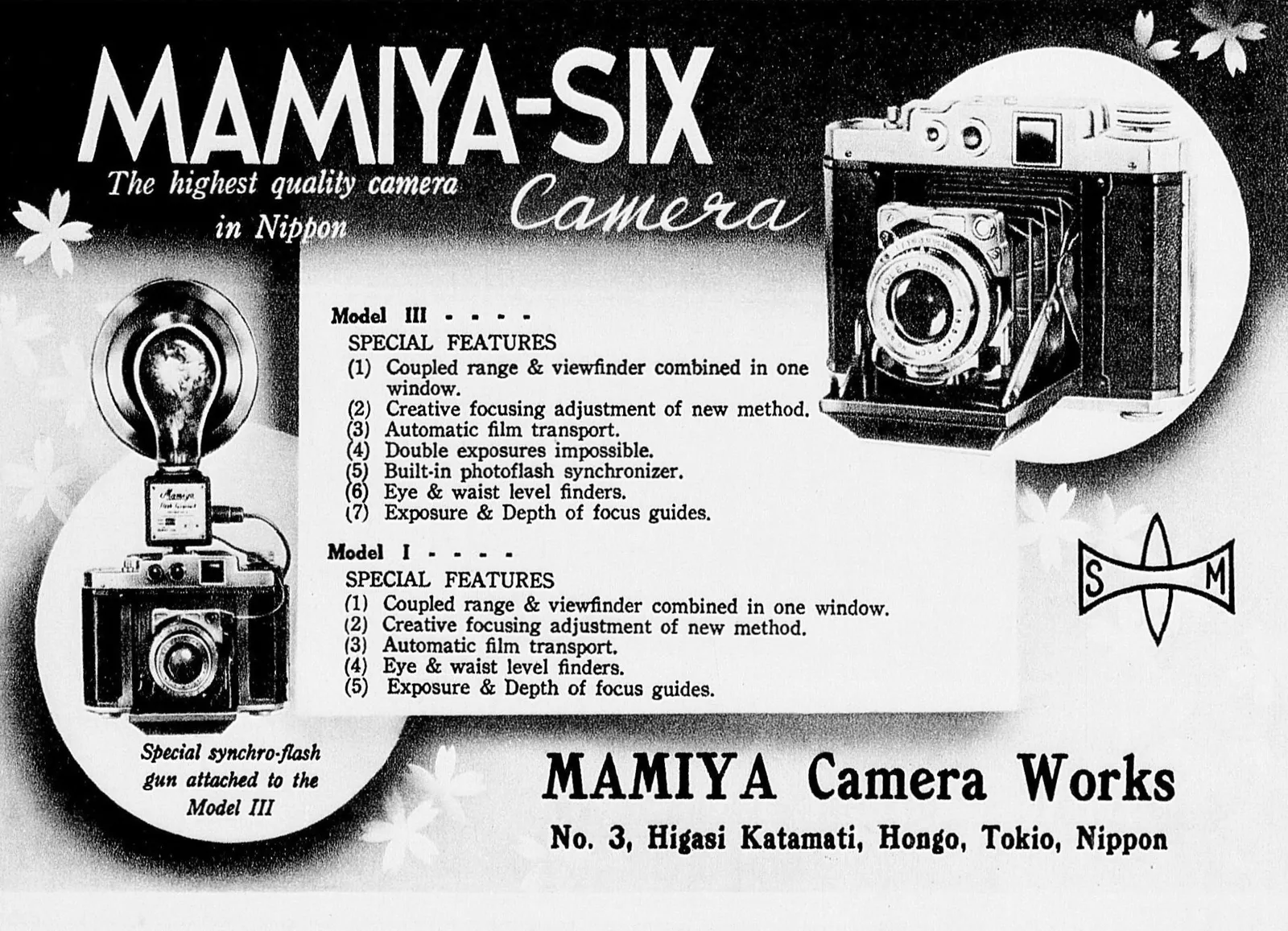
In May 1940 the camera designer Seiichi Mamiya founded his company in Tokyo with a financial backer, Tsunejiro Sugawara. The same year it launched its first camera, the Mamiya Six, a folding camera for 6 × 6 cm pictures on 120 film.
The Mamiya Six had an original idea: instead of moving the lens forward to focus, as on other folding cameras, it moved the film plane inside the body. The lens stayed fixed, which made the camera more precise and sturdy.
1949–1959
Small cameras with big ideas
In the museum
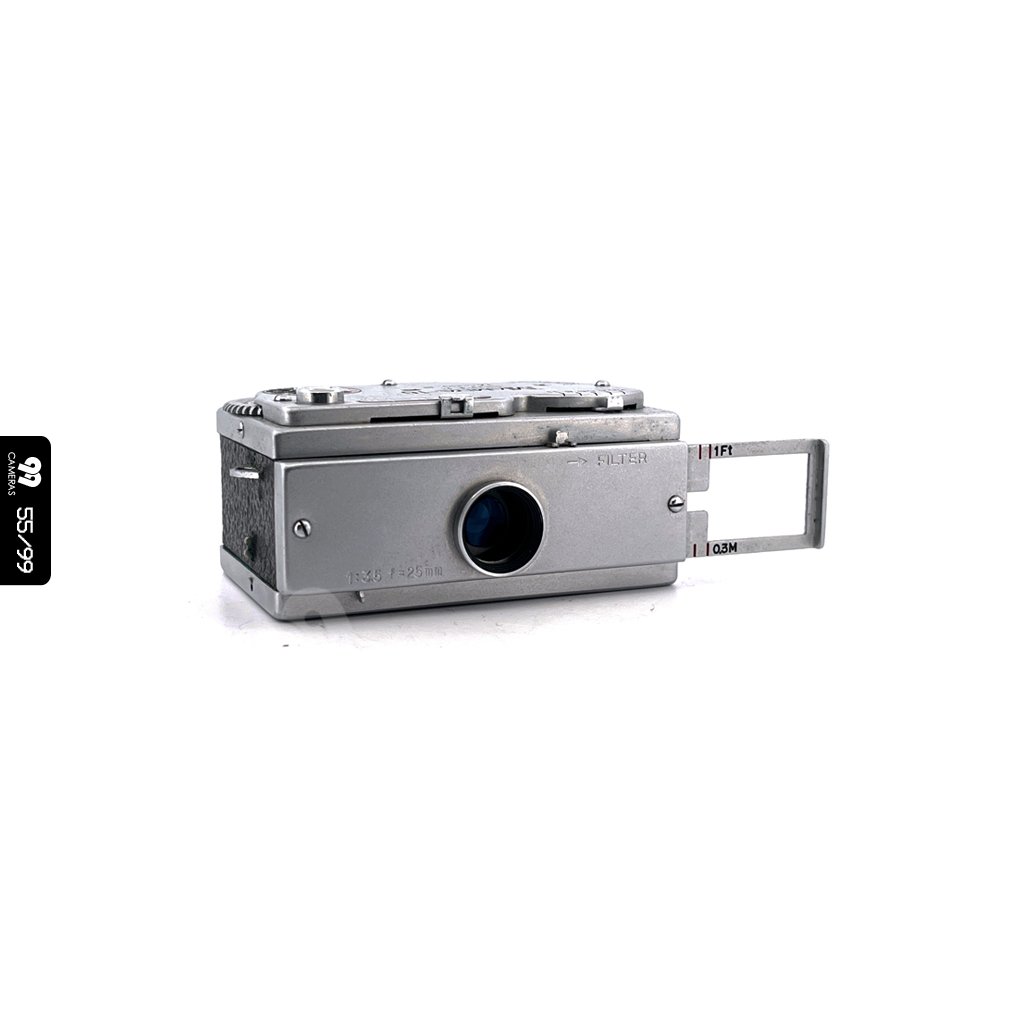
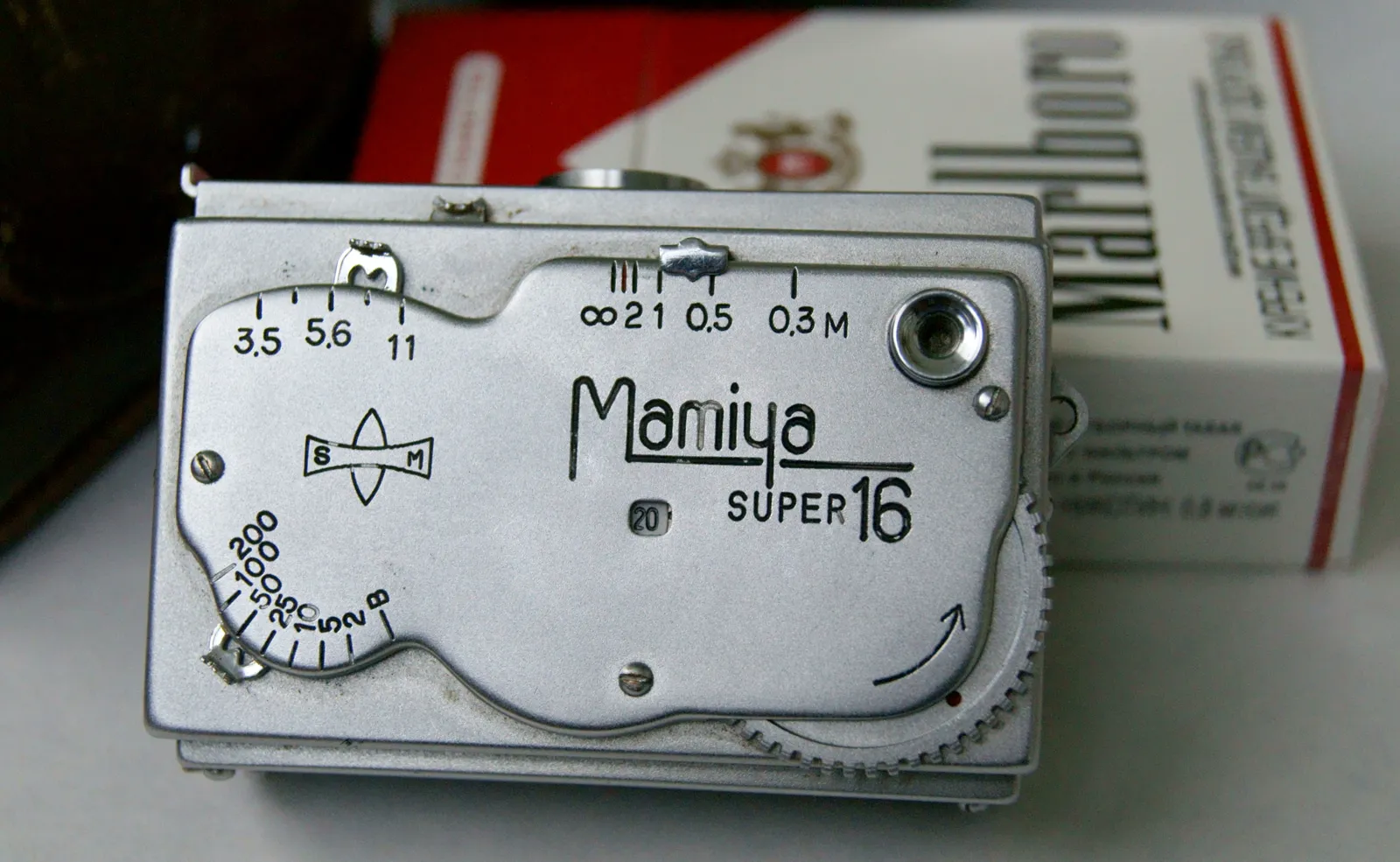
From 1949 Mamiya made 35 mm cameras and a successful series of tiny cameras for 16 mm film, which lasted until 1962. The Super 16, in the museum, was one of the smallest 16 mm cameras of its time, with a pop-out viewfinder and a built-in filter.
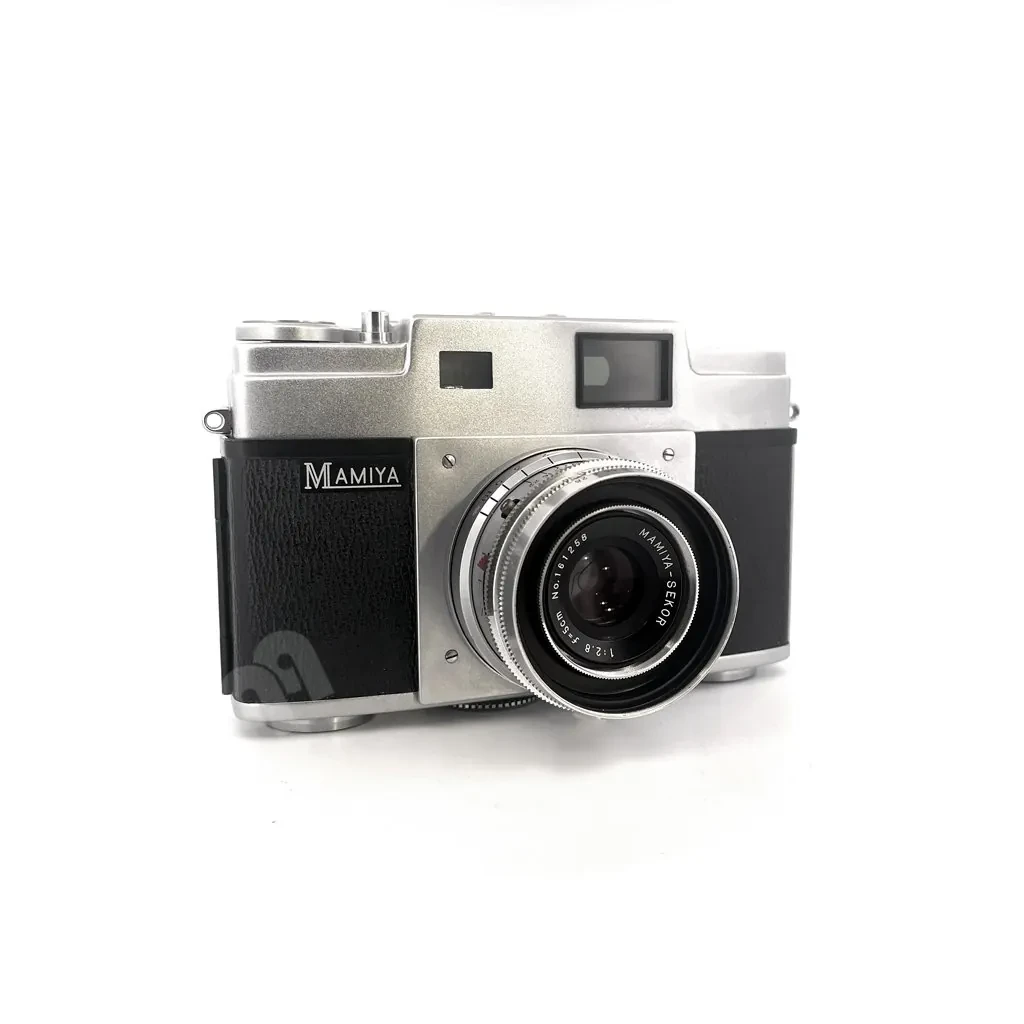
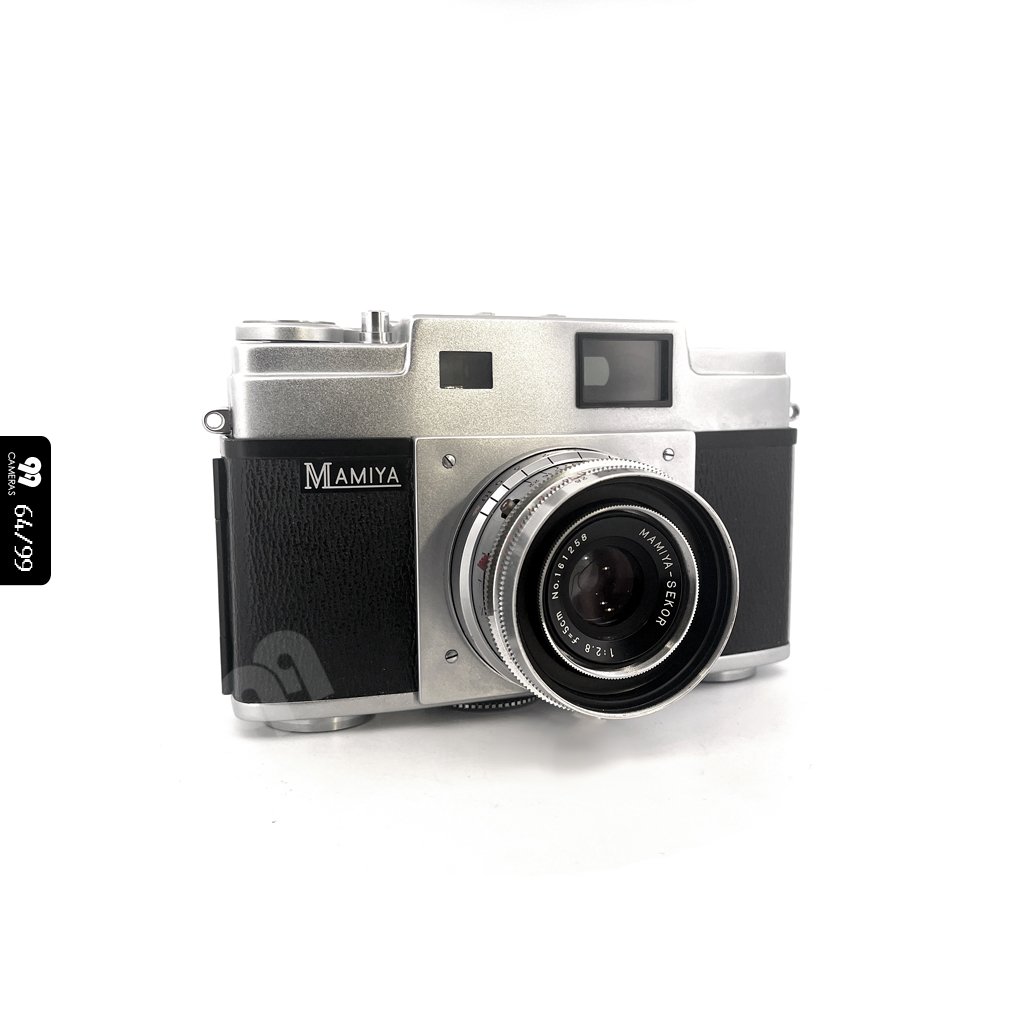
In 1957 the Magazine 35, also in the museum, did something very rare for a rangefinder: its whole back could be removed and replaced by another magazine, to change from colour to black-and-white film in the middle of a roll.

1957–1990s
The professionals’ medium format
In the museum
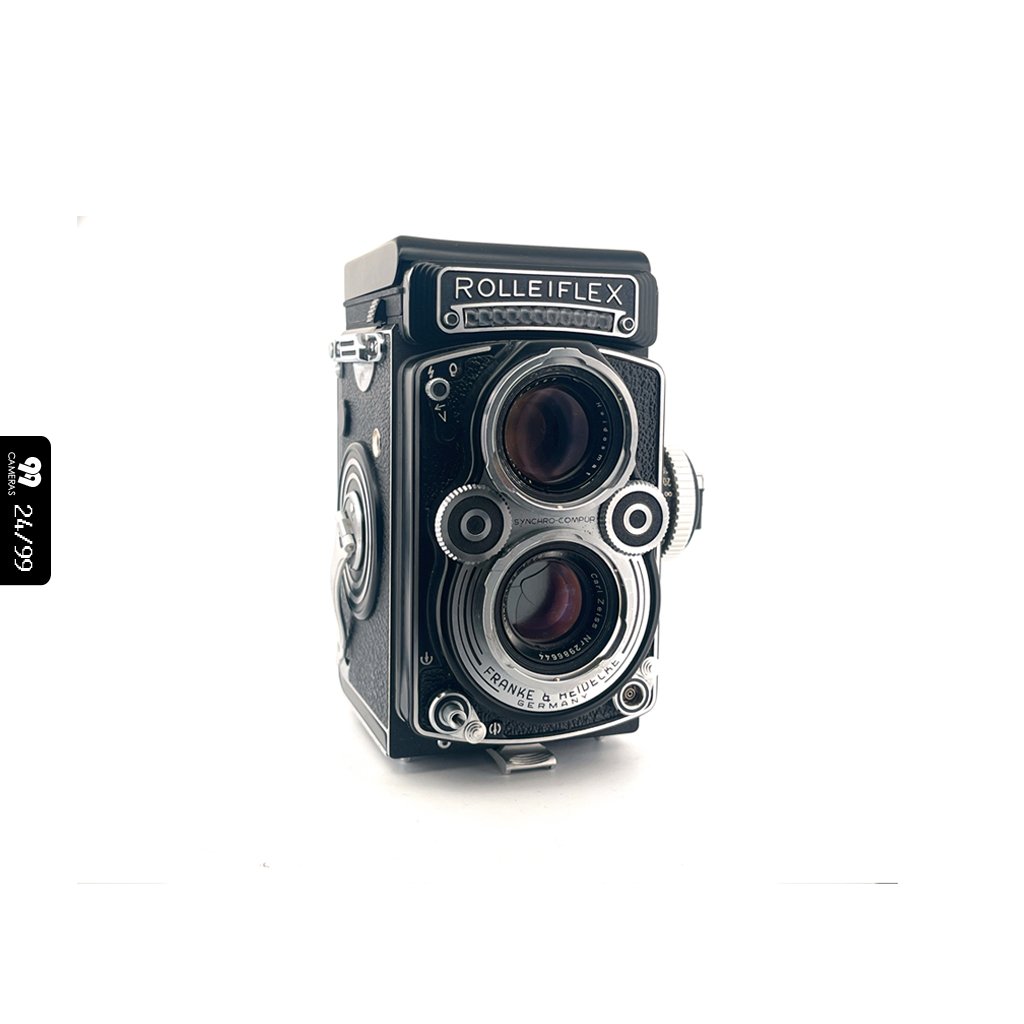
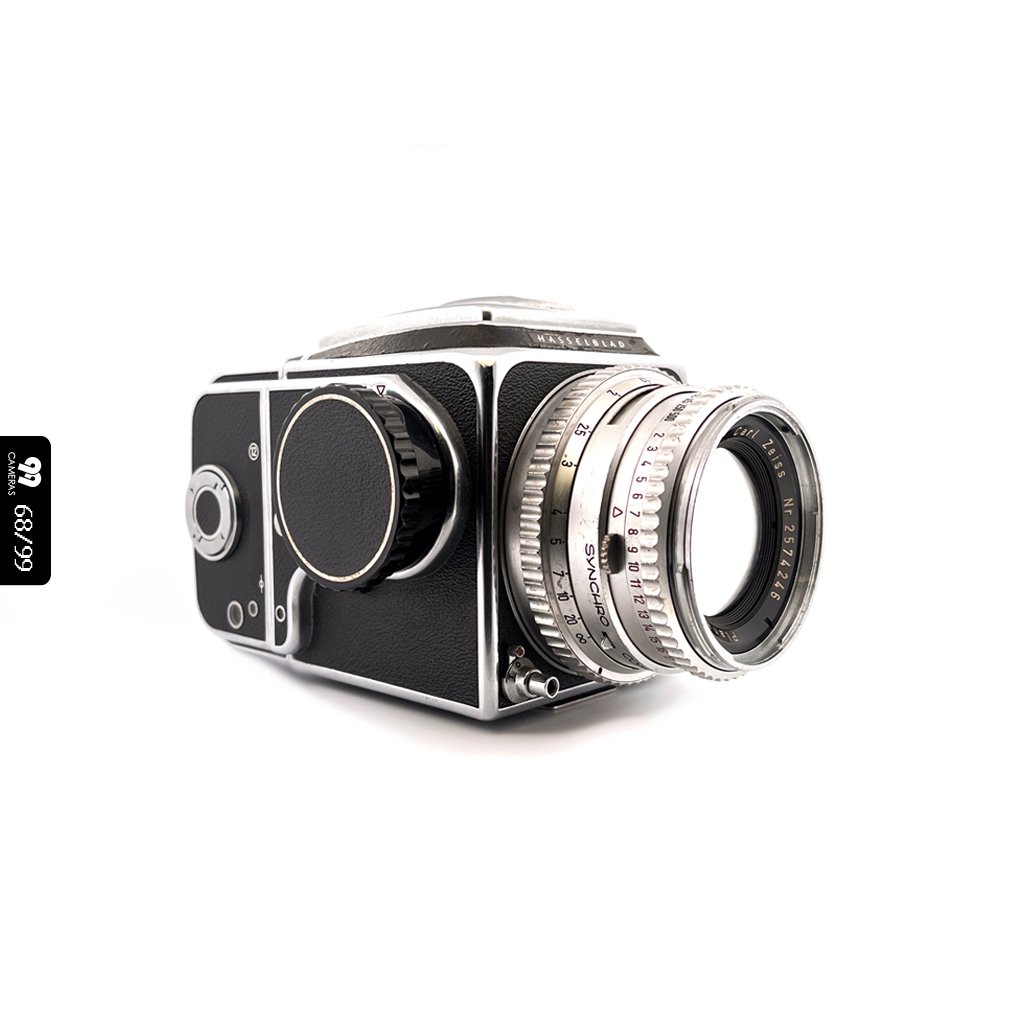
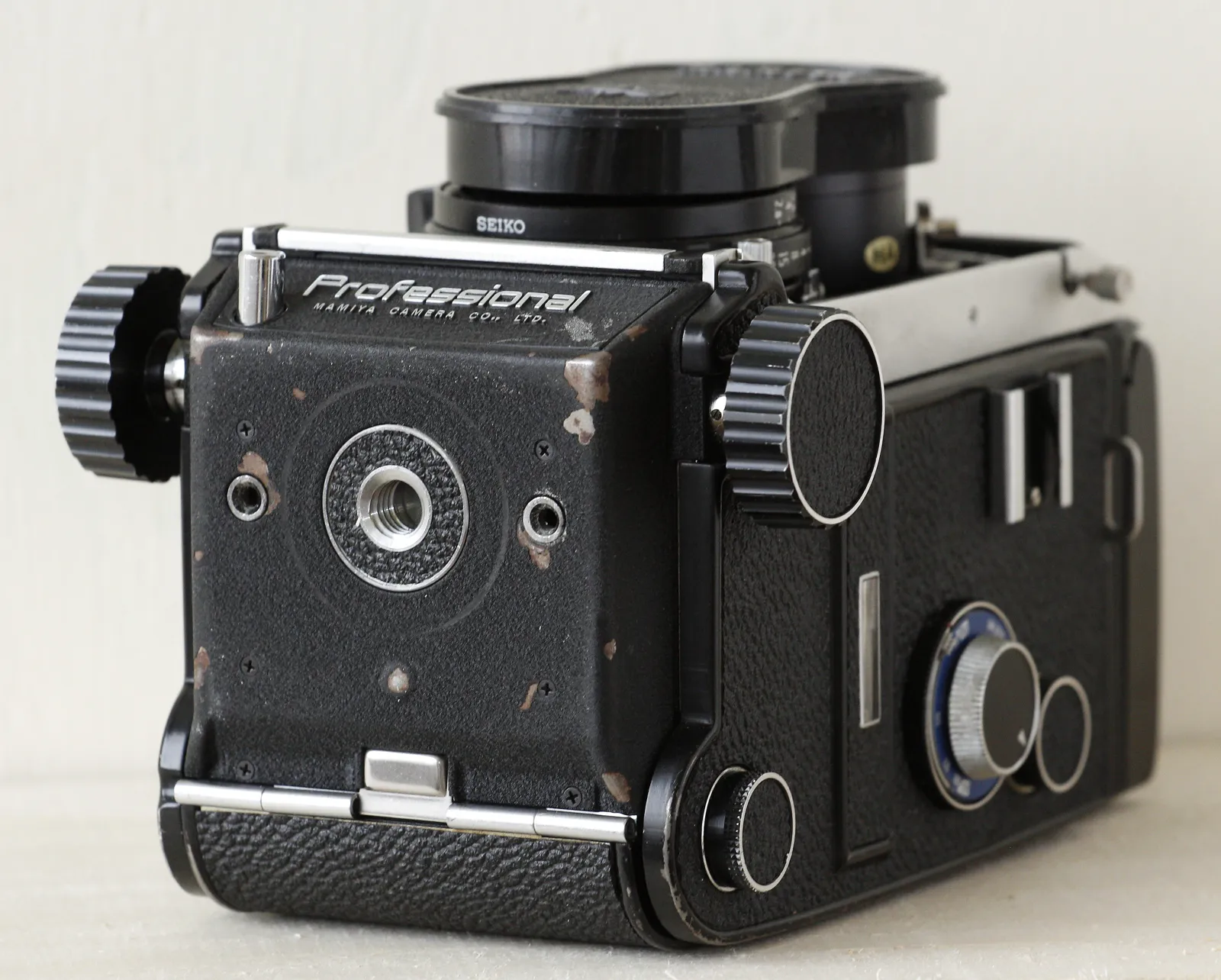
Mamiya’s C series of twin-lens reflexes, such as the C33 of 1965 and the C330 of 1969, were the only widely sold twin-lens reflexes with interchangeable lenses: the two lenses came off together on a single panel. Wedding and portrait photographers loved them.
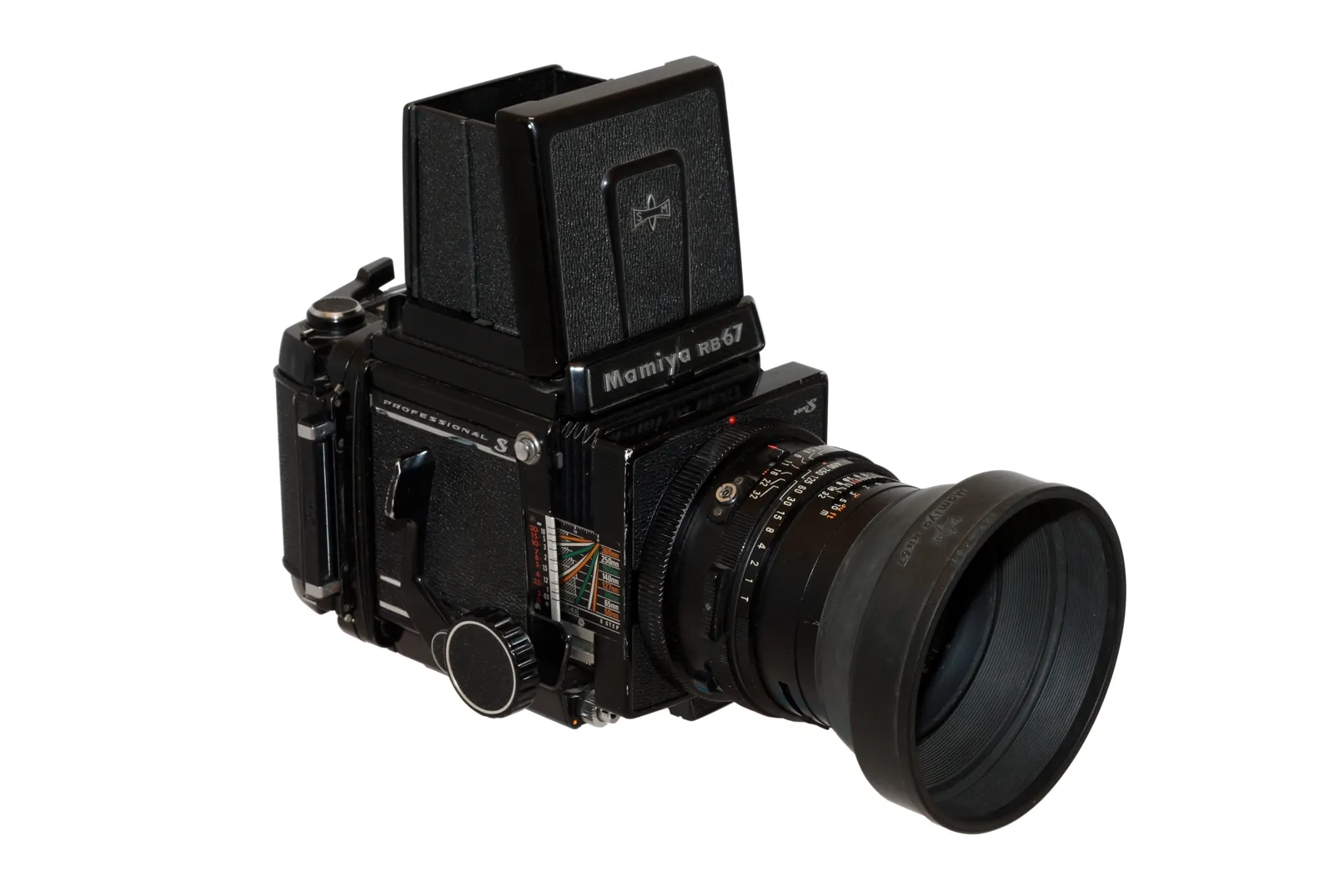
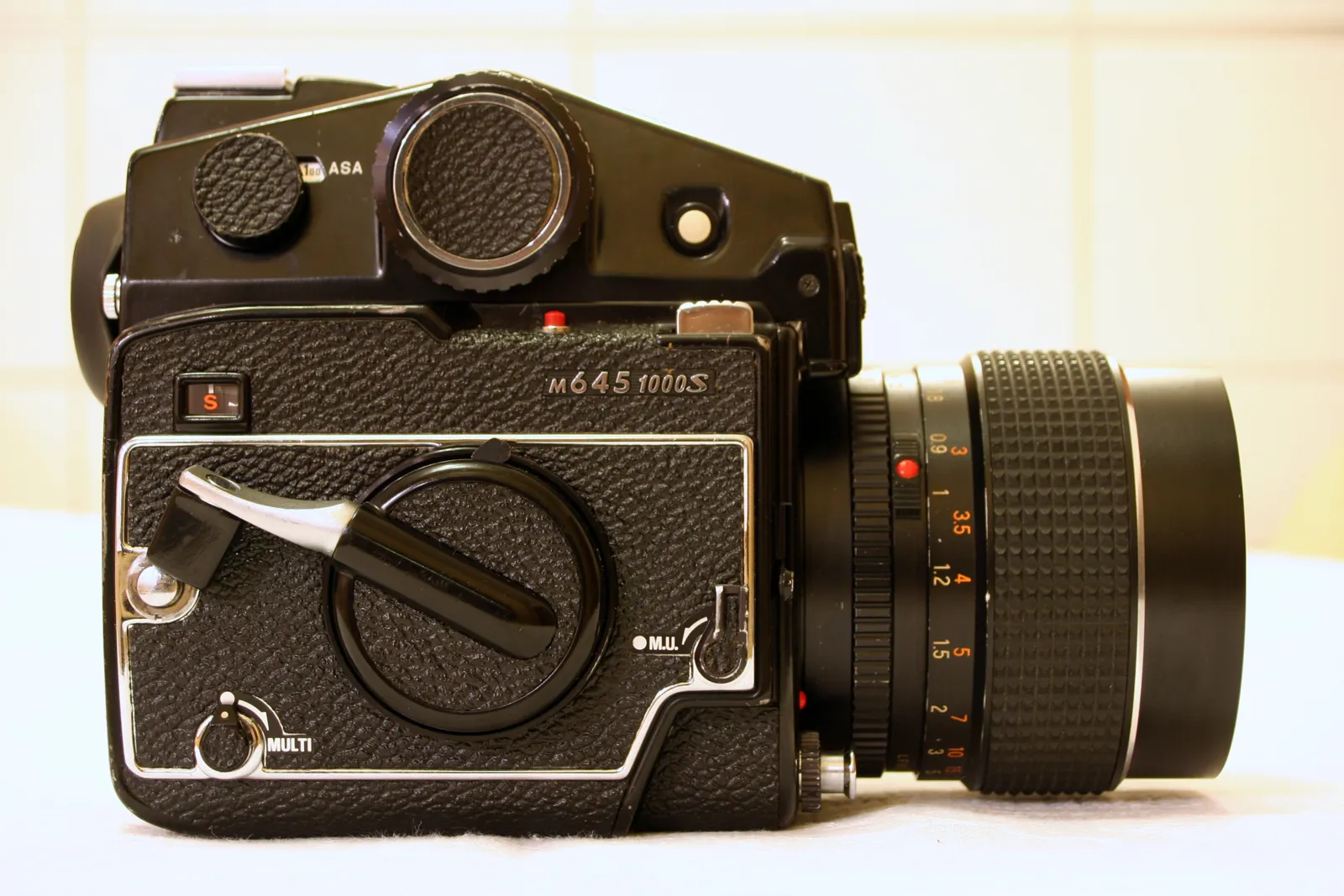
In 1970 came the RB67, a large 6 × 7 cm reflex with a rotating back, followed by the Mamiya 645 in 1975 and the RZ67 in 1982. The RB67 soon became one of the most common cameras in professional studios.
1995–today
Into Phase One
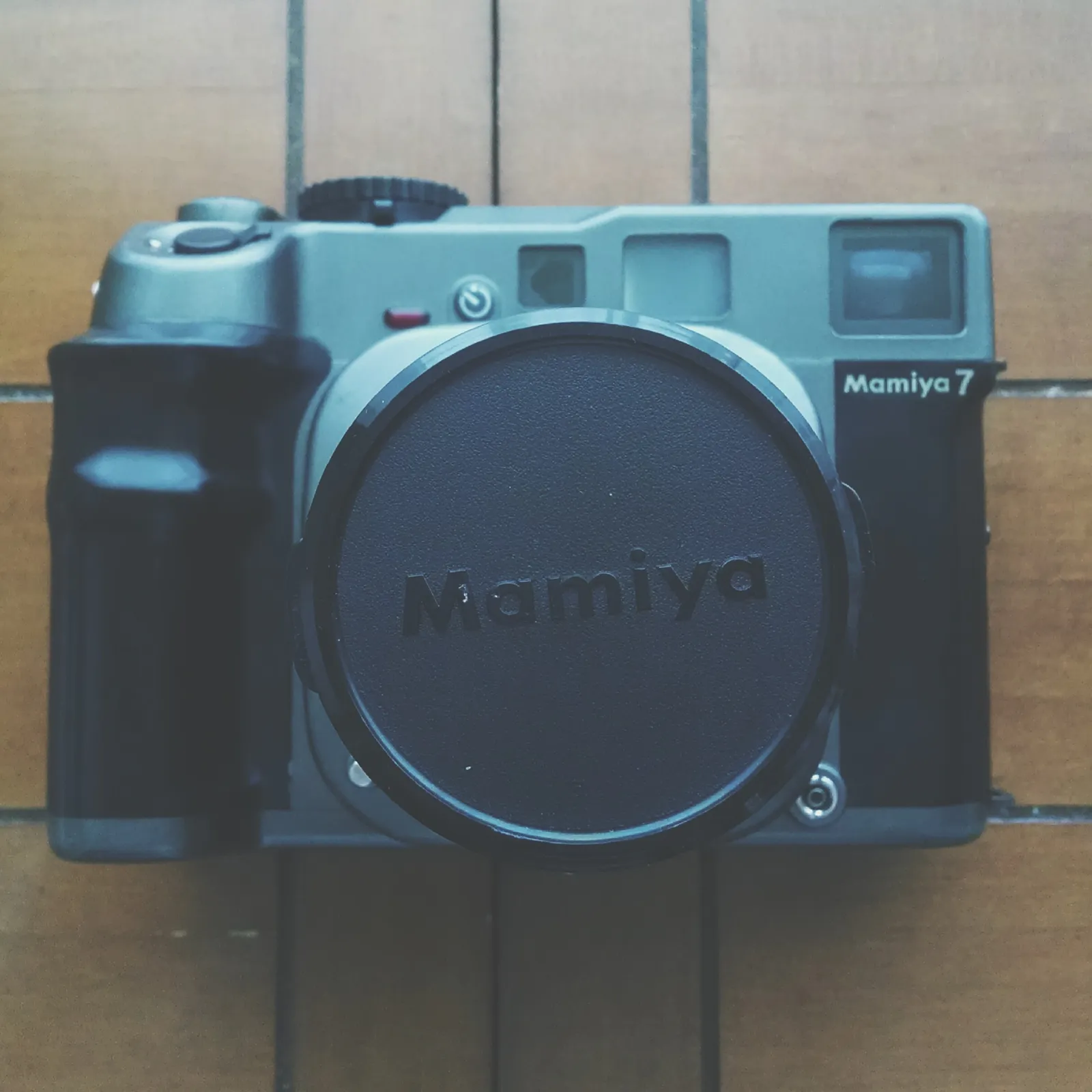
In 1995 Mamiya launched the Mamiya 7, a light 6 × 7 cm rangefinder that was made for about eighteen years. Then digital photography arrived, and medium-format film cameras sold less and less.
In 2009 the Danish maker of digital backs Phase One bought a major stake in Mamiya, and in 2015 it bought the company. Mamiya’s factory in Saku, Japan, became Phase One’s Japanese base.
Mamiya at the 99 Cameras Museum
The Mamiya Magazine 35 and the tiny Super 16 are in the showcases of the museum in Paris. You can see them, and the other cameras of this story, in our online collection.
See the Mamiya cameras of the collection
Sources. Wikipedia article on Mamiya, Camera-wiki. Some anecdotes come from oral tradition and are told as such.
Plan your visit
Visit is free and open to all
- Opening hoursMonday – Saturday : 10 – 17:30
- AddressStudio Harcourt, 6 Rue de Lota, 75116 Paris
- Exceptional closuresThursday, 26 November 2026