The adventure of the brands
The Canon story
A mechanic who took a Leica apart, a camera named after the goddess of mercy, a doctor who became a company boss, a dream lens, the first camera with a microprocessor and a bold change of lenses: the Canon story, told through its inventions and its anecdotes.
1933–1936
The goddess of mercy
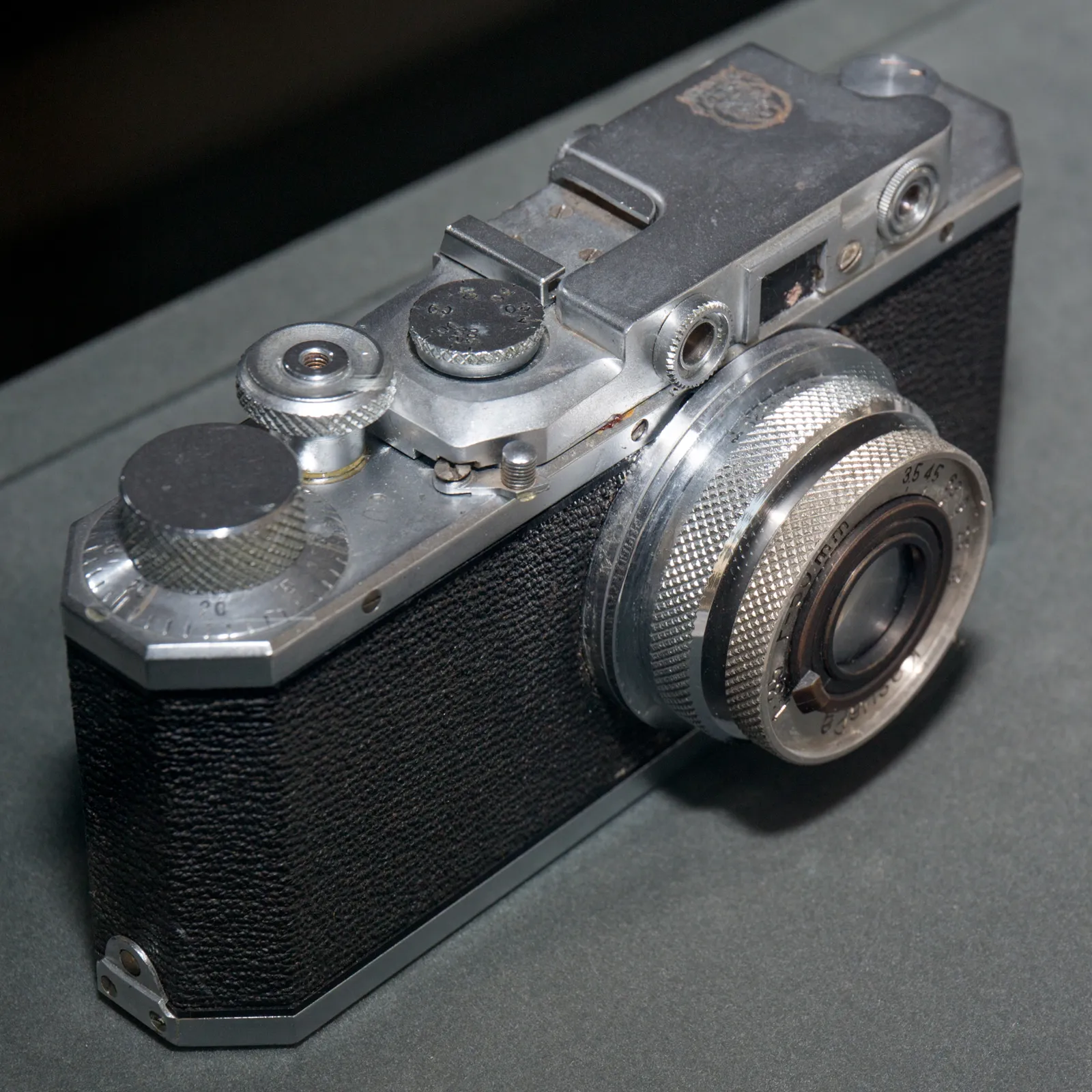
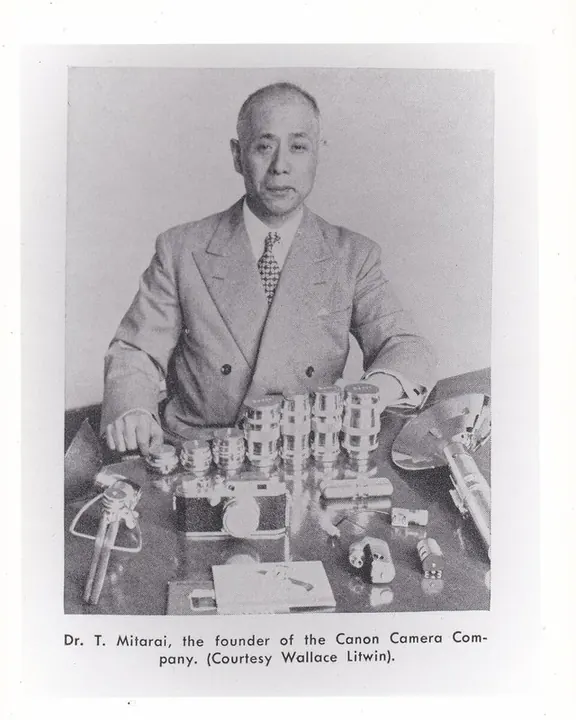
In 1933 a few friends opened a small laboratory in Tokyo, the Precision Optical Instruments Laboratory, to make a Japanese camera as good as the German Leica and Contax. The mechanic Goro Yoshida had taken a Leica apart and could not understand why it was so expensive. His brother-in-law Saburo Uchida, and a doctor, Takeshi Mitarai, supported the project.
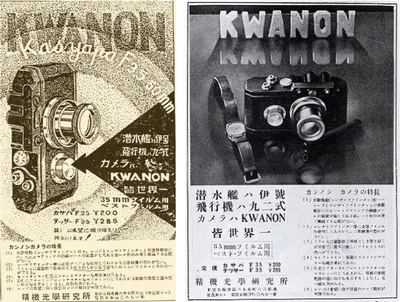
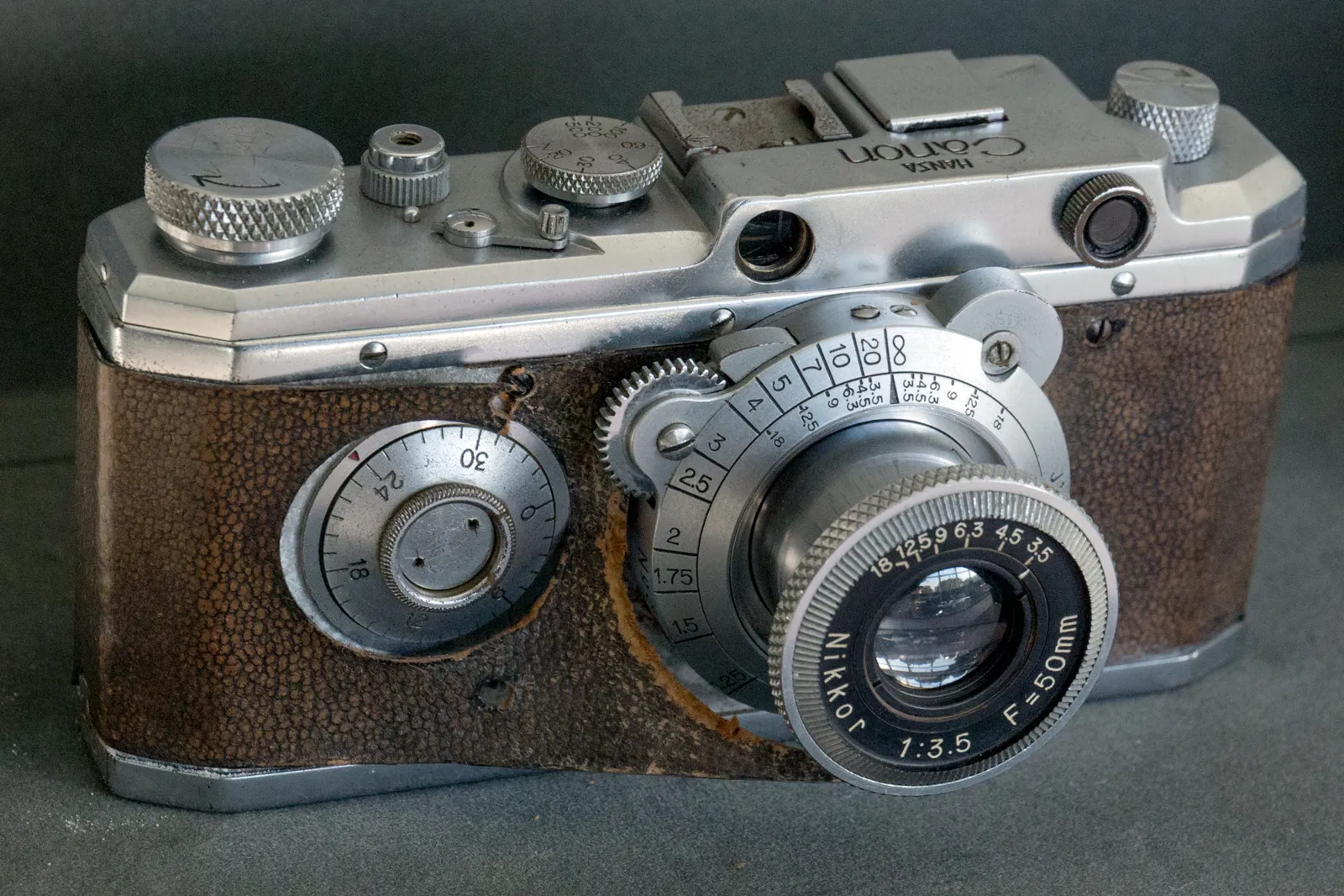
In 1934 Yoshida finished a prototype called Kwanon, after the Buddhist goddess of mercy. In 1935 the laboratory registered a new name, easier to pronounce around the world: Canon. The first camera sold, the Hansa Canon of 1936, used a lens and a rangefinder made by Nippon Kogaku, the future Nikon.
The people
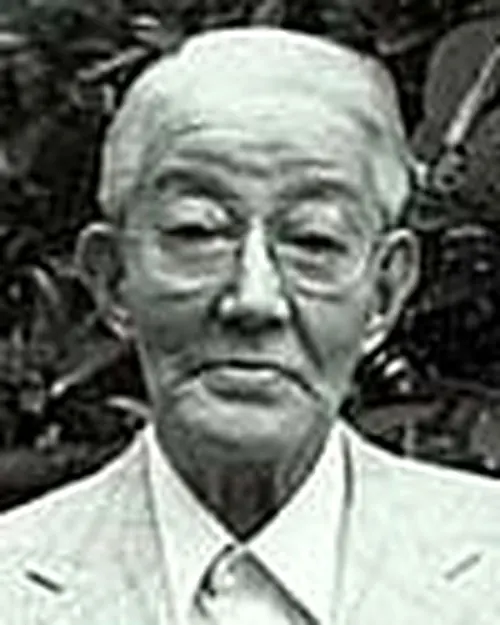
In 1937 the laboratory became a company, Precision Optical Industry, and in 1942 Takeshi Mitarai, a doctor, became its president. After the war, the factories almost empty, he relaunched production with cameras sold to American soldiers stationed in Japan.
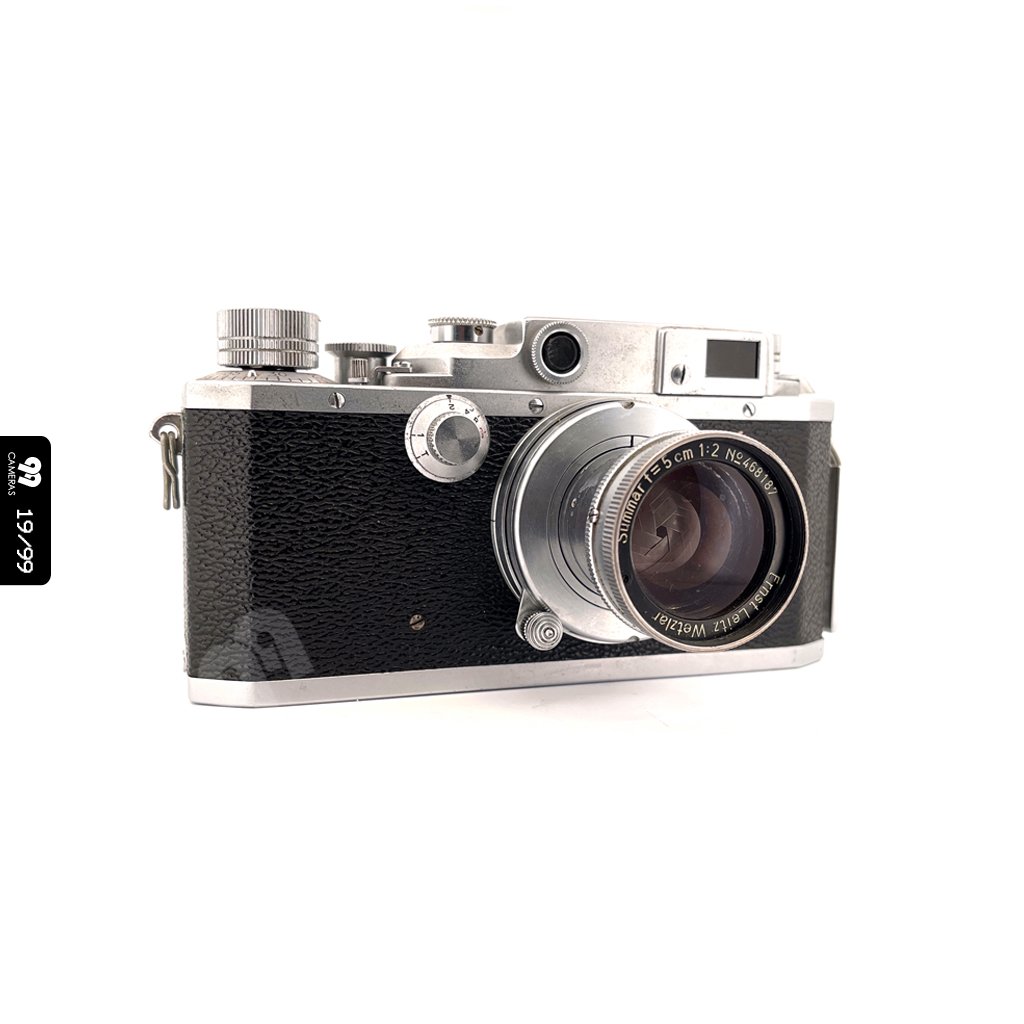
Canon’s rangefinders, the II, the III and the IIIA of 1951 in the museum, compatible with Leica lenses, soon won a reputation for quality. In 1947 the company took the name Canon Camera Company.
1956–1969
The dream lens
In the museum
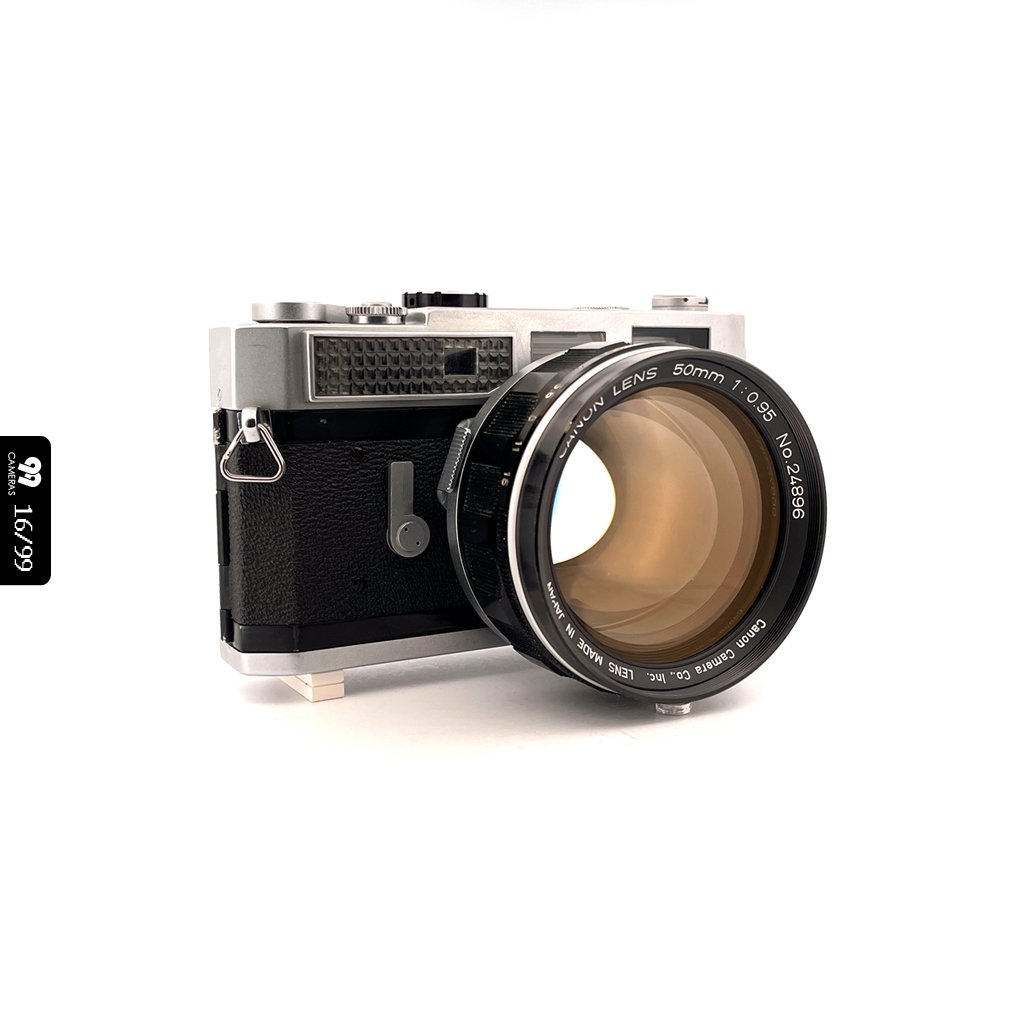
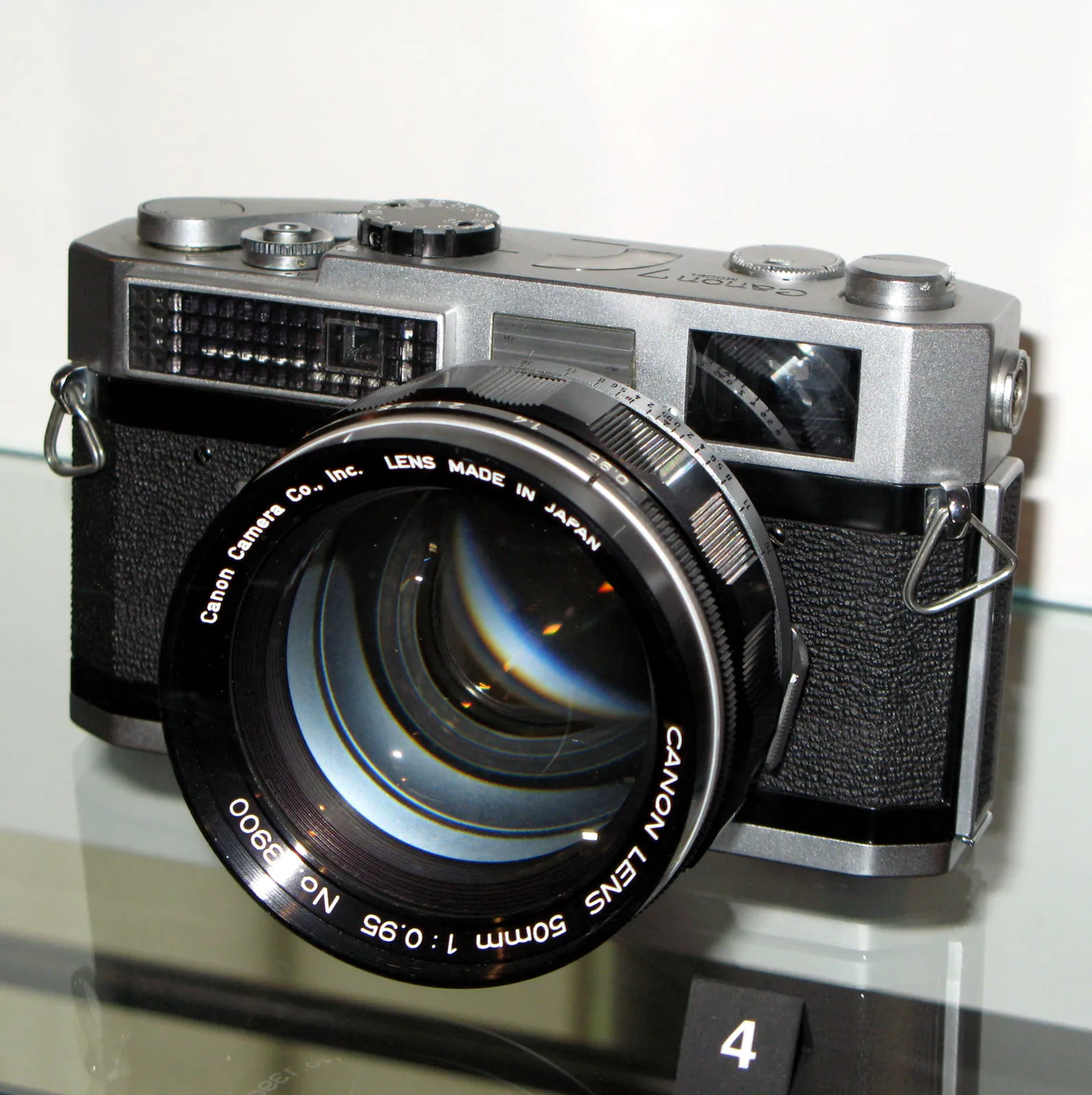
In 1961 Canon launched the Canon 7, a rangefinder with a built-in light meter, and with it a spectacular lens: the 50 mm f/0.95, one of the brightest lenses ever made for a 35 mm camera at the time, and it became known as the “dream lens”.
Canon also made reflex cameras, from the Canonflex of 1959, and cheap, simple cameras such as the Canonet of 1961, a huge success. In 1969 the company took the name Canon Inc., and it was starting to make office machines and calculators too.
1976–1986
The computer inside the camera
In the museum
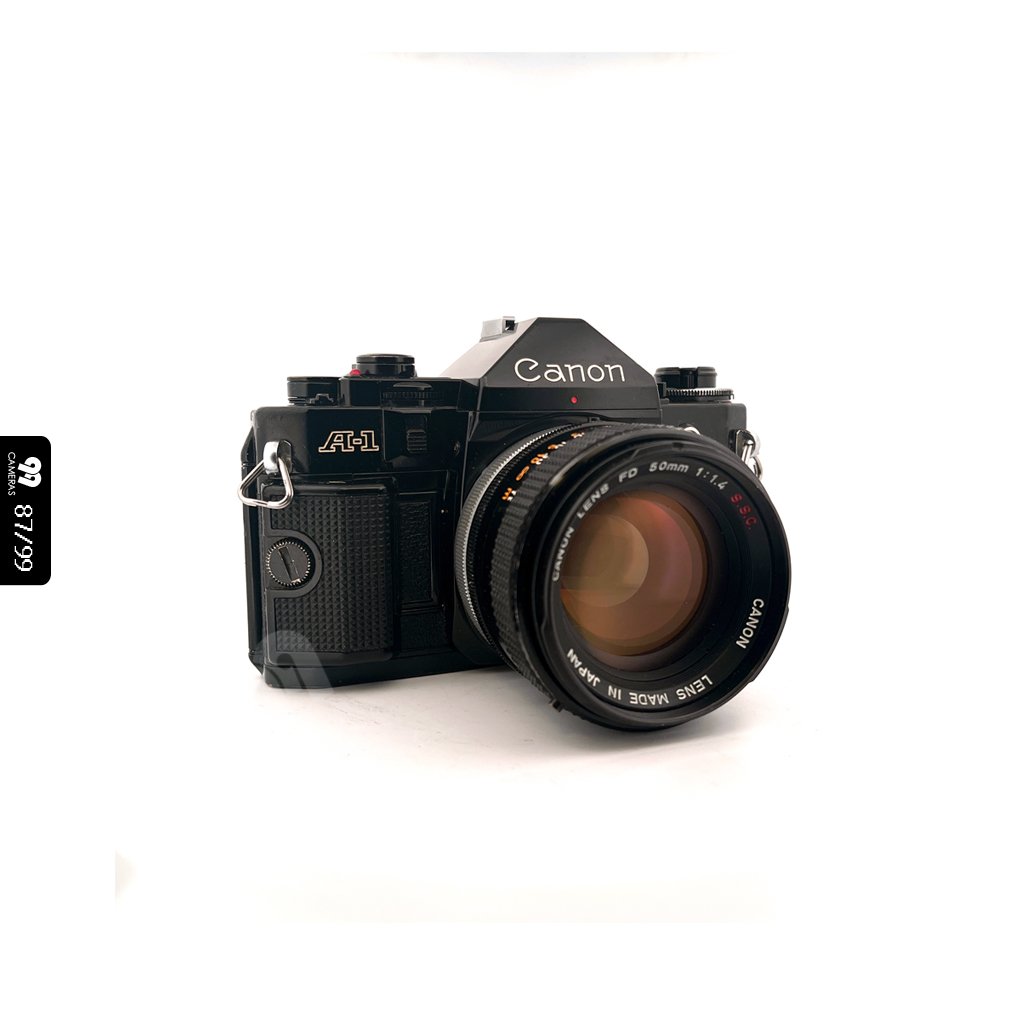
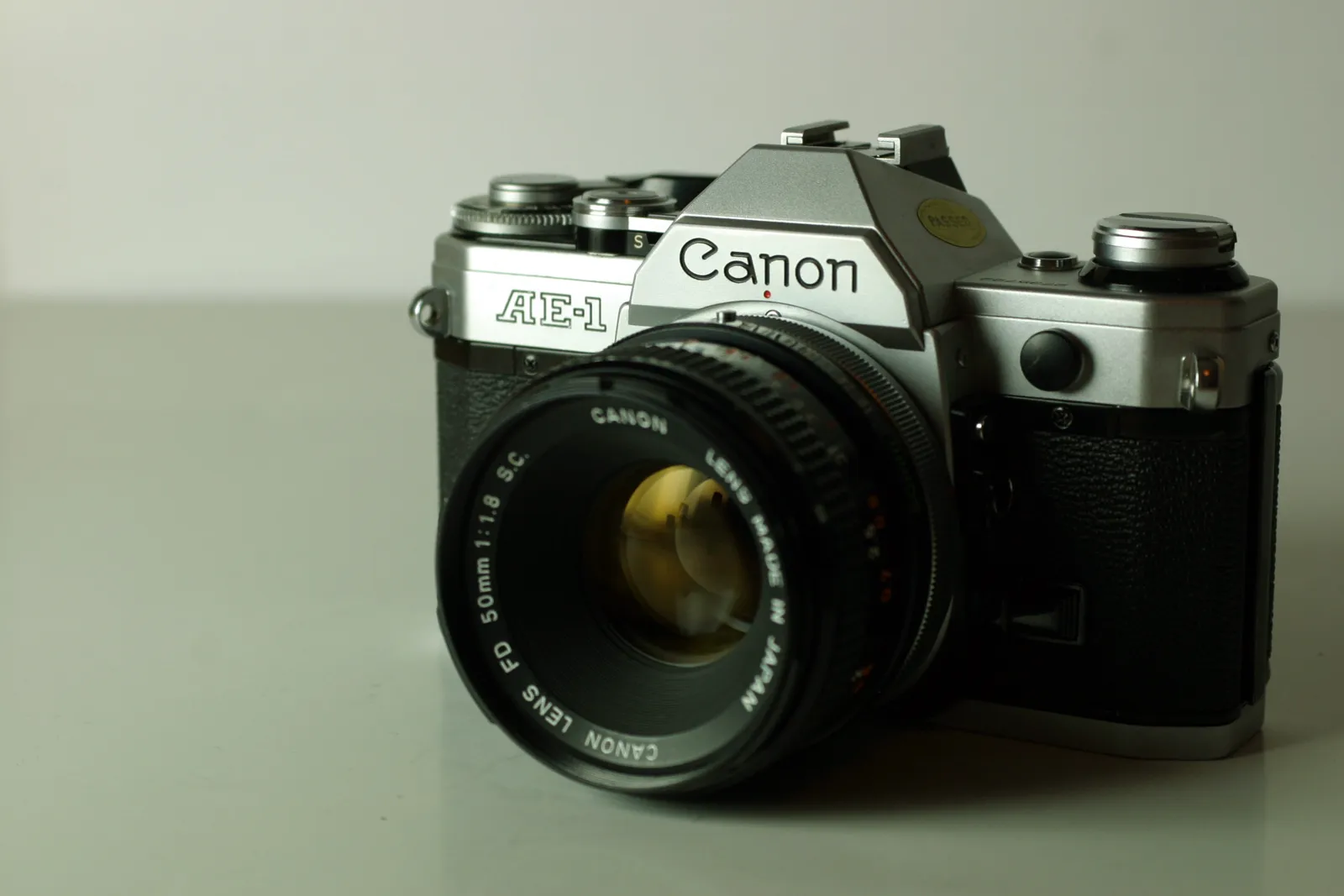
In 1976 Canon launched the AE-1, the first single-lens reflex with a microprocessor, the electronic brain of a computer. It made automatic exposure simple, the camera cheaper to build, and it was supported by a huge advertising campaign. Millions were sold.
In 1978 the Canon A-1, in the museum, went further: it offered every exposure mode, including a programmed mode that chose both the speed and the aperture. In 1986 the T90, shaped by the German designer Luigi Colani, announced the rounded, ergonomic look of the cameras to come.
The people

1987–1999
Starting again from zero
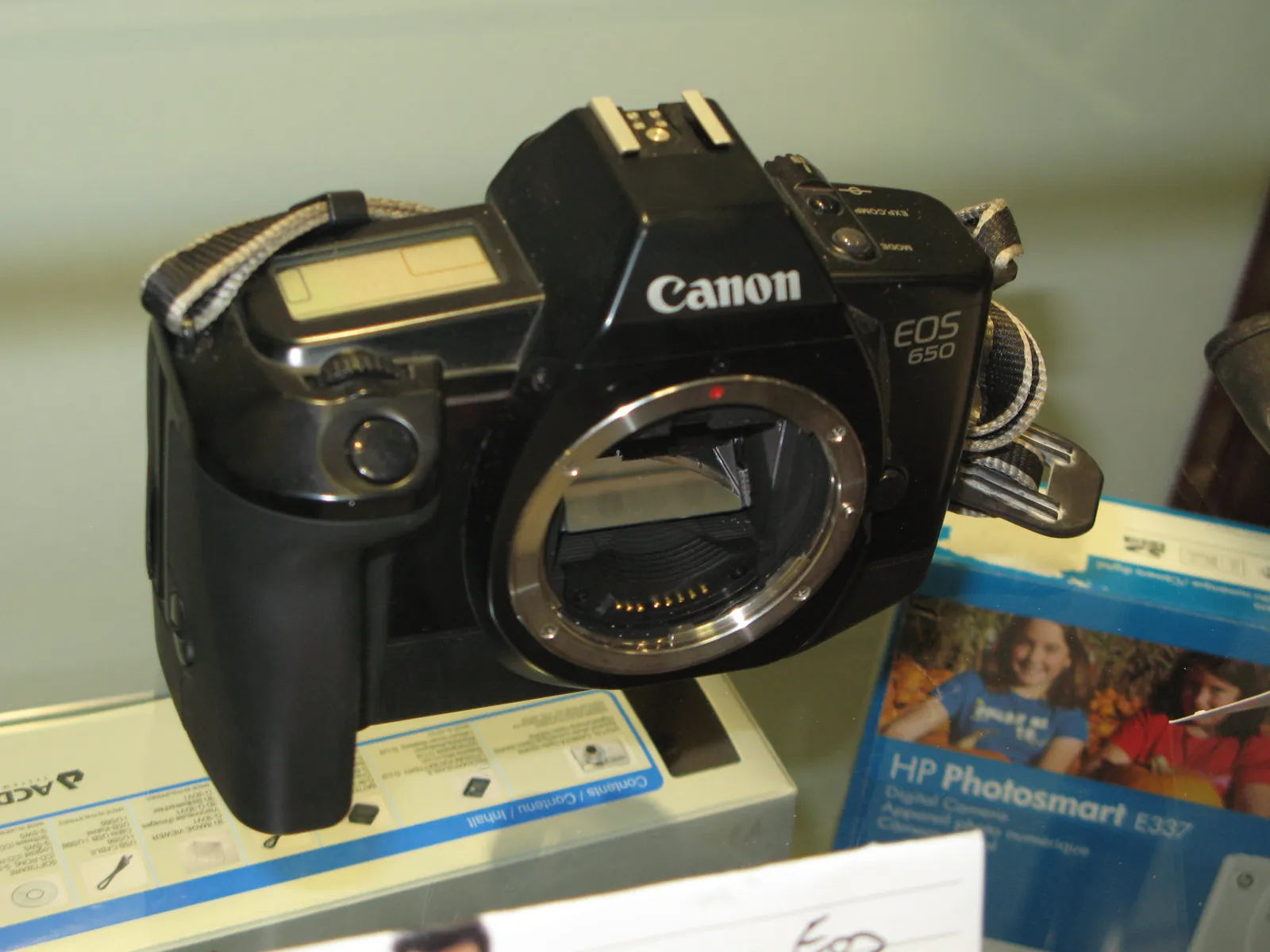
In 1987 Canon took a bold decision. To make autofocus work well, it launched a new system, EOS, with a new, fully electronic lens mount. The old FD lenses no longer fitted the new cameras. Many photographers were angry.
But the bet paid off. The EOS cameras focused fast and quietly, and their lenses had the motor built in. In a few years Canon won over many professionals, especially in sports photography, and its white telephoto lenses became a familiar sight at stadiums.
2000–today
The age of digital
Canon was one of the winners of the digital revolution. Its EOS cameras with large sensors, from the EOS D30 of 2000 and the EOS 5D of 2005, became the tools of a new generation of photographers and even of filmmakers, who used them to shoot films and series.
Today Canon makes mirrorless cameras, printers, copiers, medical imaging and lithography machines. Its first camera was a copy of a Leica; it has become one of the largest optical companies in the world.
Canon at the 99 Cameras Museum
The Canon IIIA of 1951, the Canon 7 of 1961 and the Canon A-1 of 1978 are in the showcases of the museum in Paris. You can see them, and the other cameras of this story, in our online collection.
See the Canon cameras of the collection
Sources. Canon Camera Museum (global.canon), Canon corporate history, Wikipedia articles on Canon, the Kwanon, the Canon 7, the AE-1 and the EOS system. Some anecdotes come from oral tradition and are told as such.
Plan your visit
Visit is free and open to all
- Opening hoursMonday – Saturday : 10 – 17:30
- AddressStudio Harcourt, 6 Rue de Lota, 75116 Paris
- Exceptional closuresThursday, 26 November 2026