The adventure of the brands
The Coronet story
- Founded in 1926United Kingdom
- No longer makes cameras
A small workshop in Birmingham, cameras for everyone, bakelite in bright colours, a camera as small as a matchbox, a cheap camera for 3D pictures and the end of an era: the Coronet story, told through its inventions and its anecdotes.
1926–1934
A workshop in Birmingham

Around 1926 F. W. Pettifer founded the Coronet Camera Company at 48 Great Hampton Street, in Birmingham, a city of small workshops making everything from buttons to bicycles. His idea was simple: make cameras cheap enough for everyone.
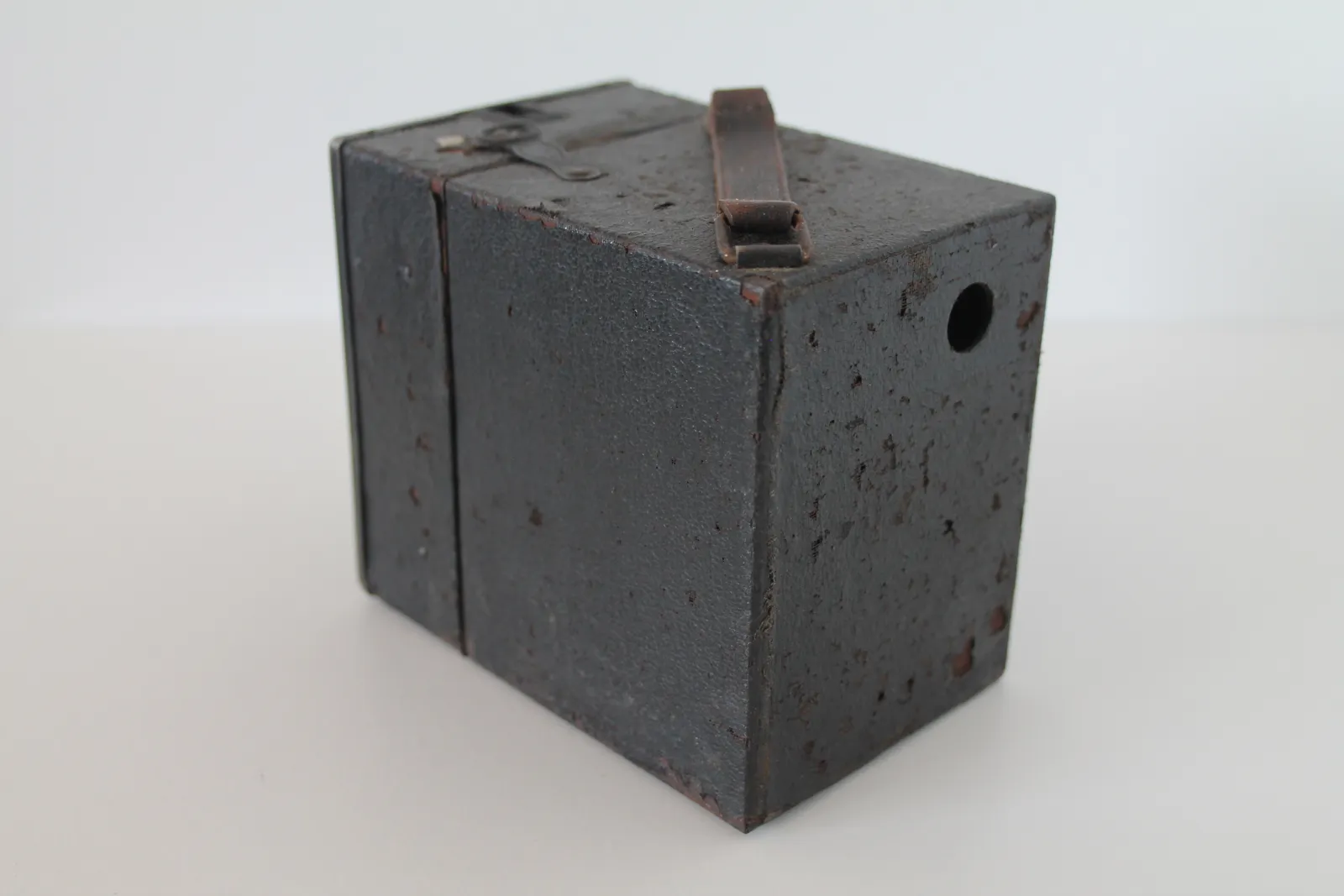
Coronet made simple box cameras and folding cameras, sold at low prices to families who could not afford a Kodak or a German camera.
1935–1939
Colours of bakelite
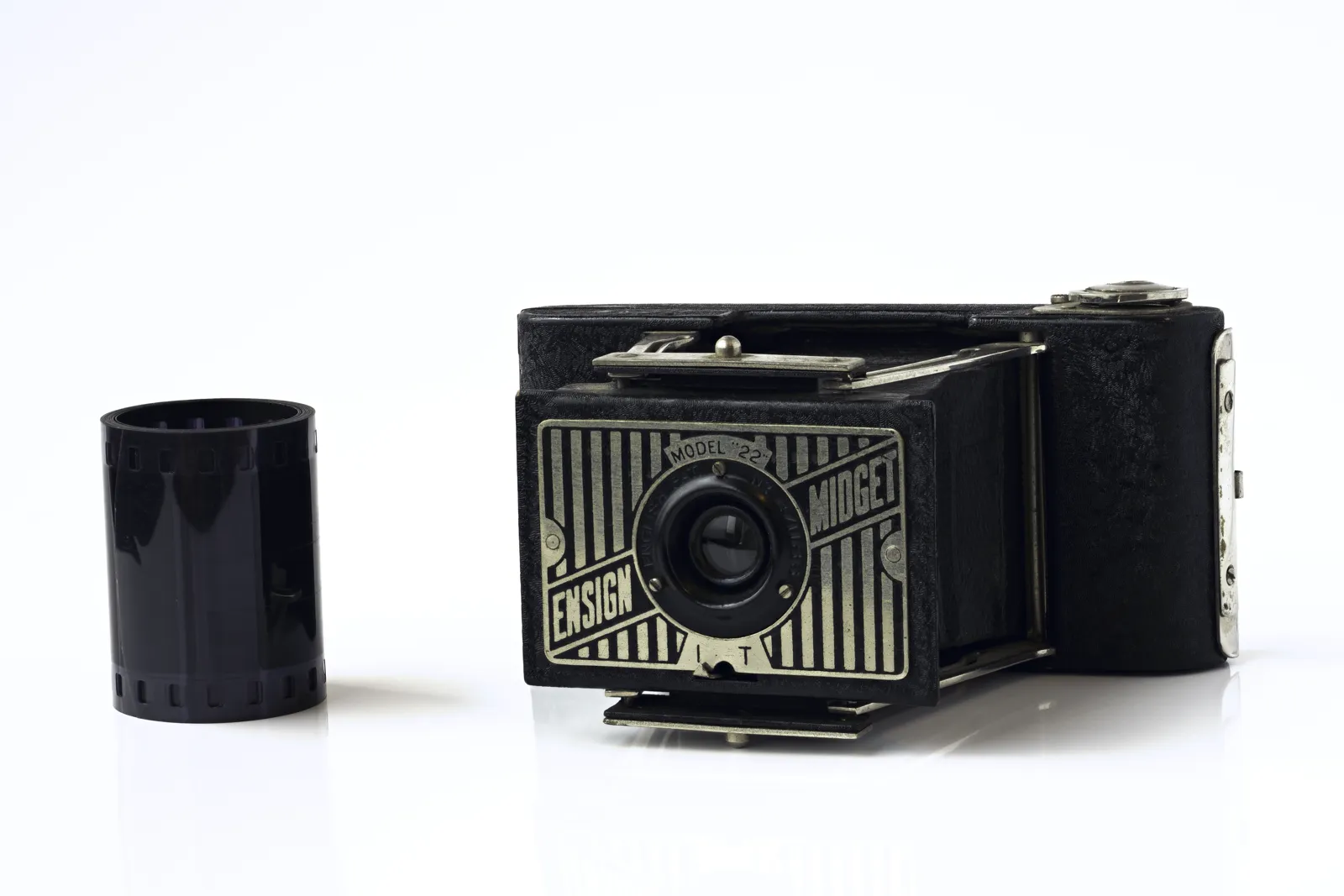
In the museum
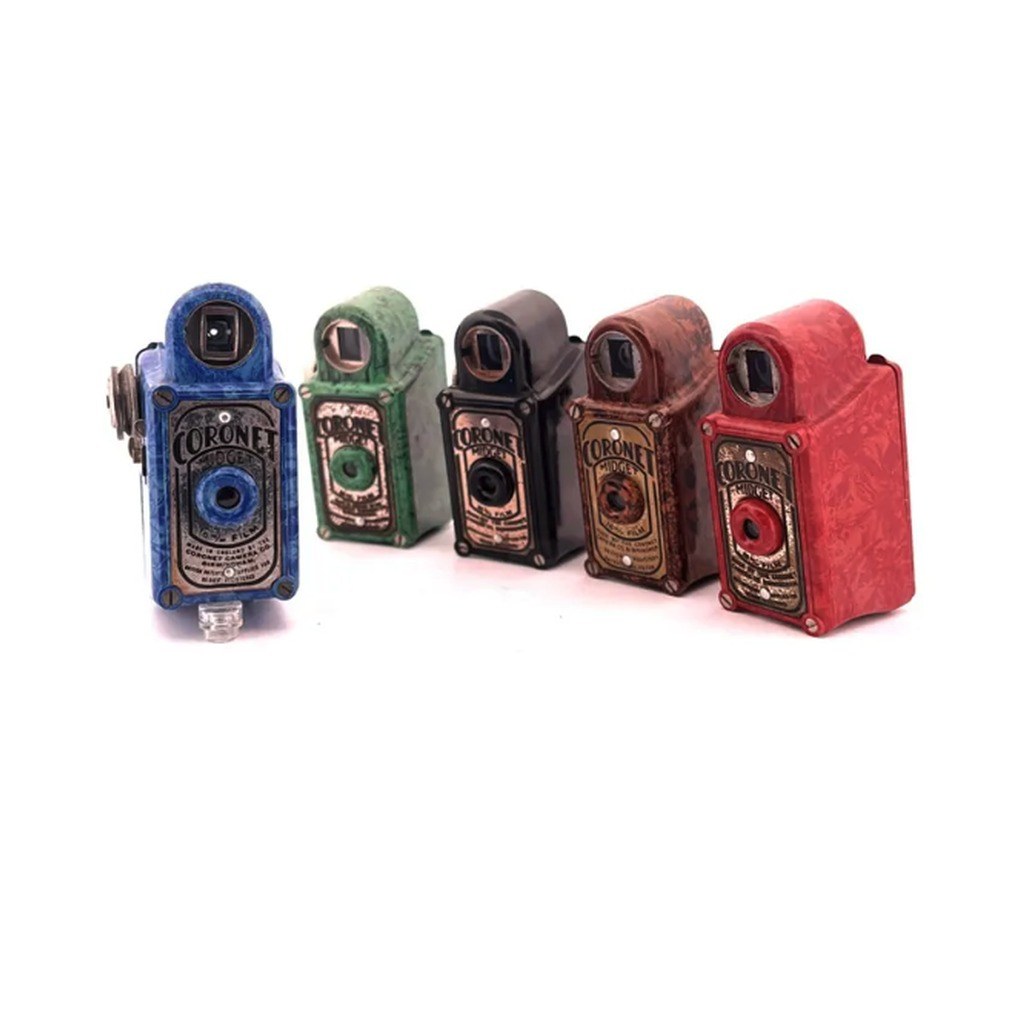
In the 1930s Coronet discovered bakelite, the first plastic, which could be moulded into complex shapes and coloured. With the help of a moulding company, Coronet made cameras in colours never seen before on cameras.
The most famous was the Midget, a camera as small as a matchbox, for six pictures on 16 mm film. It was made in black, brown, red, two shades of green and blue. Despite its size, it was a real camera, with a Taylor-Hobson lens. A Midget is in the museum.
1946–1960
Cameras for every child
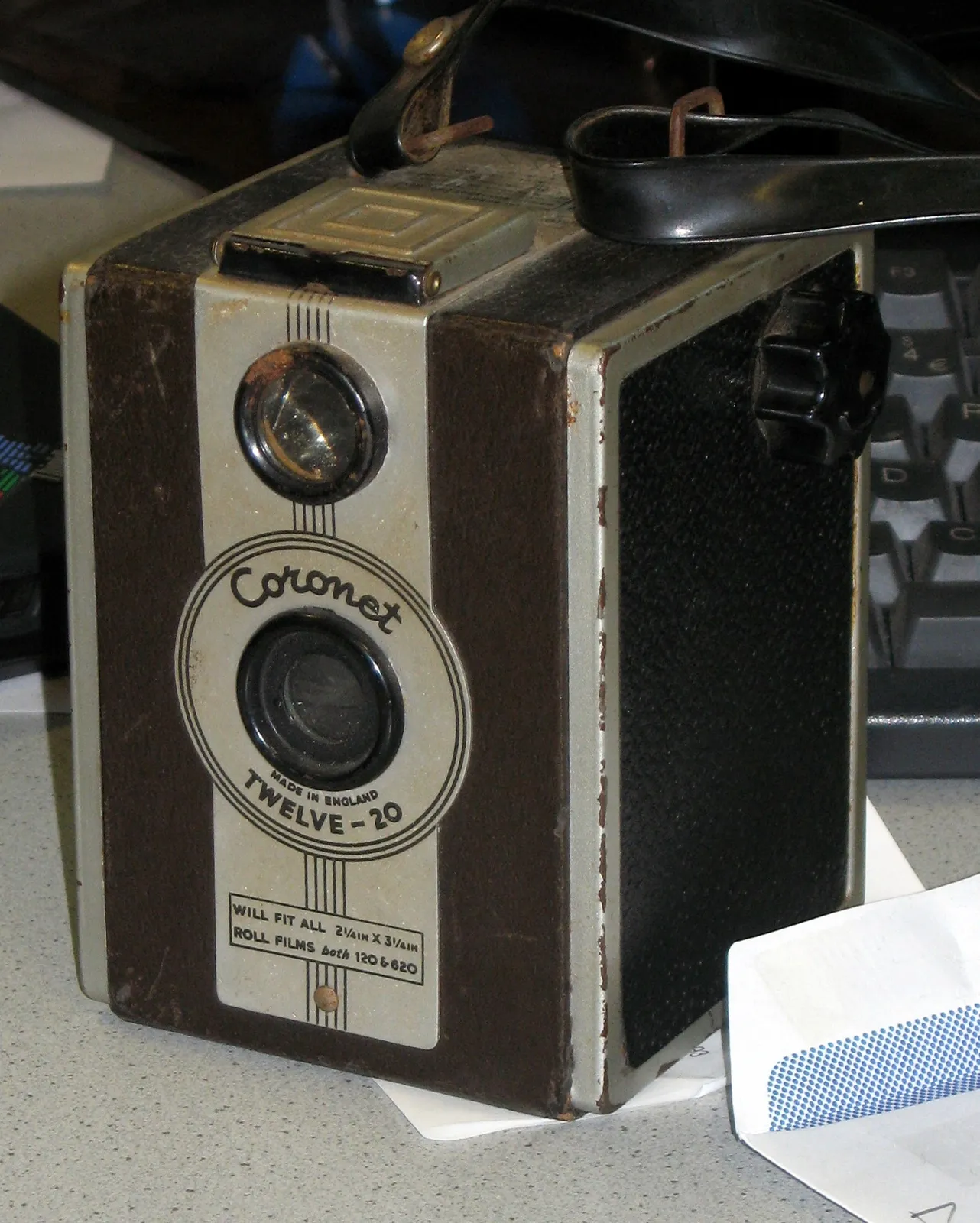
After the war the company became Coronet Ltd in 1946 and produced a long series of simple, inexpensive cameras: the Twelve-20, the Ambassador, the Flashmaster, the Cadet, the Rex. For many British children of the 1950s, a Coronet was their first camera.
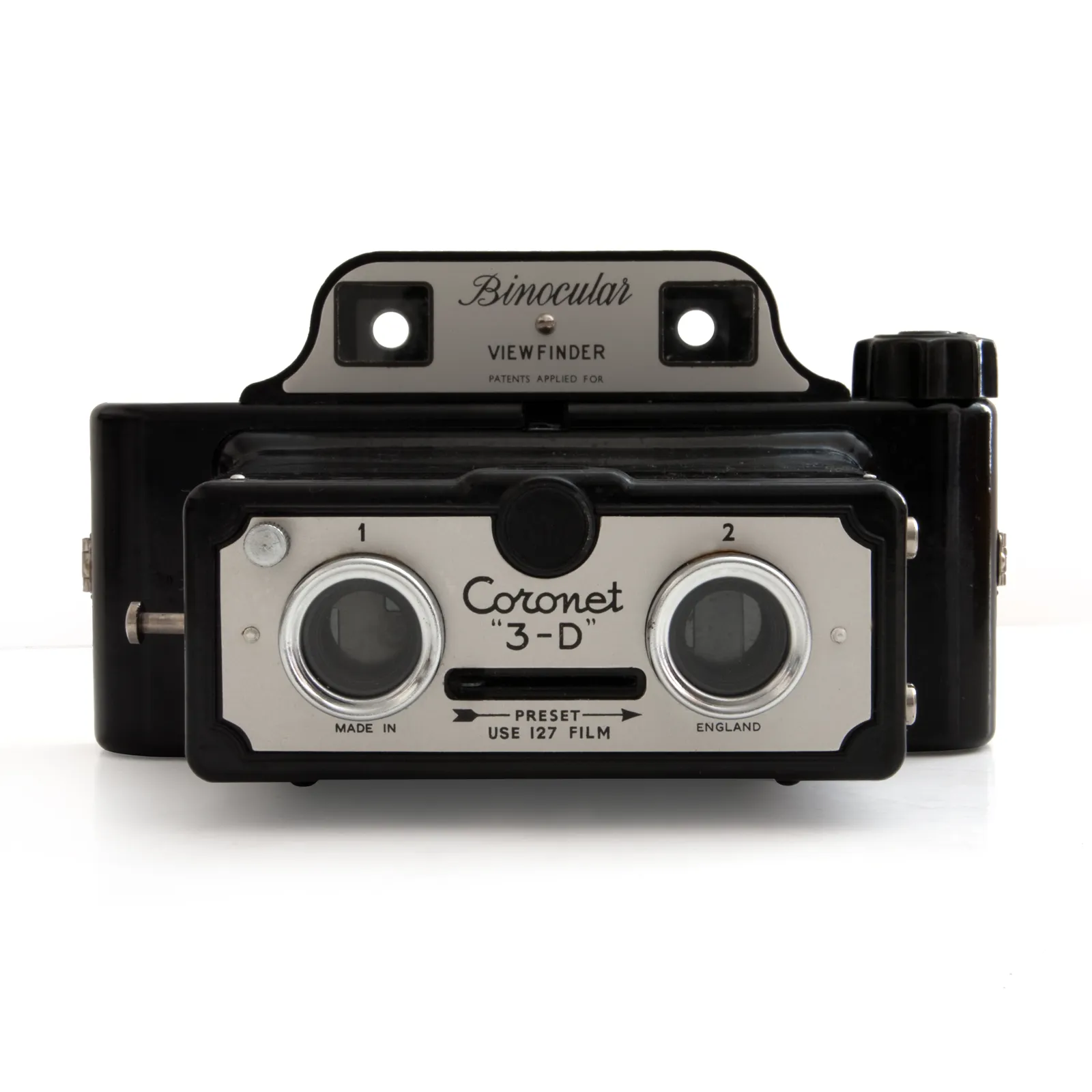
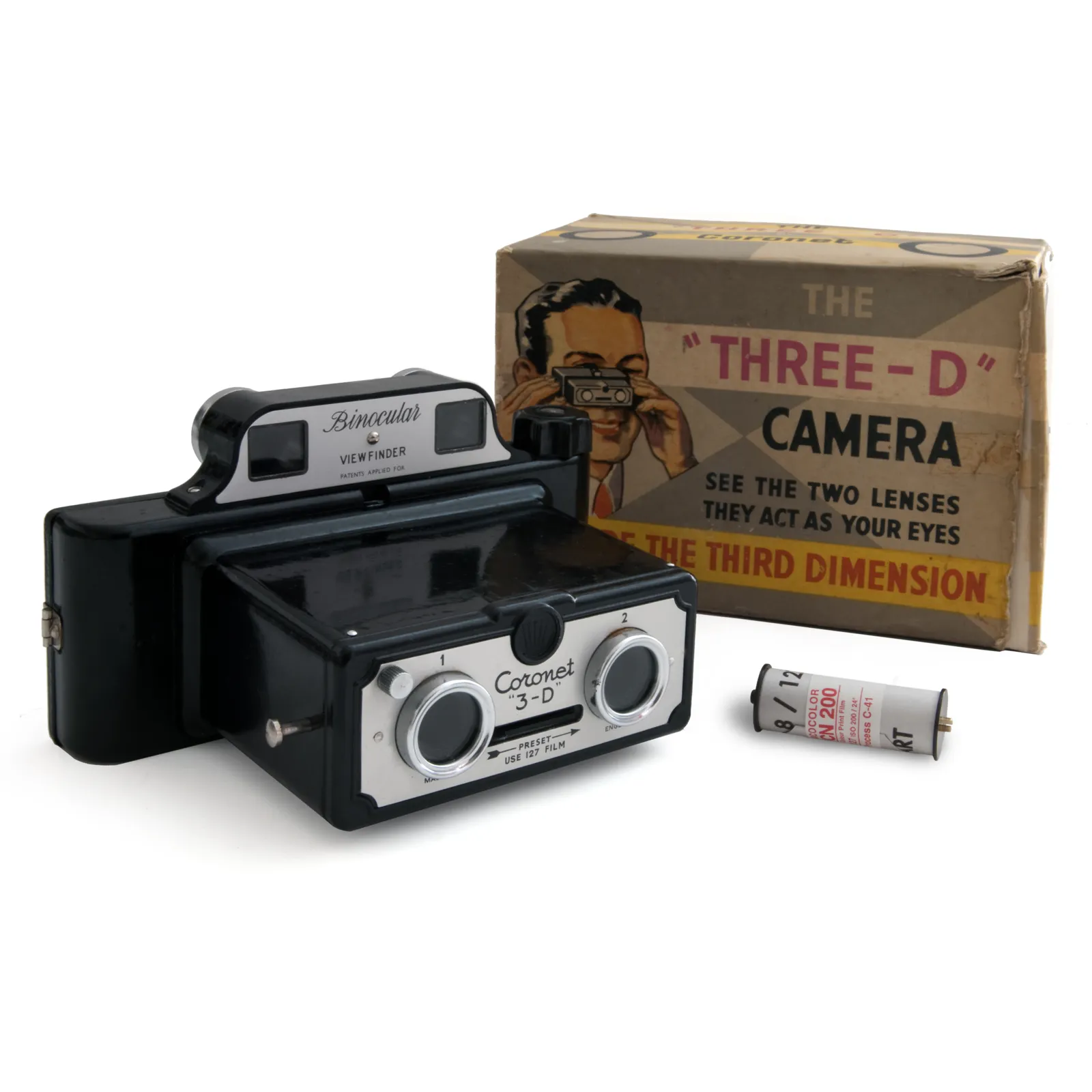
Coronet also tried original ideas, such as a cheap camera for 3D pictures in the early 1950s, when stereo photography was fashionable again.
1960–1967
The end of the cheap British camera
In the 1960s Kodak’s Instamatic of 1963, easy to load with its cartridge, and cheap cameras from Japan and Hong Kong took over the market. Coronet launched a few last models, such as the Coromatic of 1964.
Coronet stopped making cameras around 1967. Its cameras are still common today and can be found cheaply, but its colourful Midgets have become sought-after collector’s items.
Coronet at the 99 Cameras Museum
The bakelite Coronet Midget, as small as a matchbox, is in the showcases of the museum in Paris. You can see it, and the other cameras of this story, in our online collection.
See the Coronet cameras of the collection
Sources. Wikipedia article on the Coronet Camera Company, Camera-wiki, Grace’s Guide, Historic Camera, the DrCoronet history site. Some anecdotes come from oral tradition and are told as such.
Plan your visit
Visit is free and open to all
- Opening hoursMonday – Saturday : 10 – 17:30
- AddressStudio Harcourt, 6 Rue de Lota, 75116 Paris
- Exceptional closuresThursday, 26 November 2026