The adventure of the brands
The Kiev story
- Founded in 1764Ukraine
- No longer makes cameras
An arsenal founded in the 18th century, a German camera factory taken to Ukraine after the war, Contax cameras with a new name, a “Hasselbladski”, cameras that flew around the Moon and a spy camera in a cigarette pack: the Kiev story, told through its inventions and its anecdotes.
1764–1945
An arsenal on the hill
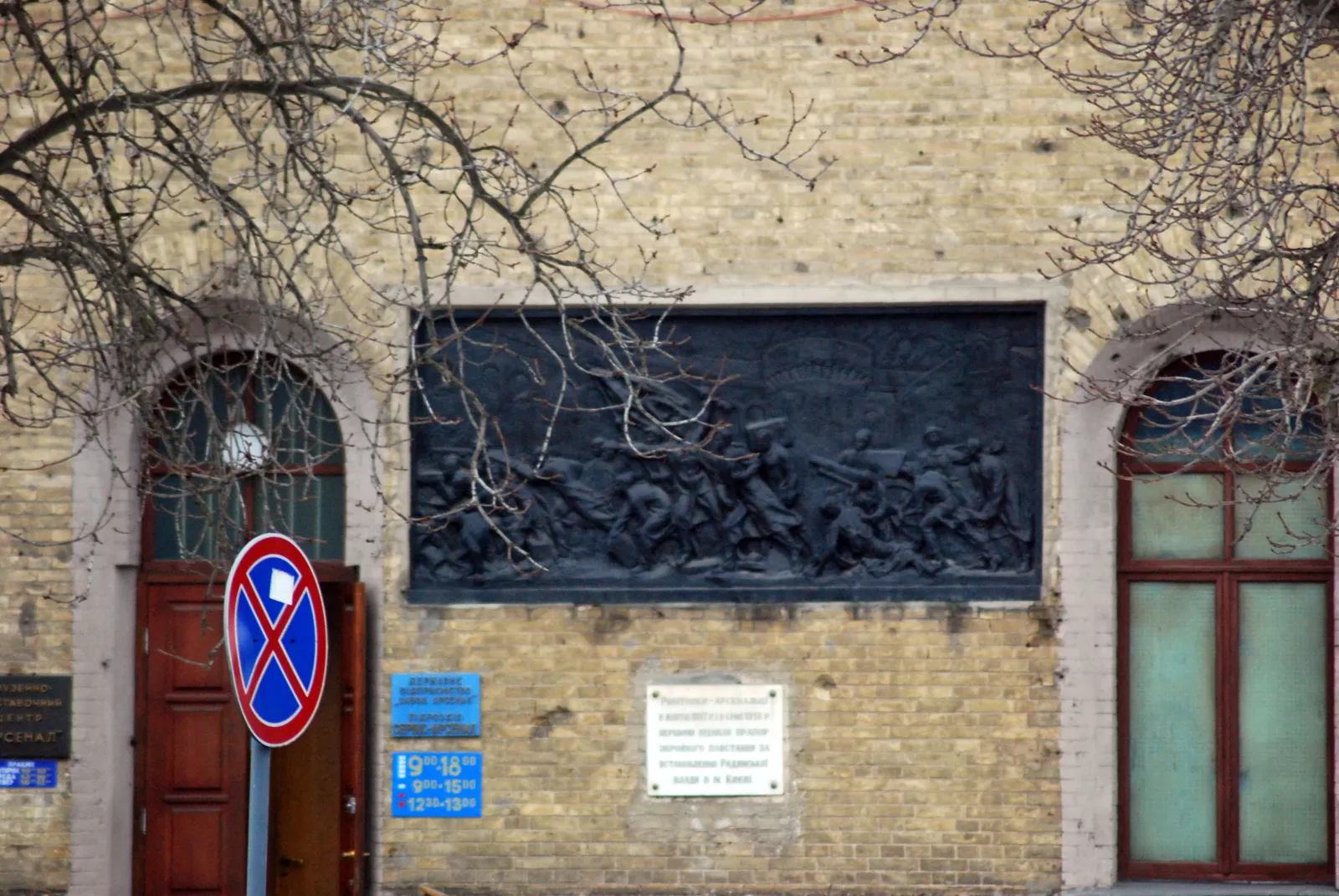
The Arsenal of Kyiv was founded in 1764, under the Russian Empire, to make and repair weapons for the army. For almost two centuries it was a military factory on the hills above the Dnieper river, in the Pechersk district.
In the 20th century the Arsenal became a large Soviet factory for military equipment and precision instruments. It was during the Second World War that its history crossed that of German photography.
1945–1947
A factory moved from Dresden
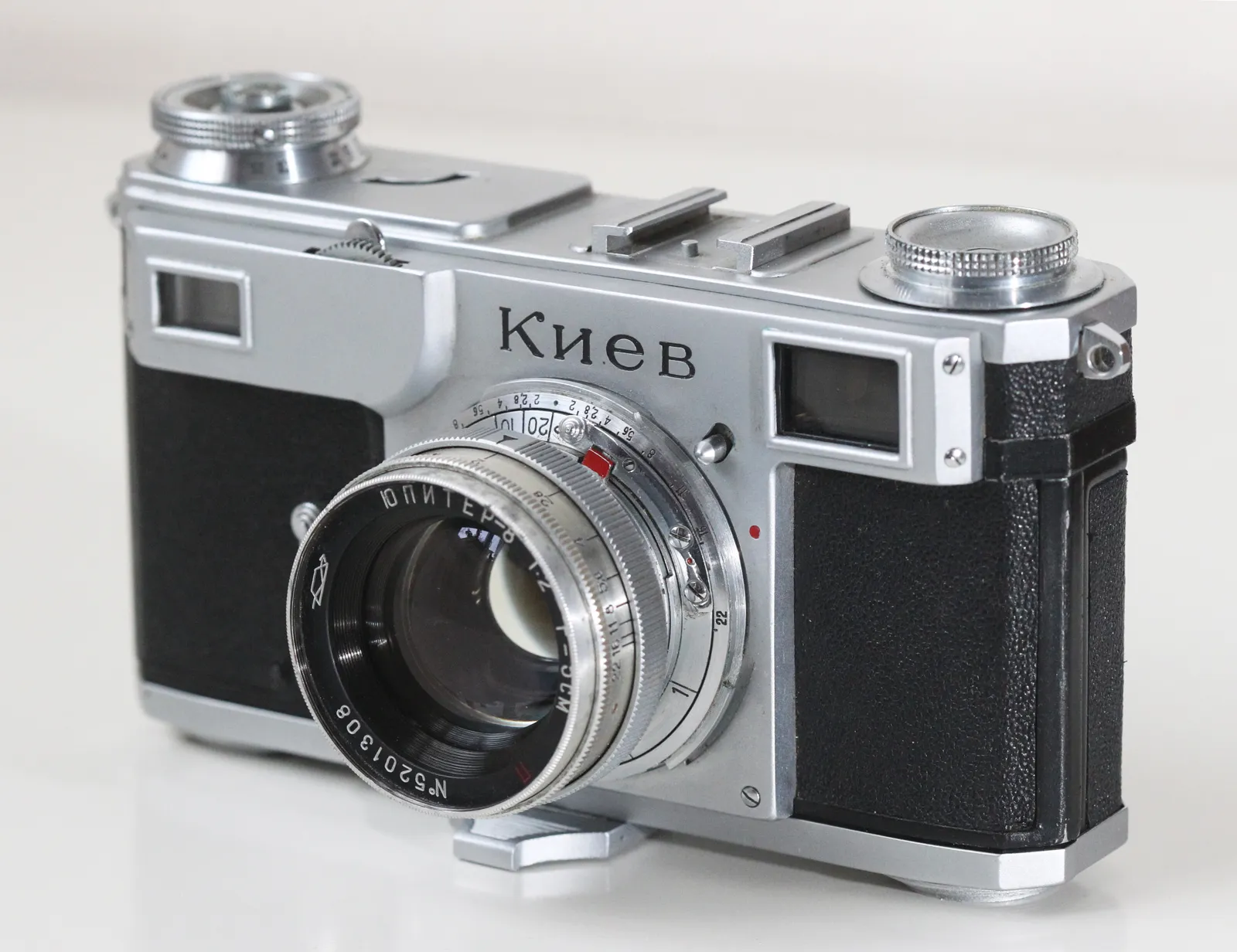
In the museum
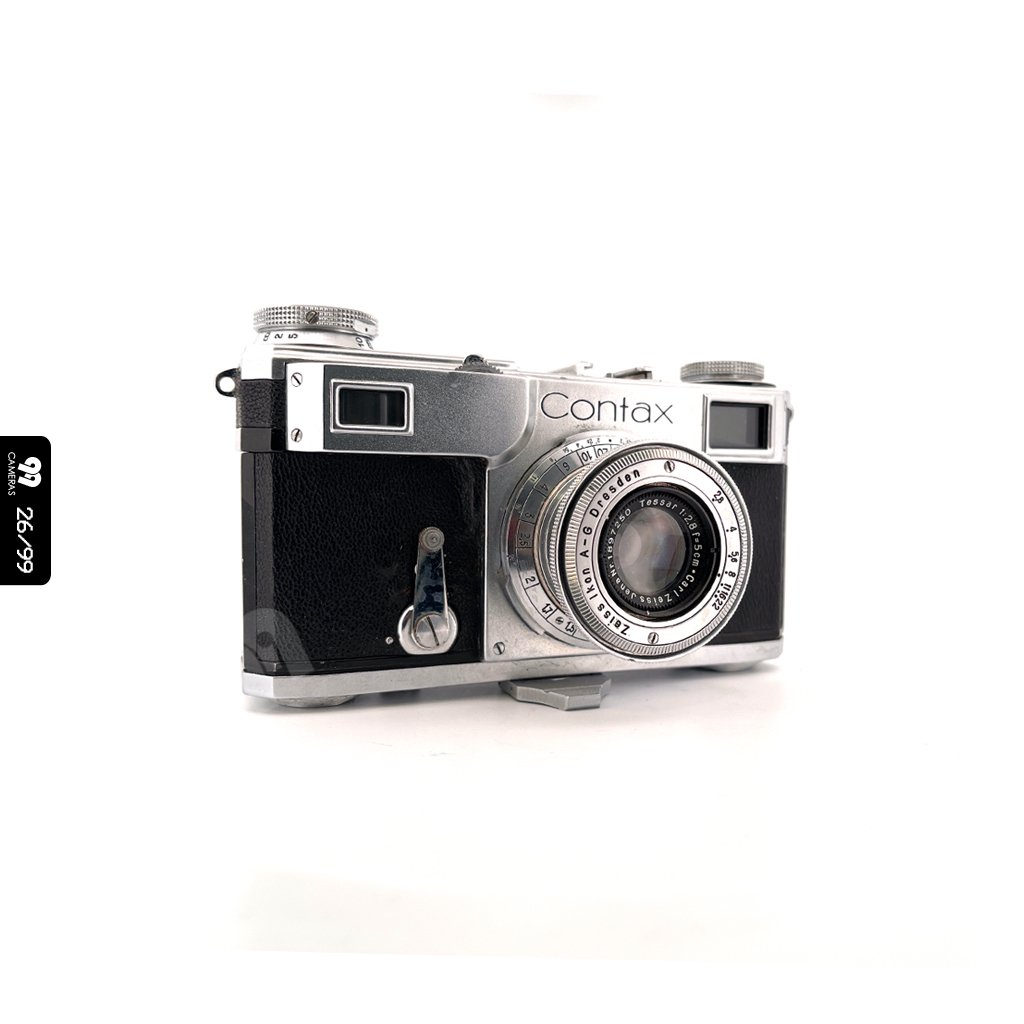
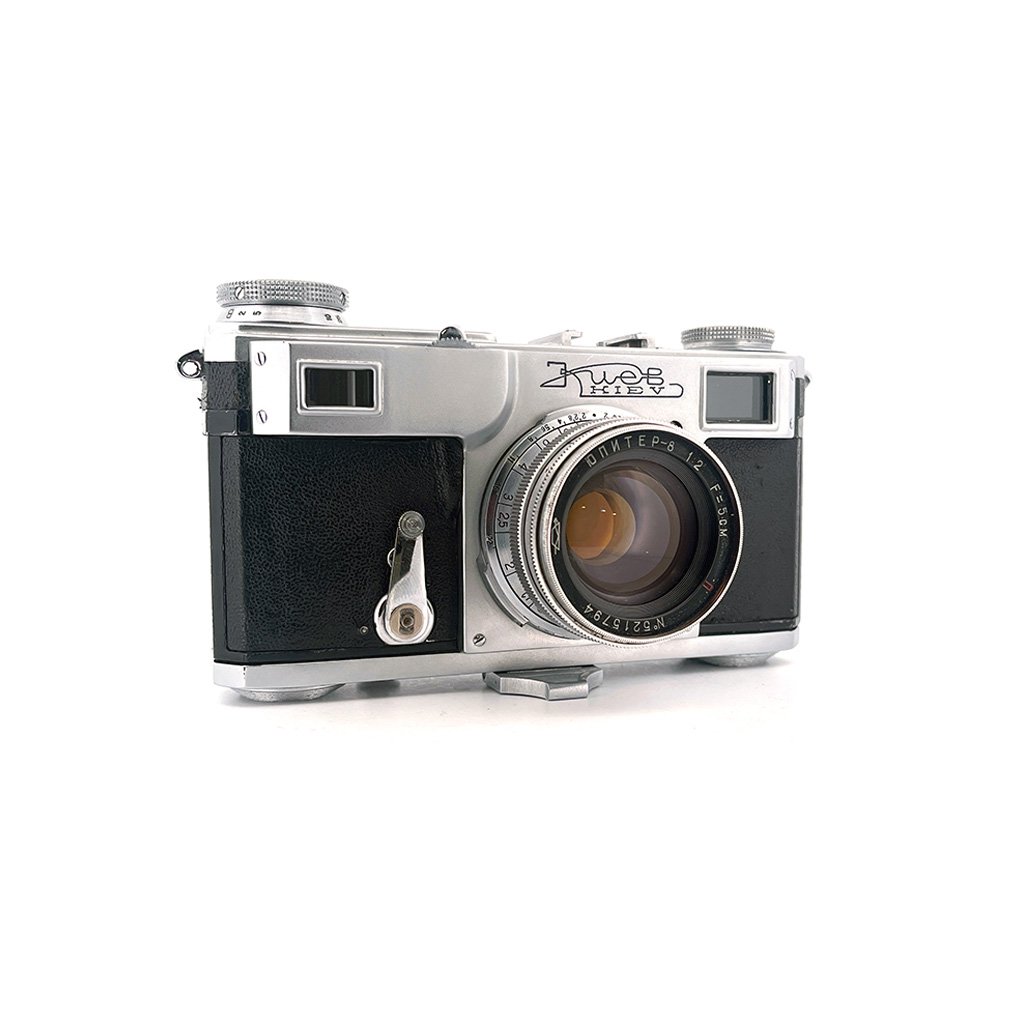
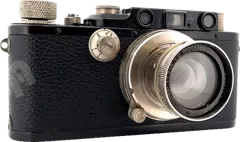
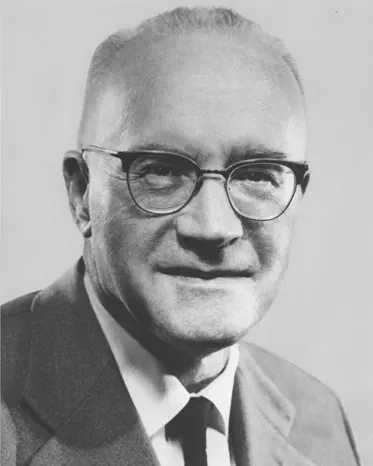
At the end of the war, Dresden was in the Soviet zone of Germany. The Zeiss Ikon factories had been heavily damaged, but the tools to make the Contax II and III, the great rangefinder cameras of the 1930s, had survived. The Soviet Union took them as war reparations.
Trial cameras were made in Germany in 1946, then everything was moved to Kyiv, with German technicians to teach the Soviet workers. In 1947 the first camera came out of the Arsenal: the Kiev. The first ones were made largely with Contax parts.

1947–1987
Forty years of Contax
In the museum
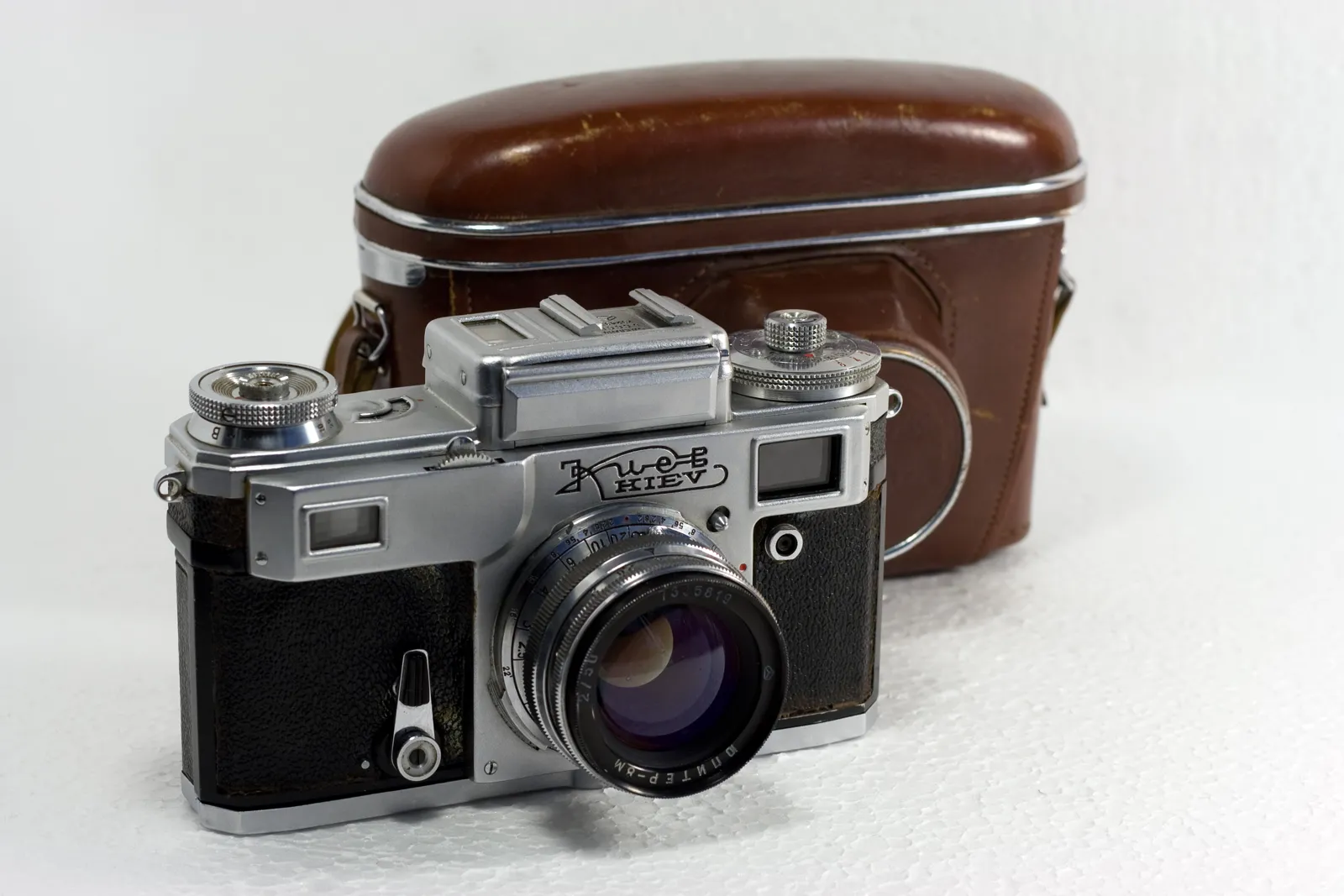
The Kiev II and Kiev III were soon made entirely in Ukraine. Production rose to 15,000 cameras a year, and in 1957 came the Kiev 4, which was made with few changes until 1987. Their lenses, such as the Jupiter-8, were Soviet versions of the Zeiss Sonnar designed by Ludwig Bertele.
Because they kept the Contax bayonet, Kiev cameras could use Zeiss lenses, and Contax cameras could use Soviet lenses. For photographers in the East, and later for amateurs in the West looking for a good, inexpensive camera, the Kiev was a Contax within reach.
1957–1990s
The “Hasselbladski”
In the museum
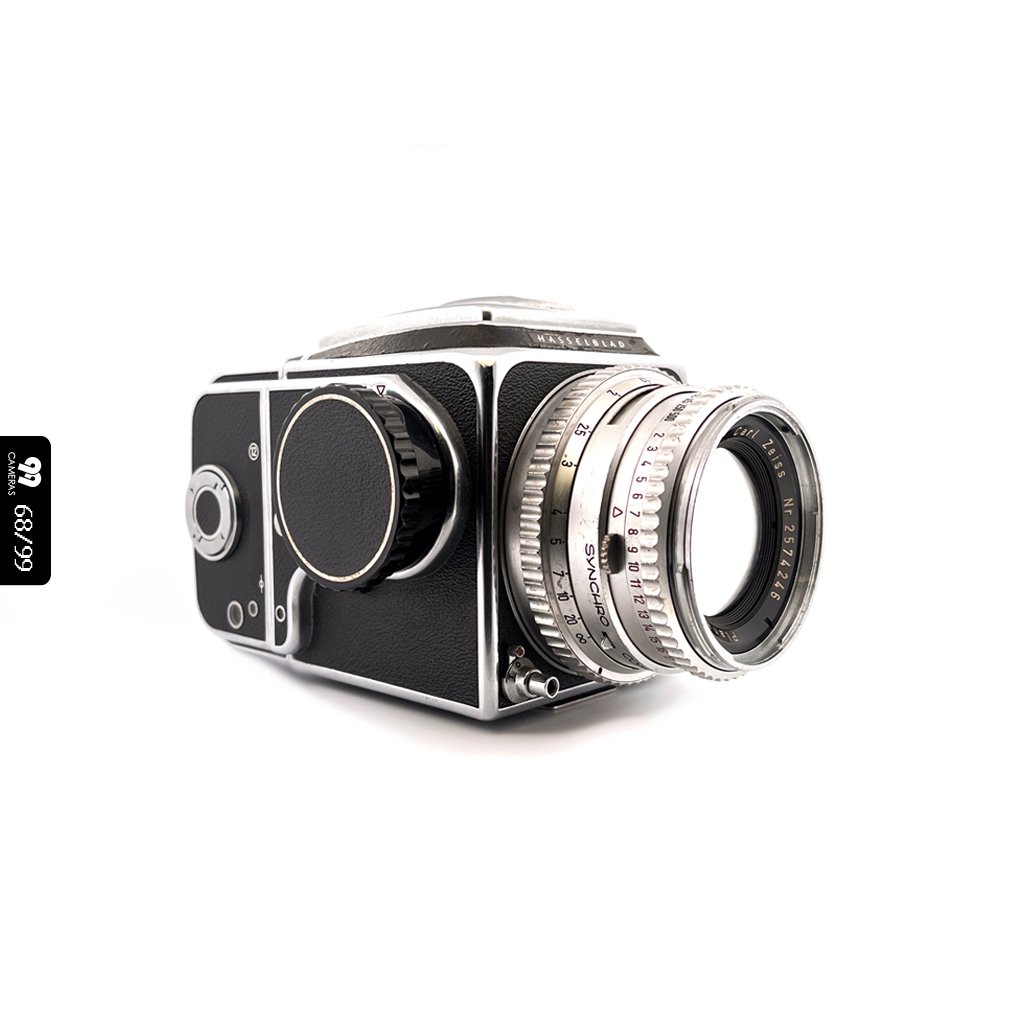
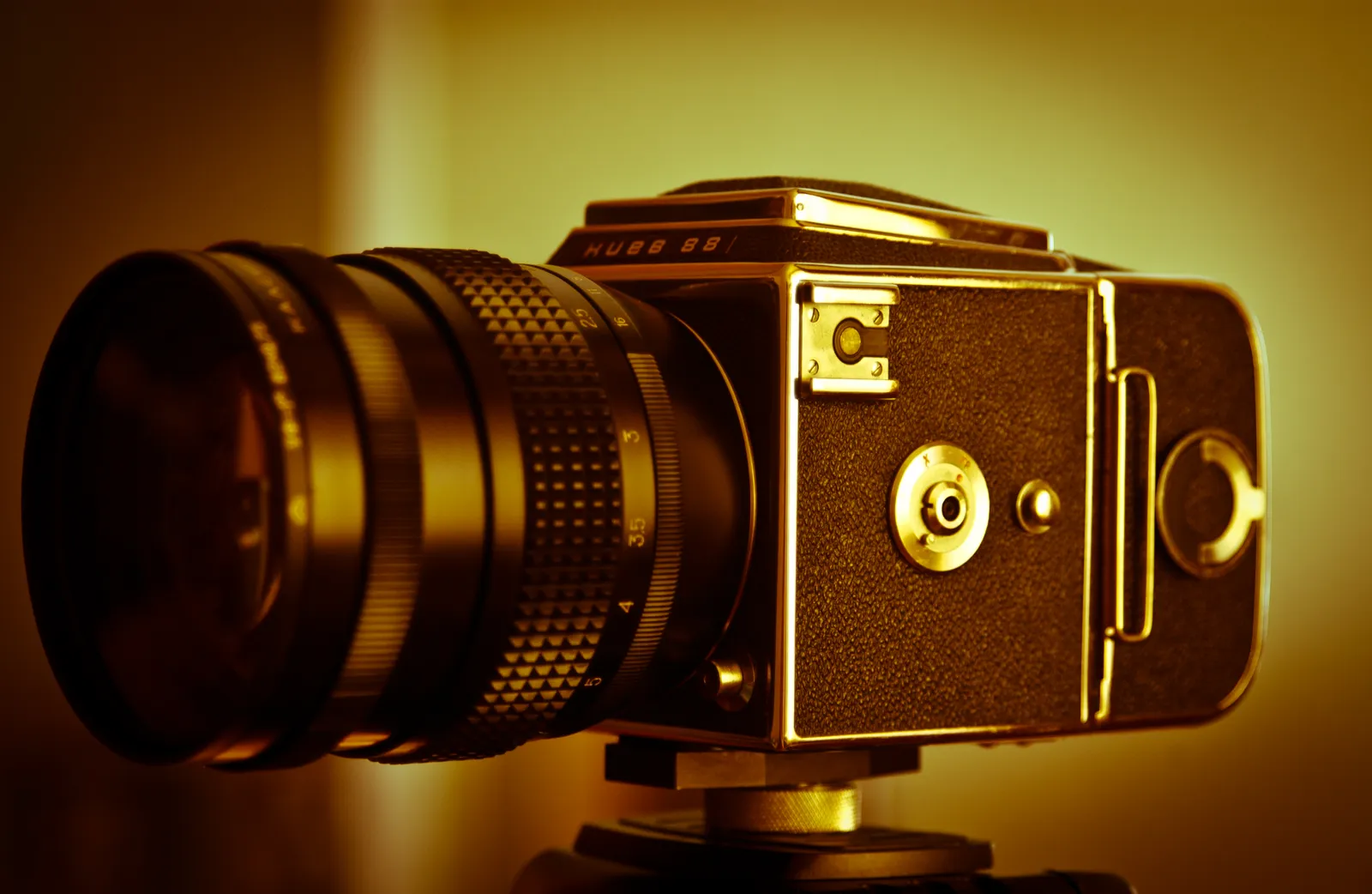
The Arsenal did not only continue the Contax. In 1957 it began to make the Salyut, a medium-format reflex camera modelled on the Swedish Hasselblad 1600F, with interchangeable lenses and film magazines. Western photographers nicknamed it the “Hasselbladski”. It later became the Kiev 88.
In 1964 the Arsenal launched the Kiev 10 Automat, one of the first reflex cameras with automatic exposure, with an unusual metal shutter shaped like a fan. Soviet engineers were not only copying: they also tried original ideas.
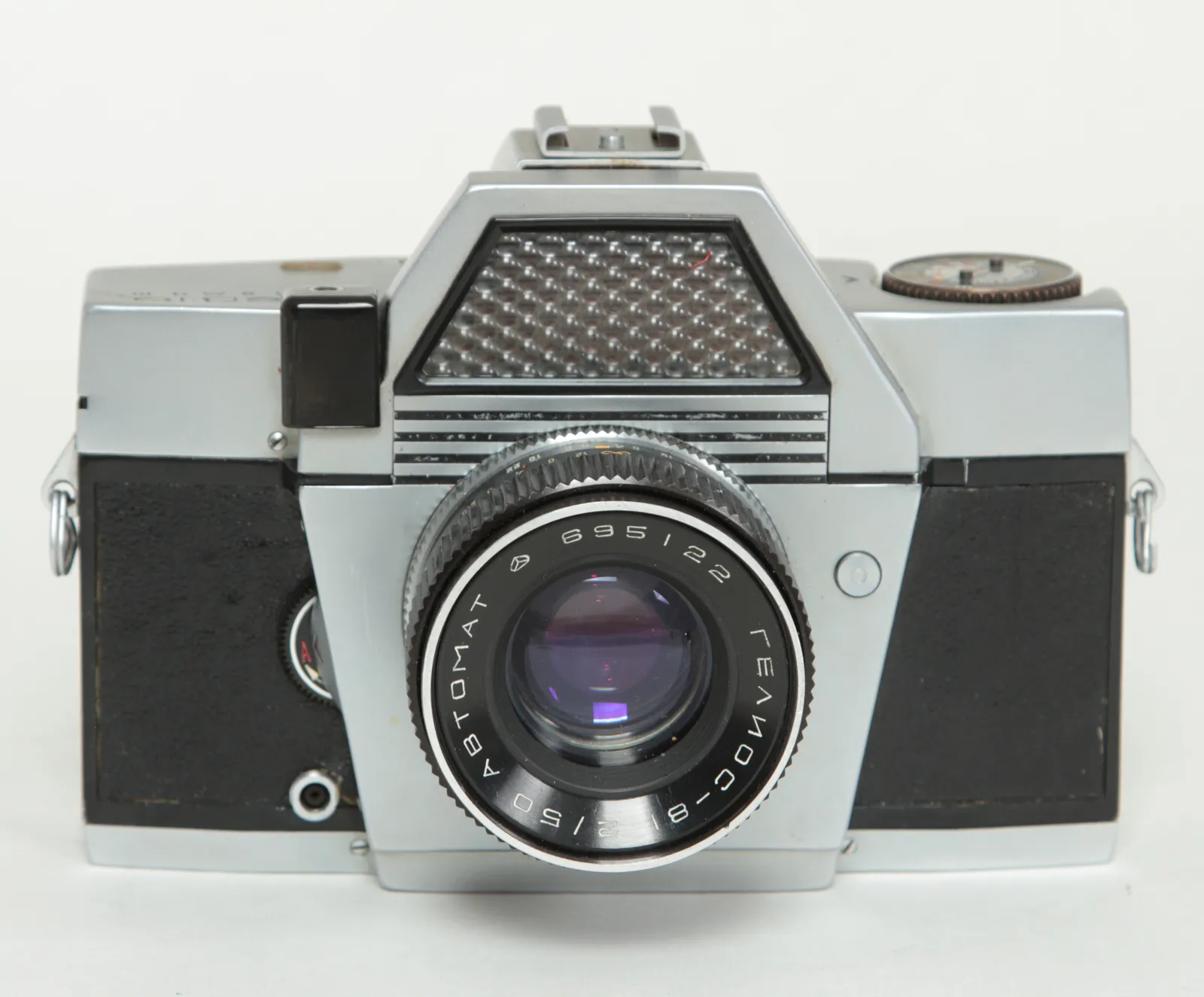
1960s–1970s
Around the Moon

Kiev cameras also took part in the Soviet space programme. A modified version of the Kiev 6S medium-format camera, the Kiev-C SKD, was designed to photograph the Earth and the Moon from unmanned Zond spacecraft.
In 1969 the Zond 7 probe flew around the Moon and came back to Earth with photographs of the Moon and of the Earth seen from space. While Hasselblads went to the Moon with the American astronauts, Kiev cameras flew around it for the Soviet Union.
1970s–2009
A camera in a cigarette pack
In the museum
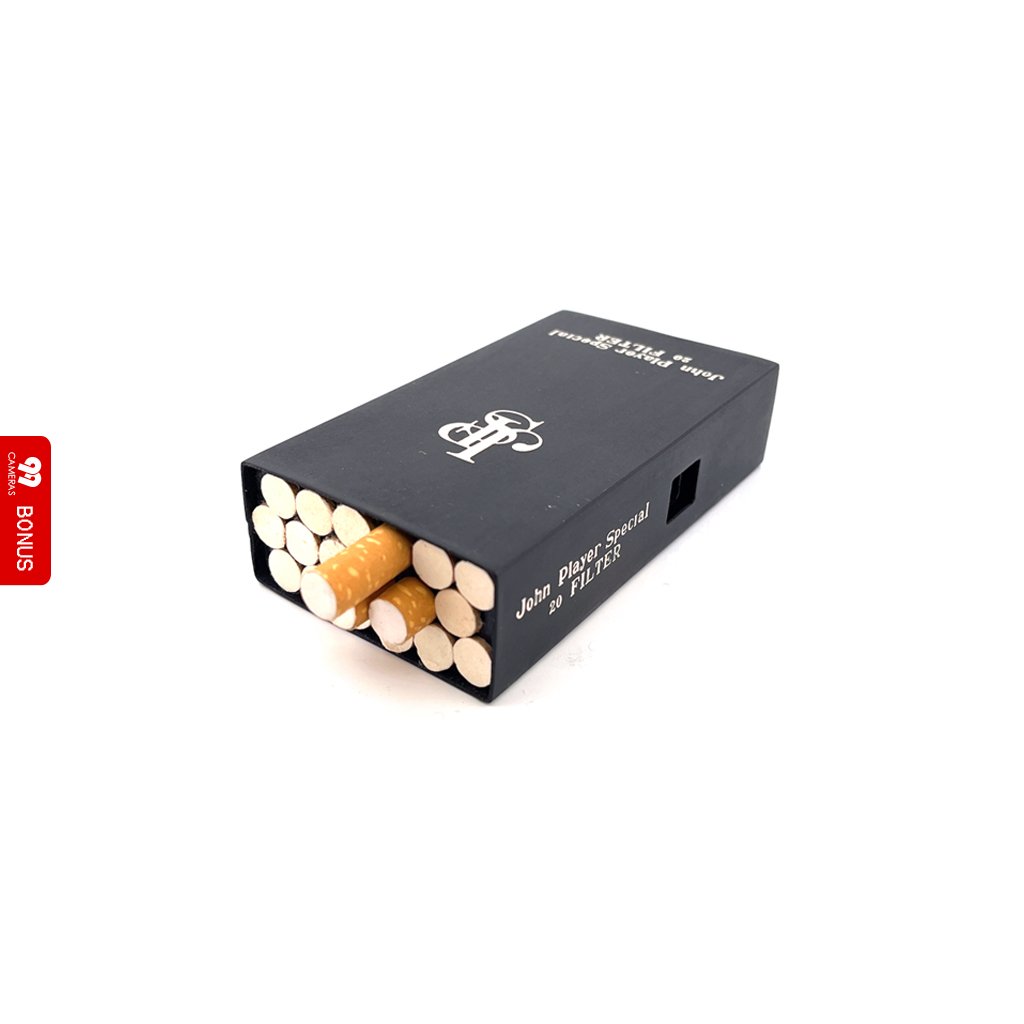
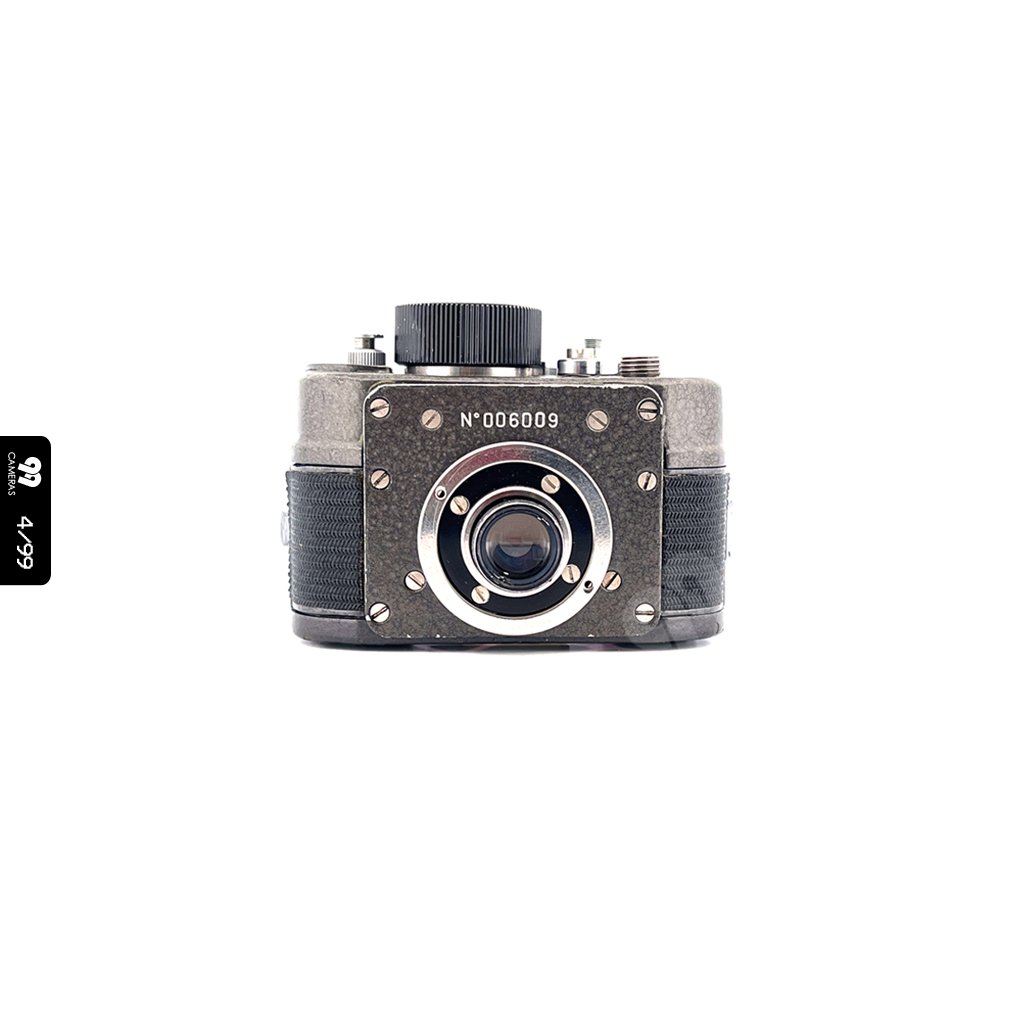
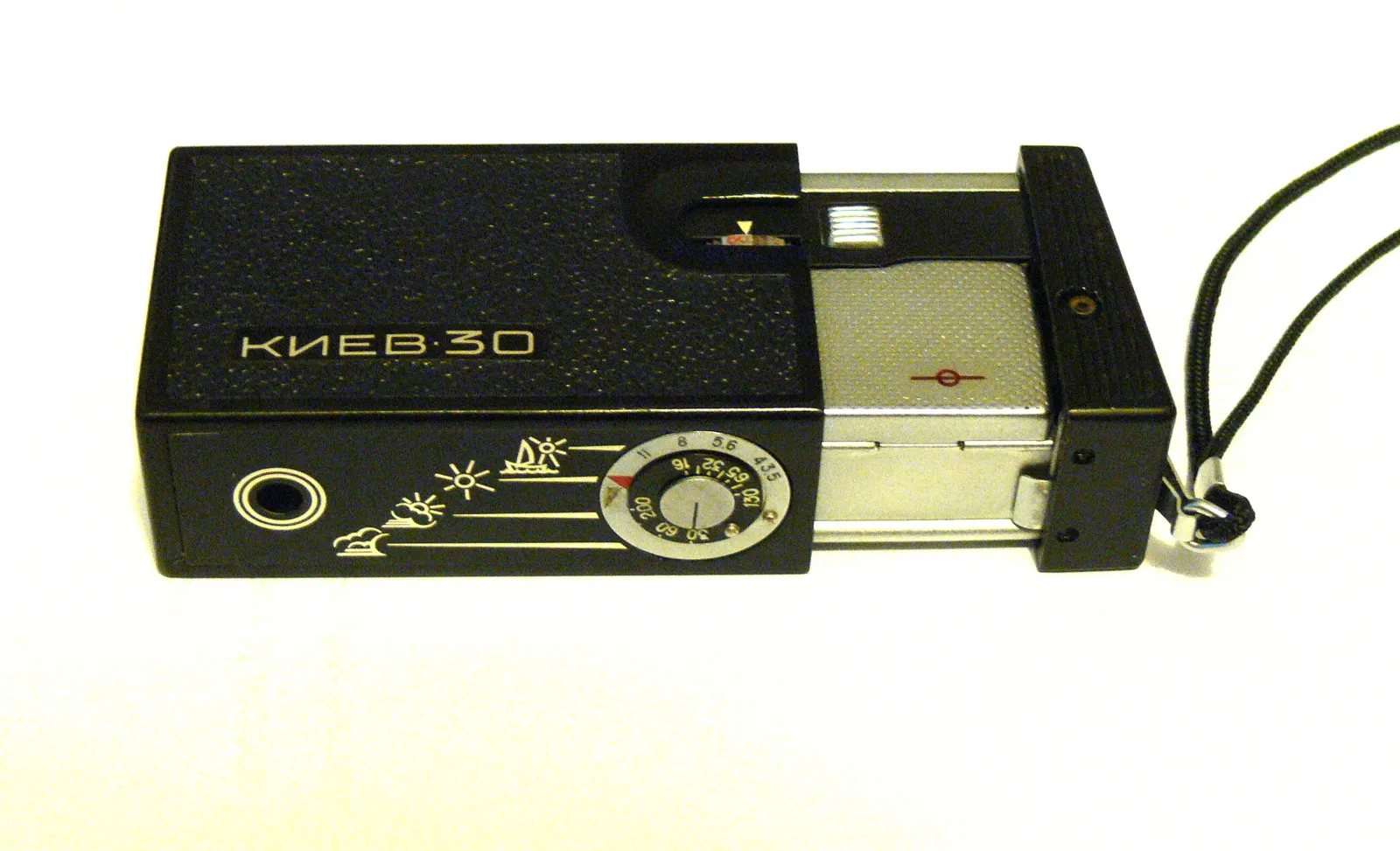
From the 1970s the Arsenal also made tiny cameras, such as the Kiev 30, for 16 mm film. In 1978 a version of the Kiev 30 was hidden inside a pack of “John Player Special” cigarettes, a British brand. It was presented as a KGB spy camera; it was more probably an amusing and expensive souvenir for Western visitors.
After the end of the Soviet Union in 1991, the Arsenal kept making cameras for a while, mostly for photographers in the West. In November 2009 the closure of the camera production was announced, after 245 years of activity at the Arsenal. The Kiev cameras became collectors’ items.
Kiev at the 99 Cameras Museum
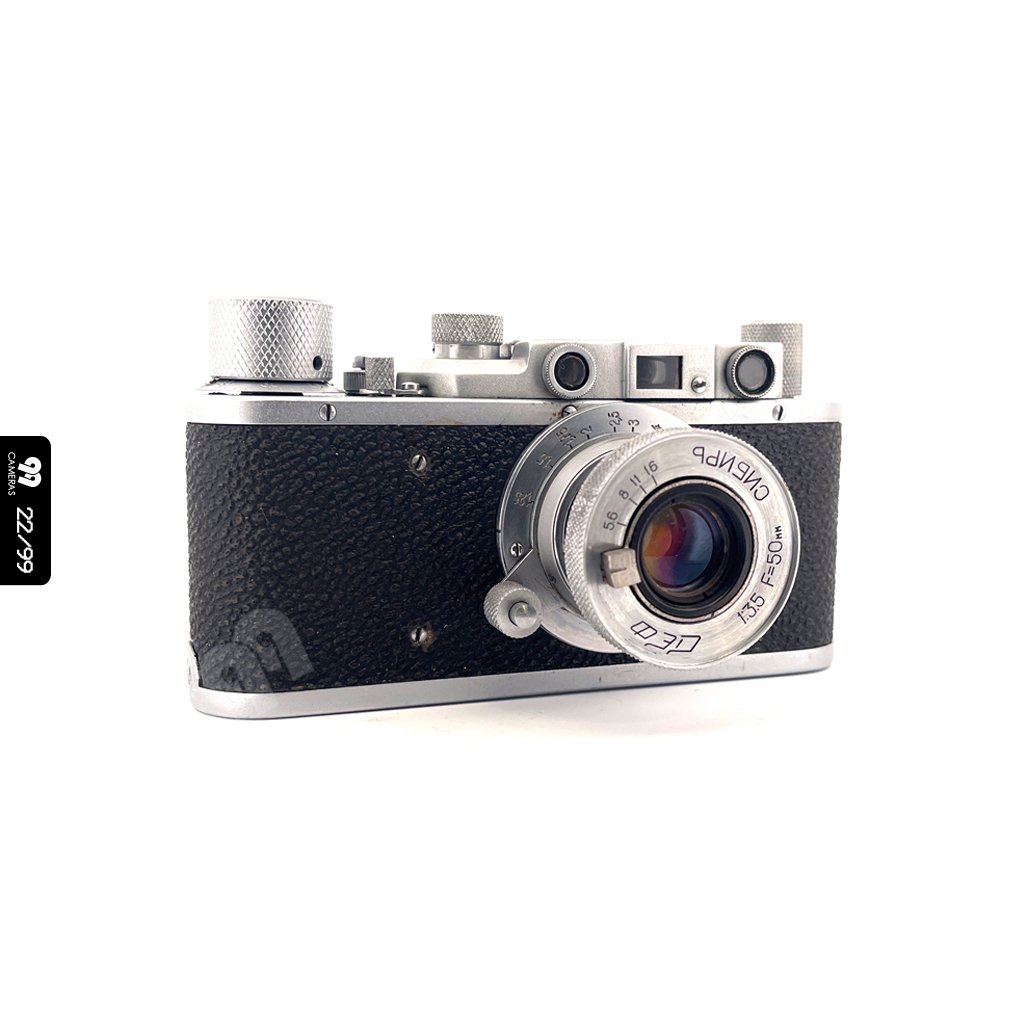
The Kiev II of 1947, direct heir of the Contax, and the Kiev 30 hidden in a pack of “John Player Special” cigarettes are in the showcases of the museum in Paris. You can see them, and the other cameras of this story, in our online collection.
See the Kiev cameras of the collection
Sources. Wikipedia articles on the Kiev brand and the Arsenal factory, Crypto Museum, Digital Camera World and Emulsive articles on the Kiev 88. Some anecdotes come from oral tradition and are told as such.
Plan your visit
Visit is free and open to all
- Opening hoursMonday – Saturday : 10 – 17:30
- AddressStudio Harcourt, 6 Rue de Lota, 75116 Paris
- Exceptional closuresThursday, 26 November 2026