The adventure of the brands
The Minox story
A self-taught inventor from Riga, a camera smaller than a finger, a factory that made radios, a flight across a continent at war, spies on both sides of the Iron Curtain, James Bond and a miniature Leica: the Minox story, told through its inventions and its anecdotes.
1905–1936
A self-taught inventor

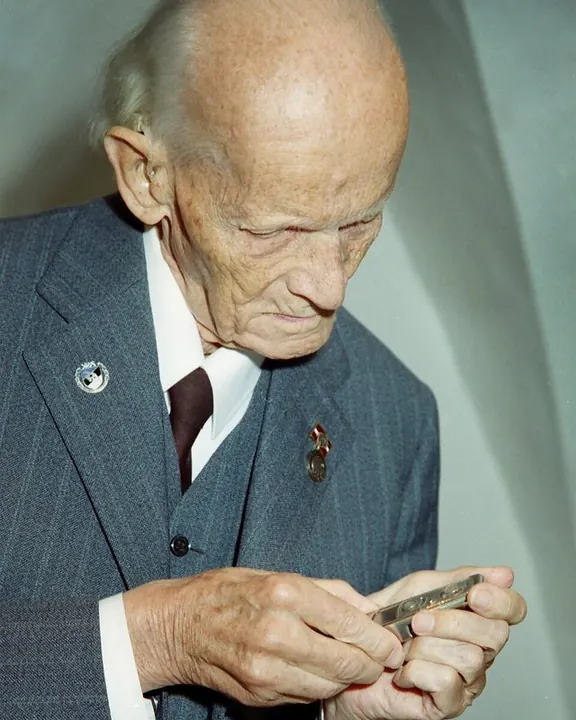
Walter Zapp was born in Riga in 1905, when Latvia was still part of the Russian Empire, to a Baltic German mother and a British father. He had no engineering degree. He learned by doing, and he had a gift for small, precise mechanisms.
In the early 1930s, living in Tallinn, in Estonia, he had an idea: a camera so small that it could always be carried, in a pocket or a hand, ready to take a picture at any moment. He started with wooden models, and in 1936 he built a working prototype, with the money and support of a friend, Richard Jürgens.
The people
1936–1940
Made by a radio factory
In the museum
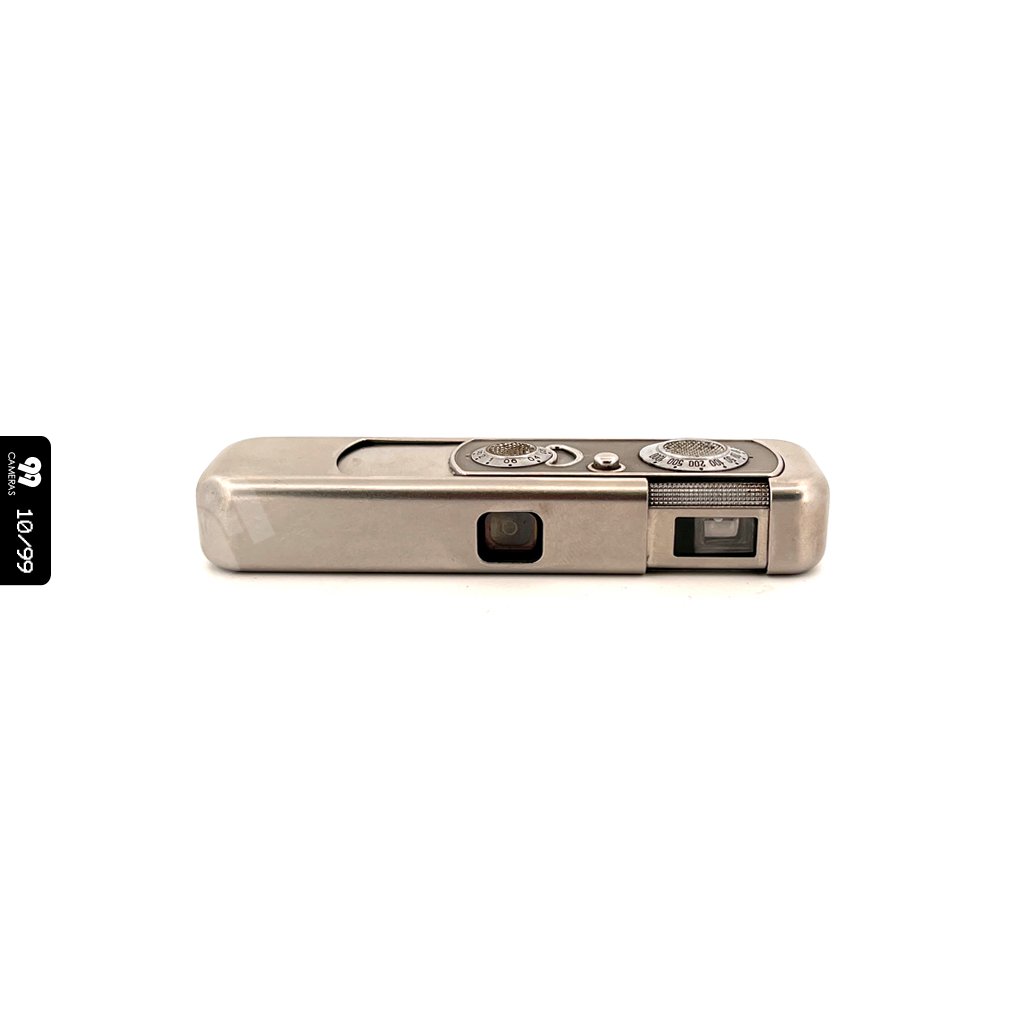
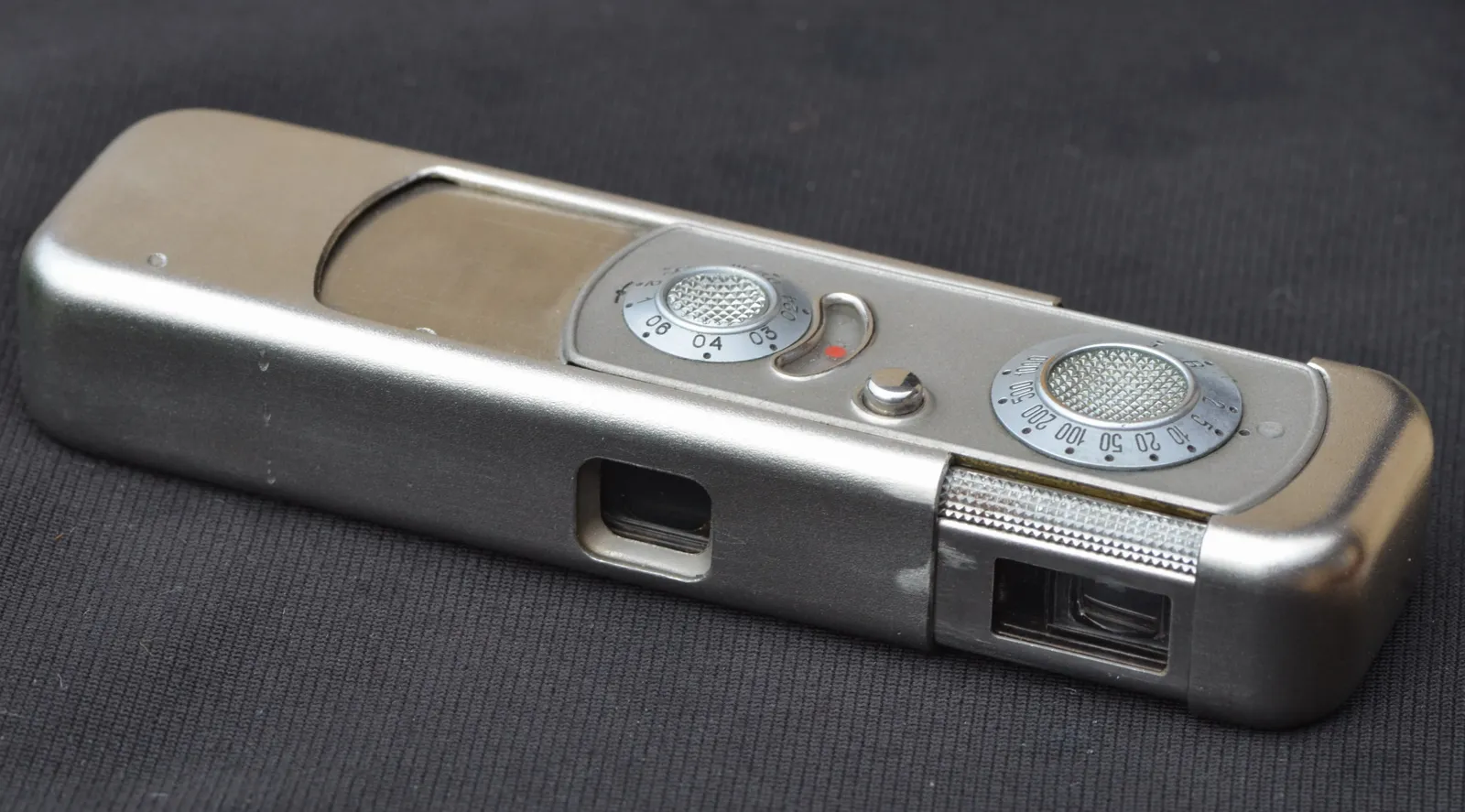
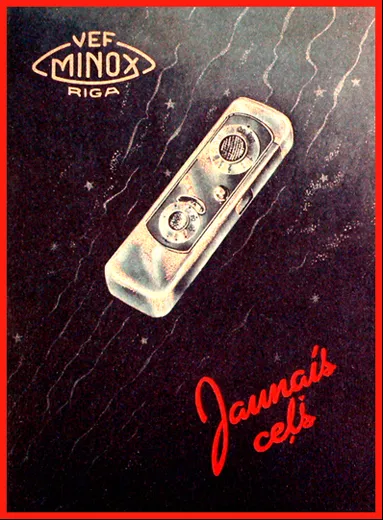
No camera maker in Estonia could build it, so Jürgens took the project to VEF, the Latvian state electrical factory in Riga, which made radios, telephones and even aircraft. VEF bought the rights, and in 1938 the Minox went on sale. It was made of stainless steel and had a sharp little lens, the Minostigmat, and shutter speeds up to 1/1000 s.
The Minox was a luxury object, as expensive as a good full-size camera, and it was sold around the world, from Europe to the United States. VEF made about 17,000 of them in a few years.
1940–1948
Across a continent at war
In 1940 the Soviet Union occupied Latvia and nationalised VEF. In 1941, like many Baltic Germans, Zapp left for Germany, taking his prototypes and the first production camera with him. Riga was then occupied by Germany, and the war swept over the region.
After the war Zapp started again in West Germany. In 1945 he founded a new company, Minox GmbH, near Wetzlar, the town of Leica, and from 1948 it made a redesigned camera, the Minox II, followed by the Minox A. The Riga camera was born again in Germany.
1948–1990
The spy camera
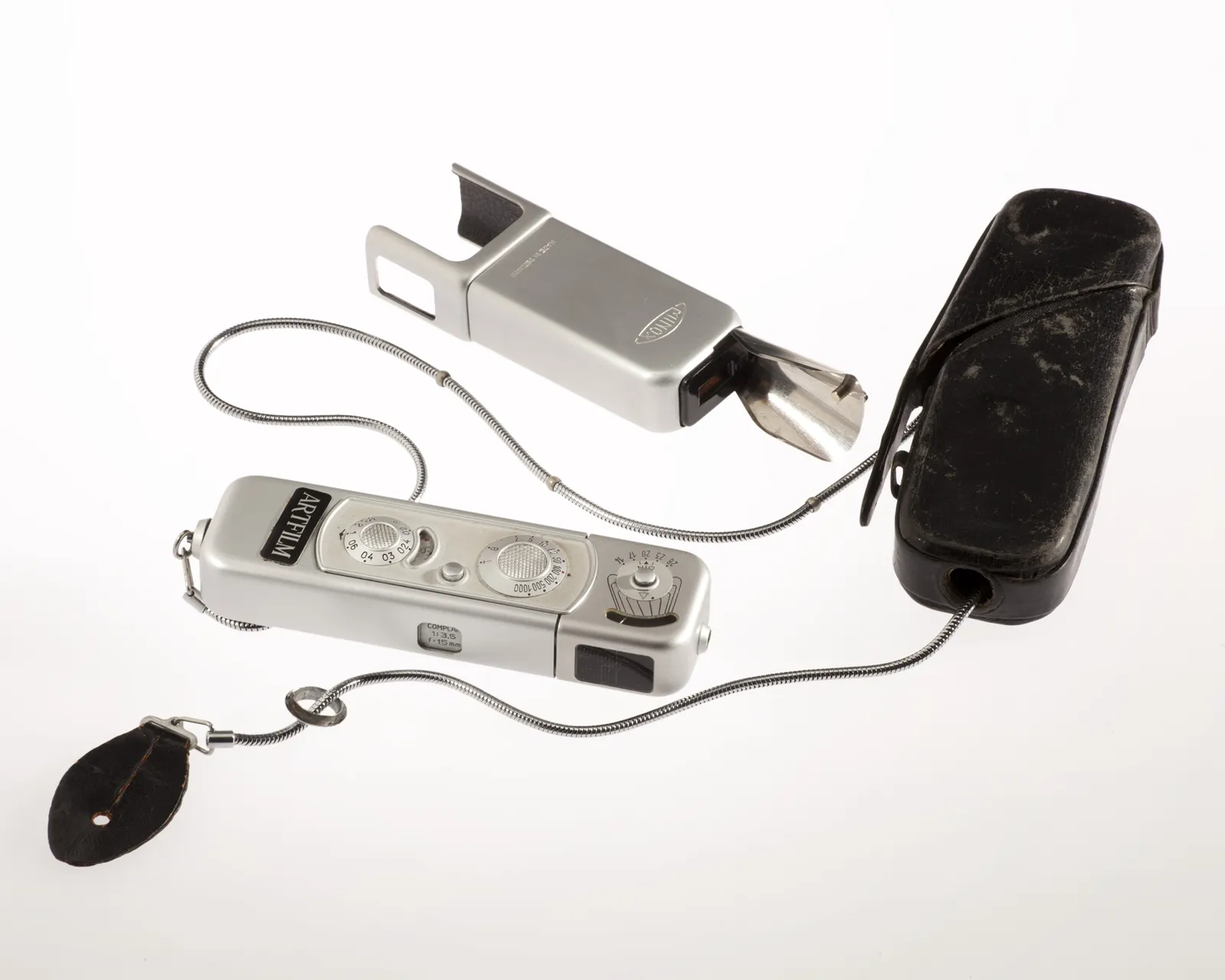
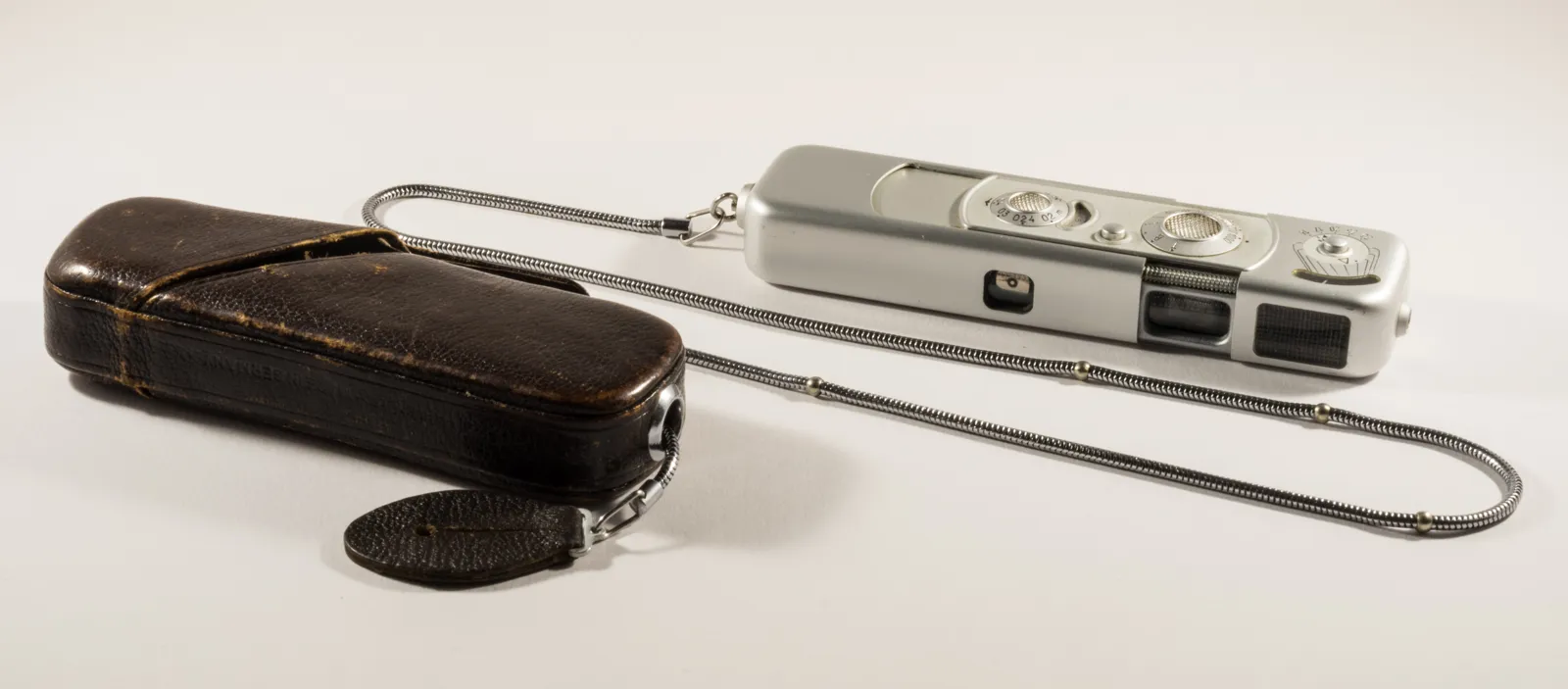
The Minox was made for travellers, but it found another customer: intelligence services. Small, silent and very sharp at short distances, it was perfect for photographing documents. During the Cold War, the CIA, the KGB, MI6 and many other agencies used it, especially the Minox B and C.
Real spies used it too. In the United States, the navy officer John Walker, who sold secrets to the Soviet Union for almost twenty years, photographed documents with a Minox. The camera also became a cliché of spy films: James Bond uses one in On Her Majesty’s Secret Service (1969).
1974–1995
The smallest 35 mm
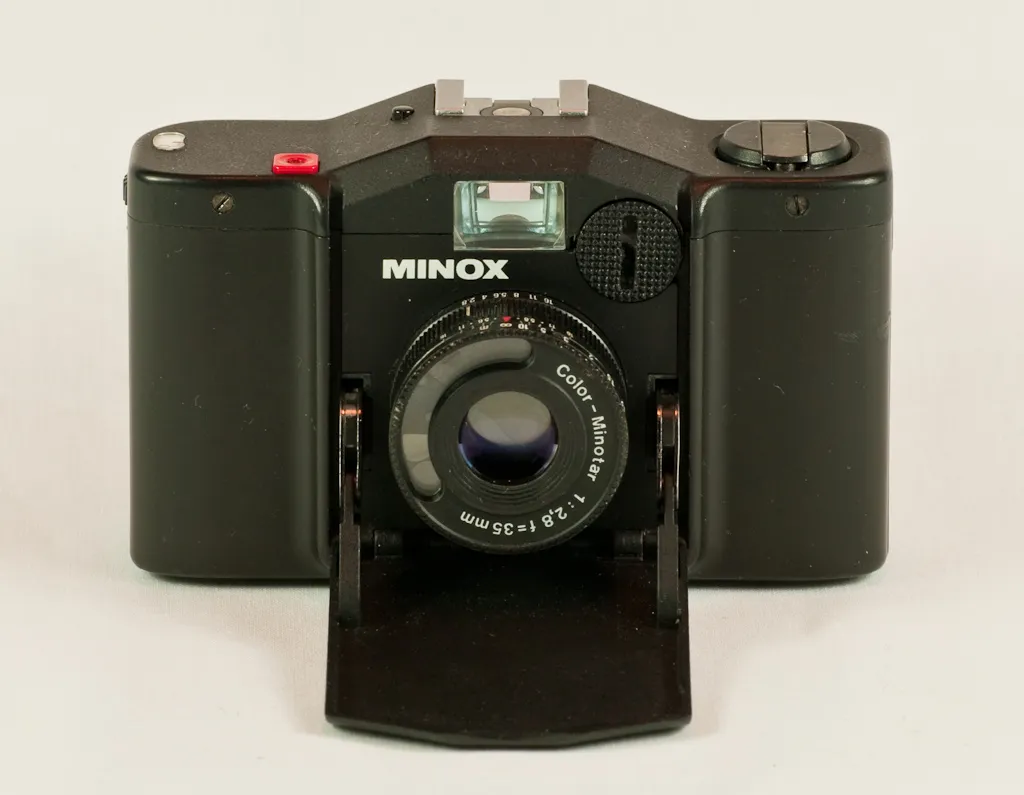
Minox wanted to reach a wider public with normal 35 mm film. In 1974 it launched the Minox 35 EL, a camera for 24 × 36 mm film that was the smallest of its kind in the world when it came out. A small flap folded down to uncover the lens, and the automatic exposure did the rest.
The 35 series sold well for twenty years and inspired a new generation of compact cameras, while the original Minox, with its tiny film, remained the camera of spies, doctors, engineers and collectors.
1996–2005
A miniature Leica
In 1996 Leica bought Minox, the two companies of Wetzlar joining forces. The partnership did not last: a management buyout in 2001 made Minox independent again, and it separated completely from Leica in 2005.
Minox moved with the times: binoculars, rifle scopes, and small digital cameras. Walter Zapp, honoured in Latvia and Estonia, died in 2003 near Basel, in Switzerland, at the age of 97.
2005–today
The legend of the little camera
Today Minox mainly makes sports optics, binoculars and scopes, but its little camera has kept its legend. Original Minox cameras are sought after by collectors, and a small community still finds and develops the 8 × 11 mm film.
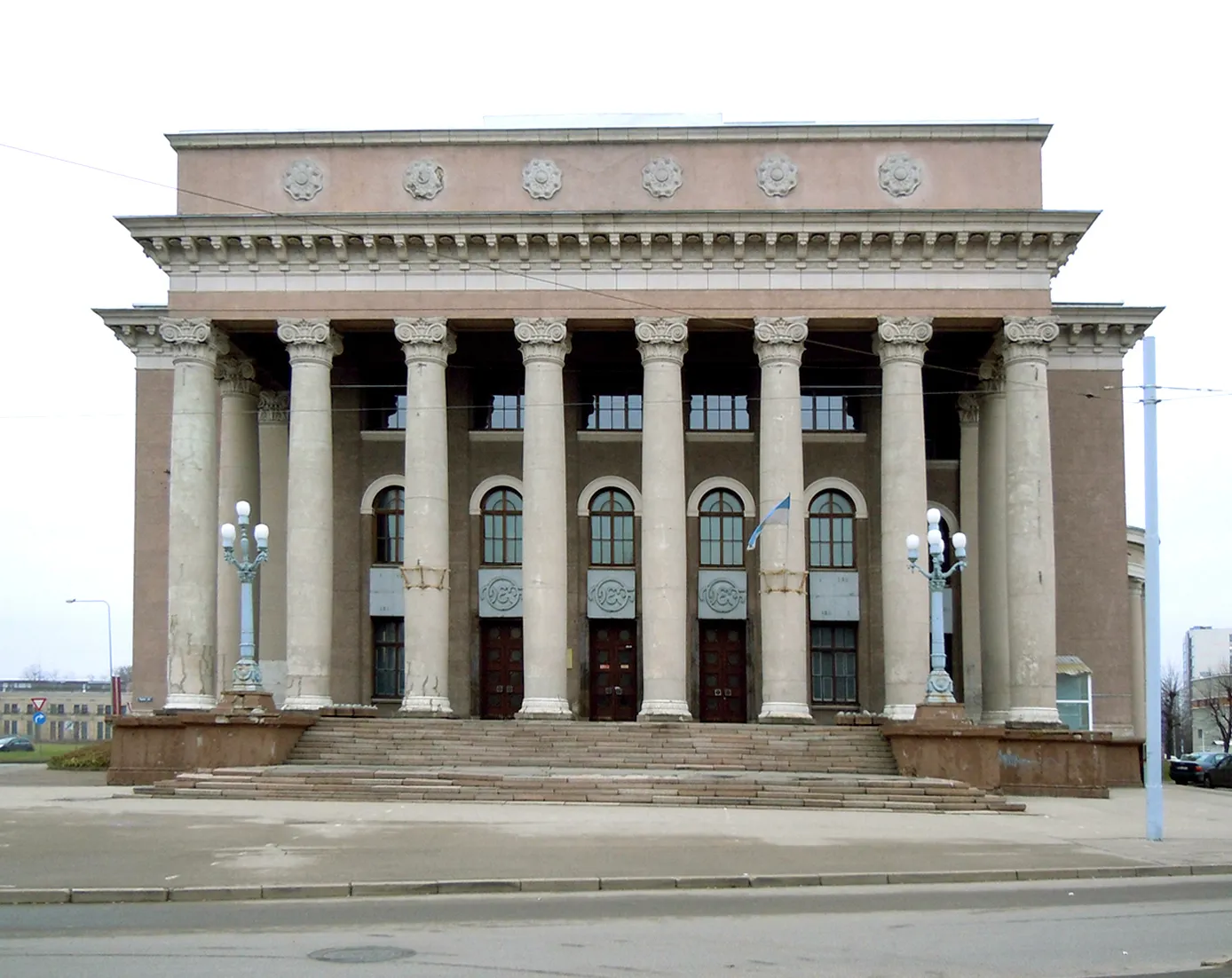
In Riga and Tallinn, Walter Zapp is remembered as one of the great inventors of the Baltic. His house in Tallinn has a plaque, and the VEF factory district in Riga is being reborn as a place for technology and culture.
Minox at the 99 Cameras Museum
The Minox made in Riga in 1938 is in the showcases of the museum in Paris, among the smallest cameras of the collection. You can see it, and the other cameras of this story, in our online collection.
See the Minox of the collection
Sources. MINOX company history (Walter Zapp), Wikipedia articles on Minox and Walter Zapp, Crypto Museum (Minox), CIA Museum, Goethe-Institut Riga. Some anecdotes come from oral tradition and are told as such.
Plan your visit
Visit is free and open to all
- Opening hoursMonday – Saturday : 10 – 17:30
- AddressStudio Harcourt, 6 Rue de Lota, 75116 Paris
- Exceptional closuresThursday, 26 November 2026