The adventure of the brands
The Nikon story
A navy optics maker with German engineers, lenses that a Life photographer took to Korea, a camera built like a tank, cameras on the Moon and under the sea, and a red stripe drawn by a car designer: the Nikon story, told through its inventions and its anecdotes.
1917–1945
Optics for the navy
Nikon was born in 1917 as Nippon Kogaku, “Japan Optical”, when three optical companies merged in Tokyo with the support of the Mitsubishi group. Its first customer was the Imperial Japanese Navy, which needed rangefinders, binoculars and periscopes.
To learn quickly, the company hired eight German engineers, who arrived in 1921 and taught Japanese technicians the art of optical design. From 1932 its camera lenses were called Nikkor, and in 1936 it made the lens and the rangefinder of the first Canon camera. During the war, Nippon Kogaku grew into a huge military supplier.
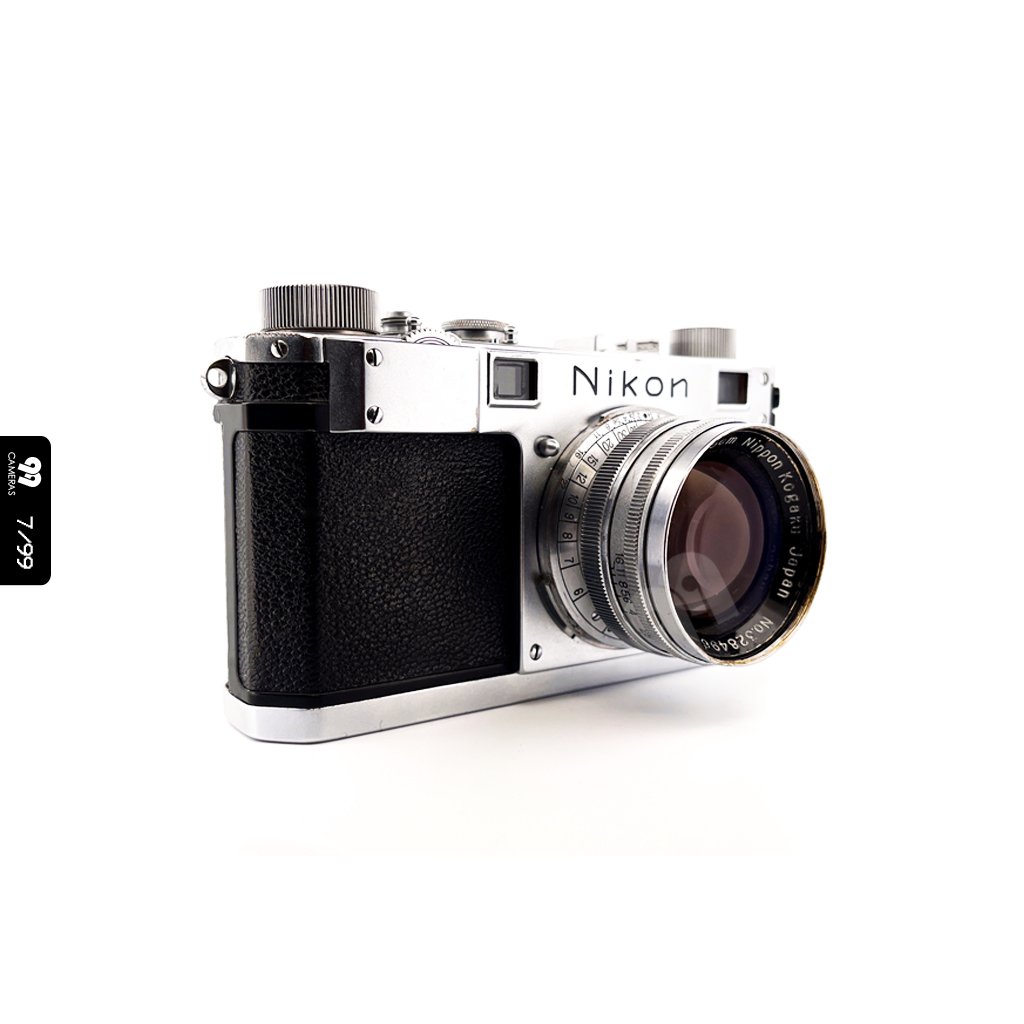
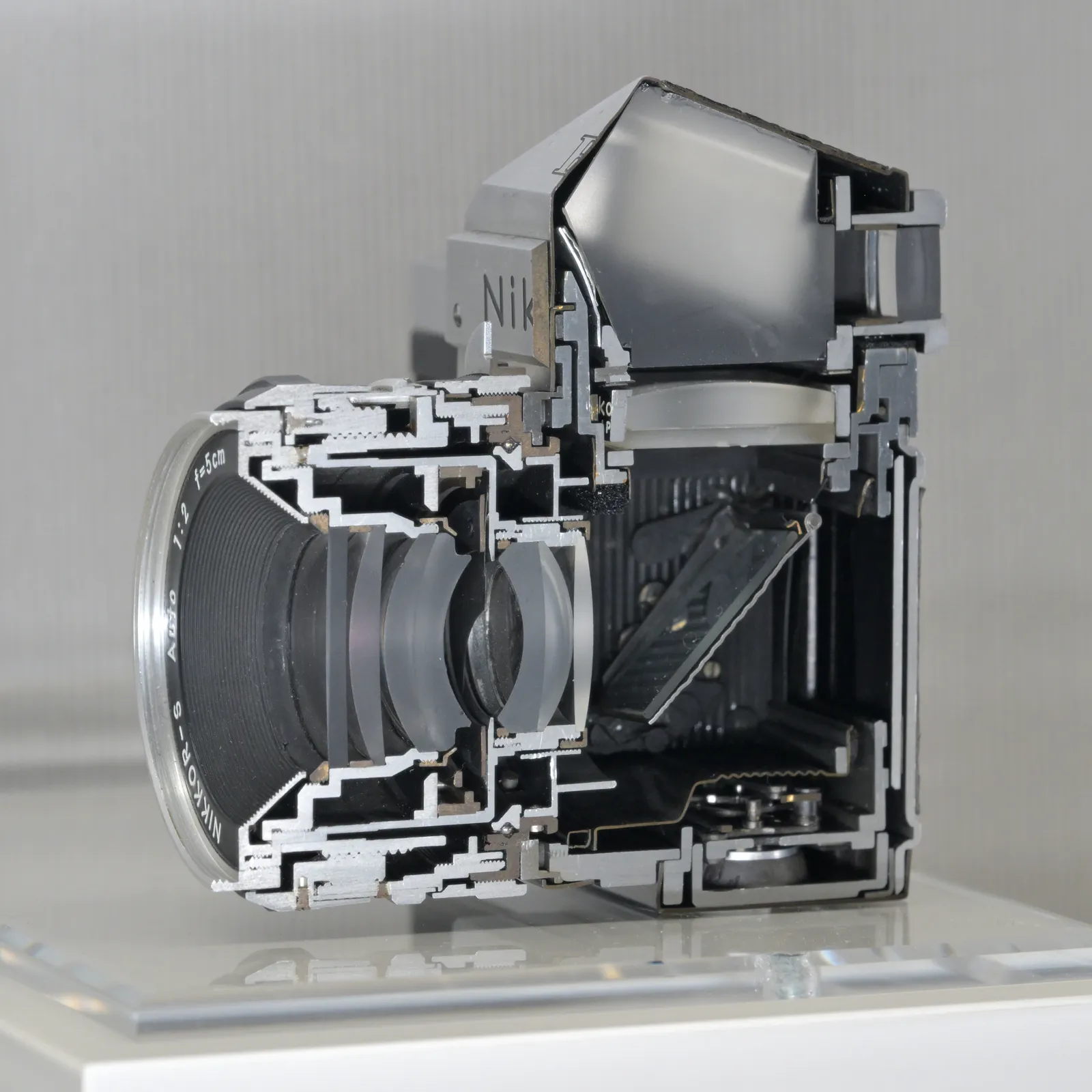
After the defeat, Nippon Kogaku turned to civilian products. In 1948 it launched its first camera, the Nikon I, a rangefinder inspired by the Contax and the Leica, with an unusual 24 × 32 mm format. It was followed by the Nikon M and the Nikon S of 1950, in the museum, which used the standard 24 × 36 mm frame.
The quality of the Nikkor lenses surprised the West. In 1950 American photographers working for Life in Tokyo adopted them, and the Nikon name began to be known around the world.
1959–1971
The camera of the professionals
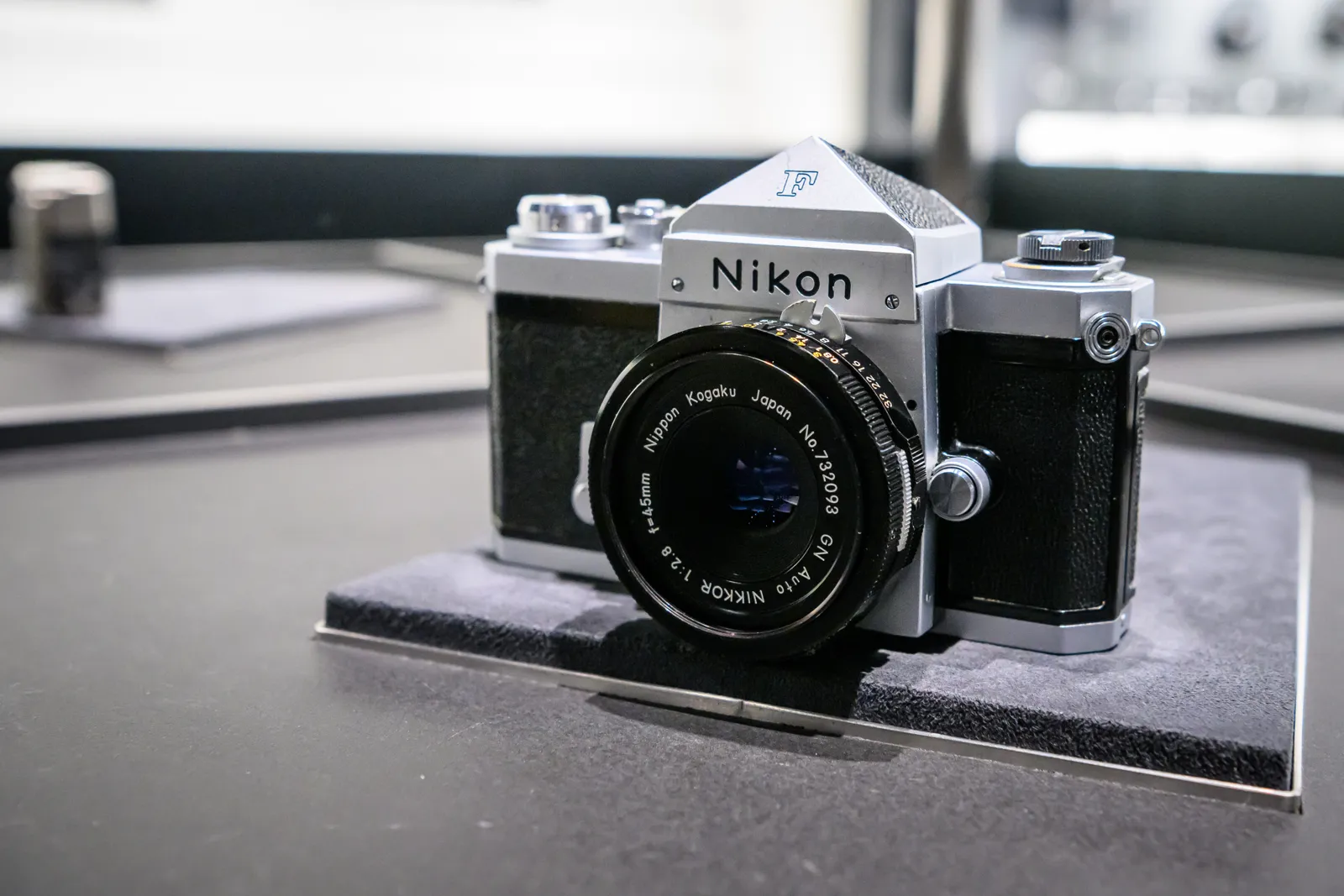
In the museum
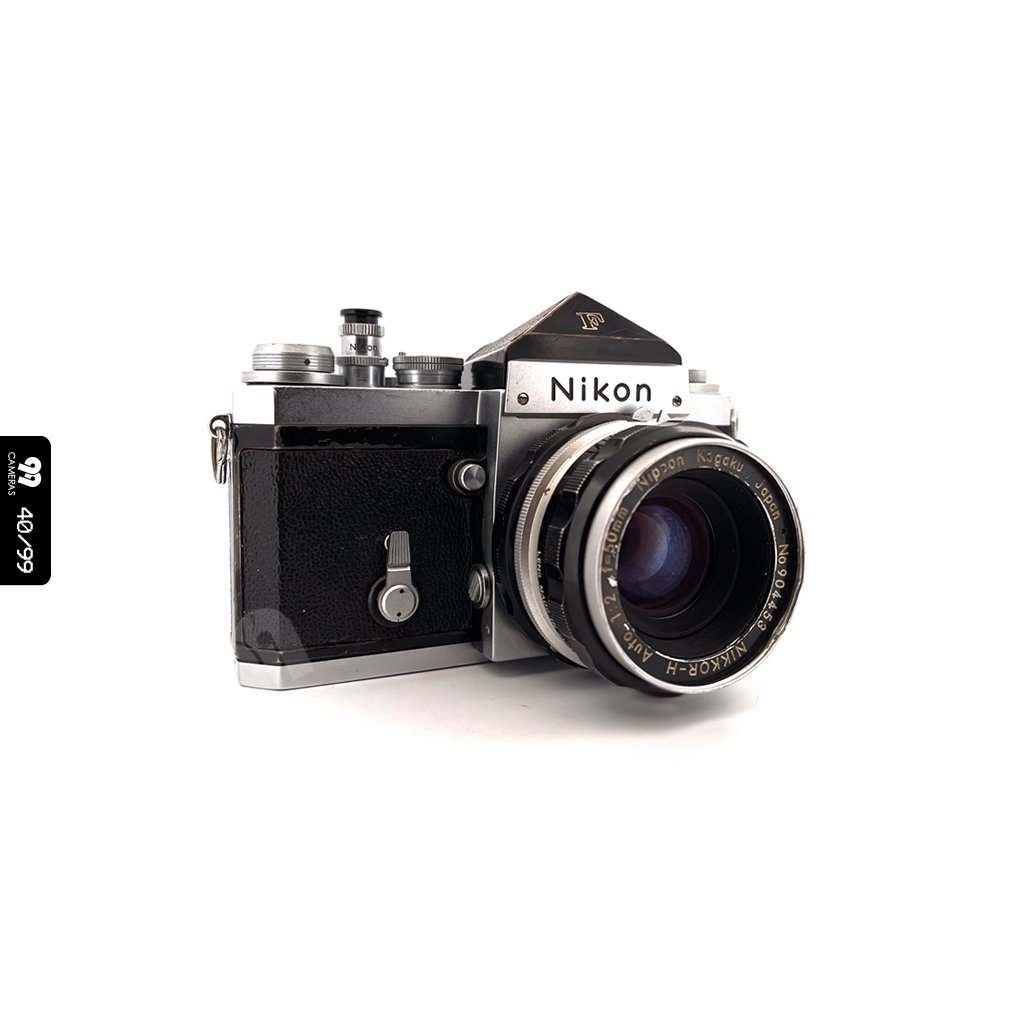
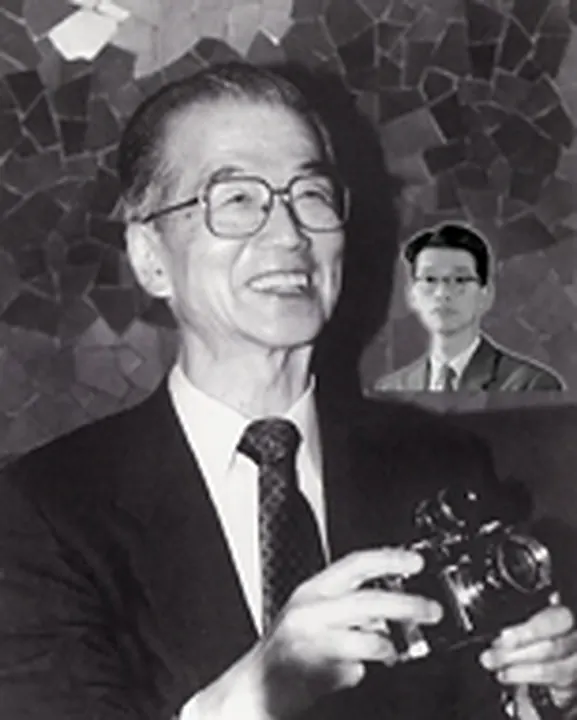
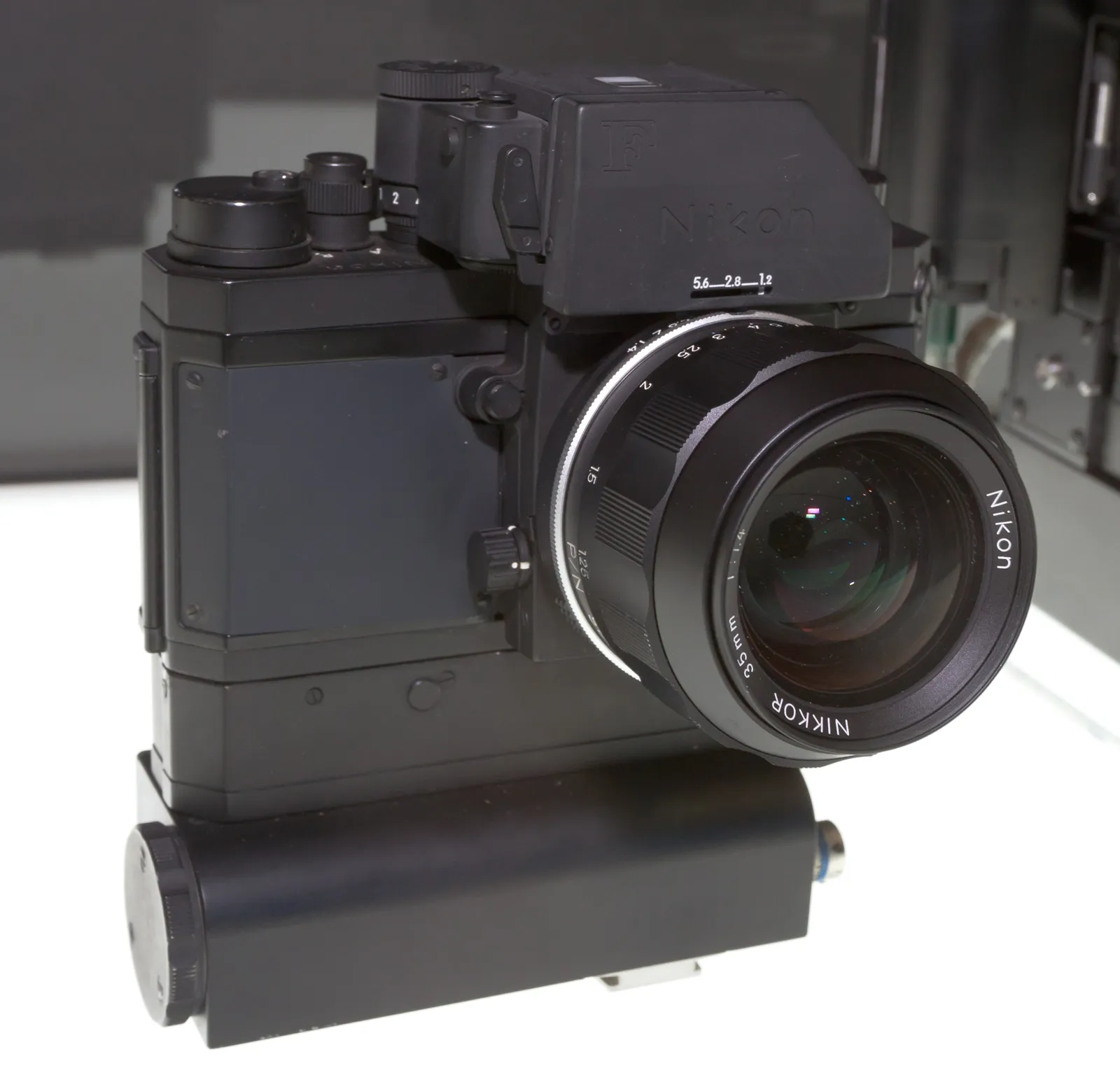
In 1959 Nippon Kogaku launched the Nikon F, a single-lens reflex designed under the direction of Masahiko Fuketa. It was not just a camera but a system: interchangeable viewfinders, a motor drive, dozens of lenses, all built to take hard knocks. Within a few years it became the camera of press photographers around the world.
The Nikon F was the camera of the Vietnam War, of sports photographers and of fashion studios. It made Nikon the reference of professional photography for decades, and Japanese cameras the leaders of the world market.
The people
1963–1984
Under the sea and on the Moon
In the museum
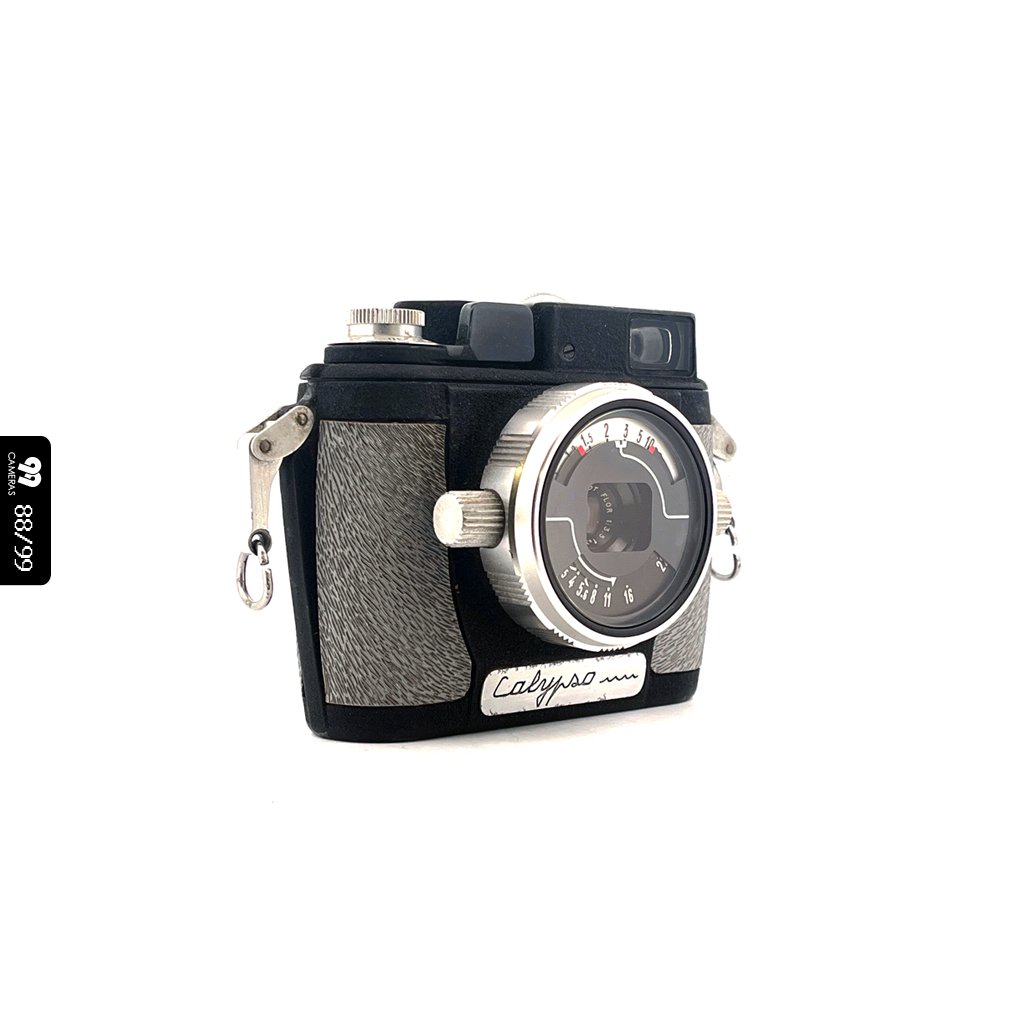
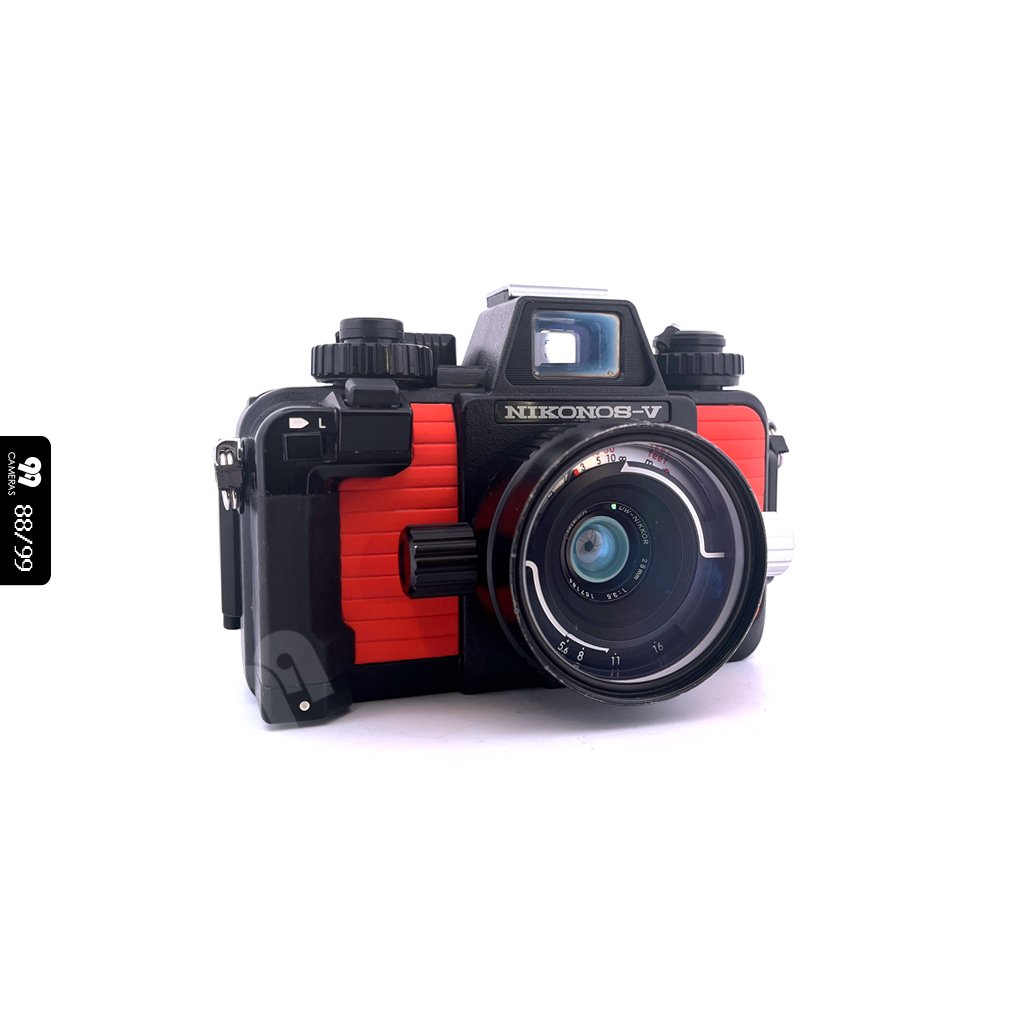
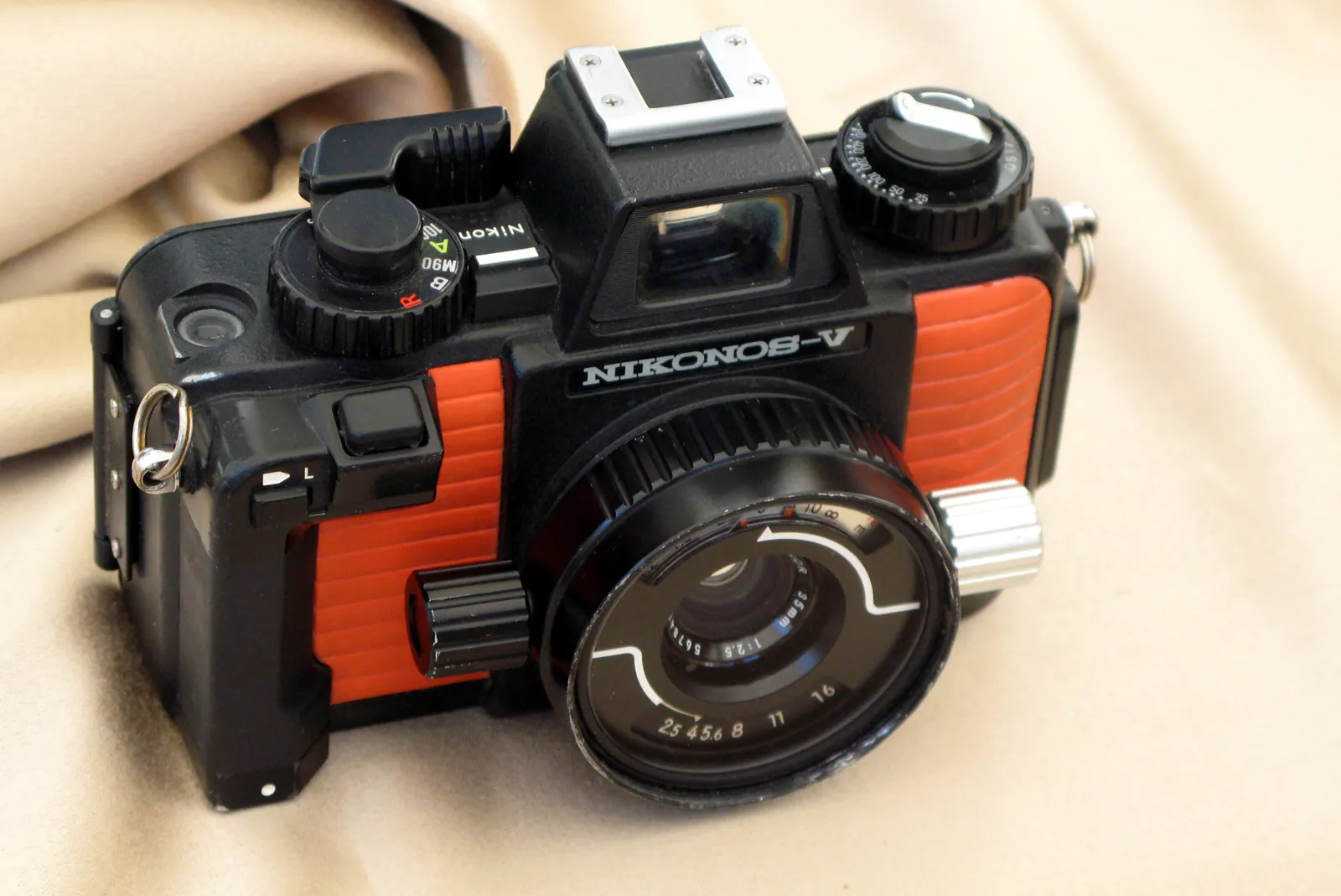
The first Nikon underwater camera was not Japanese. In 1960 the French company La Spirotechnique launched the Calypso, designed by the Belgian engineer Jean de Wouters for Jacques-Yves Cousteau: the first 35 mm camera that could dive without a housing, sealed by rubber O-rings. Nikon bought the rights, and from 1963 the Calypso became the Nikonos. Divers, scientists and underwater photographers used it for decades; both the Calypso and the Nikonos V of 1984 are in the museum.
Nikon also went to space. In 1971 a specially modified Nikon F flew on the Apollo 15 mission, and Nikon cameras have been used by NASA astronauts ever since, including on the Space Shuttle and the International Space Station.

1980–1999
The red stripe
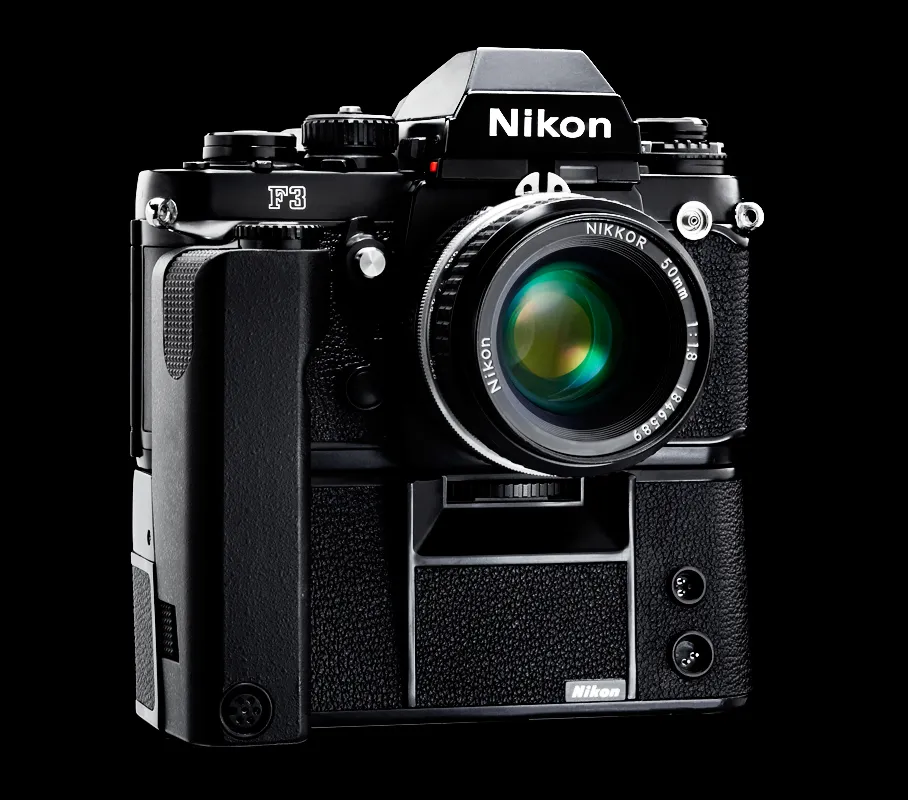
In 1980 the Nikon F3 brought electronics to the professional Nikon: automatic exposure, a quieter shutter, a long battery life. It was made for more than twenty years. Its design was entrusted to the Italian car designer Giorgetto Giugiaro.
In 1988 Nippon Kogaku took the name of its cameras: Nikon Corporation. Nikon also made steppers, the machines that print microchips, which became one of its main businesses. Then autofocus arrived, and Canon, with its EOS system of 1987, began to win over many professionals.
The people

1999–2018
The digital turn
In 1999 Nikon launched the D1, the first digital single-lens reflex designed from the start by a camera maker and sold at a price professionals could afford. Within a few years, digital replaced film in newspapers and agencies.
Nikon remained one of the two great names of professional photography, side by side with Canon. In 2018 it launched its Z system of mirrorless cameras, with a new, wider lens mount.
2018–today
Still the professionals’ choice
Today Nikon makes mirrorless cameras, lenses, binoculars and microscopes, and its precision equipment is still used in the semiconductor industry. In 2024 it bought RED, an American maker of cinema cameras.
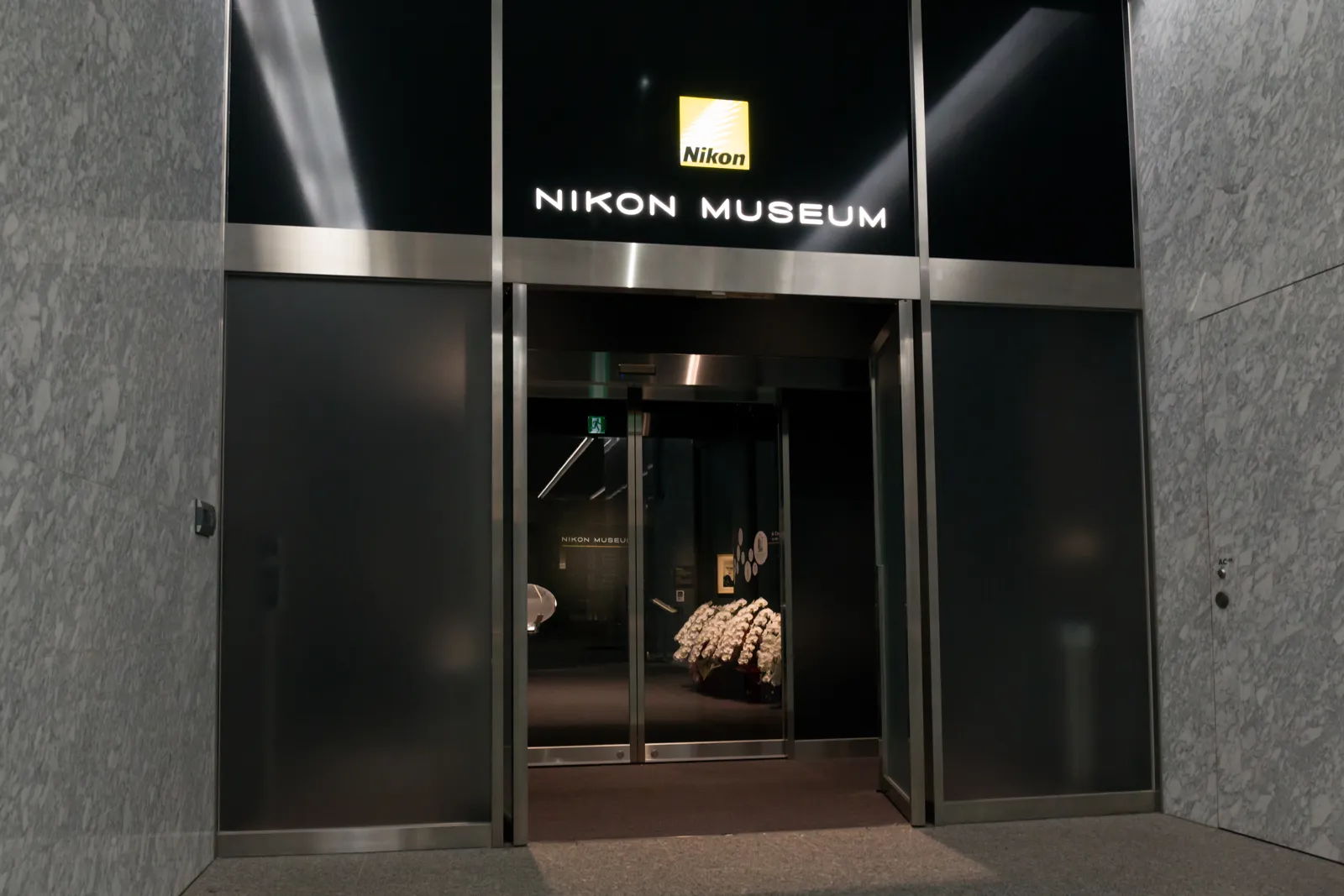
Old Nikon film cameras, the F, the F2, the FM2, are prized again by film photographers, and the Nikon Museum in Tokyo tells the story of the company since 1917.
Nikon at the 99 Cameras Museum
The Nikon S of 1950, the Nikon F of 1959 and the Nikonos V are in the showcases of the museum in Paris. You can see them, and the other cameras of this story, in our online collection.
See the Nikon cameras of the collection
Sources. Nikon corporate history and Nikon Museum, Nikon “Thousand and One Nights”, Wikipedia articles on Nikon, the Nikon F, the F3 and the Nikonos, Adorama and TechRadar articles on Nikon’s centenary. Some anecdotes come from oral tradition and are told as such.
Plan your visit
Visit is free and open to all
- Opening hoursMonday – Saturday : 10 – 17:30
- AddressStudio Harcourt, 6 Rue de Lota, 75116 Paris
- Exceptional closuresThursday, 26 November 2026