The adventure of the brands
The Pentax story
A maker of spectacle lenses, the first Japanese reflex for 35 mm film, a mirror that came back by itself, a name bought from East Germany, a light meter behind the lens and the smallest reflex ever made: the Pentax story, told through its inventions and its anecdotes.
1919–1951
The rising sun
In 1919 Kumao Kajiwara founded in Tokyo a small company to make spectacle lenses: Asahi Kogaku, “Rising Sun Optical”. In the 1930s it began making lenses for cameras of other Japanese brands, and during the war it made binoculars and military optics.
After 1945 Asahi made binoculars and lenses again for civilians, and its engineers dreamed of a camera of their own: a single-lens reflex for 35 mm film, a type of camera that no Japanese company yet made.

1952–1956
The first Japanese reflex
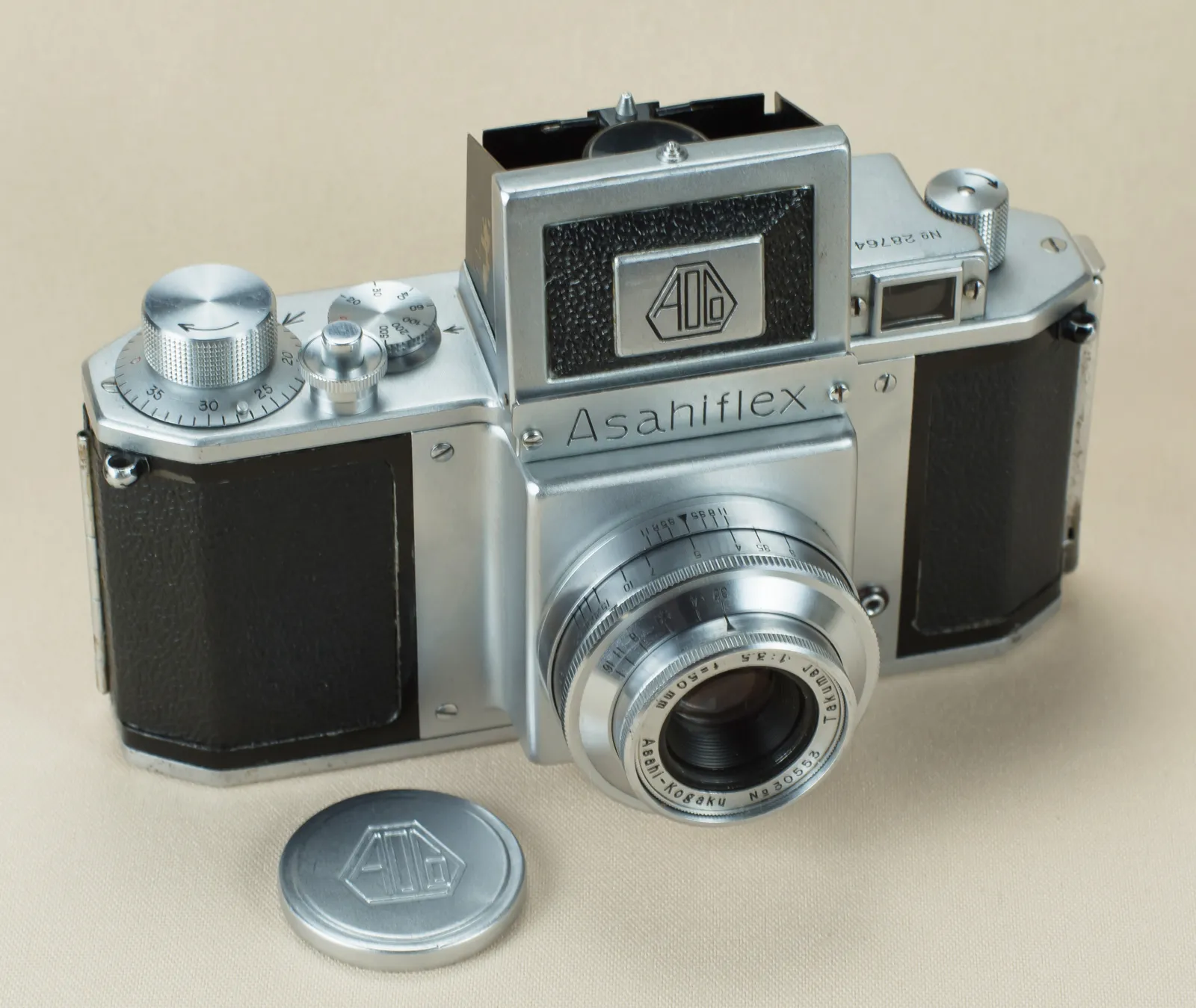
In the museum
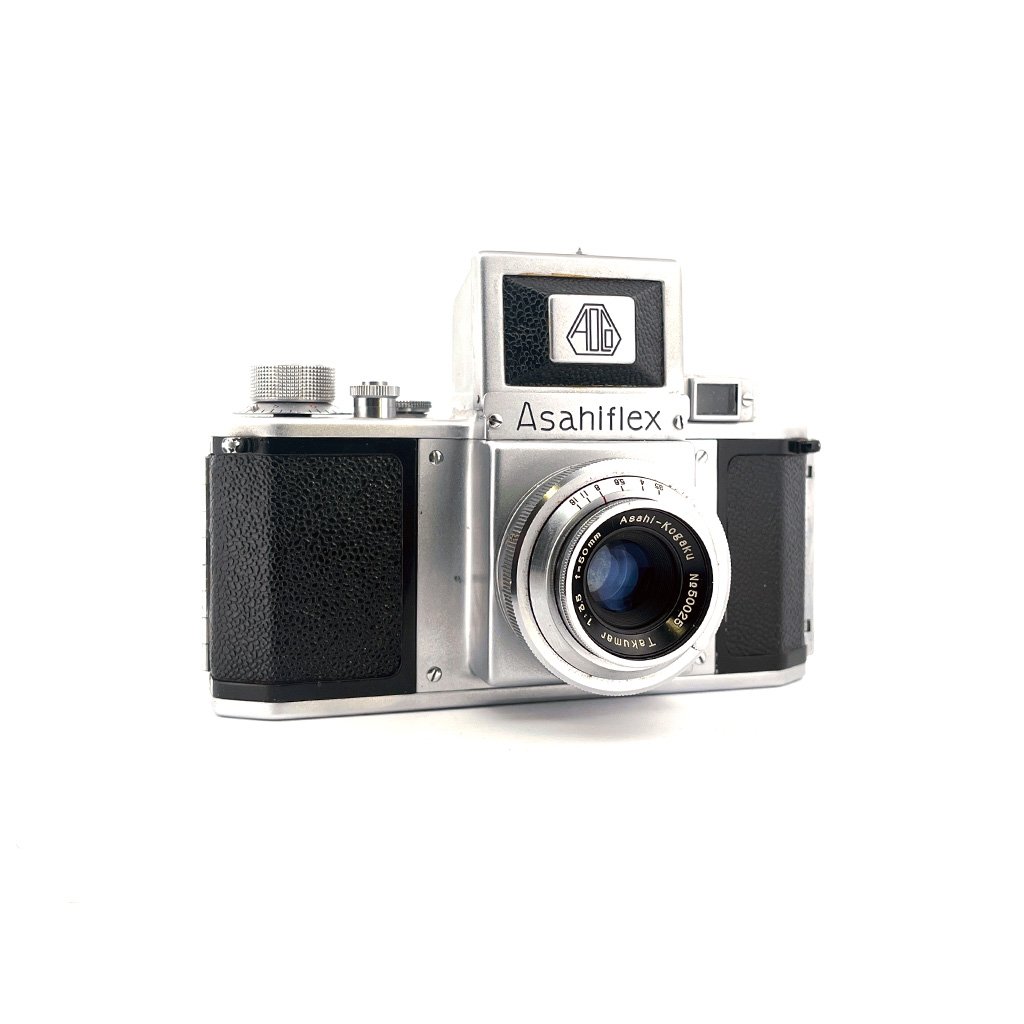
In 1952 Asahi launched the Asahiflex, the first Japanese single-lens reflex for 35 mm film. The photographer looked through the lens itself, by way of a mirror, which meant no error of framing, even with a telephoto lens.
In 1954 the Asahiflex IIB brought an invention that changed the reflex camera: a mirror that came back down by itself after the picture. Before, the mirror stayed up and the viewfinder went black until the film was wound on. Now the image reappeared at once.
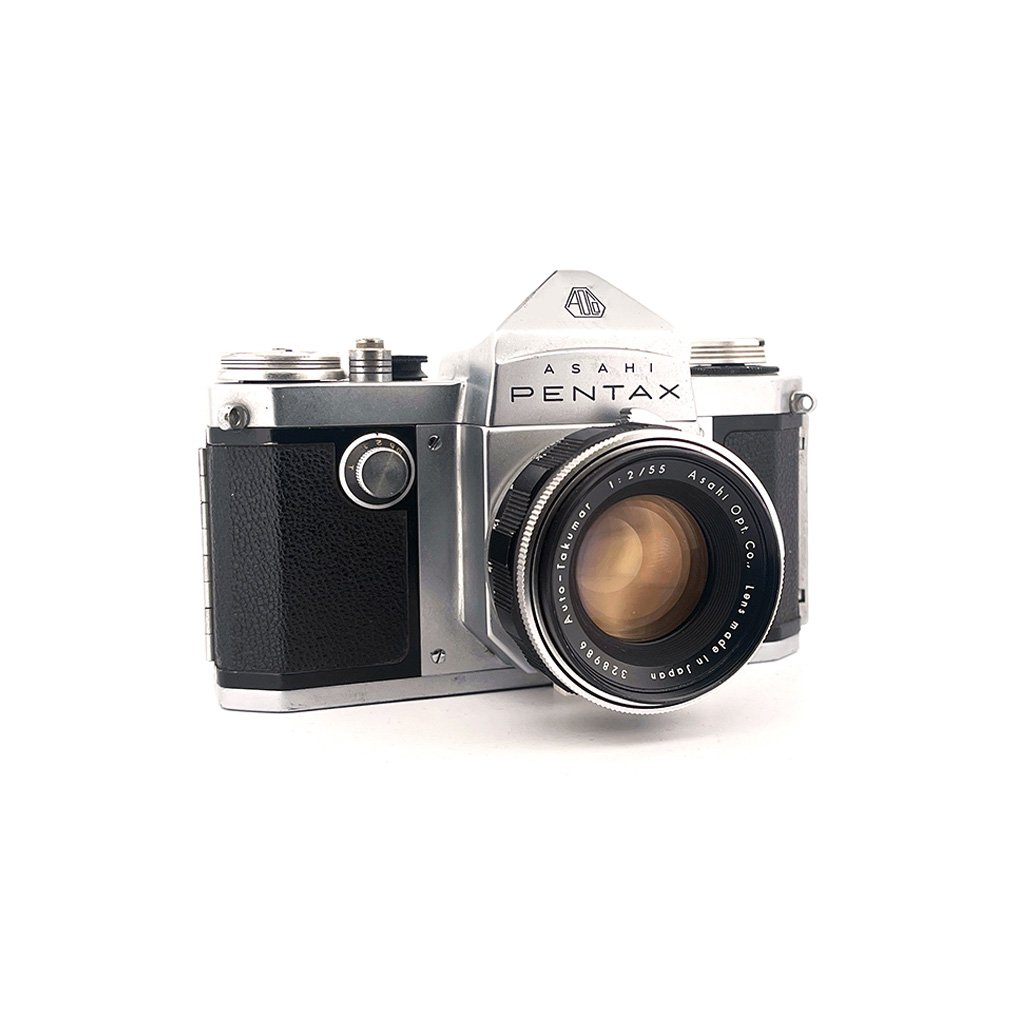
In 1957 Asahi launched the Asahi Pentax. It added a pentaprism: a block of glass on top of the camera that let the photographer look at eye level and see the image the right way round. Together with the quick-return mirror, it gave the modern single-lens reflex its final shape.
The camera was small, elegant and well made, and it sold very well. It made Pentax one of the great names of the Japanese reflex camera, alongside Nikon, Canon and Minolta.
1964–1975
The light meter behind the lens
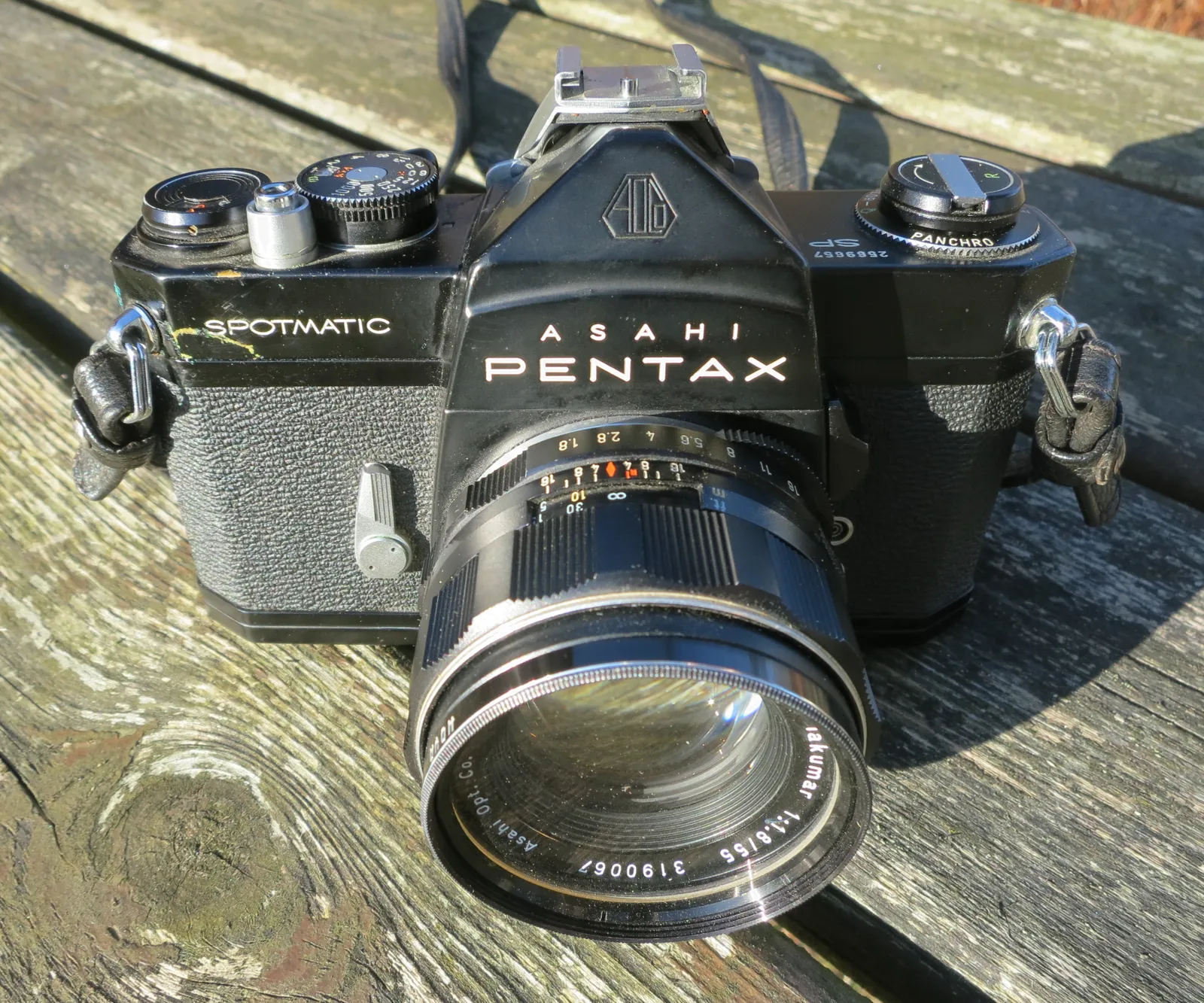
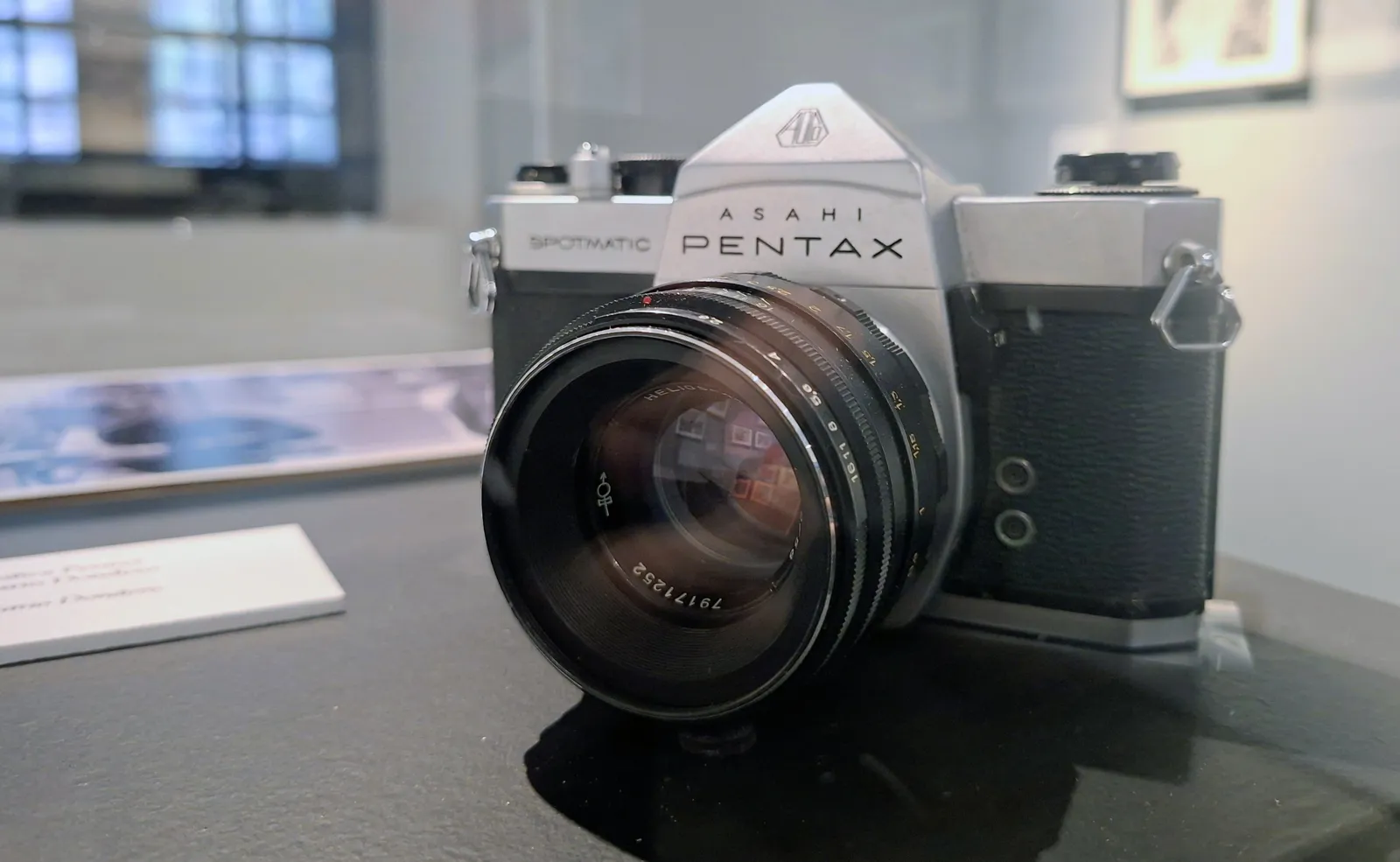
In 1964 Asahi launched the Spotmatic, one of the first single-lens reflex cameras to measure the light through the lens, exactly where the picture would be taken. It was a huge success: millions were sold, and it was the reflex of a whole generation of amateurs.
In the United States Pentax cameras were sold under the name Honeywell Pentax. In 1975 Asahi changed its lens mount and introduced the K mount, a bayonet that is still used on Pentax cameras today.
1978–2011
The smallest reflex in the world
In the museum
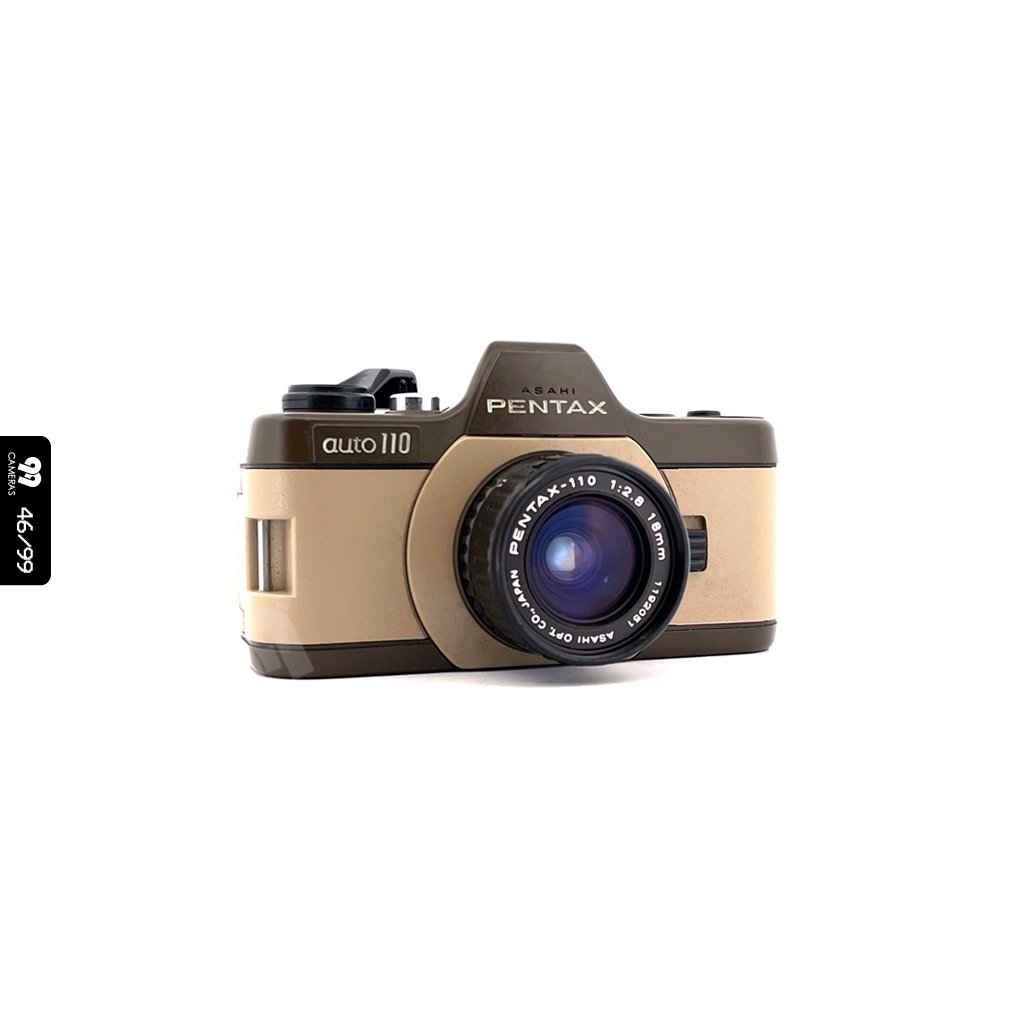
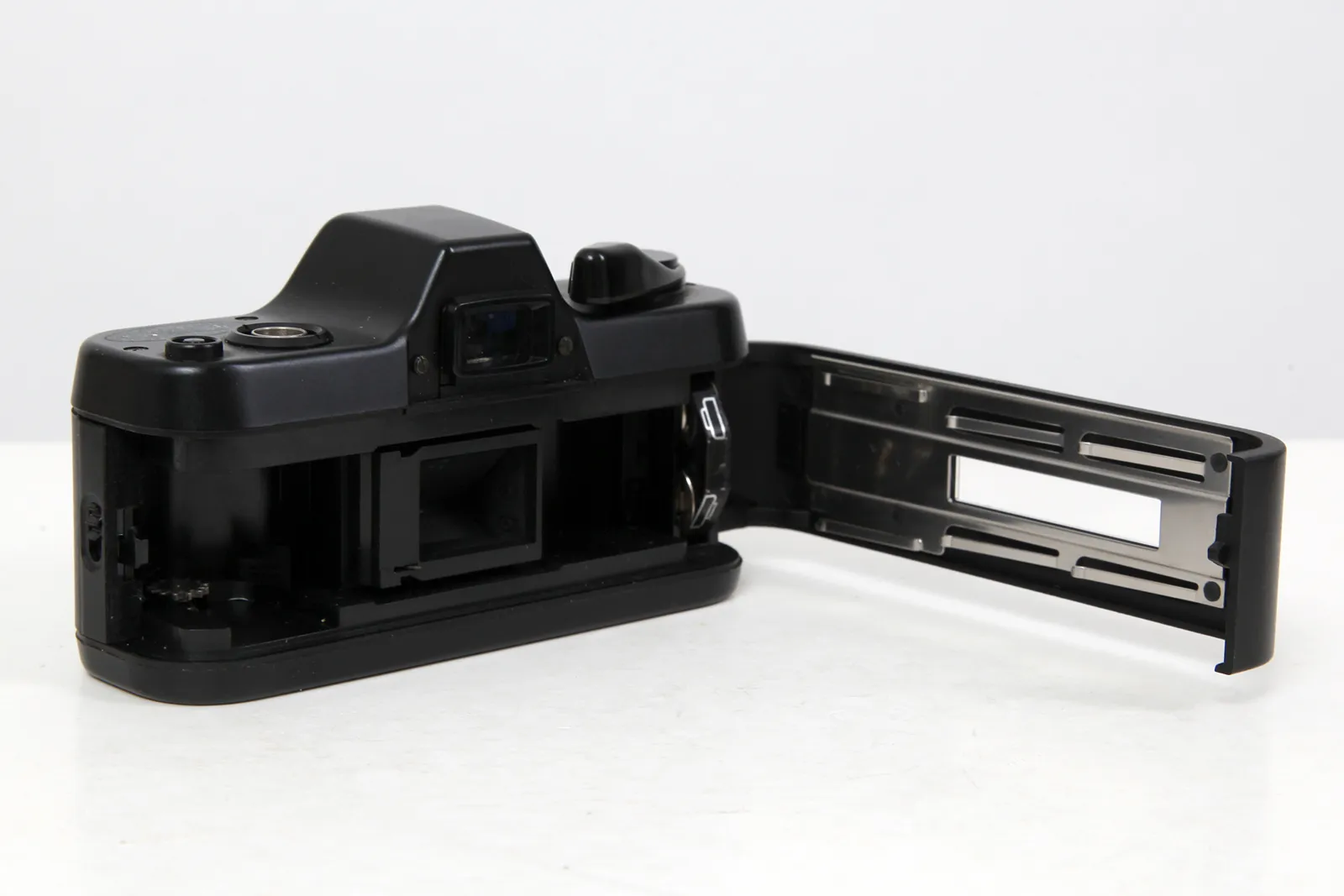
In 1978 Pentax launched the Auto 110, a complete single-lens reflex with interchangeable lenses for the tiny 110 cartridge film. It was the smallest system reflex camera ever made, barely bigger than a matchbox, and it is in the museum.
Pentax went on with the ME, the LX, the medium-format 645 and 67, and then digital cameras. The company took the name Pentax in 2002, joined the Hoya group in 2007, and Ricoh in 2011.
2011–today
A new film camera
Under Ricoh, Pentax kept making reflex cameras when most other makers turned to mirrorless. And in 2024 it did something no big brand had done for twenty years: it launched a new film camera, the Pentax 17, a half-frame camera for 35 mm film.
The Pentax 17 was a response to the film revival among young photographers. More than a century after a small Tokyo company made its first spectacle lenses, the Pentax name is still on new cameras, including film ones.
Pentax at the 99 Cameras Museum
The Asahiflex, the Asahi Pentax of 1957 and the tiny Pentax Auto 110 are in the showcases of the museum in Paris. You can see them, and the other cameras of this story, in our online collection.
See the Pentax cameras of the collection
Sources. Wikipedia articles on Pentax, the Asahiflex, the Asahi Pentax, the Spotmatic and the Auto 110, Ricoh Imaging, Science Museum Group collection. Some anecdotes come from oral tradition and are told as such.
Plan your visit
Visit is free and open to all
- Opening hoursMonday – Saturday : 10 – 17:30
- AddressStudio Harcourt, 6 Rue de Lota, 75116 Paris
- Exceptional closuresThursday, 26 November 2026