The adventure of the brands
The Ilford story
- Founded in 1879United Kingdom
- Still makes cameras
A photographer who made plates in his basement, a town that did not want to lend its name, a comma that settled the dispute, a white camera, colour prints that last and six managers who saved the factory: the Ilford story, told through its inventions and its anecdotes.
1879–1901
Plates in the basement
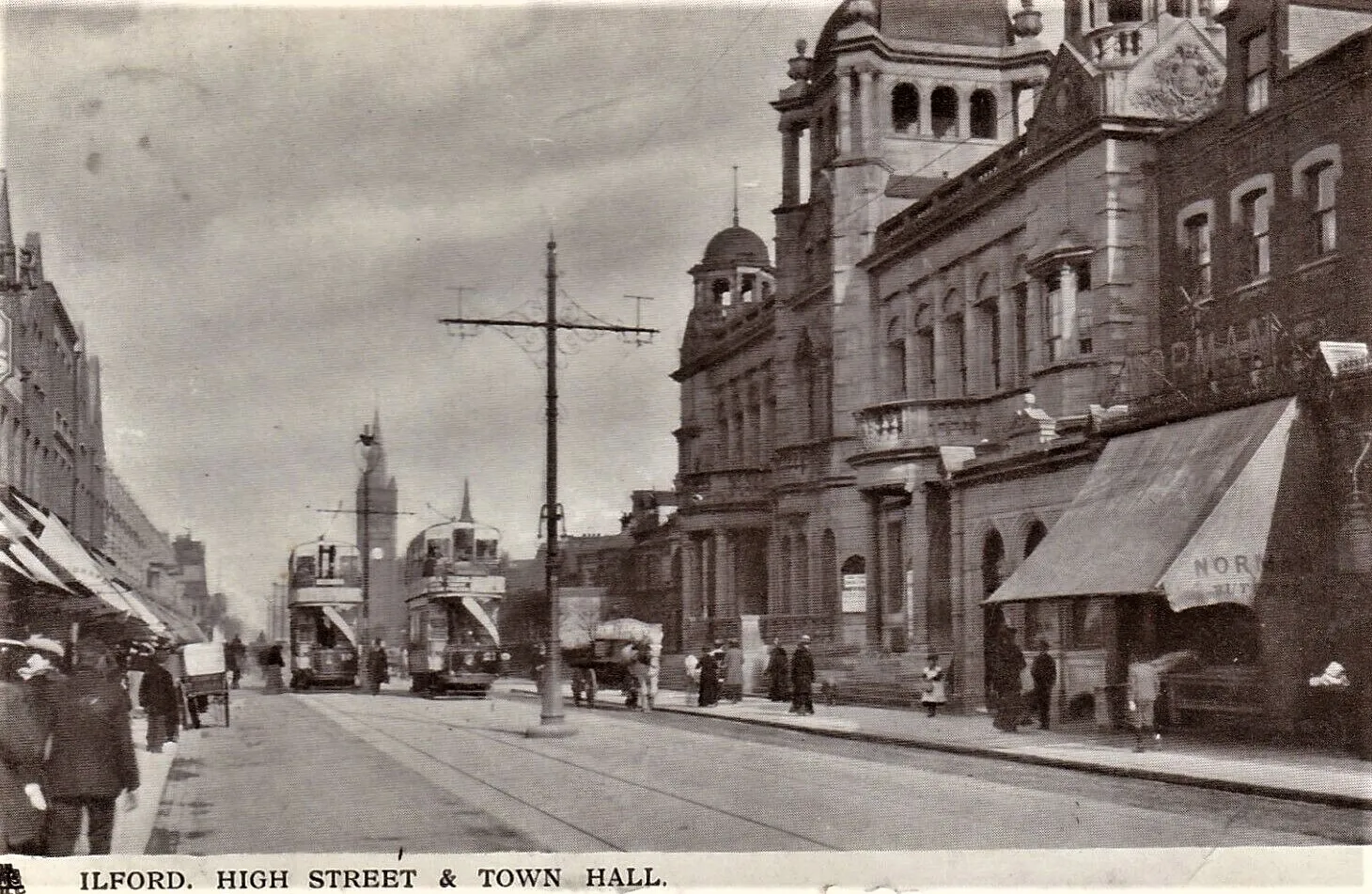
Alfred Hugh Harman ran a photography business in Peckham, in south London. In 1879 he moved to Ilford, then a village east of London, and started making gelatine dry plates in the basement of his house. He called his business the Britannia Works.
Dry plates, ready to use and much more sensitive than the old wet plates, were changing photography. Harman’s plates were excellent and sold very well. From 1886 they were sold under the name of the village: Ilford plates. The company went public in 1891.
1901–1945
The great British film maker
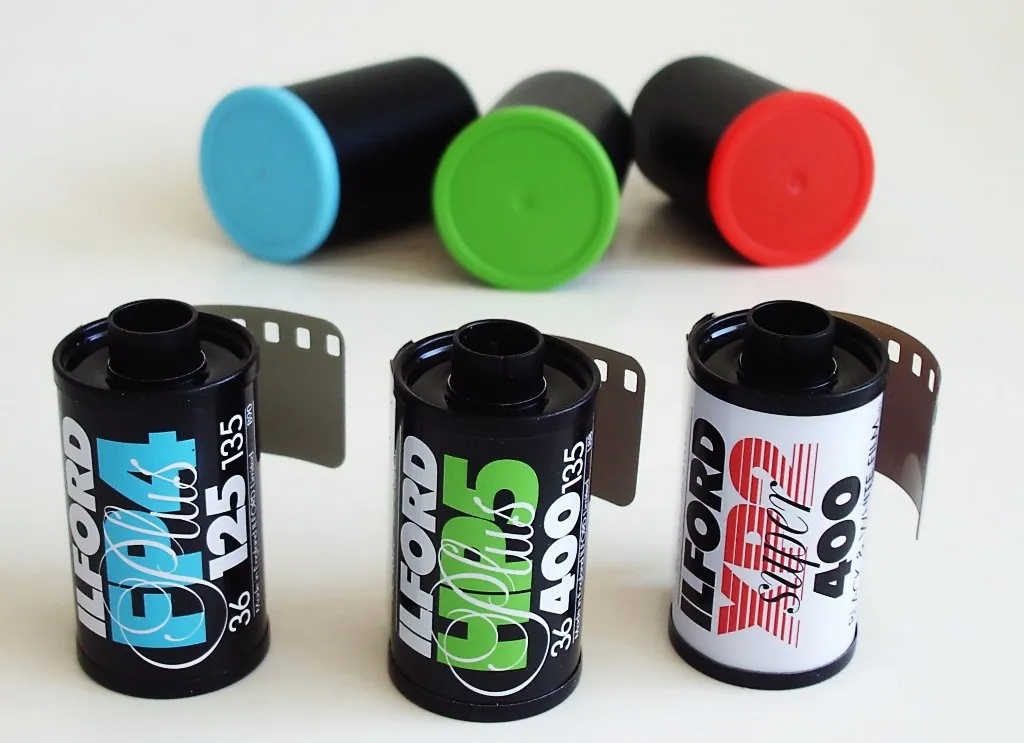
In the early 20th century Ilford grew by joining with other British makers of plates, papers and films. It became the leading British photographic company, the main rival of Kodak in Britain.
Ilford made black-and-white films whose names are still known today. The letters tell their story: HP for “Hypersensitive Panchromatic”, a fast film, and FP for a fine-grain film. The first HP films appeared in the 1930s.
1949–1960s
A white camera
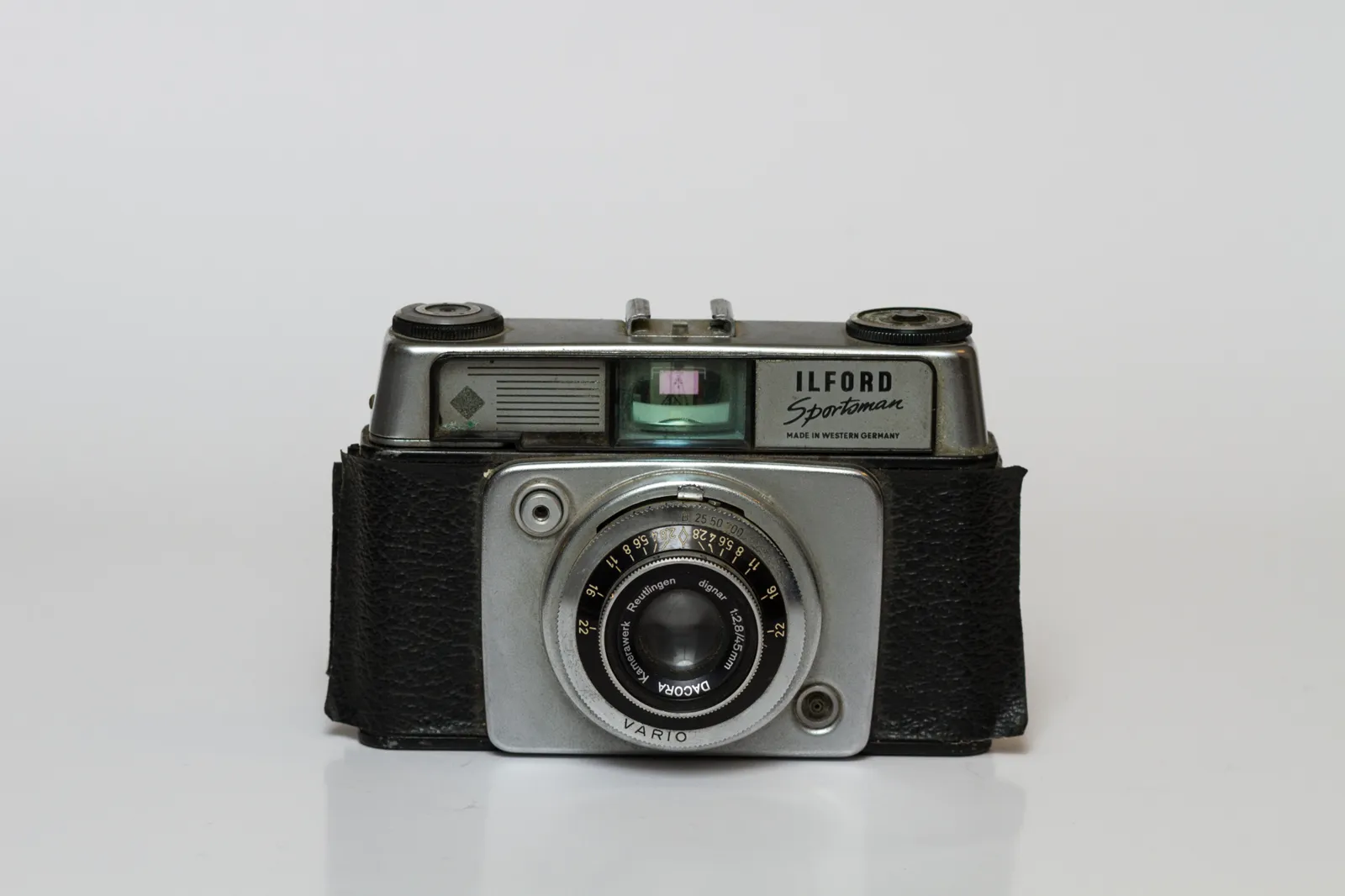
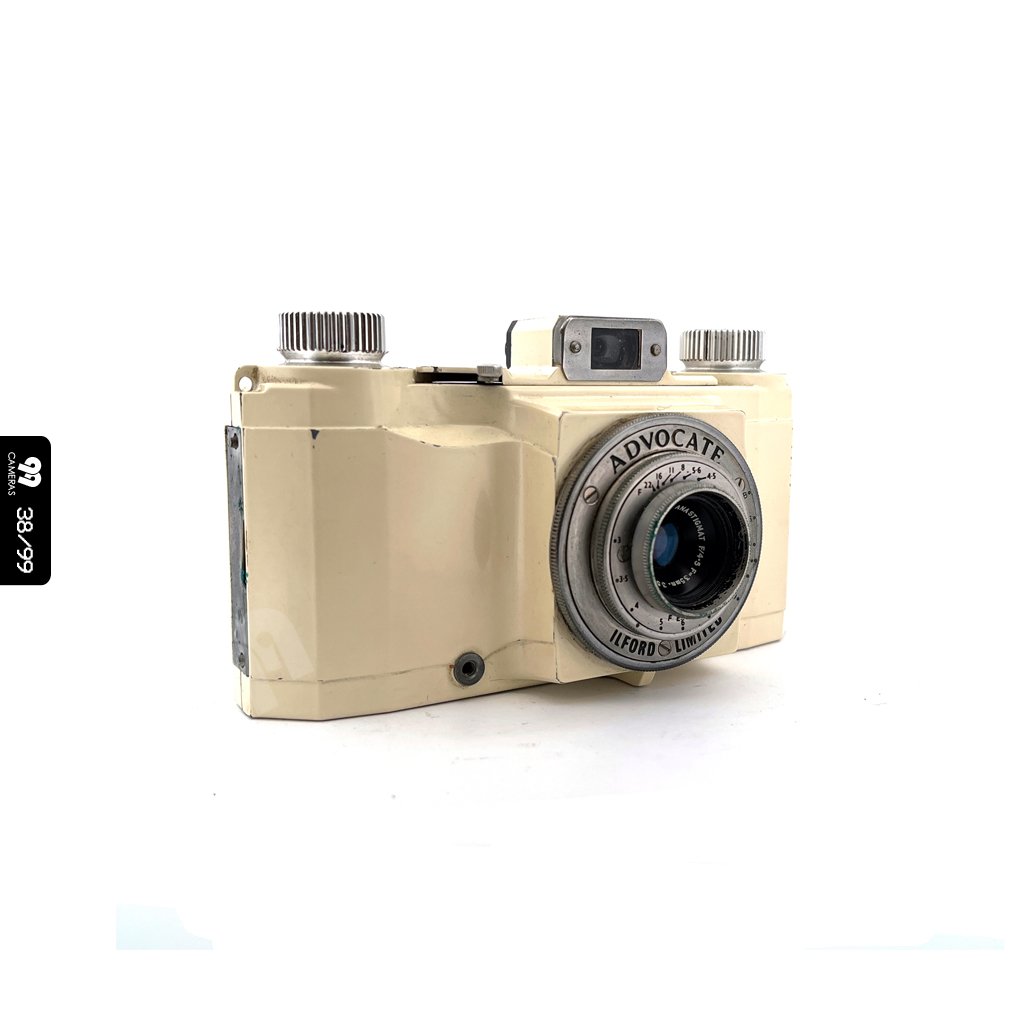
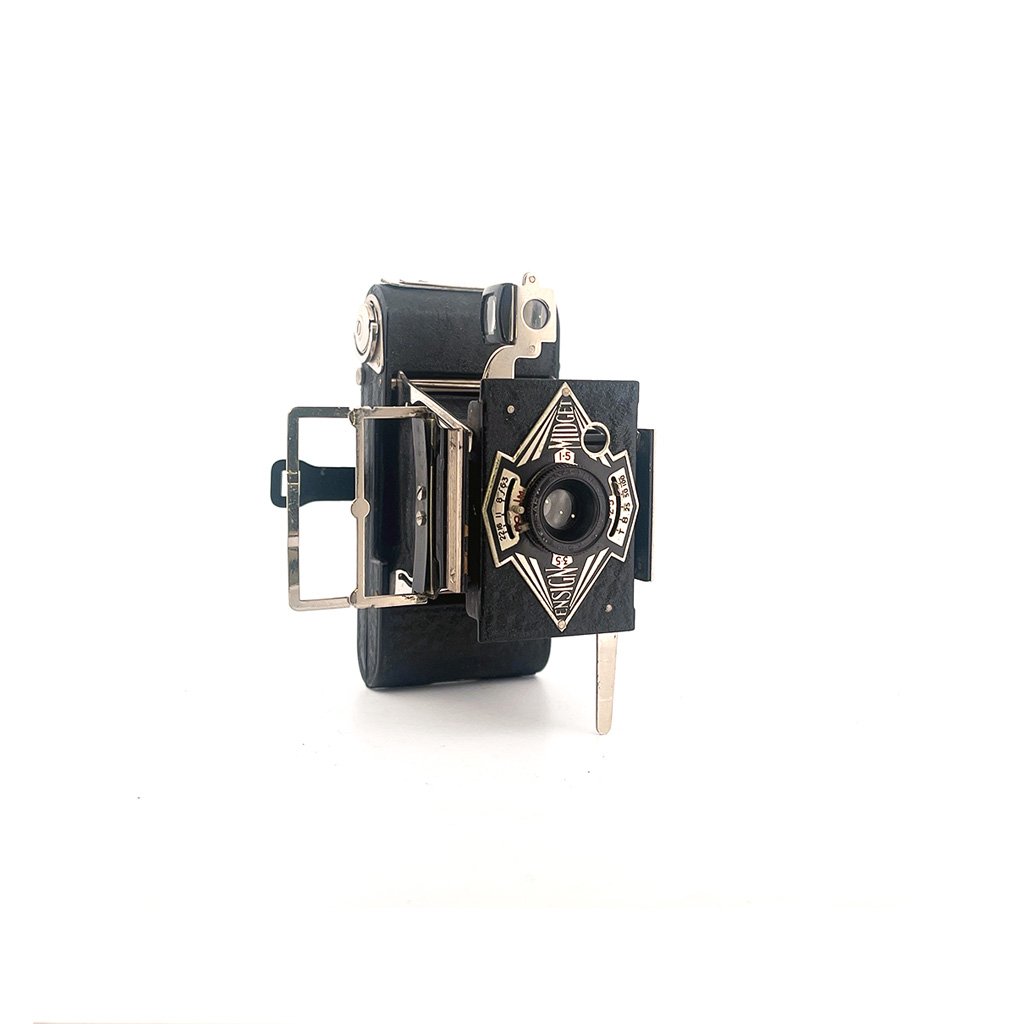
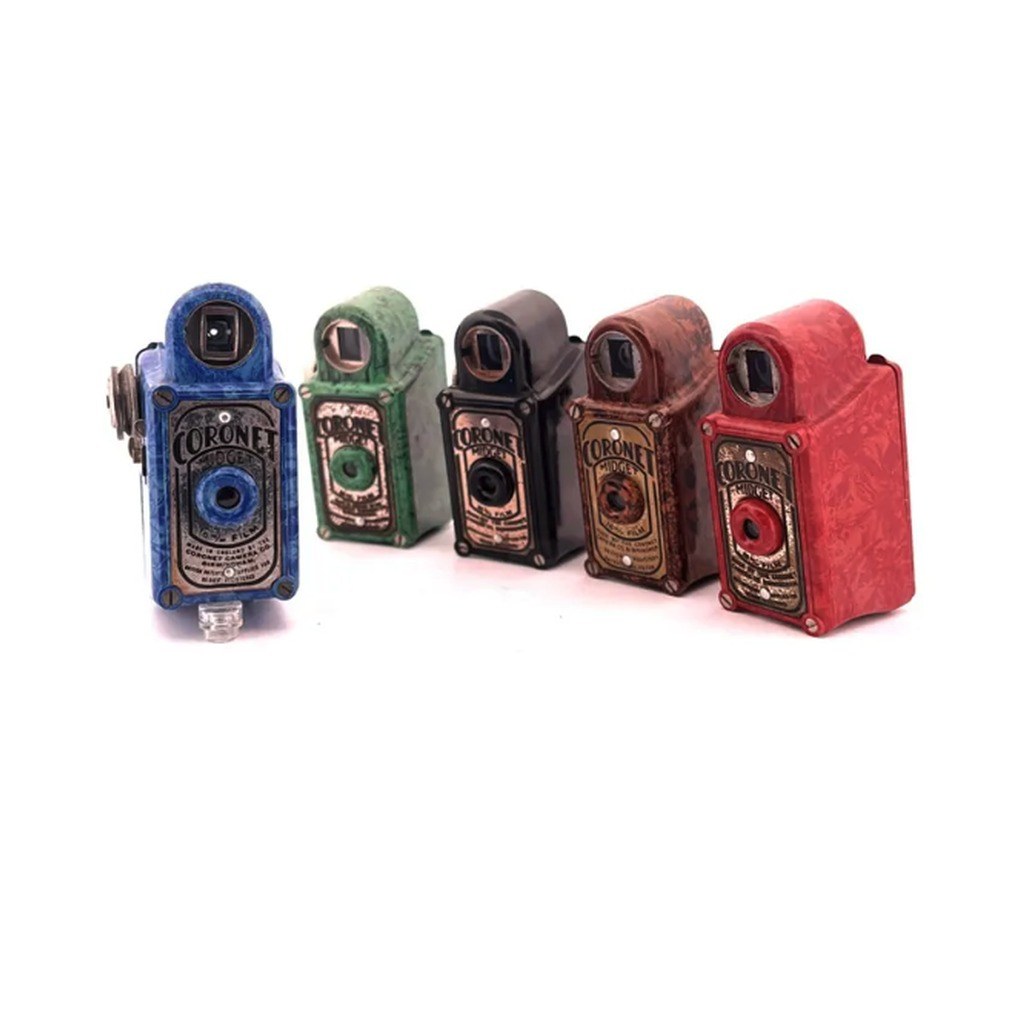
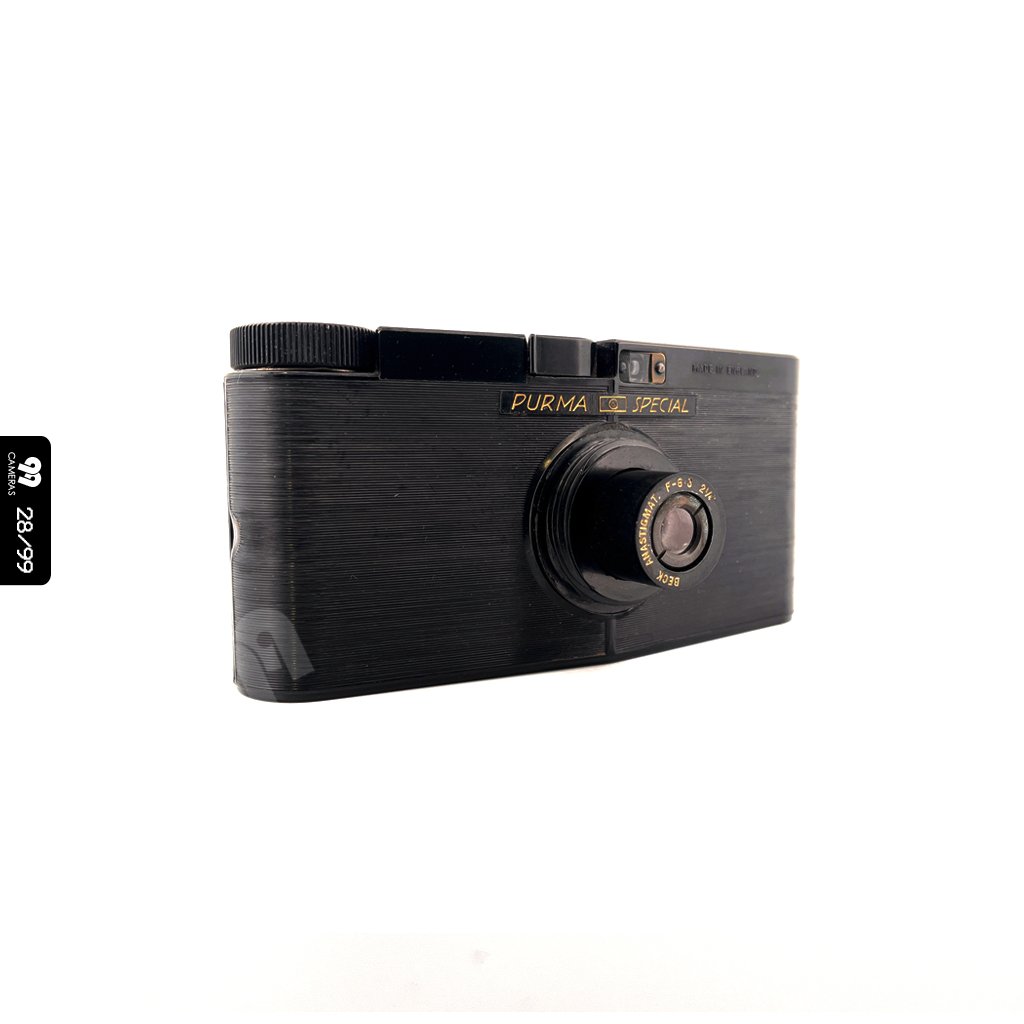
After the war Ilford also sold cameras under its name. In 1949 came the Ilford Advocate, a 35 mm camera made by Kennedy Instruments, a company linked to Ilford. Its die-cast aluminium body was covered with white enamel, very unusual at the time. The Advocate was made until 1957, and one is in the museum.
Other Ilford cameras, such as the Sportsman and the Sporti, were made in Germany by Dacora for the British market. They were simple, affordable cameras meant to sell more Ilford film.

1959–2004
Swiss owners and brilliant colours
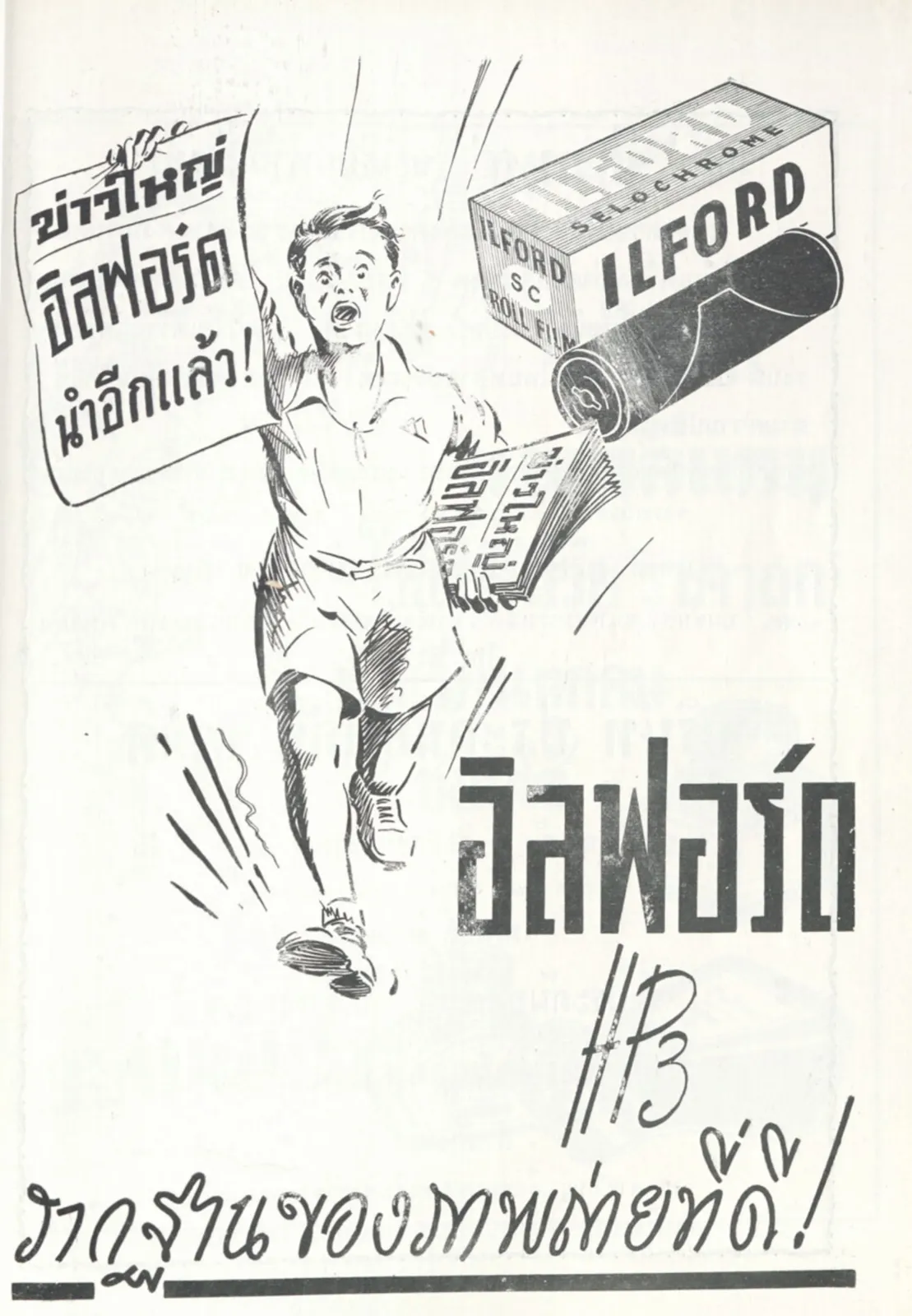
In 1959 the chemical giant ICI took control of Ilford, and in 1969 the Swiss group Ciba became its sole owner. Ciba had developed a process for colour prints from slides, Cibachrome, known for its brilliant colours and long life; it was later called Ilfochrome. Ciba also owned the French company Lumière, which became Ilford France.
Ilford kept improving its black-and-white films: HP5 in 1976, then HP5 Plus in 1989, and XP1, a black-and-white film that could be developed in ordinary colour labs. But in the 2000s, digital photography made sales collapse.
2004–today
Saved by its managers
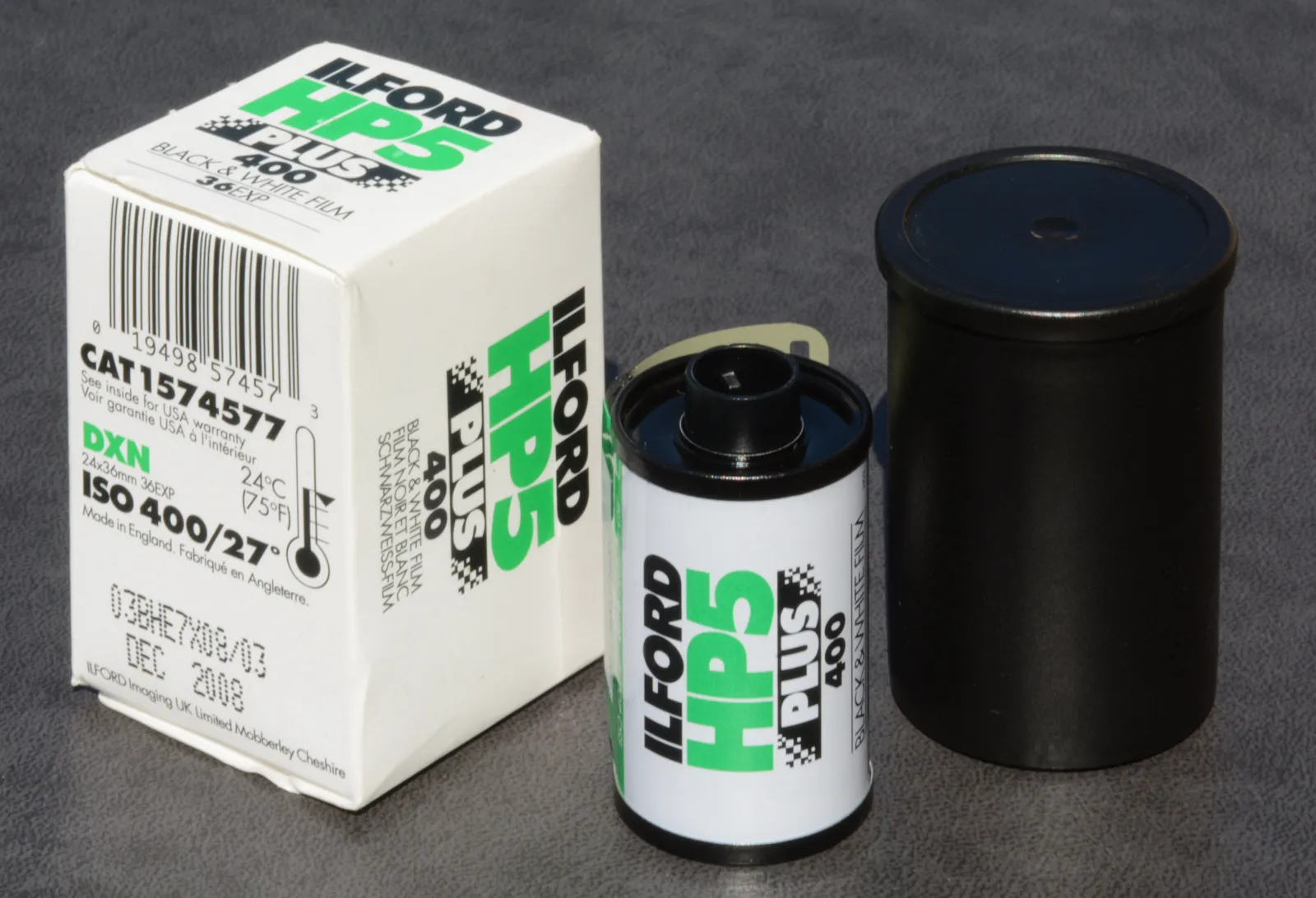
In August 2004 Ilford’s British company went into receivership. Six of its managers bought the black-and-white business and, in February 2005, founded Harman Technology, named after the founder Alfred Harman. The factory is at Mobberley, in Cheshire.
Harman Technology makes films, papers and chemicals sold under the Ilford Photo name: HP5 Plus, FP4 Plus, Pan F Plus, Delta and XP2. In 2024 Ilford celebrated 145 years with retro packaging, and the return of film among young photographers has given it new life.

Ilford at the 99 Cameras Museum
The white Ilford Advocate of 1949 is in the showcases of the museum in Paris. You can see it, and the other cameras of this story, in our online collection.
See the Ilford cameras of the collection
Sources. Ilford Photo history, Wikipedia articles on Ilford Photo, Alfred Hugh Harman and Ilfochrome, Grace’s Guide, Photomemorabilia Ilford chronology, Science Museum Group. Some anecdotes come from oral tradition and are told as such.
Plan your visit
Visit is free and open to all
- Opening hoursMonday – Saturday : 10 – 17:30
- AddressStudio Harcourt, 6 Rue de Lota, 75116 Paris
- Exceptional closuresThursday, 26 November 2026