The adventure of the brands
The Panon story
- Founded in 1952Japan
- No longer makes cameras
A lens that turns during the picture, a small Tokyo workshop, a camera that flew in a Gemini capsule, an actor who photographed his film sets with it for decades and a revival backed by Jeff Bridges: the story of Panon and the Widelux, told through its inventions and its anecdotes.
1840s–1957
A lens that turns
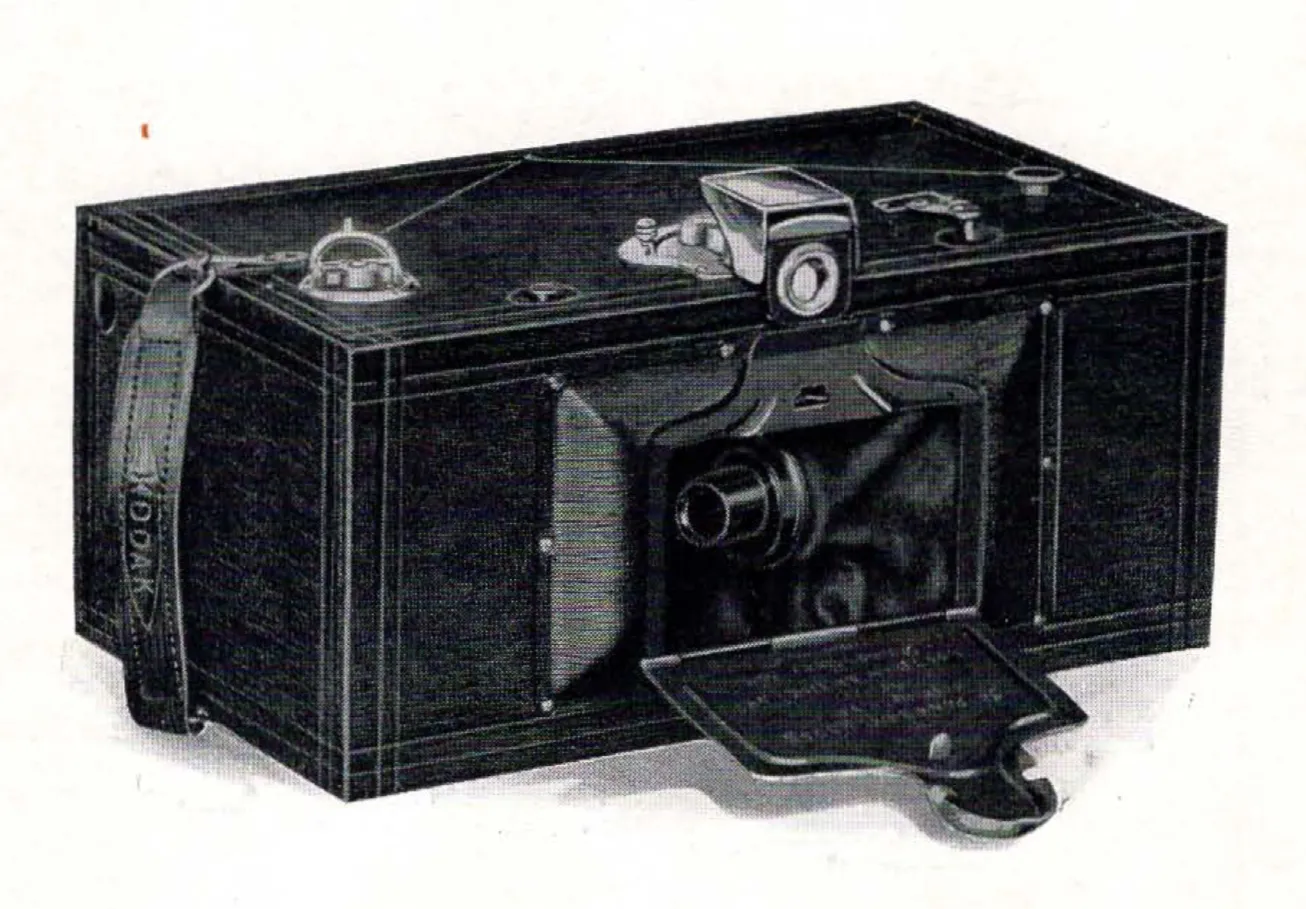
Since the early days of photography, people wanted to capture wide views: landscapes, cities, crowds. One solution was the swing-lens camera: during the exposure, the lens turns on itself and sends the image through a narrow slit onto curved film. Kodak sold one, the Panoram, from 1899.
In Tokyo, a small company, Panon Camera Shoko, specialised in this kind of camera. In 1952 it launched the Panon, a panoramic camera for 120 roll film.
1958–1970s
The Widelux
In the museum
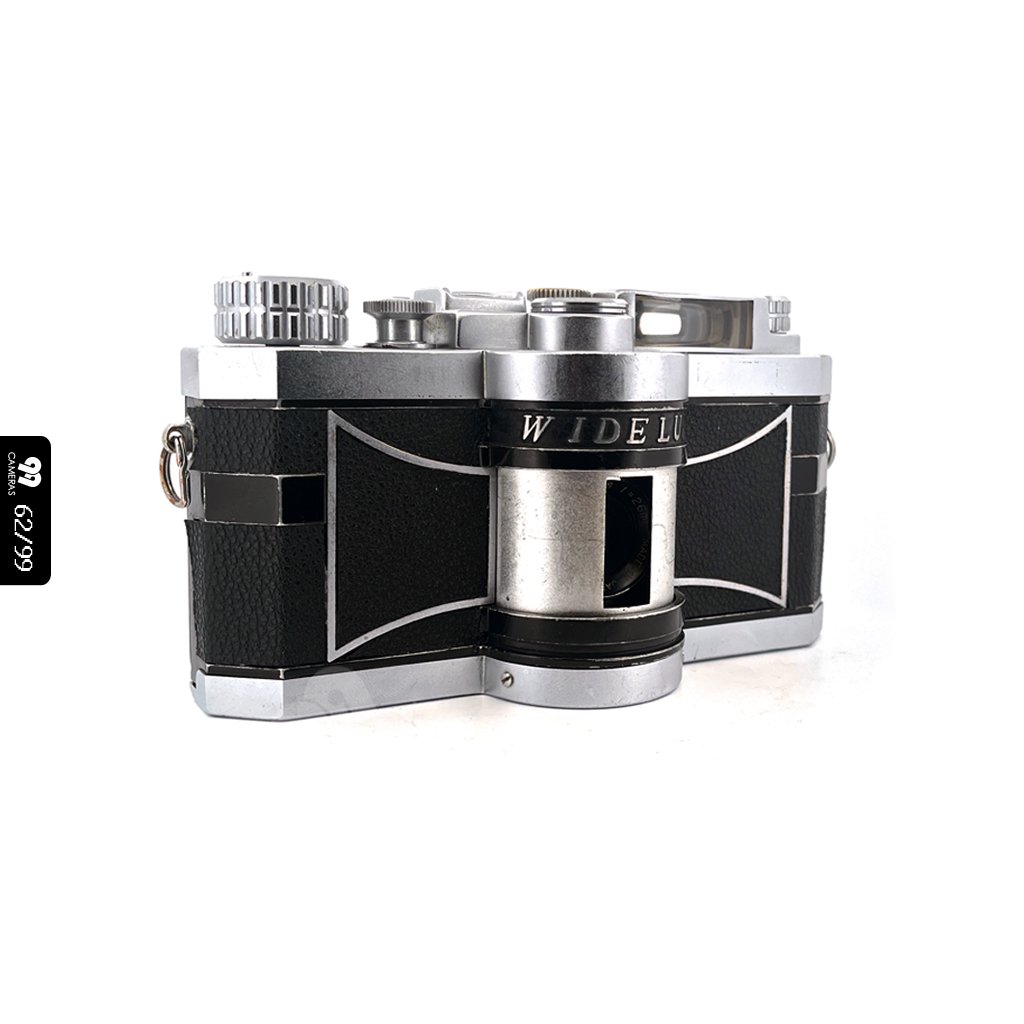
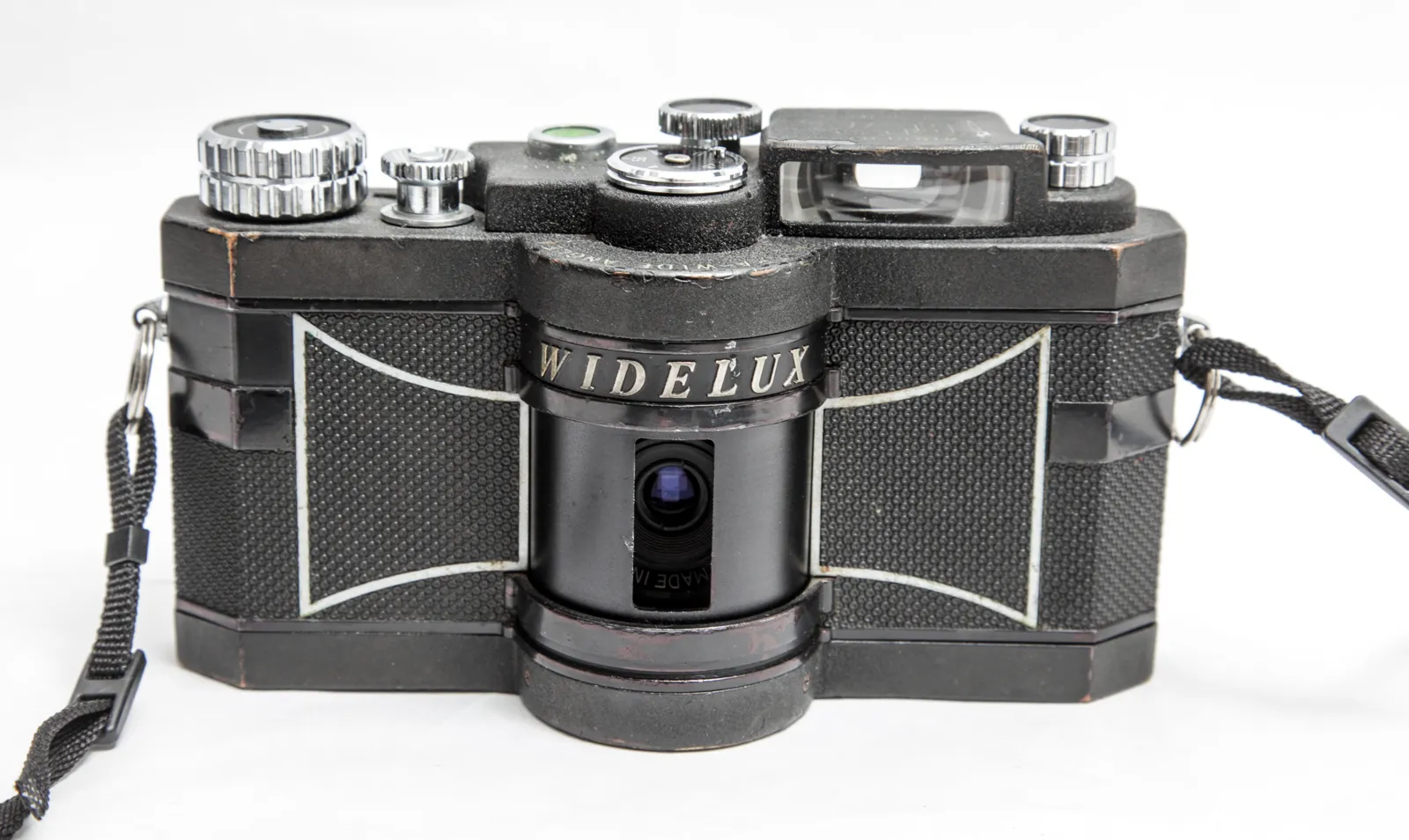
In 1958–1959 Panon launched the Widelux, a swing-lens panoramic camera for ordinary 35 mm film. Its 26 mm lens turned during the exposure and recorded a view of about 130 degrees on a frame of 24 × 58 mm, more than twice as long as a normal picture. It had no ordinary shutter, only a slit that turned with the lens.
The Widelux was made in several versions, among them the F6 of around 1970, which is in the museum. Only about 20,000 35 mm Widelux cameras are thought to have been made in all.
1979–2000
The camera of Jeff Bridges

The Widelux F7 of 1979 and the F8 of 1988 kept the same principle. In 1988 Panon also launched the Widelux 1500 for 120 film, with frames of 50 × 122 mm. The last 35 mm model, the F8, was made until 2000.
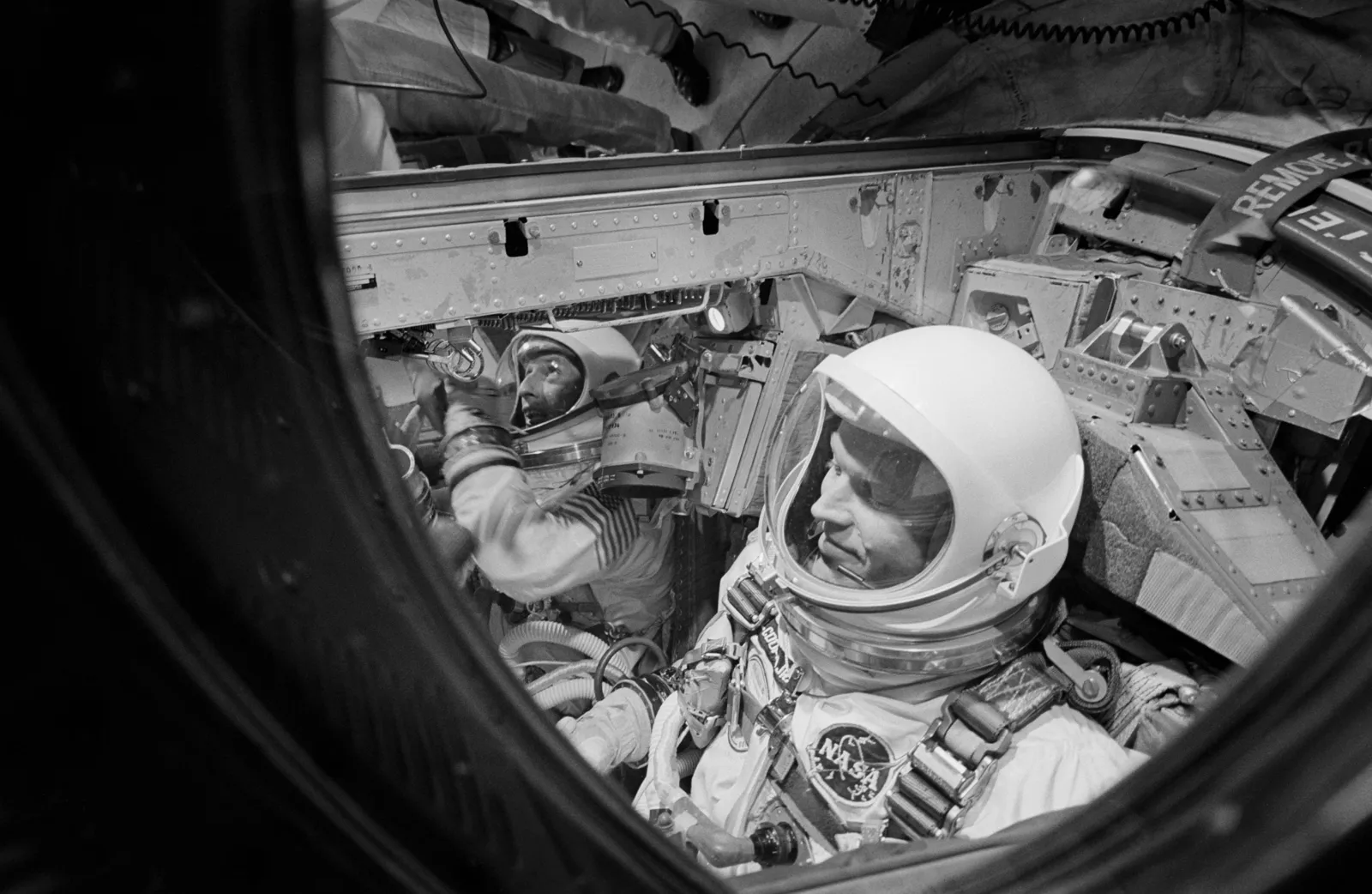
Photographers and artists loved its long images. Stanley Kubrick experimented with it, and the actor Jeff Bridges began in 1984 to photograph his film sets with a Widelux.
2000–today
From film to smartphones
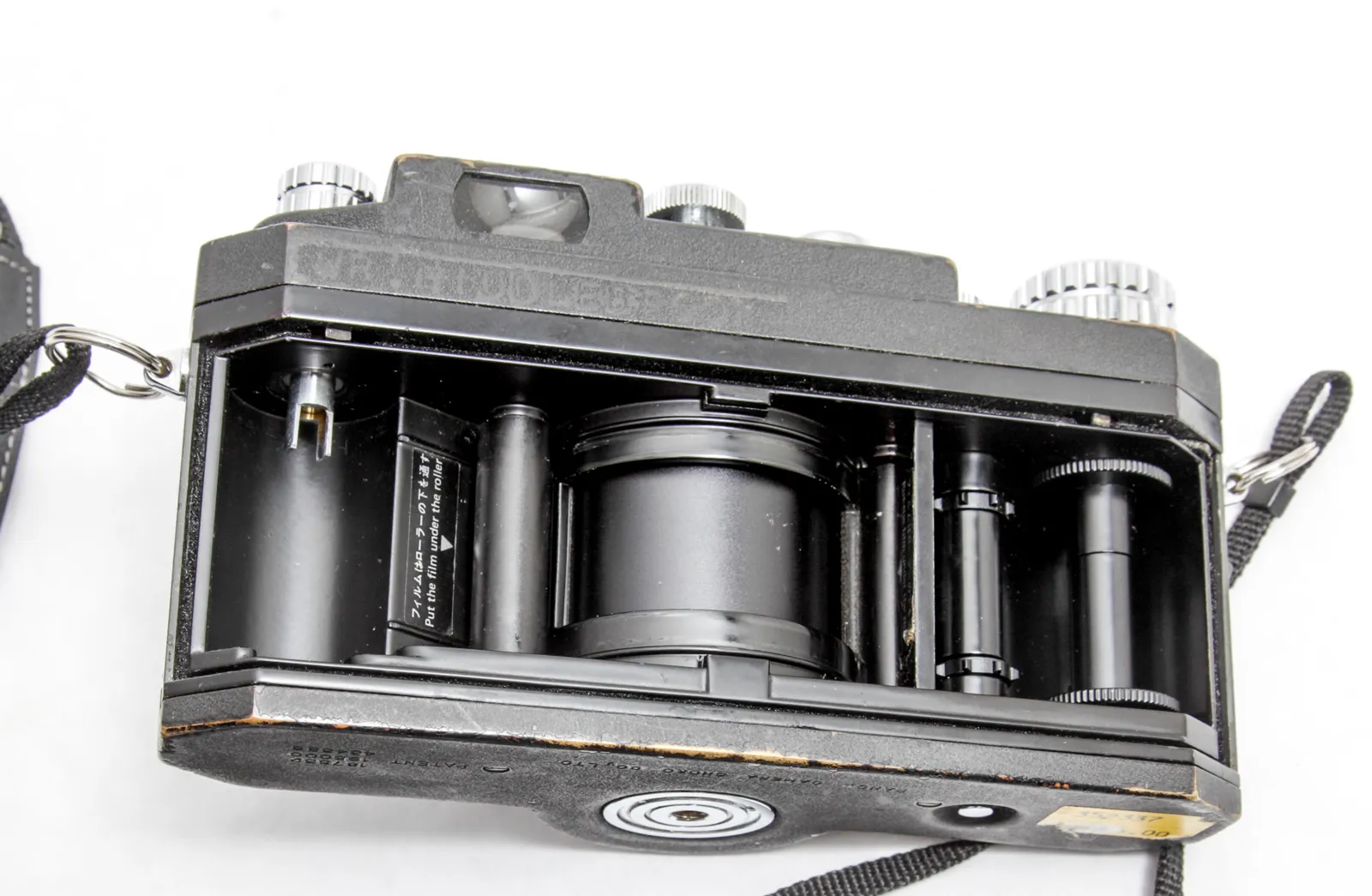
After 2000 Panon stopped making cameras; it is reported that its factory was damaged by a fire, and the company had disappeared by the mid-2000s. Used Widelux cameras became sought after, and their prices rose.
The idea lives on: the panorama mode of smartphones also builds a wide image bit by bit as you turn. And in the 2020s, with the support of Jeff Bridges, a new company announced the revival of the camera under the name WideluxX.
Panon at the 99 Cameras Museum
The Widelux F6, the swing-lens camera of Jeff Bridges and of a Gemini capsule, is in the showcases of the museum in Paris. You can see it, and the other cameras of this story, in our online collection.
See the Panon cameras of the collection
Sources. Wikipedia article on the Widelux, Collectiblend, Photographic Historical Society of New England, Digital Camera World and Notebookcheck articles. Some anecdotes come from oral tradition and are told as such.
Plan your visit
Visit is free and open to all
- Opening hoursMonday – Saturday : 10 – 17:30
- AddressStudio Harcourt, 6 Rue de Lota, 75116 Paris
- Exceptional closuresThursday, 26 November 2026