The adventure of the brands
The Gaumont story
- Founded in 1895France
- No longer makes cameras
A young clerk who bought his employer’s shop with Gustave Eiffel as a partner, a camera as flat as a notebook, a secretary who became the first woman film director, the largest cinema in the world and a daisy as a logo: the Gaumont story, told through its inventions and its anecdotes.
1864–1895
A clerk who bought the shop
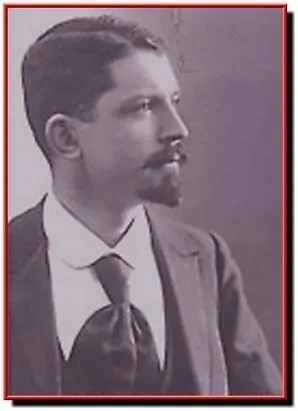
Léon Gaumont was born in Paris in 1864, into a modest family. Passionate about science, he followed evening classes and worked for precision instrument makers. In 1893 he became the manager of the Comptoir général de photographie, a Paris company selling photographic equipment.
In 1895 the owners fell out, and Gaumont took over the business with a few partners, among them the engineer Gustave Eiffel and the astronomer Joseph Vallot. The company became L. Gaumont et Cie. It was the same year as the first Lumière screening.
The people
1895–1910s
A camera like a notebook
In the museum
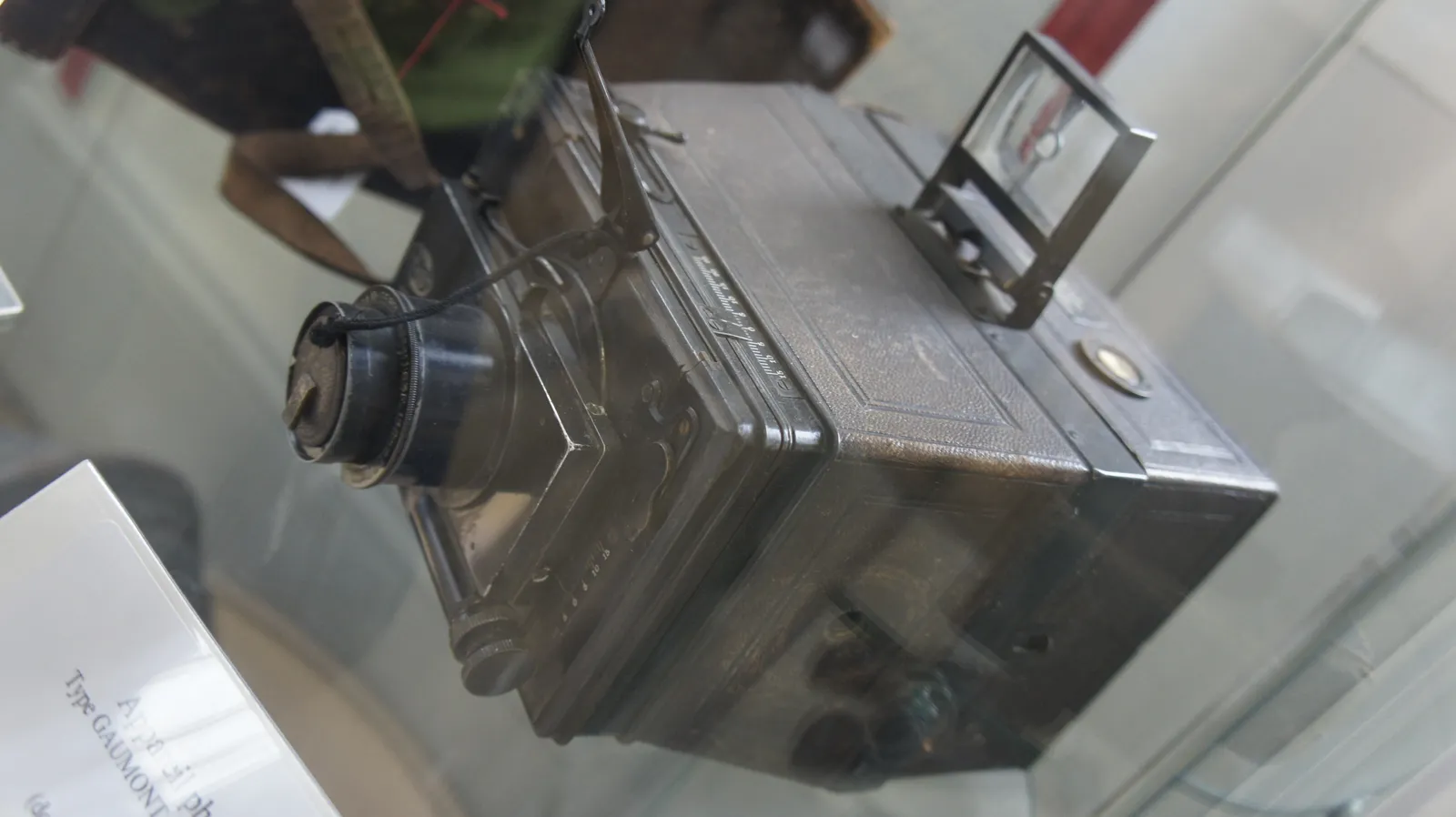
Gaumont first sold cameras and equipment for photographers. The Spido, a sturdy plate camera, was popular with reporters. Gaumont also sold the Chronophotographe of Georges Demenÿ, an assistant of the physiologist Étienne-Jules Marey, to make and show moving pictures.
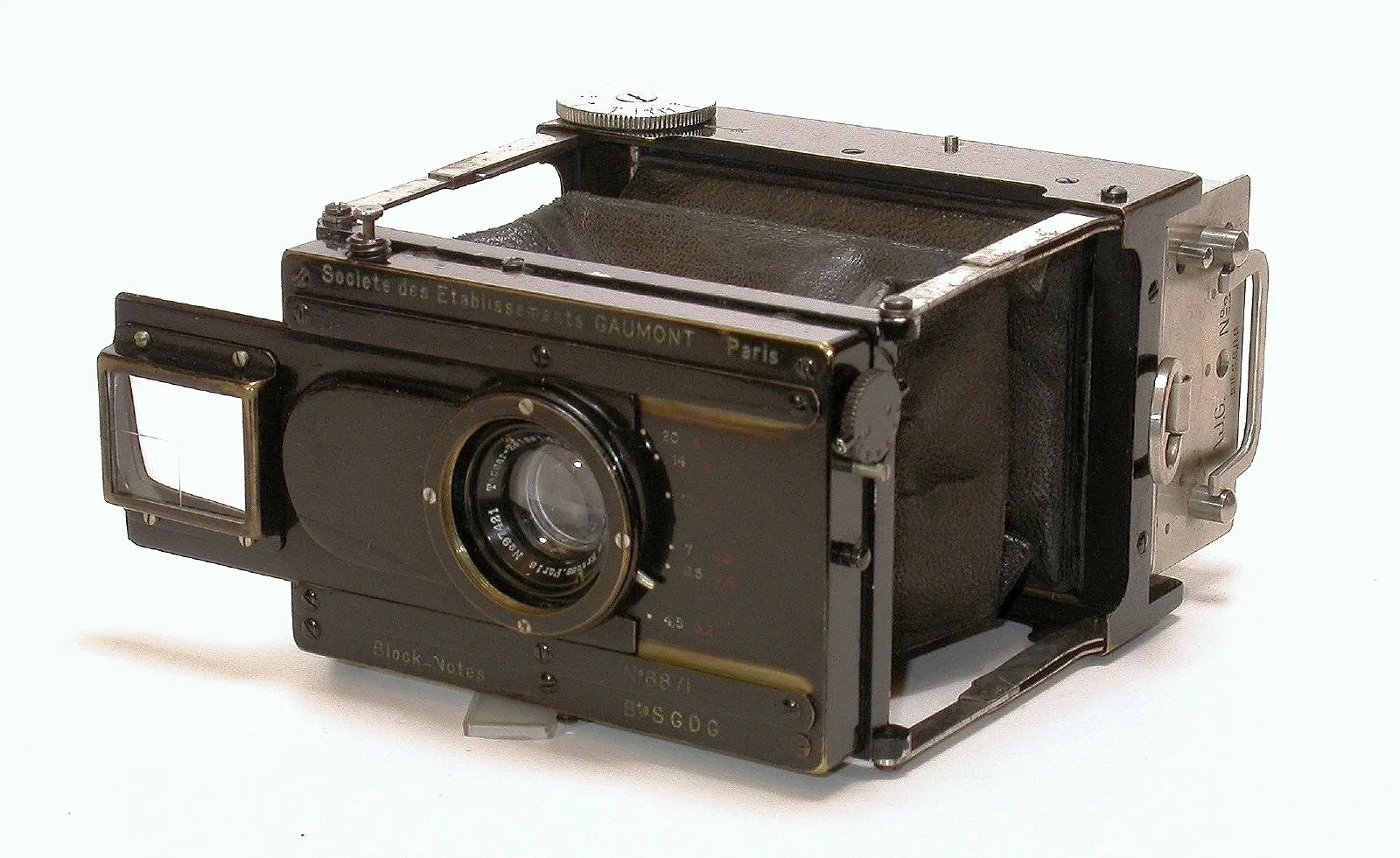
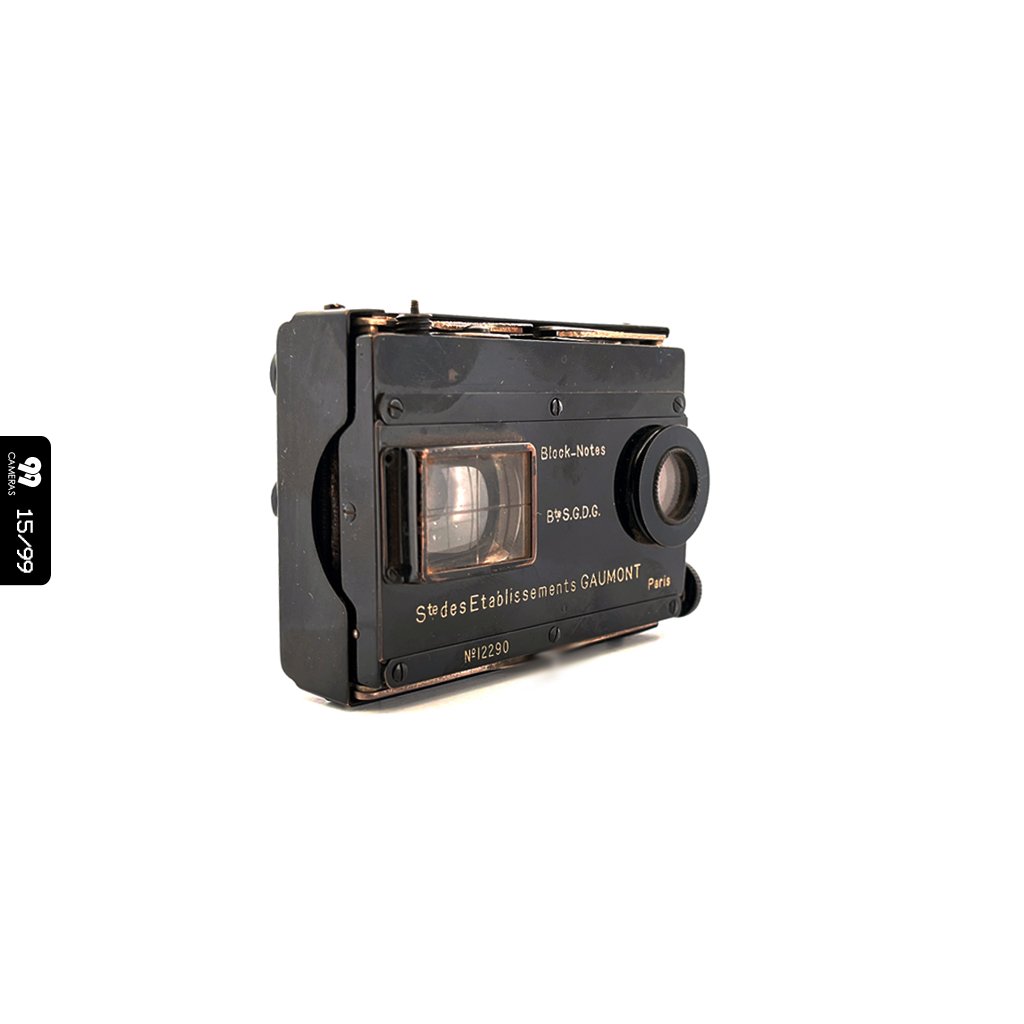
Around 1902–1903 came the Block-Notes, a folding camera so flat that it slipped into a pocket like a notebook. It used small glass plates and was sold for decades in several sizes. A Block-Notes is in the museum.
The people
1896–1907
A secretary behind the camera

Gaumont’s secretary, Alice Guy, thought that films could tell stories, not only show real scenes. Around 1896 she made La Fée aux choux (“The Cabbage Fairy”), one of the very first fiction films. She became the head of Gaumont’s film production, and is considered the first woman film director.
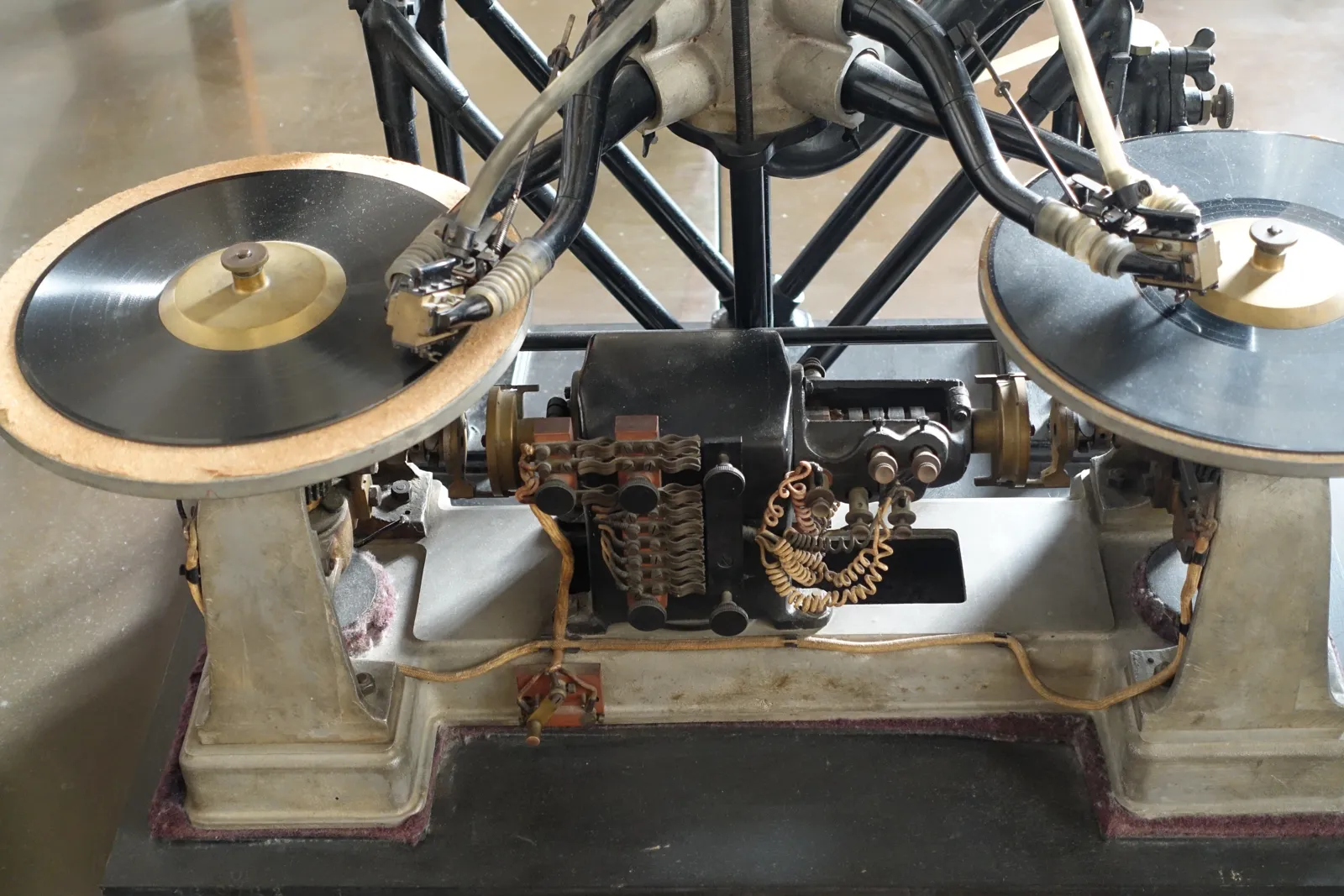
Gaumont also worked on sound. From 1902 the Chronophone synchronised a film projector with a phonograph, to show singers who seemed to sing on screen. Alice Guy made many of these “phonoscènes” before leaving for the United States in 1907, where she founded her own studio.
1905–1930s
The largest cinema in the world
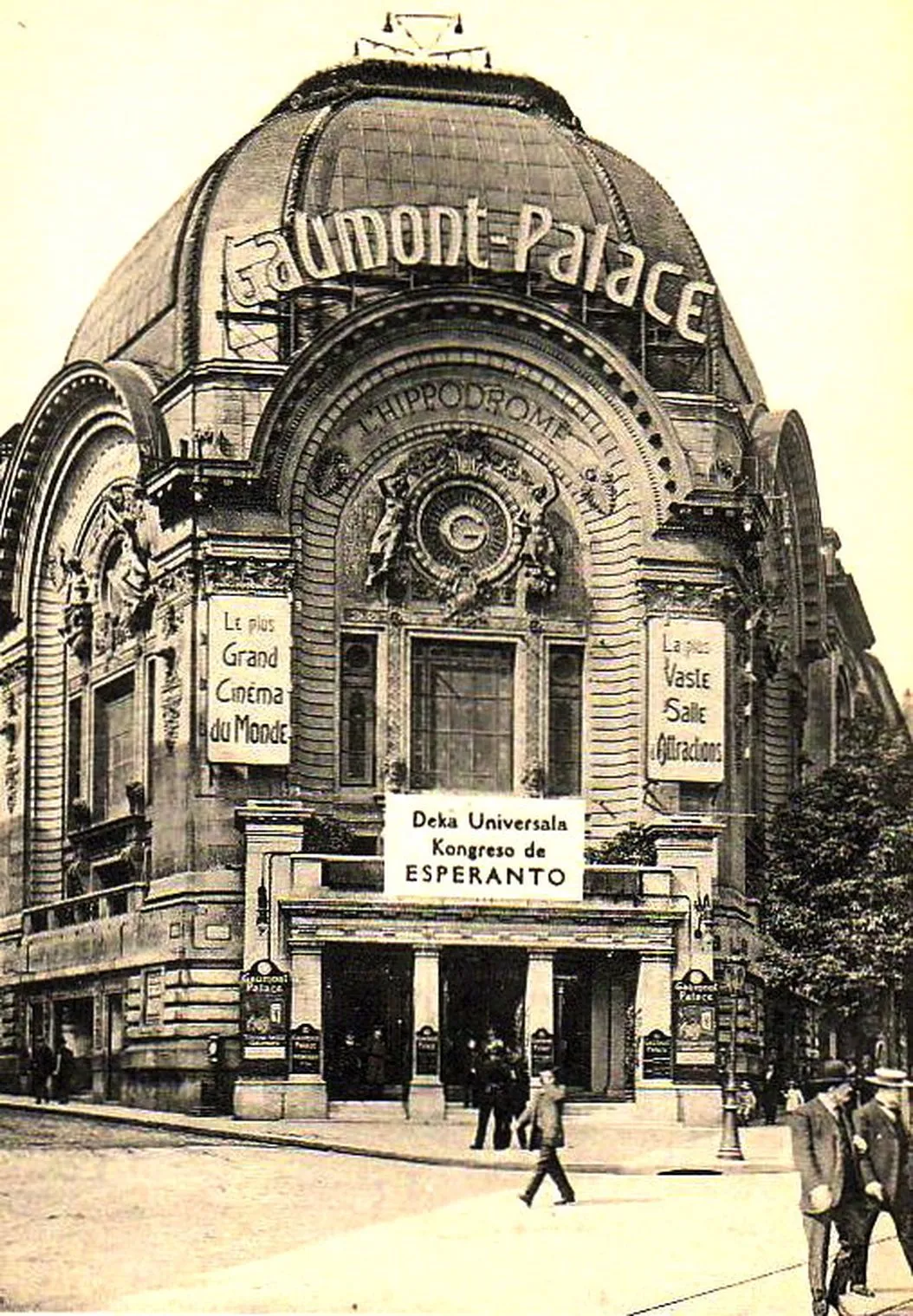
Gaumont built large film studios in the Buttes-Chaumont district of Paris and became, with its great rival Pathé, one of the two giants of French cinema. Louis Feuillade, Alice Guy’s successor, directed famous serials such as Fantômas in 1913 and Les Vampires in 1915.
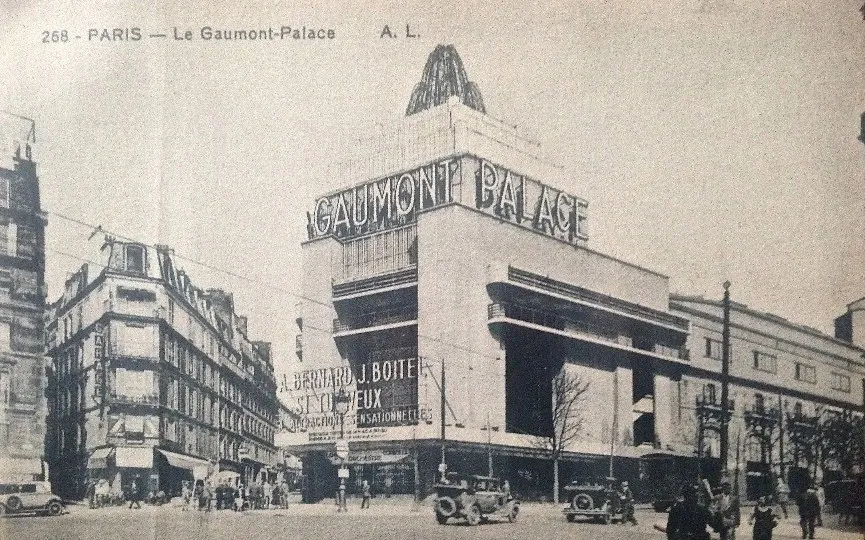
In 1911 Gaumont opened the Gaumont-Palace on place de Clichy, in a former hippodrome: with several thousand seats, it was presented as the largest cinema in the world. It was rebuilt with a new façade in 1931.
1930s–today
The oldest film company

Over time Gaumont left the camera business to concentrate on cinema. Léon Gaumont retired in 1930 and died in 1946. His company went through difficult years, mergers and changes of owners, but it never disappeared.
Gaumont is often described as the oldest film company in the world still in activity. It has produced and distributed films of Louis de Funès, Les Visiteurs and Intouchables, and its daisy still appears before its films.
Gaumont at the 99 Cameras Museum
The Gaumont Block-Notes, the camera as flat as a notebook, is in the showcases of the museum in Paris. You can see it, and the other cameras of this story, in our online collection.
See the Gaumont cameras of the collection
Sources. Gaumont company history, Wikipedia articles on Léon Gaumont, Gaumont and Alice Guy, Larousse dictionary of cinema, Museum of the History of Science (Oxford), George Eastman Museum. Some anecdotes come from oral tradition and are told as such.
Plan your visit
Visit is free and open to all
- Opening hoursMonday – Saturday : 10 – 17:30
- AddressStudio Harcourt, 6 Rue de Lota, 75116 Paris
- Exceptional closuresThursday, 26 November 2026