The adventure of the brands
The Rollei story
Two men who left Voigtländer, a camera you look down into, the favourite of Paris street photographers and of a Chicago nanny, a tiny 35 mm that nobody else wanted and a factory in Singapore: the story of Franke & Heidecke and the Rolleiflex, told through its inventions and its anecdotes.
1920–1928
Two men from Voigtländer
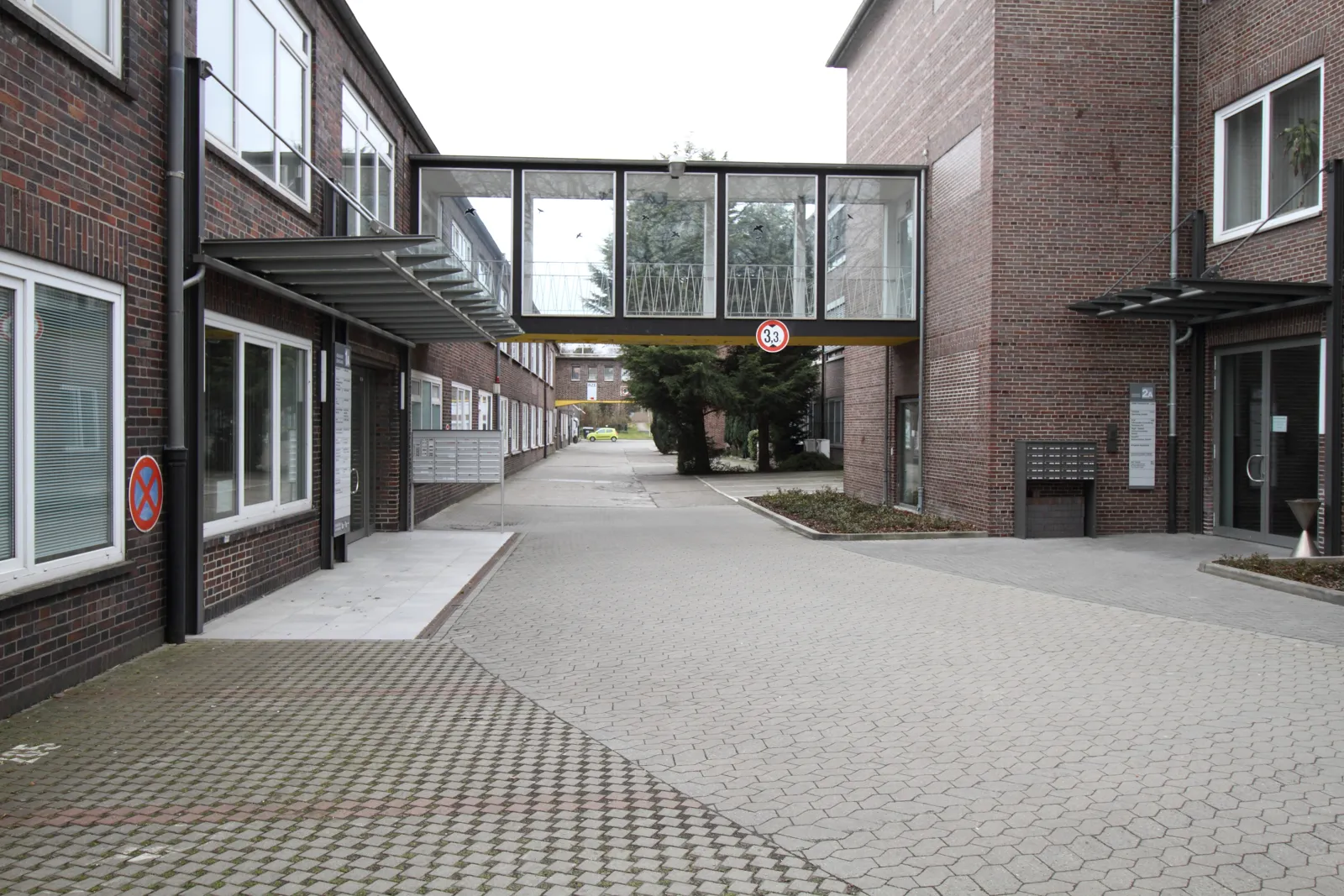
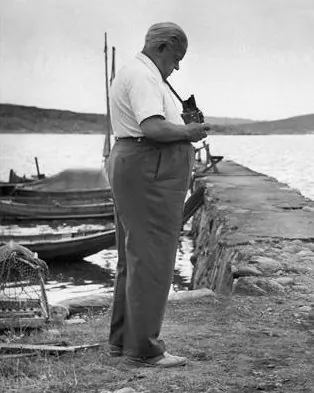
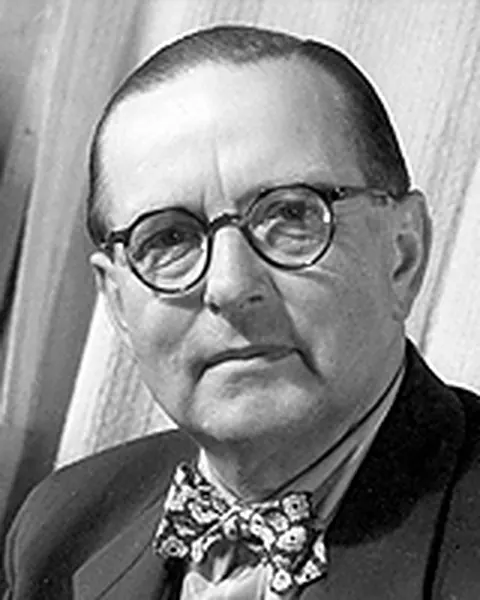
In 1920, in Braunschweig, the town of Voigtländer, two men started their own company: Reinhold Heidecke, a precision mechanic who had run a workshop at Voigtländer, and Paul Franke, a businessman. They called it Franke & Heidecke.
Their first camera, the Heidoscop of 1921, was a stereo camera with three lenses: two to take a pair of pictures in relief, a third in the middle to frame and focus. It was a success, and it already contained the idea that would make their fortune: a separate lens just for viewing.
1929–1939
A camera you look down into
In the museum
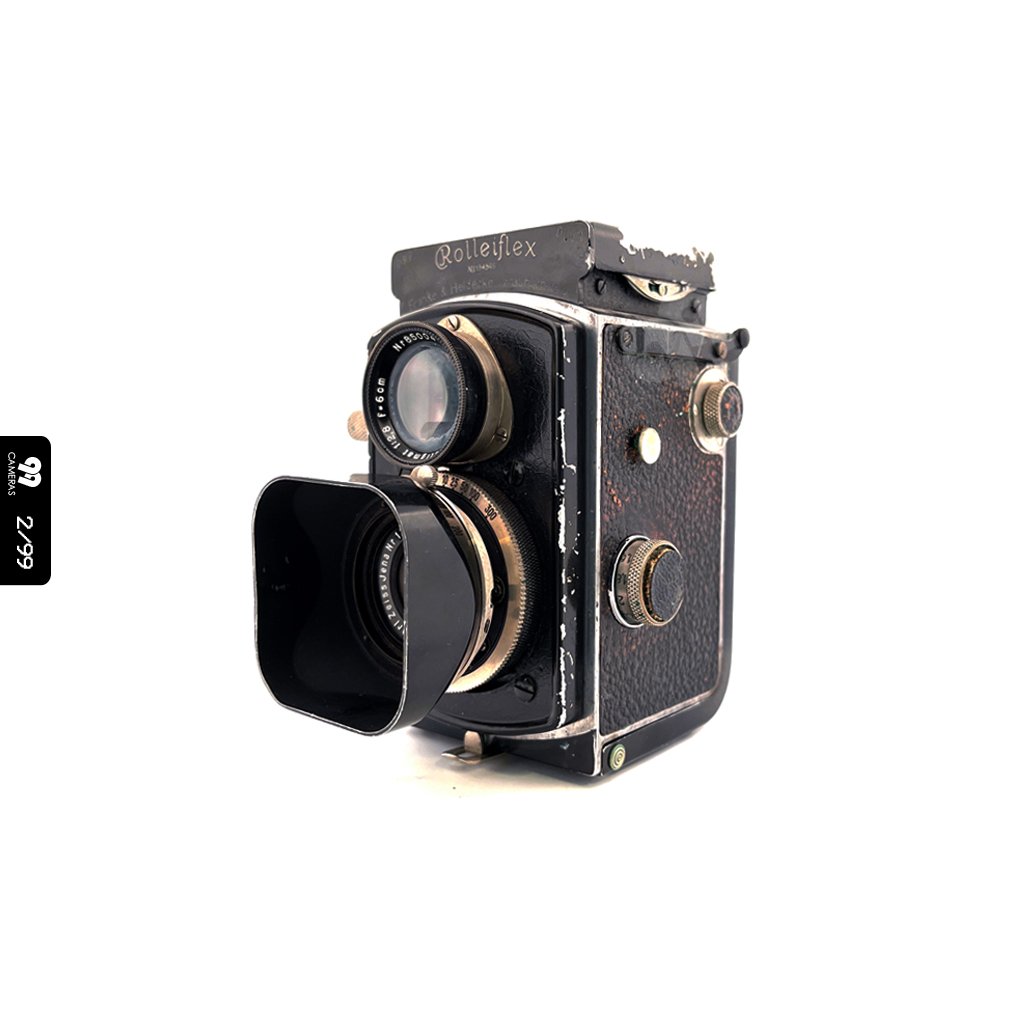
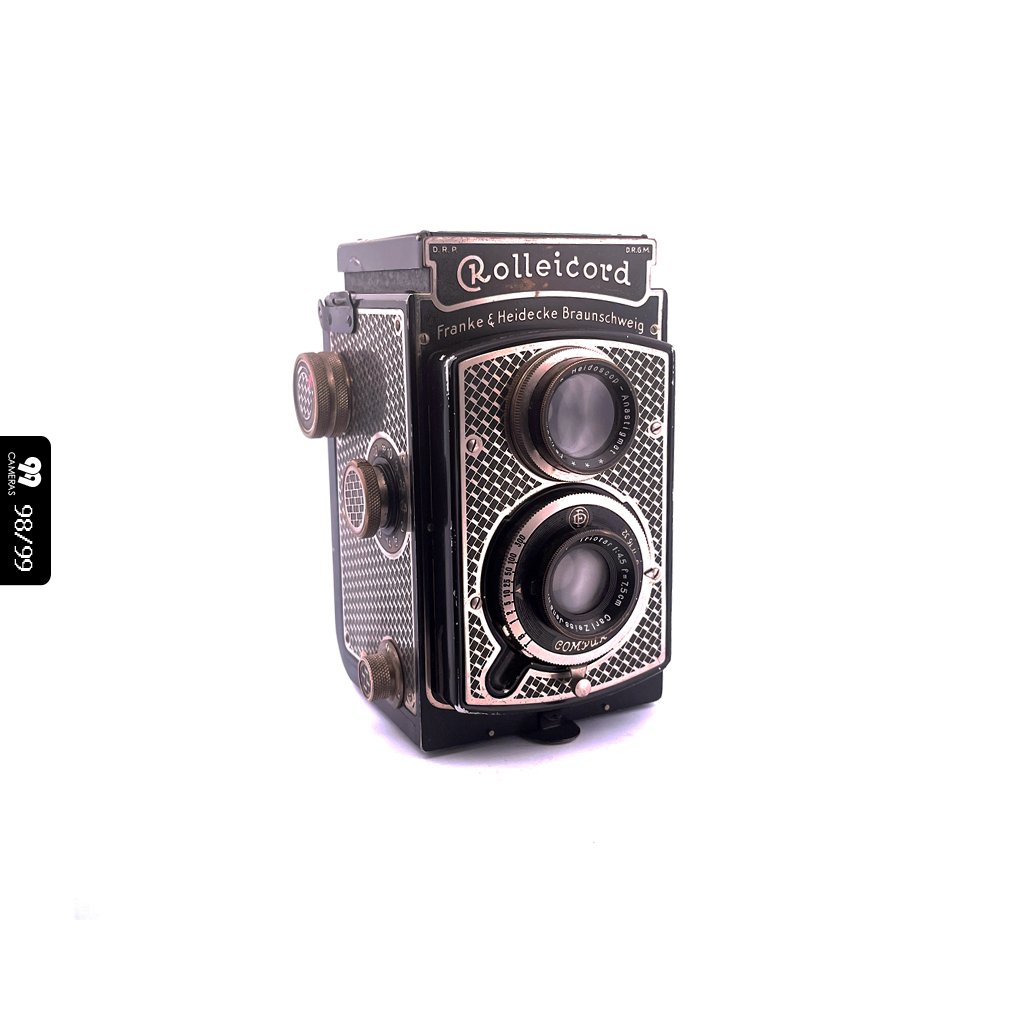
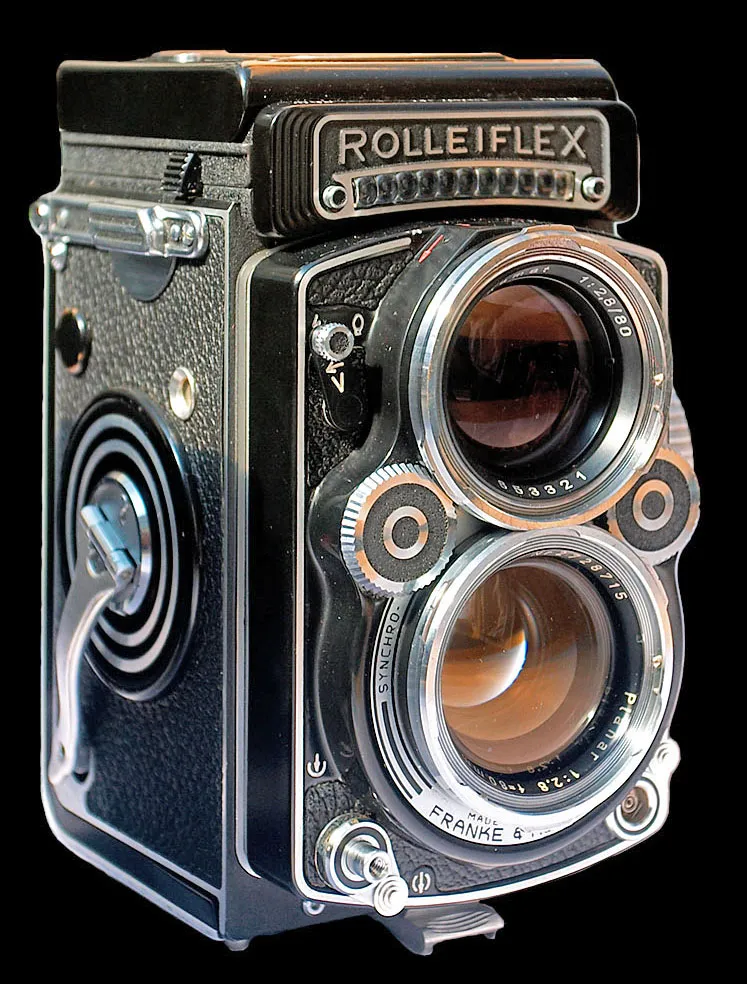
In 1929 Franke & Heidecke launched the Rolleiflex: two lenses one above the other, the top one sending the image to a ground-glass screen that you looked at from above, the bottom one taking the picture on 6 × 6 cm roll film. The photographer held the camera at the chest and saw a large, bright image, right side up but reversed left to right.
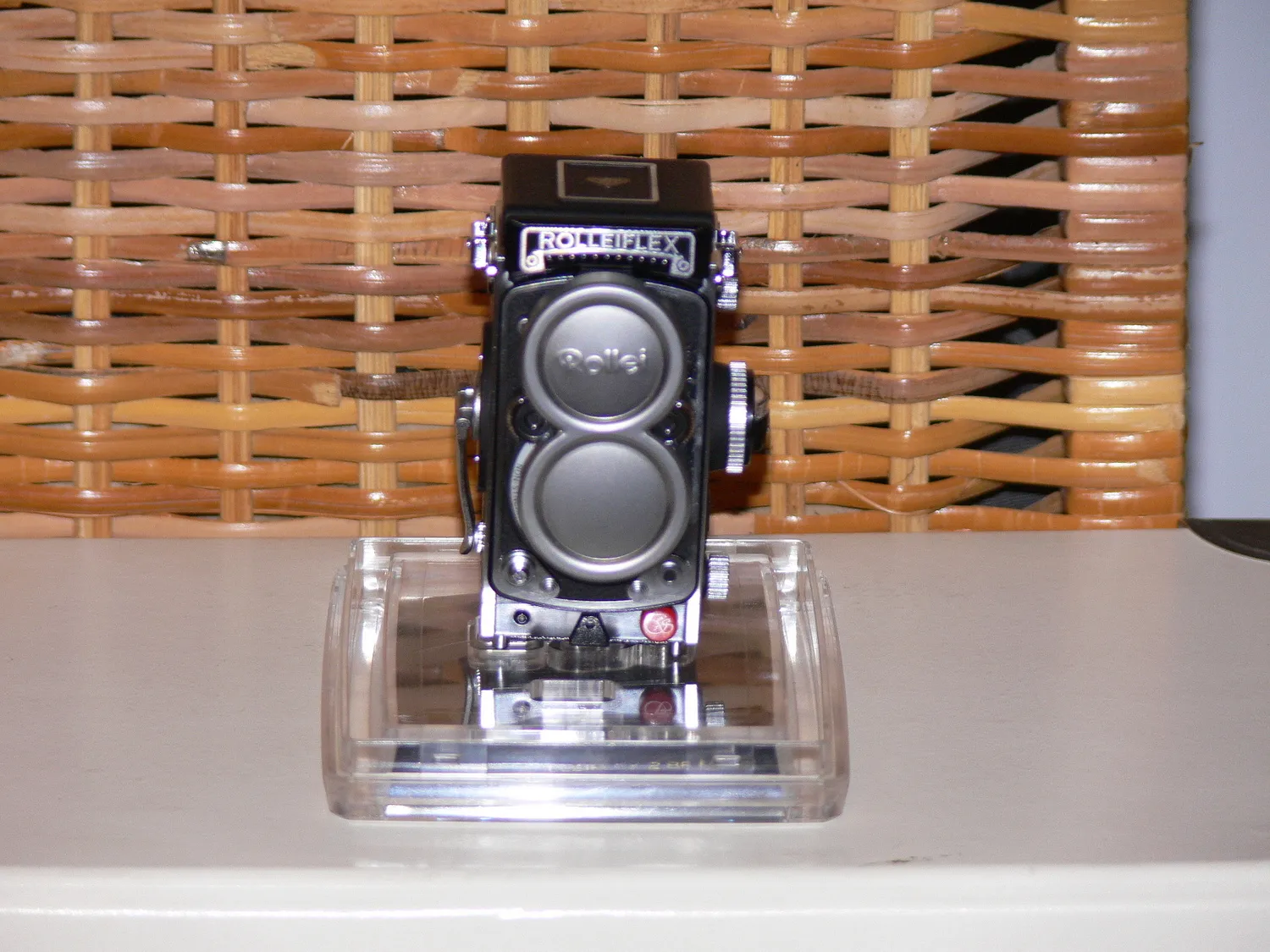
Light, quiet, fast to use and giving big square negatives, the Rolleiflex conquered professionals and amateurs. A smaller version, the Baby Rolleiflex of 1931, used 4 × 4 cm pictures, and the cheaper Rolleicord of 1933, with its Art Deco front, opened the camera to a wider public.
1945–1960
The camera of the street
In the museum
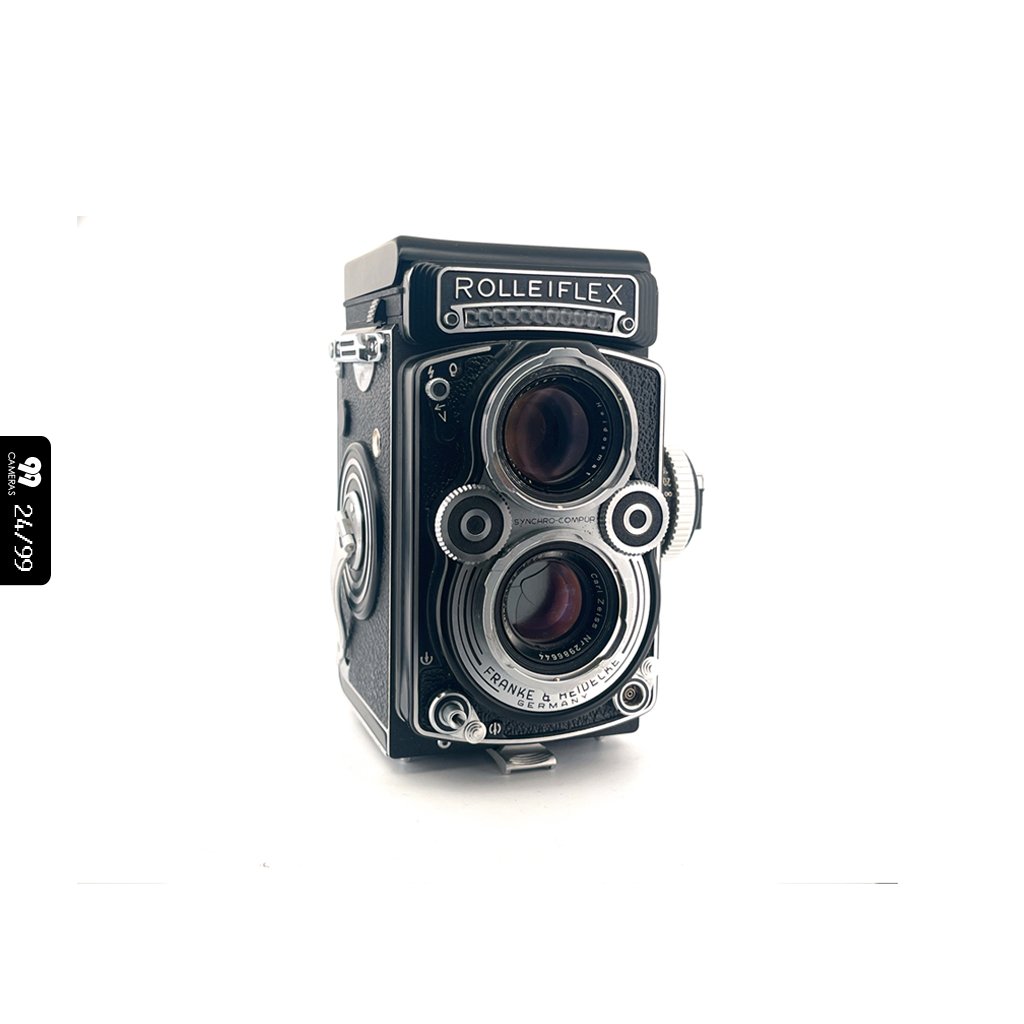
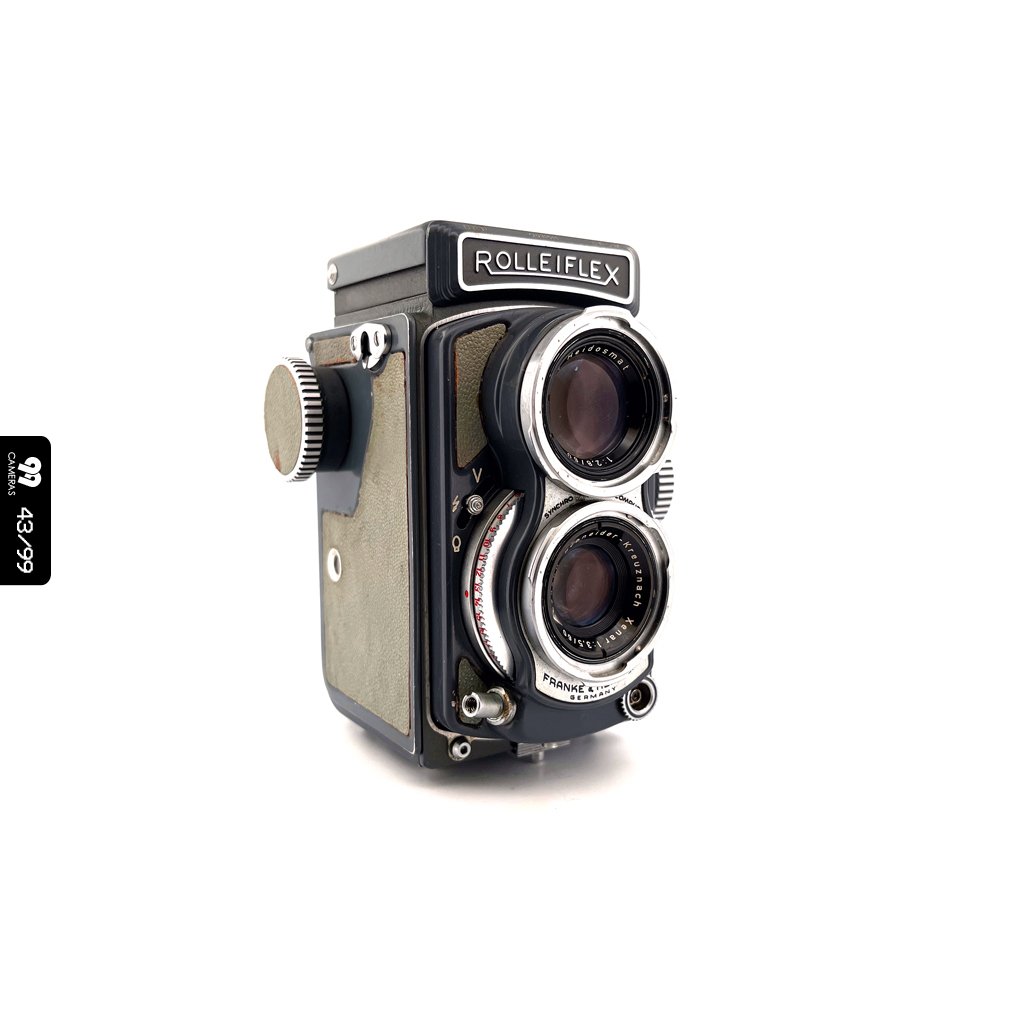
After the war, the Rolleiflex became the camera of a generation of photographers. In Paris, Robert Doisneau, Willy Ronis and many others photographed the streets, the cafés and the people of the city with it. In New York, Diane Arbus and Richard Avedon used it, and so did countless wedding and studio photographers around the world.
The Rolleiflex kept improving, up to the 2.8F of 1960 with its built-in light meter, in the museum, and the grey “baby” of 1957. Reinhold Heidecke died in 1960, but his camera had become a classic that would be made for decades.
1966–1974
New ideas, new risks
In the museum
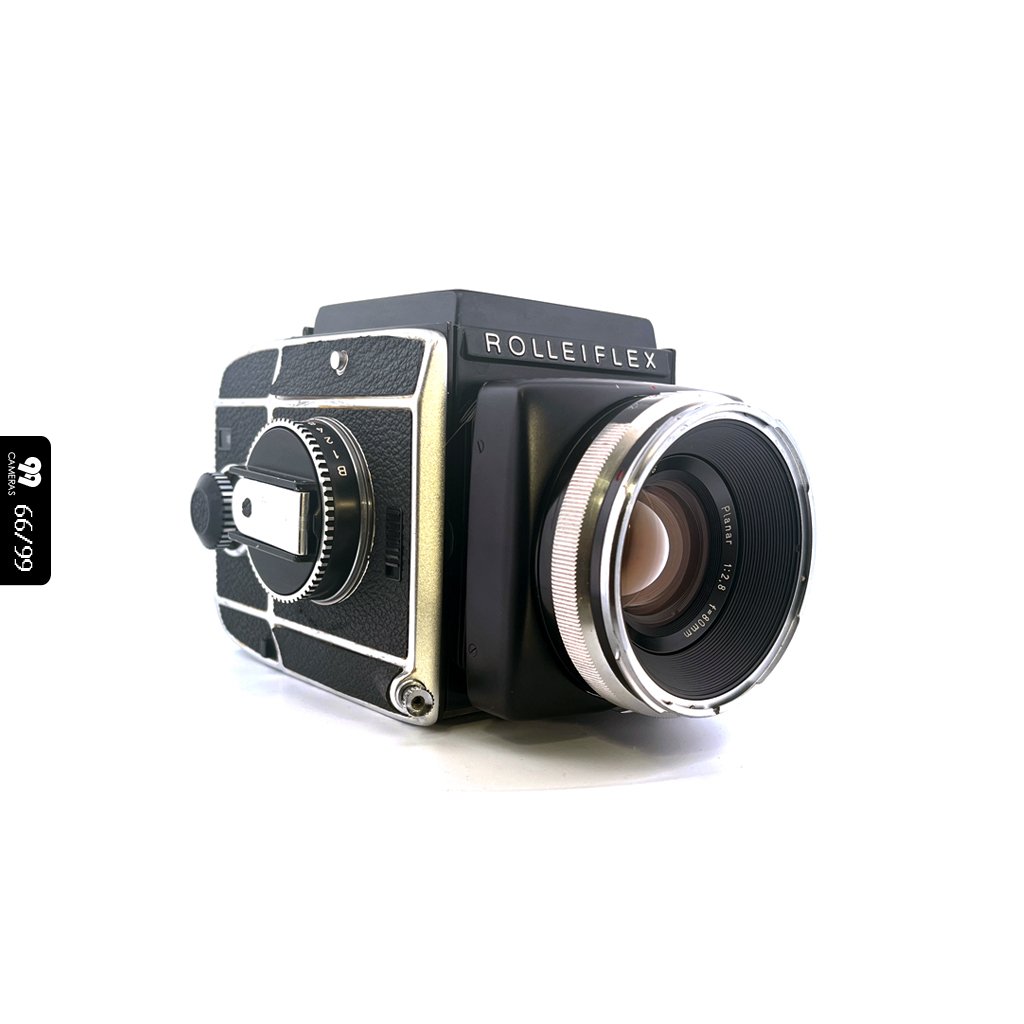
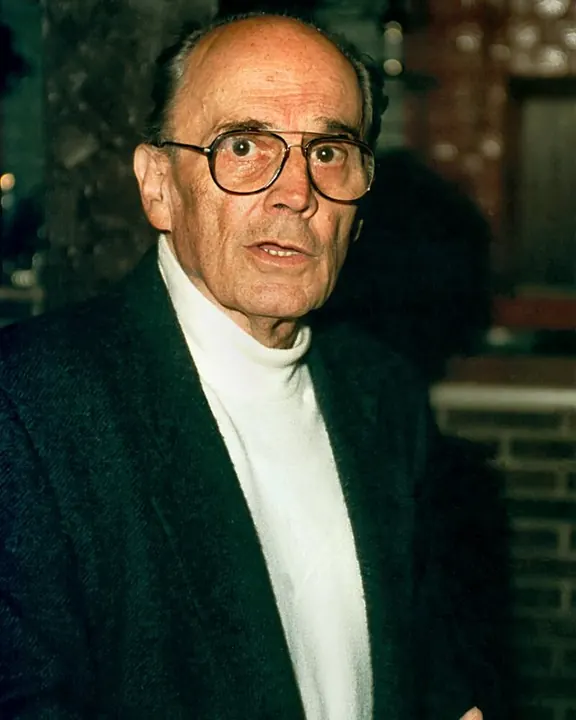
In the 1960s Rollei tried to go beyond the twin-lens reflex. In 1966 came the Rolleiflex SL66, a single-lens reflex for 6 × 6 cm film, with a bellows that allowed the lens to tilt, like on a large studio camera. Engineers such as Claus Prochnow worked on it in Braunschweig, “the oldest camera town”, as he liked to say.
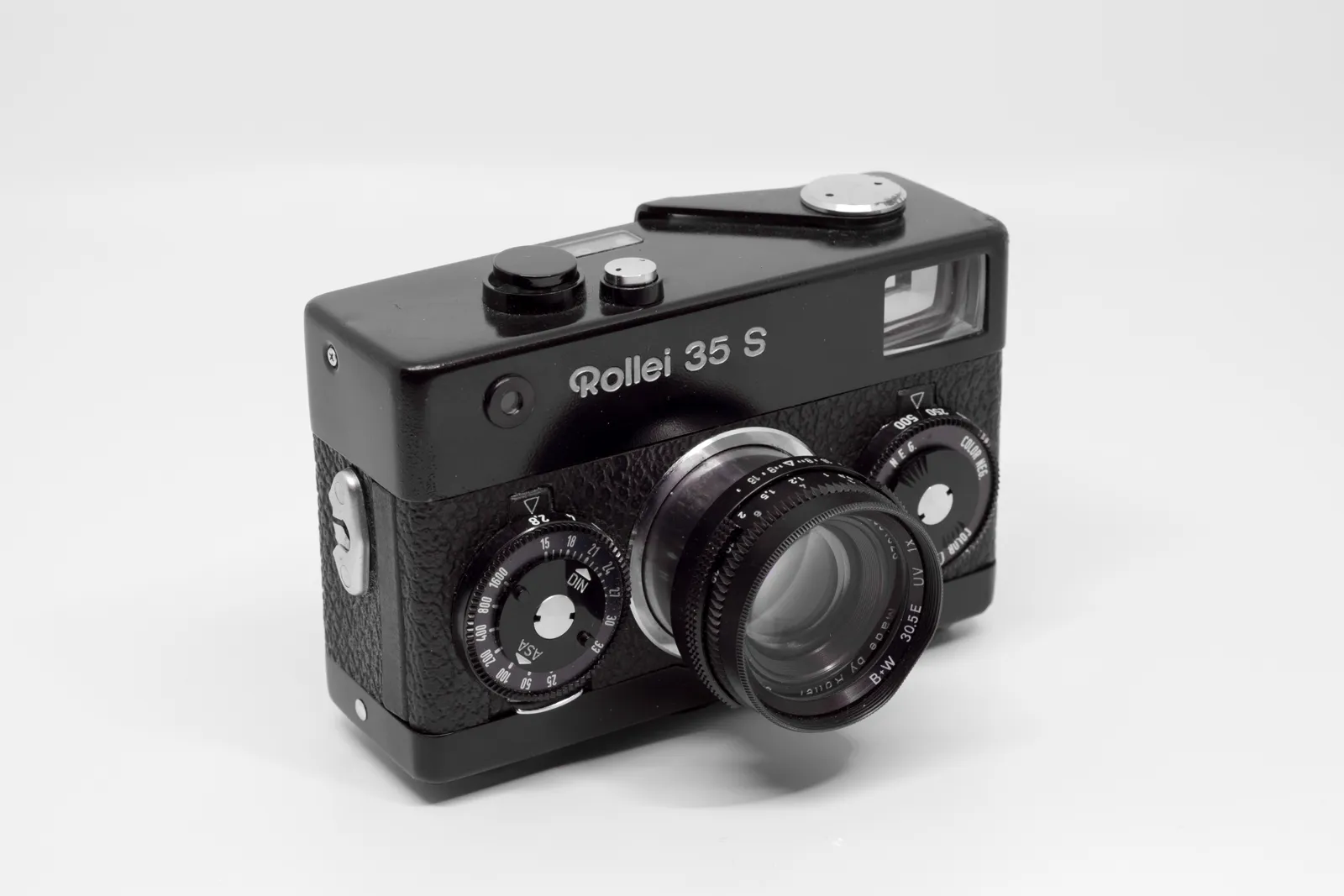
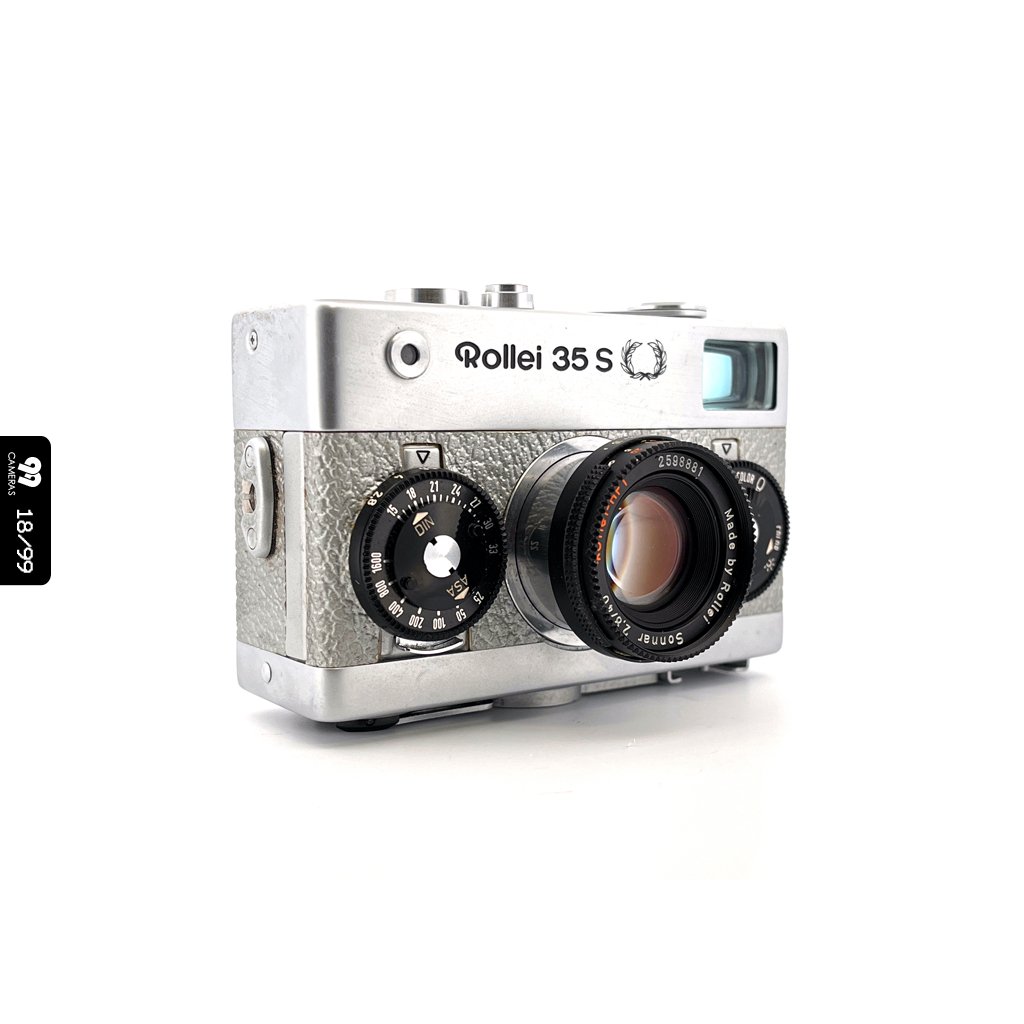
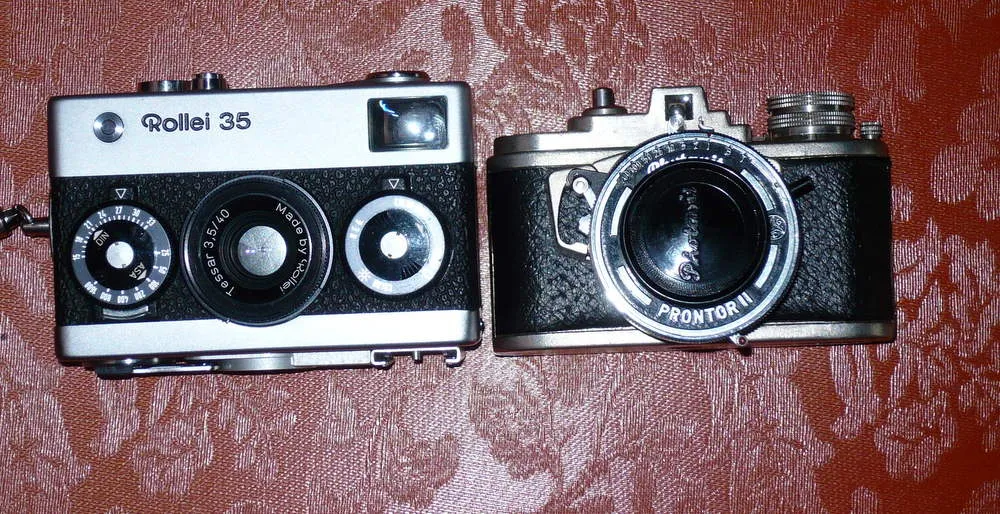
The same year Rollei launched a tiny camera that was to become one of its greatest successes, the Rollei 35. The company also took over the old Voigtländer name in the early 1970s, and opened a large factory in Singapore to lower its costs.

1970–1981
Too far, too fast
To compete with Japan, Rollei moved much of its production to Singapore from 1970, with thousands of workers. It launched many new products: reflex cameras for 35 mm film, flashes, projectors. But the investments were huge and the products did not sell well enough.
In 1981 Rollei went bankrupt. The Singapore factory closed, and a smaller company took over the Braunschweig business in 1982.
1982–2015
The last twin-lens reflex
After the bankruptcy, Rollei changed owners several times. The Braunschweig company, renamed Franke & Heidecke for a time, went on making Rolleiflex twin-lens reflexes and medium-format cameras for professionals, in small numbers and at high prices.
The last company to make the Rolleiflex twin-lens reflex stopped production in the mid-2010s. For more than eighty years, from 1929, Braunschweig had made the same kind of camera, improved again and again.
2015–today
The square that lives on
The Rollei name is still used today for photographic products, and the Rolleiflex has a new life among film photographers, who prize its silence, its sharp lenses and its square pictures.
The 6 × 6 square, made famous by the Rolleiflex, never really left photography: it came back in a new form on Instagram, whose first pictures were square. The way of seeing invented in Braunschweig in 1929 is still with us.
Rollei at the 99 Cameras Museum
From the Baby Rolleiflex of 1931 and the Rolleicord “Art Deco” to the Rolleiflex 2.8F, the SL66 and the Rollei 35 Jubilee, you can see the cameras of this story in the showcases of the museum in Paris, and in our online collection.
See the Rollei cameras of the collection
Sources. Wikipedia articles on Rollei, the Rolleiflex and the Rollei 35, Rollei company history, Vivian Maier archive, Digital Camera World and Catawiki articles on Rollei. Some anecdotes come from oral tradition and are told as such.
Plan your visit
Visit is free and open to all
- Opening hoursMonday – Saturday : 10 – 17:30
- AddressStudio Harcourt, 6 Rue de Lota, 75116 Paris
- Exceptional closuresThursday, 26 November 2026