The adventure of the brands
The Argus story
- Founded in 1931United States
- No longer makes cameras
A radio company in Ann Arbor, the first cheap 35 mm camera in America, a camera shaped like a brick that sold by the millions, a soldier who photographed the war with it and a cameo in Harry Potter: the Argus story, told through its inventions and its anecdotes.
1931–1935
A radio company

In 1931 three businessmen, among them Charles Verschoor, founded the International Radio Corporation in Ann Arbor, Michigan. At first it made radios, in the middle of the Great Depression.
Radios sold mostly in the autumn and winter, and the company looked for a product to keep its factory busy all year. It chose cameras.
1936–1941
The brick
In the museum
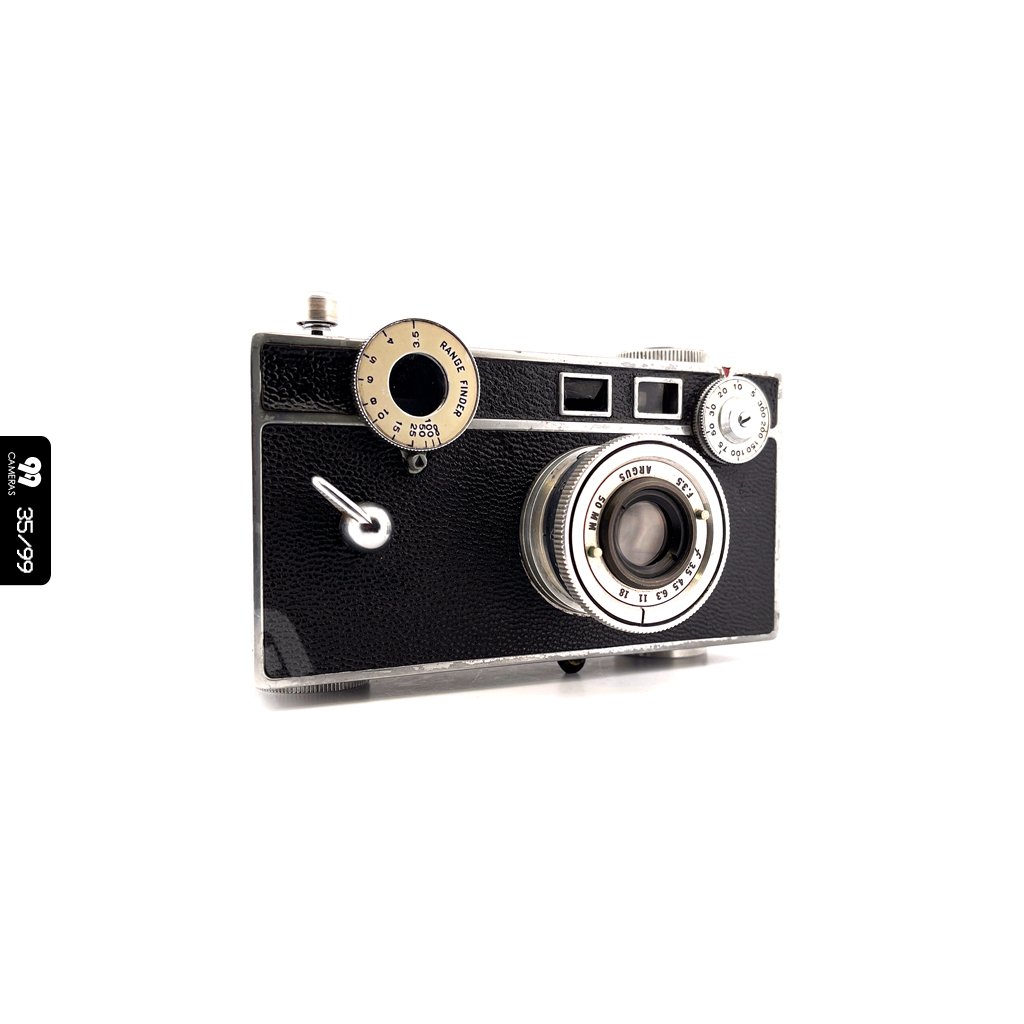
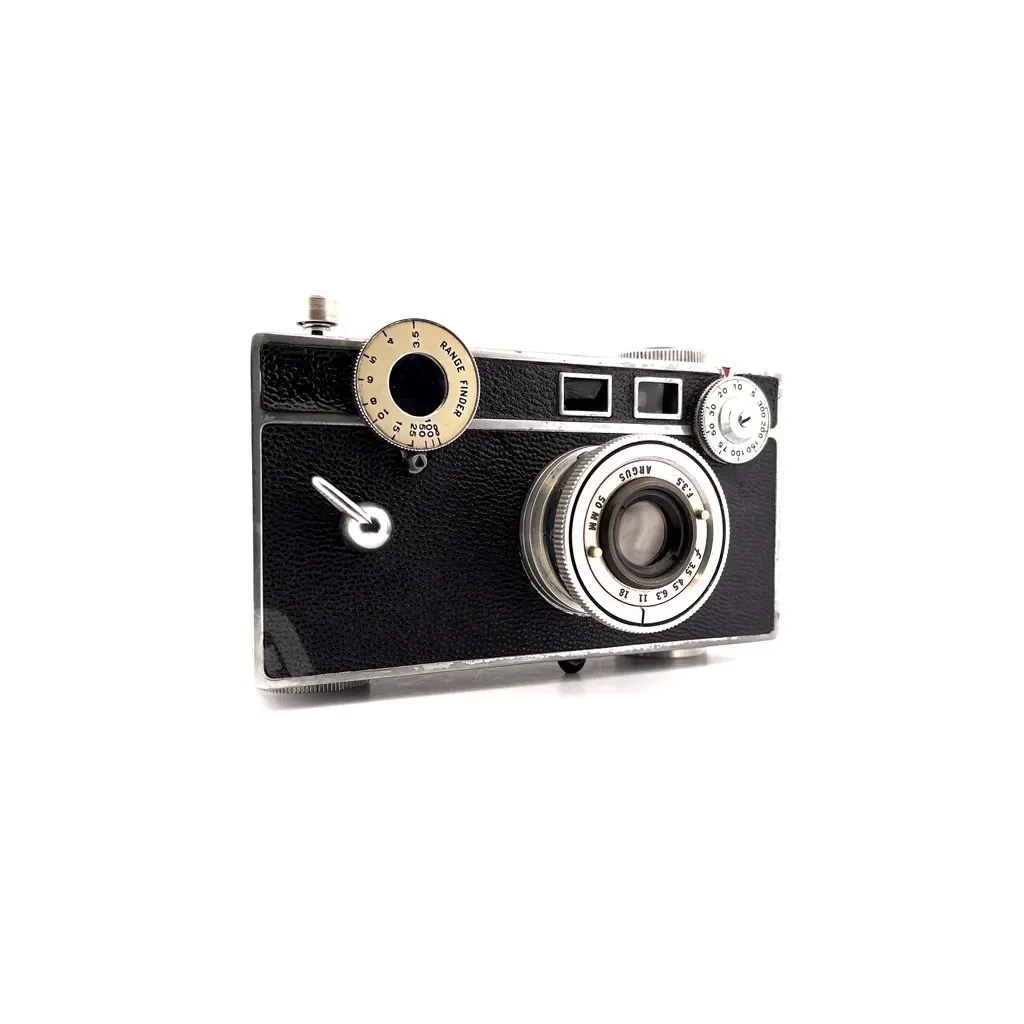
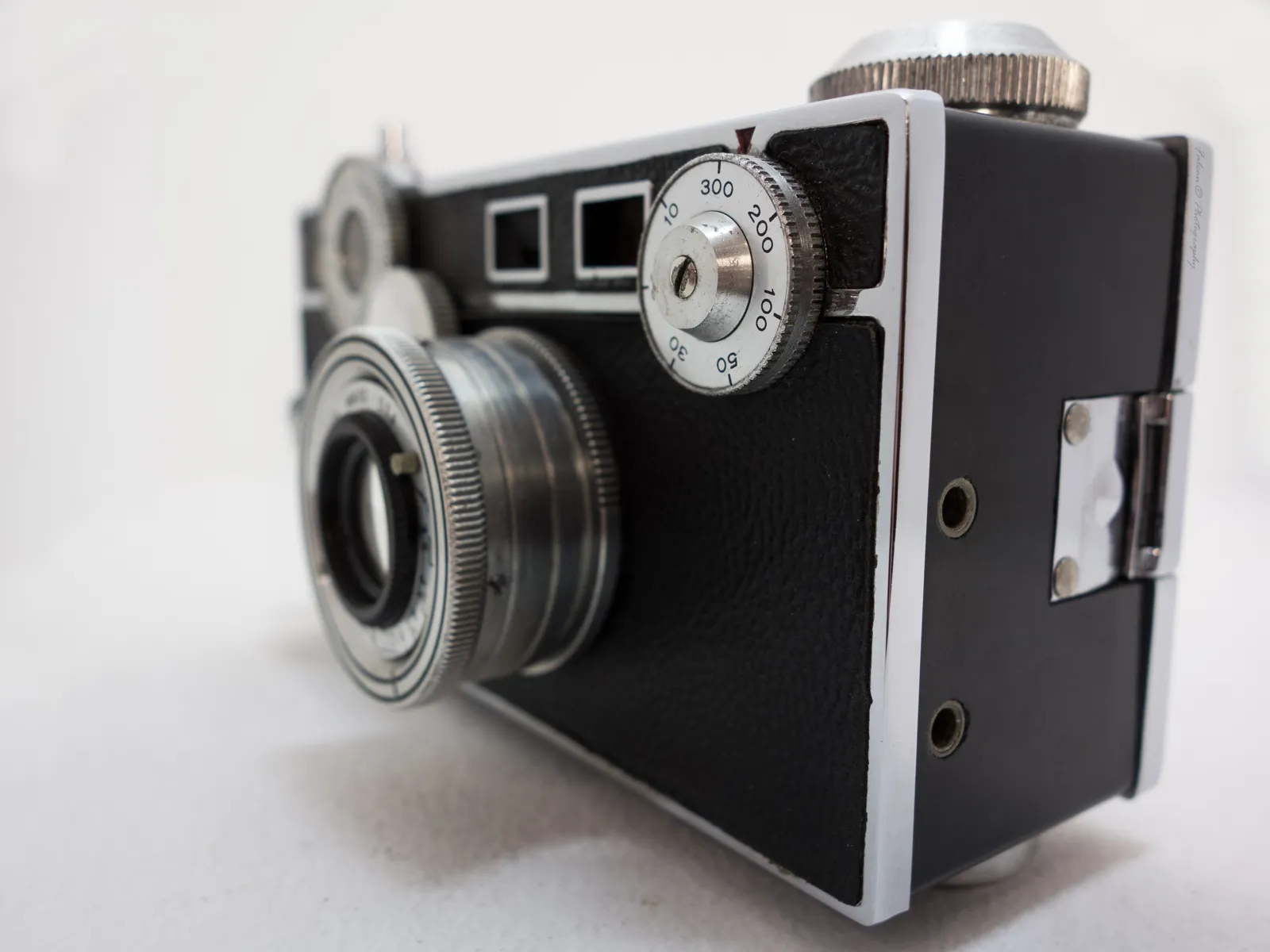
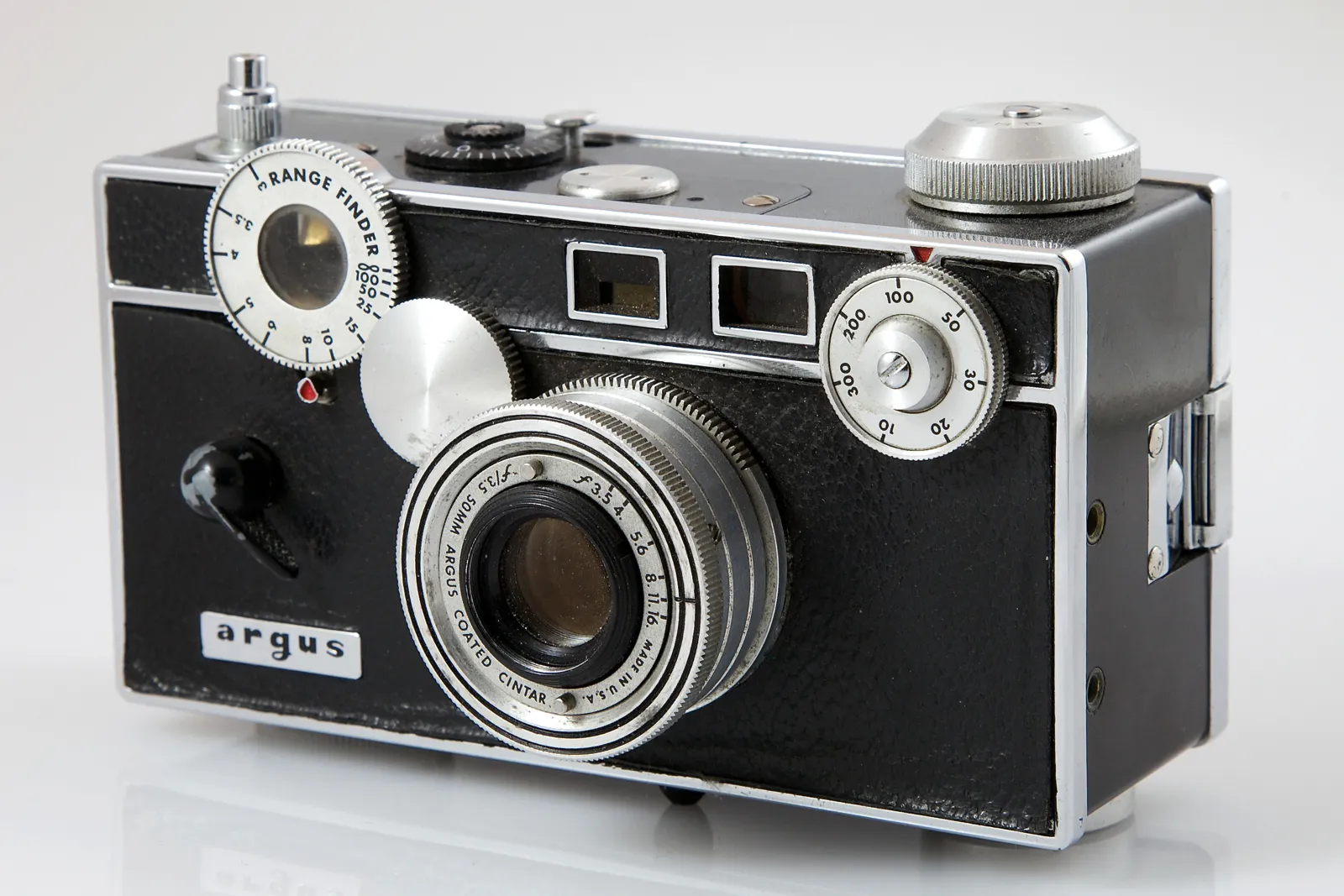
In May 1936 the company launched the Argus A, the first low-cost 35 mm camera in the United States. In 1938 came the Argus C, designed by the engineer Gustave Fassin: a boxy rangefinder of bakelite and metal, quickly improved as the C2 and then the C3. The Argus C is in the museum.
The C3 was made for nearly thirty years and sold more than two million copies. It was one of the best-selling cameras in history, the first 35 mm camera of countless Americans.
The people
1942–1945
A camera at war
In August 1942 Argus stopped making cameras for the public and worked for the war effort, producing military optics and radio equipment.
Many American soldiers carried their own Argus. The best known is Tony Vaccaro, a young infantryman who photographed the war in Europe from the front line with an Argus C3, and later became a famous fashion and portrait photographer.

1946–today
From Ann Arbor to Hogwarts
After the war Argus launched new cameras, and in 1956 the C44 used one of the first lenses designed with the help of a computer. But Japanese and German competition was growing. The company was bought by Sylvania in 1957, then sold again, and camera production ended in the late 1960s.
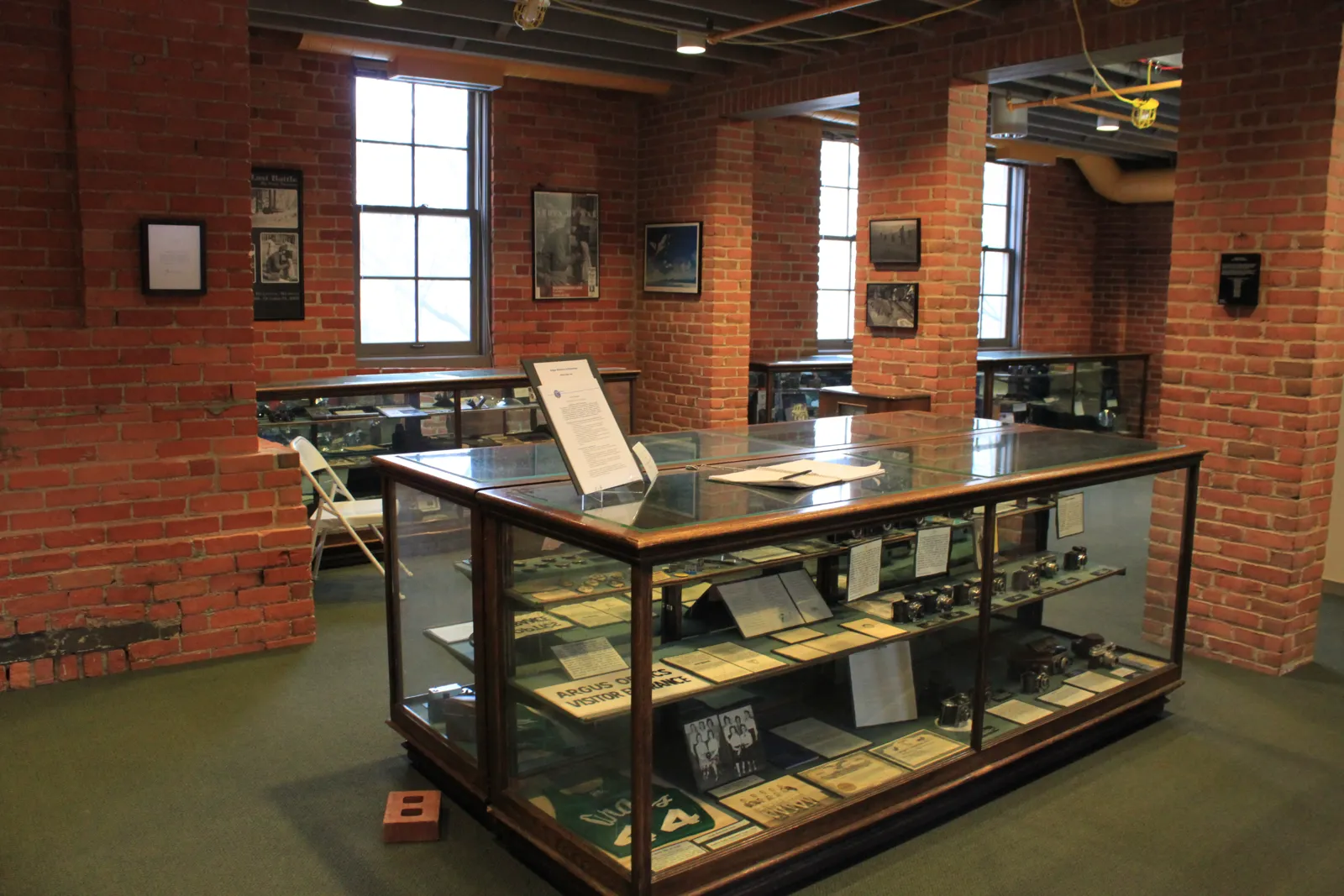
The Argus building in Ann Arbor houses today a small Argus museum. And the C3 had one last moment of fame: it is the camera of the young photographer Colin Creevey in the film Harry Potter and the Chamber of Secrets (2002).
Argus at the 99 Cameras Museum
The Argus C of 1938, the first of the “bricks”, is in the showcases of the museum in Paris. You can see it, and the other cameras of this story, in our online collection.
See the Argus cameras of the collection
Sources. Wikipedia article on Argus, Argus Museum Ann Arbor, Camera-wiki. Some anecdotes come from oral tradition and are told as such.
Plan your visit
Visit is free and open to all
- Opening hoursMonday – Saturday : 10 – 17:30
- AddressStudio Harcourt, 6 Rue de Lota, 75116 Paris
- Exceptional closuresThursday, 26 November 2026