Brand stories
The Kodak story
A bank clerk who never took his holiday, a camera for a dollar, two musicians who invented colour film, a war against Polaroid and the digital camera Kodak was afraid of: the story of the company that put a camera in every family, told through its inventions and its anecdotes.
1877–1888
A bank clerk’s holiday
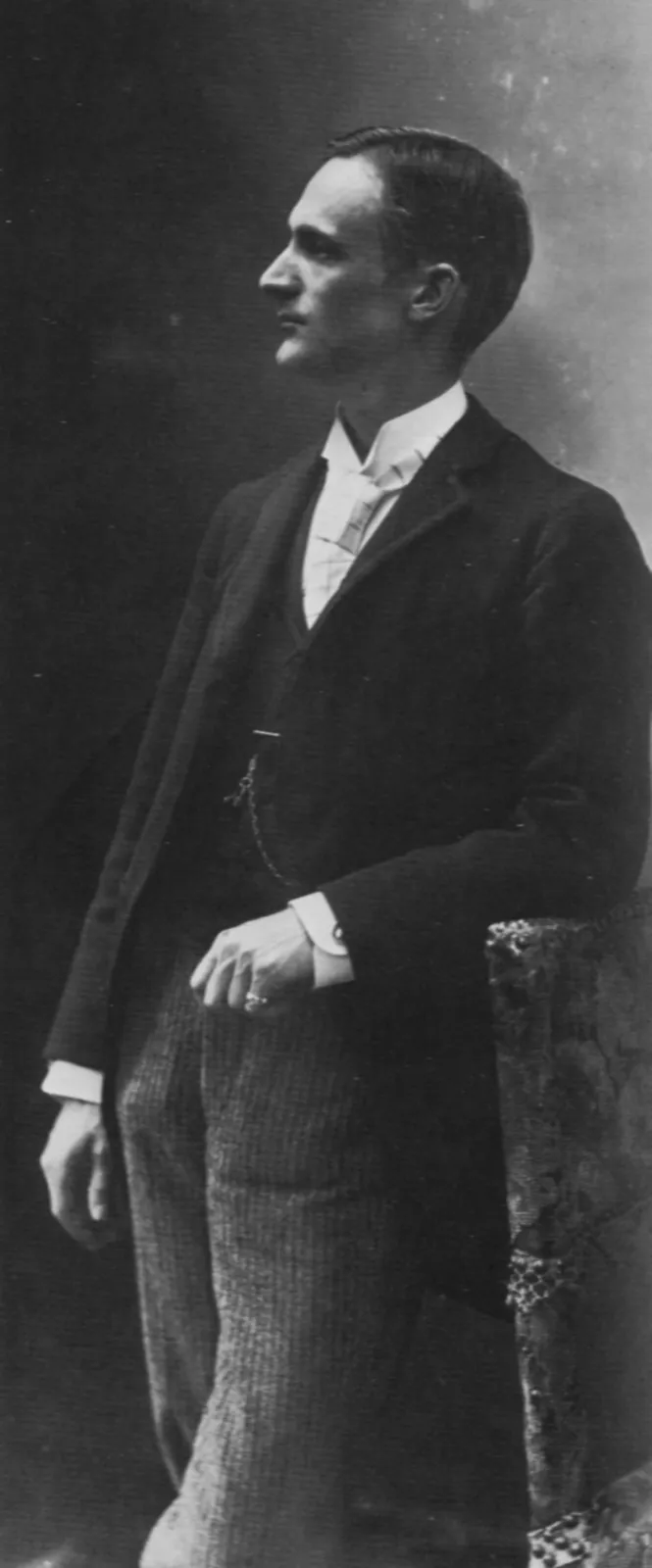
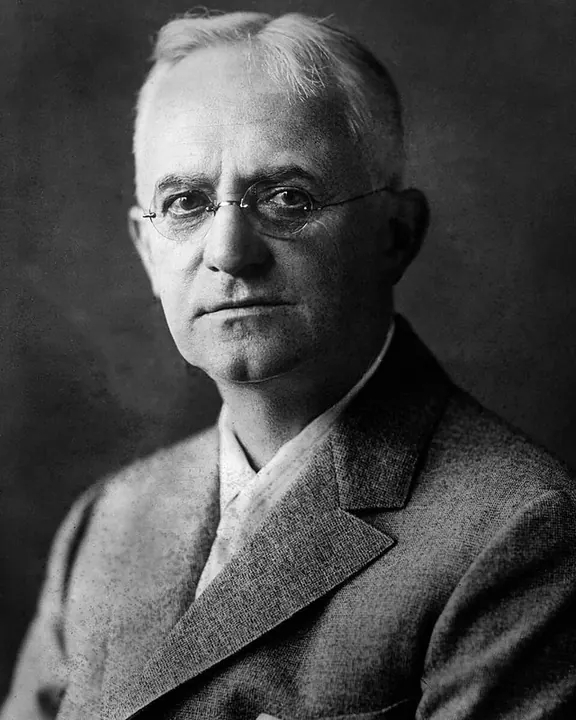
In 1877 George Eastman was 23 and a junior clerk at a savings bank in Rochester, in the state of New York. He supported his widowed mother and sisters, and he was planning his first real holiday, a trip to Santo Domingo in the Caribbean. A colleague advised him to take pictures, so he bought a photographic outfit: a big wooden camera, a heavy tripod, glass plates, chemicals, a tent to develop the plates on the spot. He described it as a “pack-horse load”.
He never went on the trip, but he never put the camera down either. At night, in his mother’s kitchen, he experimented with “dry” plates that could be prepared in advance. In 1880 he started making them with the money of a local businessman, Henry Strong, a maker of buggy whips. His real idea came next: replacing glass with a light, flexible roll of film. Photography was going to fit in a hand.
The people
1888–1900
“You press the button, we do the rest”
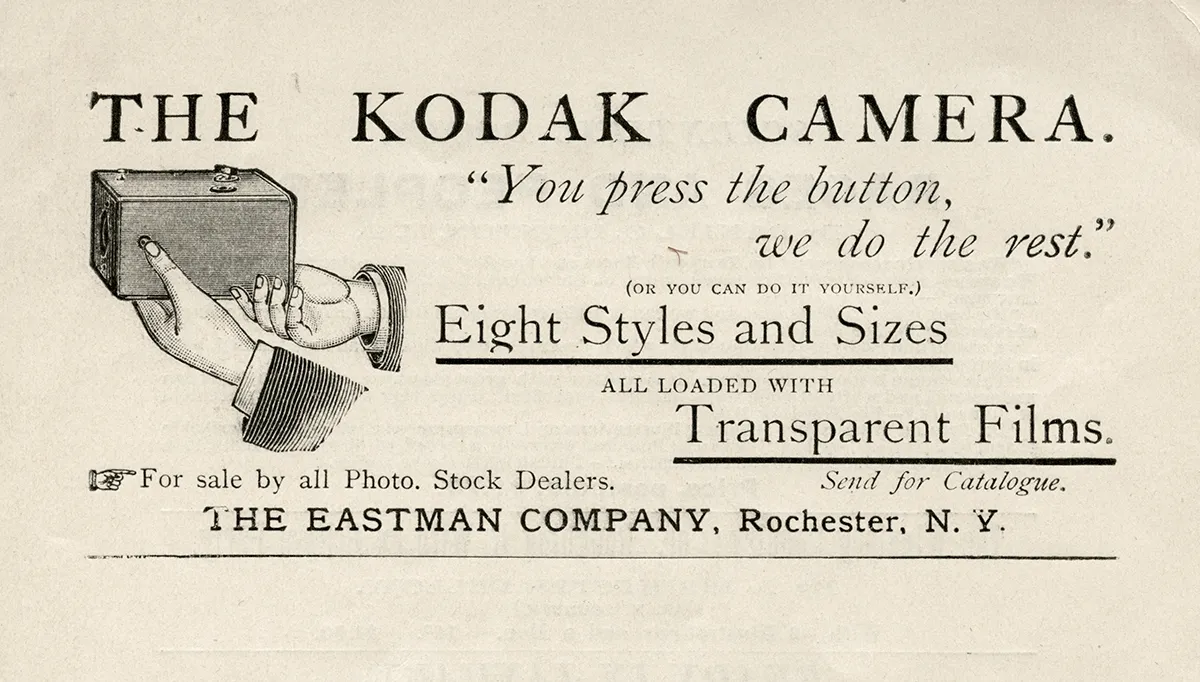
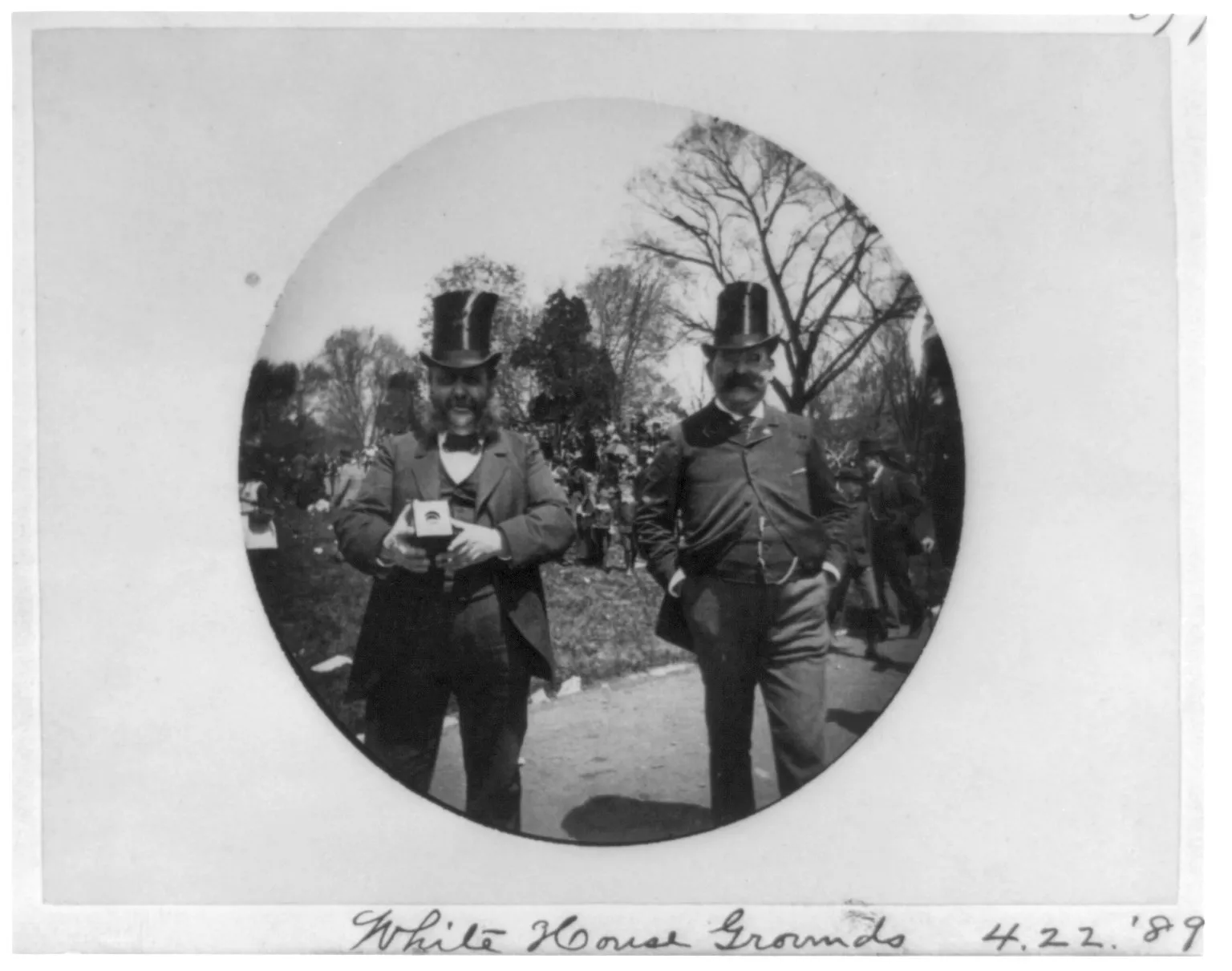
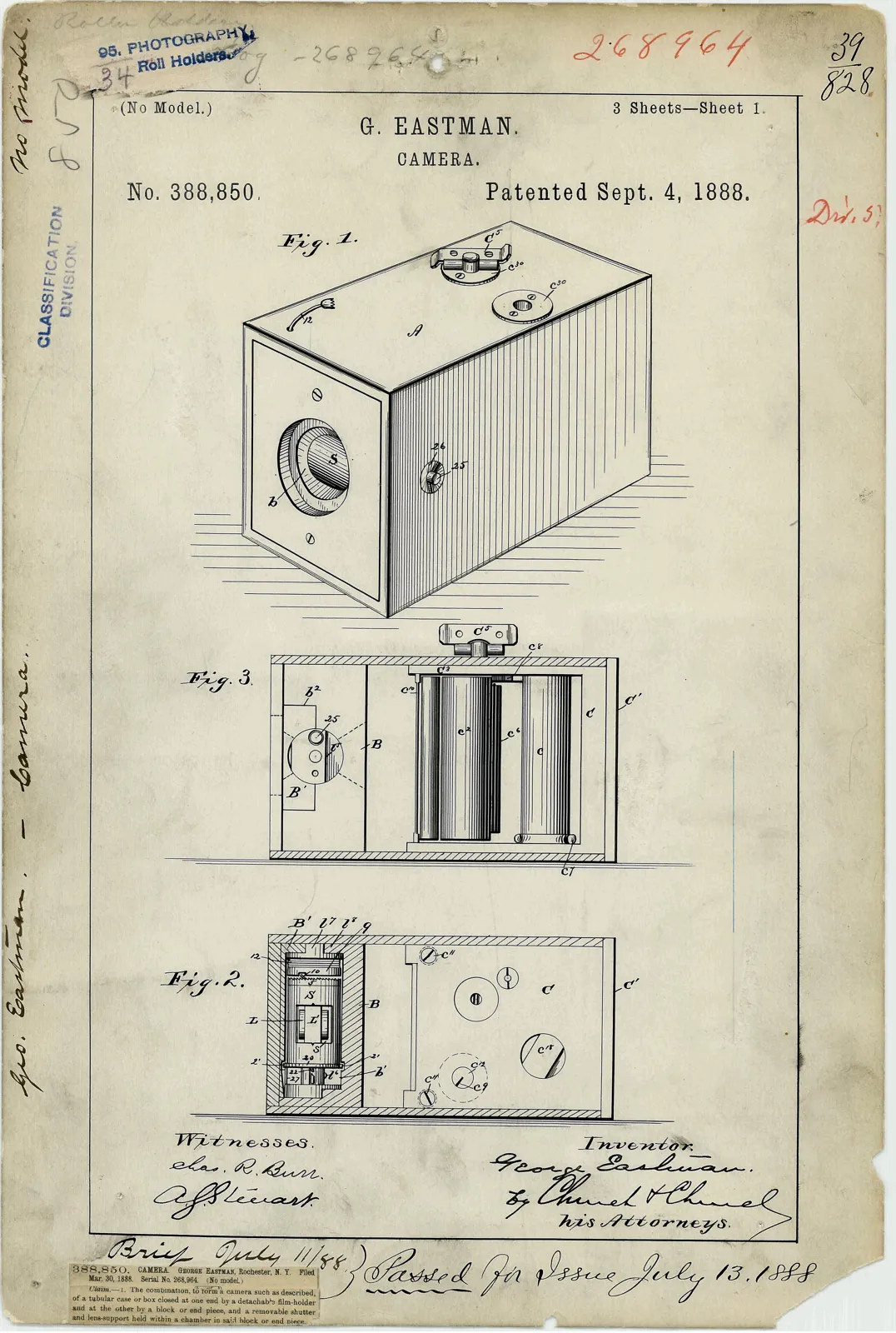
In 1888 Eastman launched the Kodak, a small box sold for 25 dollars and already loaded with film for 100 pictures. There was no viewfinder and no focusing: you pointed and pressed. When the roll was finished, you sent the whole camera back to Rochester. For 10 dollars the factory developed and printed the pictures, round, 6 cm across, reloaded the camera and sent everything back. The slogan said it all: “You press the button, we do the rest.”
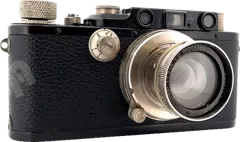
In 1889 Kodak replaced paper film with transparent celluloid. Thomas Edison’s laboratory bought it for its first films: his assistant William Dickson cut it into strips 35 mm wide, with perforations on both sides, for the Kinetoscope. That is the film Oskar Barnack would put into the first Leica thirty years later. In 1892 the company took the name Eastman Kodak.
1900–1929
A camera for a dollar
In the museum
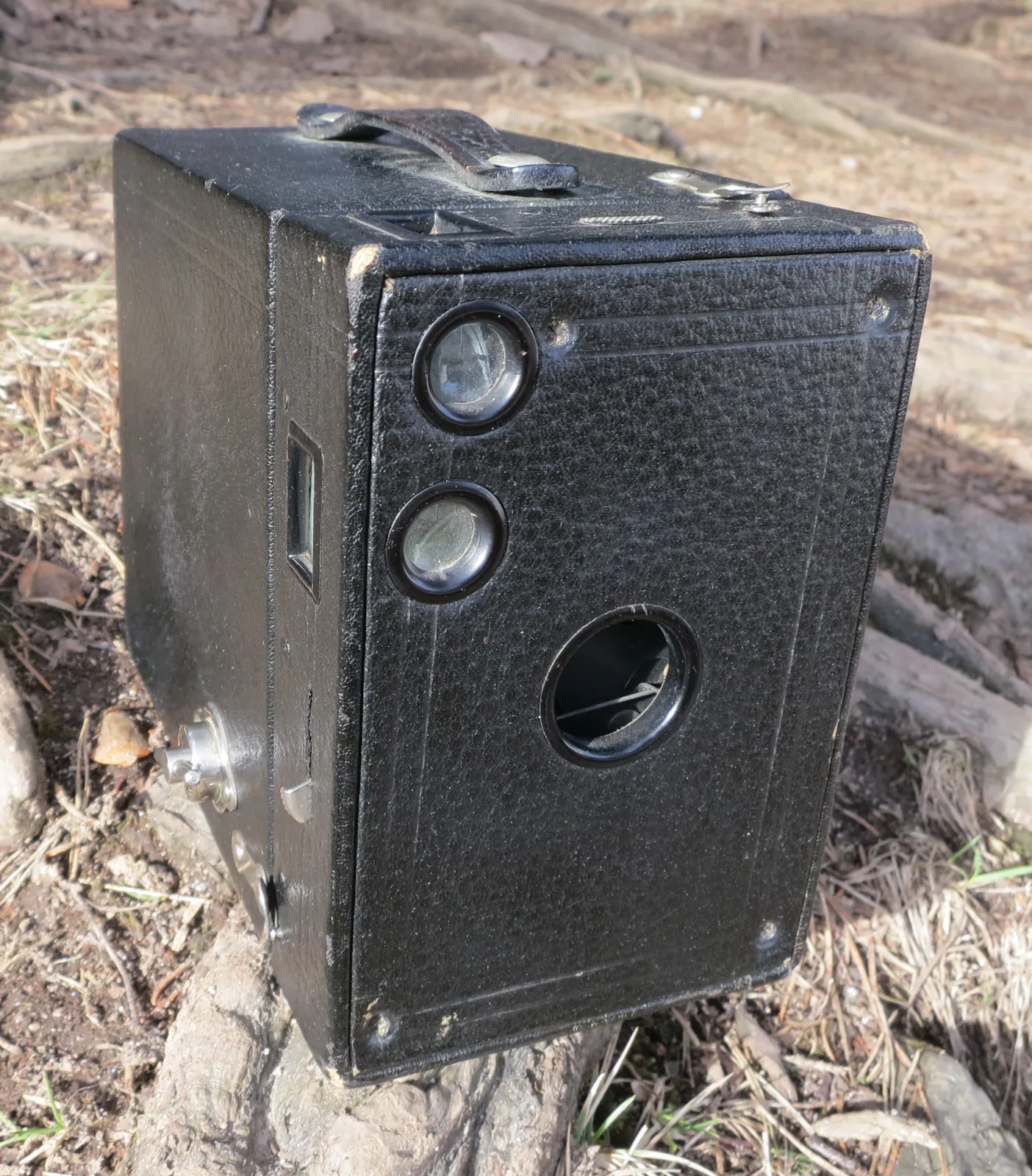
In 1900 Kodak went further: the Brownie, a cardboard box designed by Frank Brownell, cost one dollar, and a roll of film 15 cents. It was meant for children. Its name is often linked to the Brownies, little elves drawn by the Canadian illustrator Palmer Cox, then very popular, and Kodak’s advertisements used similar characters. More than 150,000 Brownies were sold in the first year, and the name lived on for some 80 years.
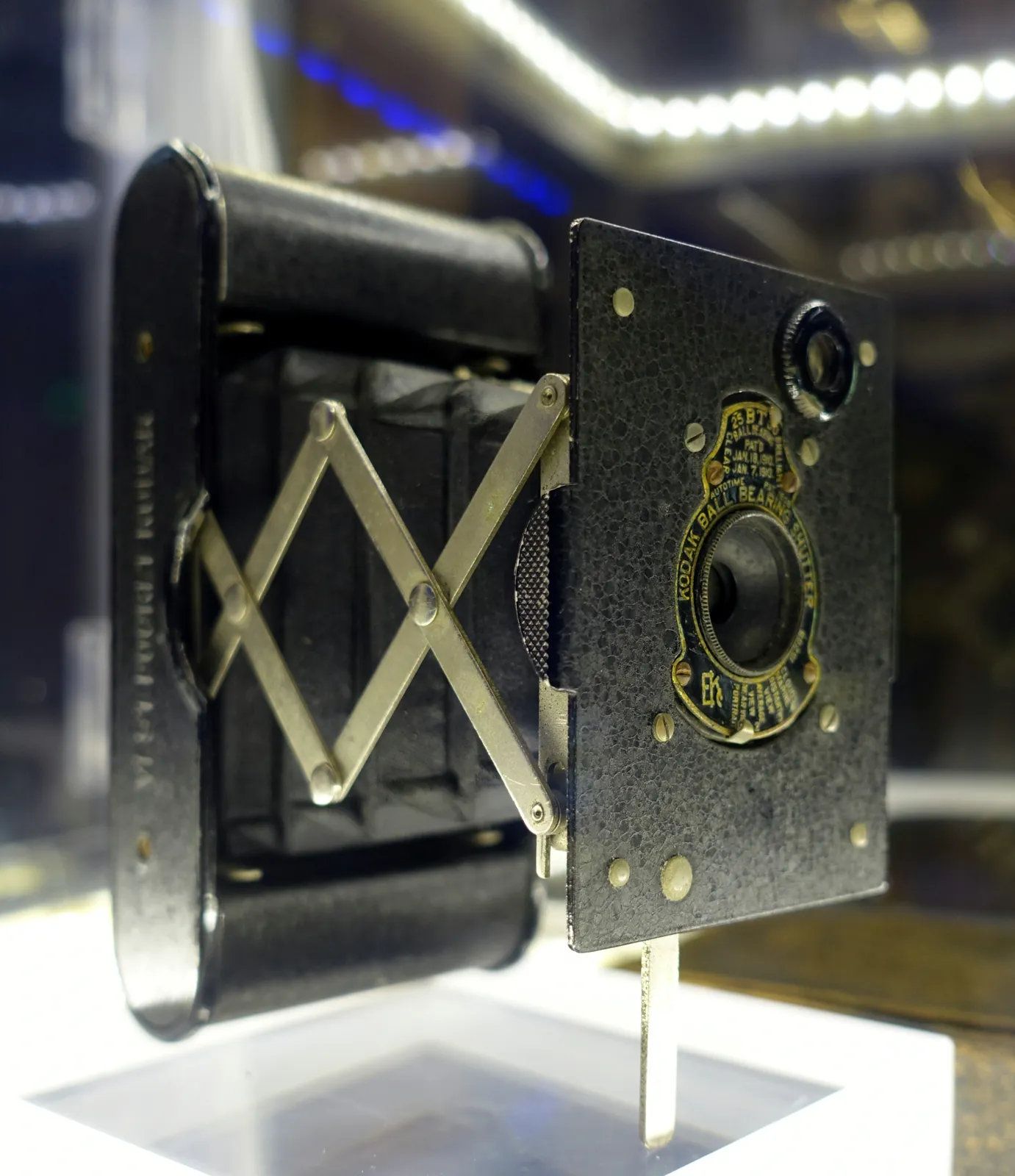
Kodak’s advertising invented a new figure, the “Kodak Girl”, a free young woman travelling with her camera, and a new habit: photographing holidays, children and family celebrations. In 1912 the Vest Pocket Kodak, as thin as a notebook, became “the soldier’s Kodak” in the First World War: thousands of soldiers took one to the trenches, even when the army forbade cameras. Kodak also supplied most of the film of the young Hollywood.
The people
1928–1945
Design, colour and the 35 mm cartridge
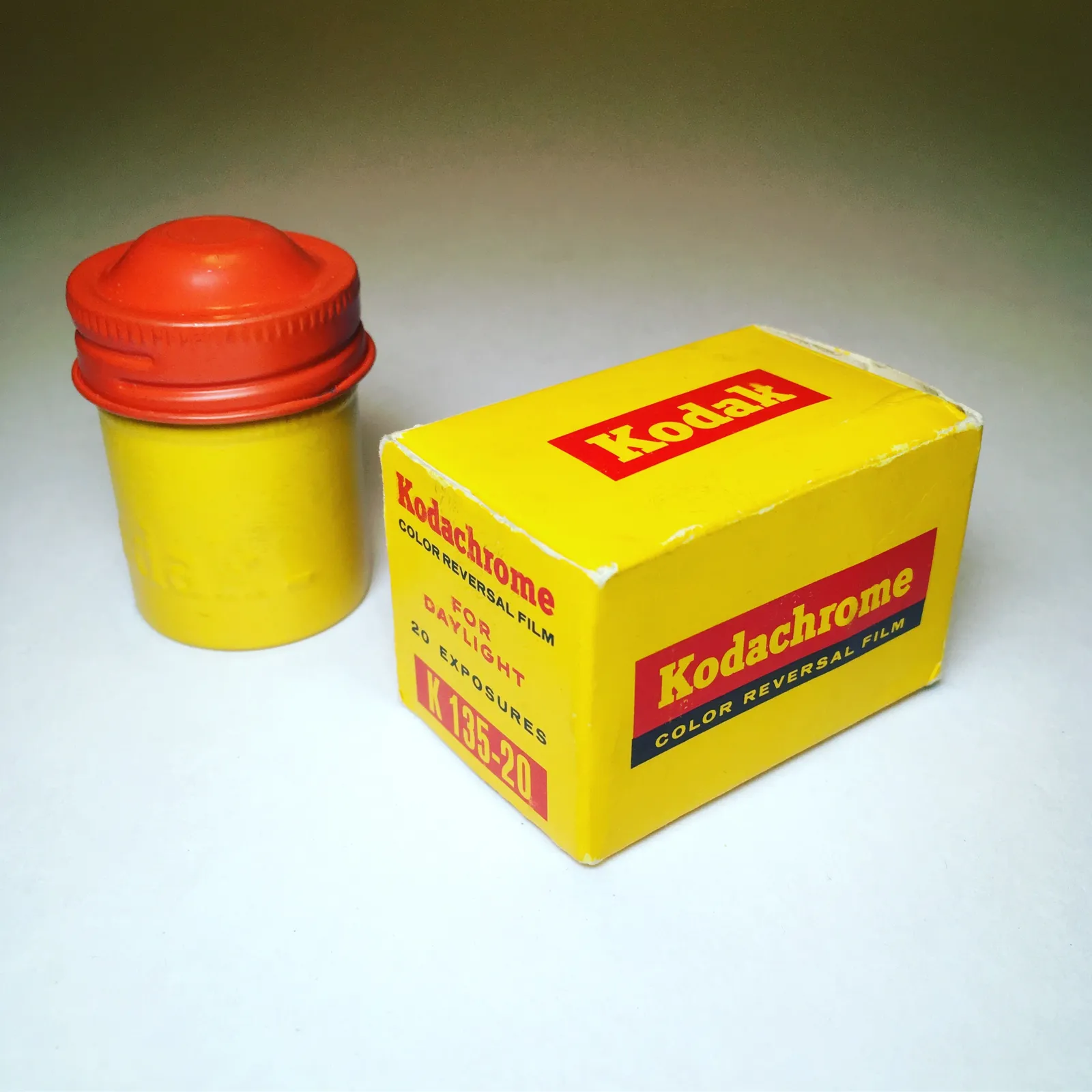
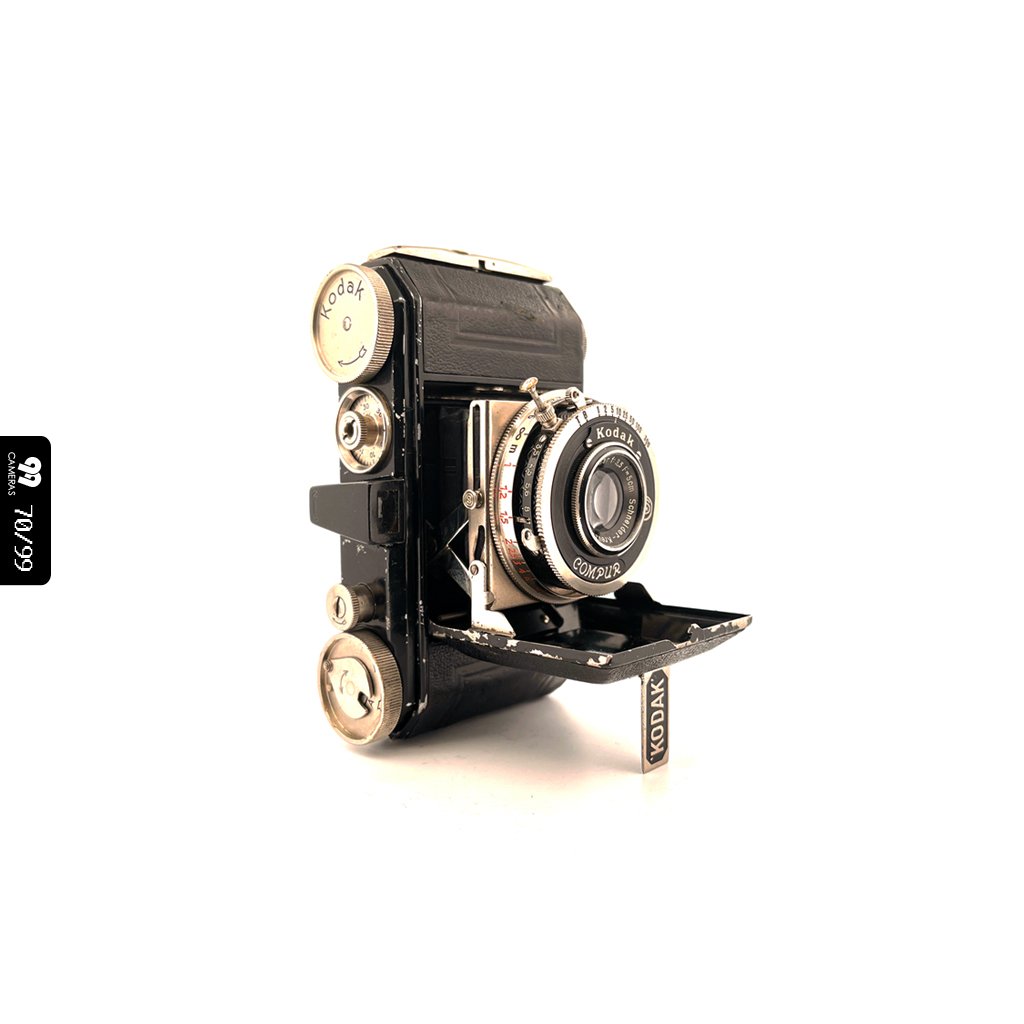
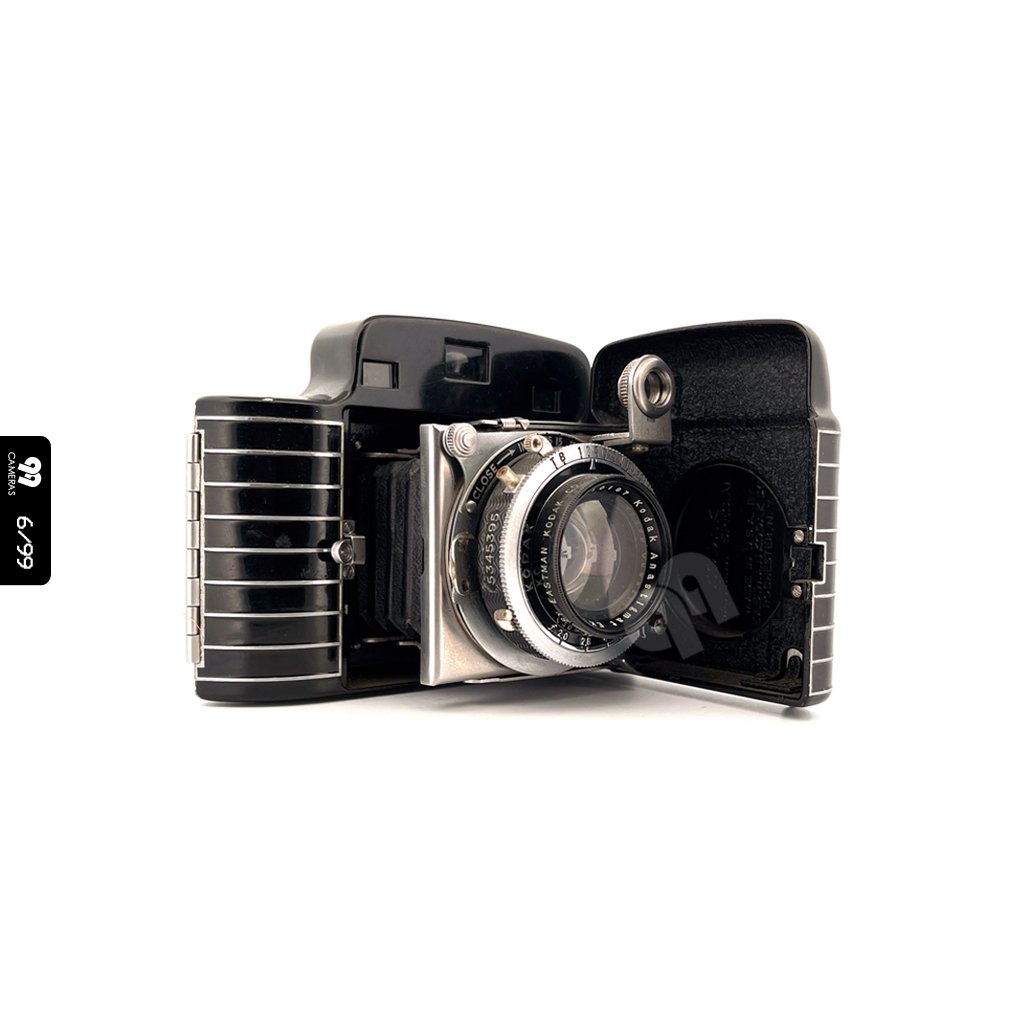
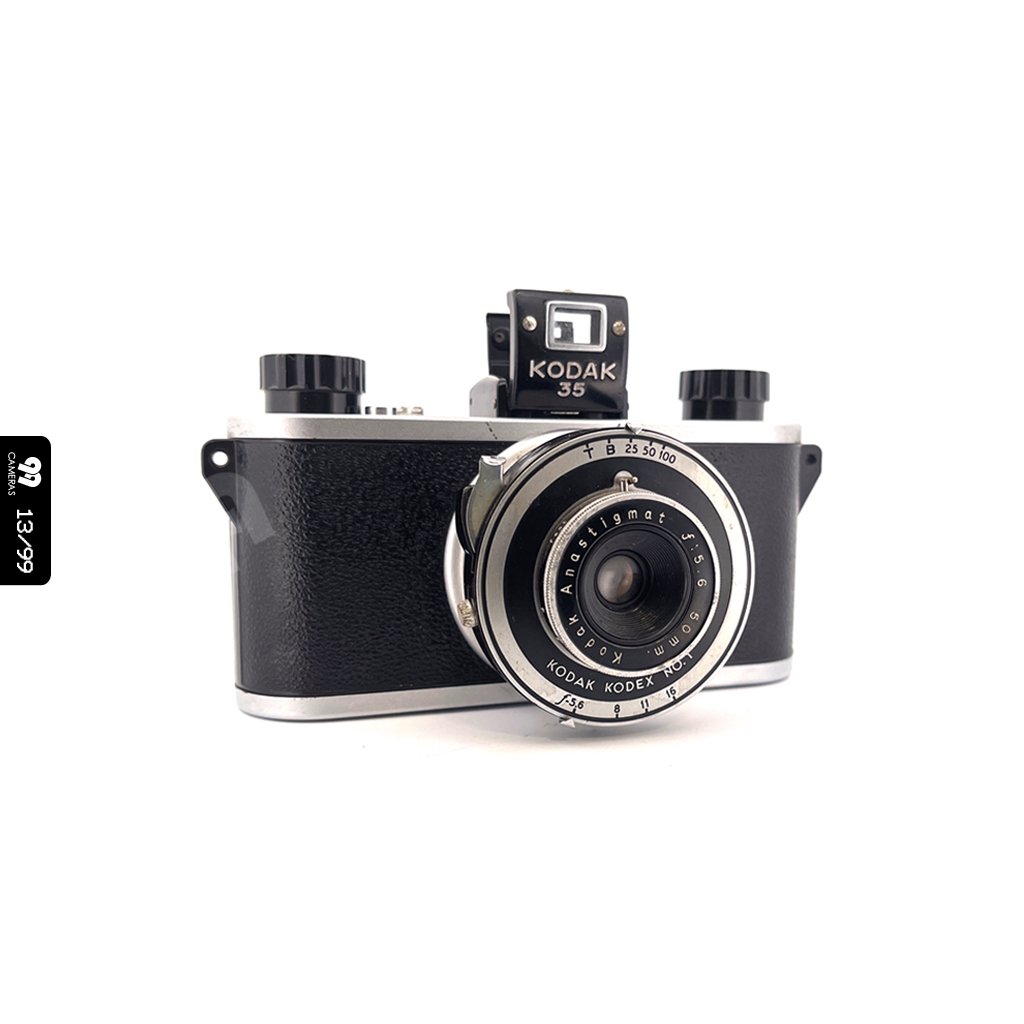
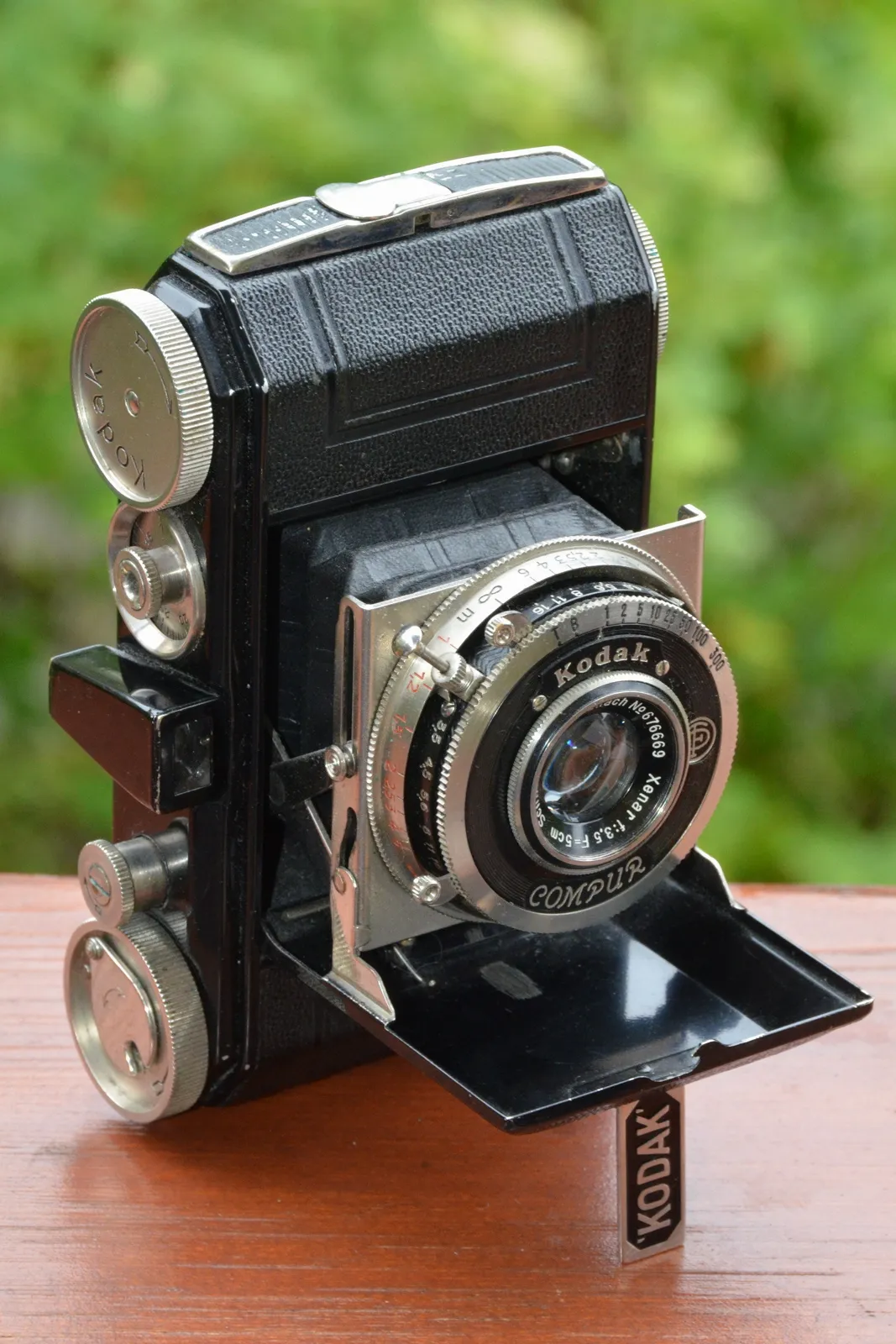
From 1928 Kodak hired the industrial designer Walter Dorwin Teague, who gave its cameras an Art Deco look; his Bantam Special of 1936 is often called one of the most beautiful cameras ever made. In 1931 Kodak bought the Stuttgart factory of the German engineer August Nagel, and in 1934 Nagel’s Retina came with a new invention: the 135 cartridge, a small metal can of 35 mm film that you could load in daylight. It is the cartridge still sold today.
In 1935 came Kodachrome, the first colour film for everyone, first for amateur films, then in 1936 for slides. Its colours were so rich and long-lasting that it was used for 74 years. George Eastman did not see it: ill and in pain, he took his own life in 1932, at 77, leaving a note that read: “To my friends: my work is done. Why wait?”
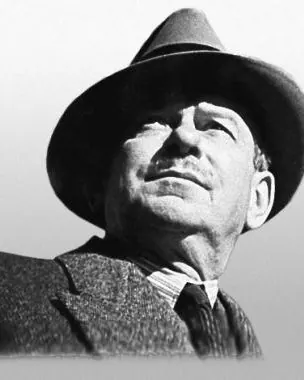
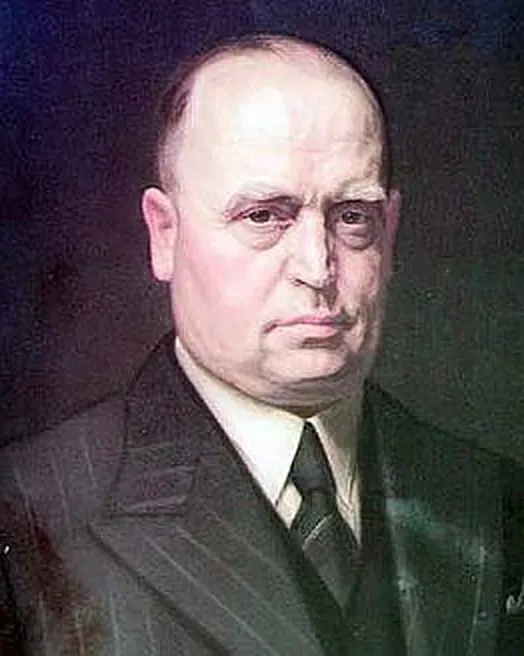
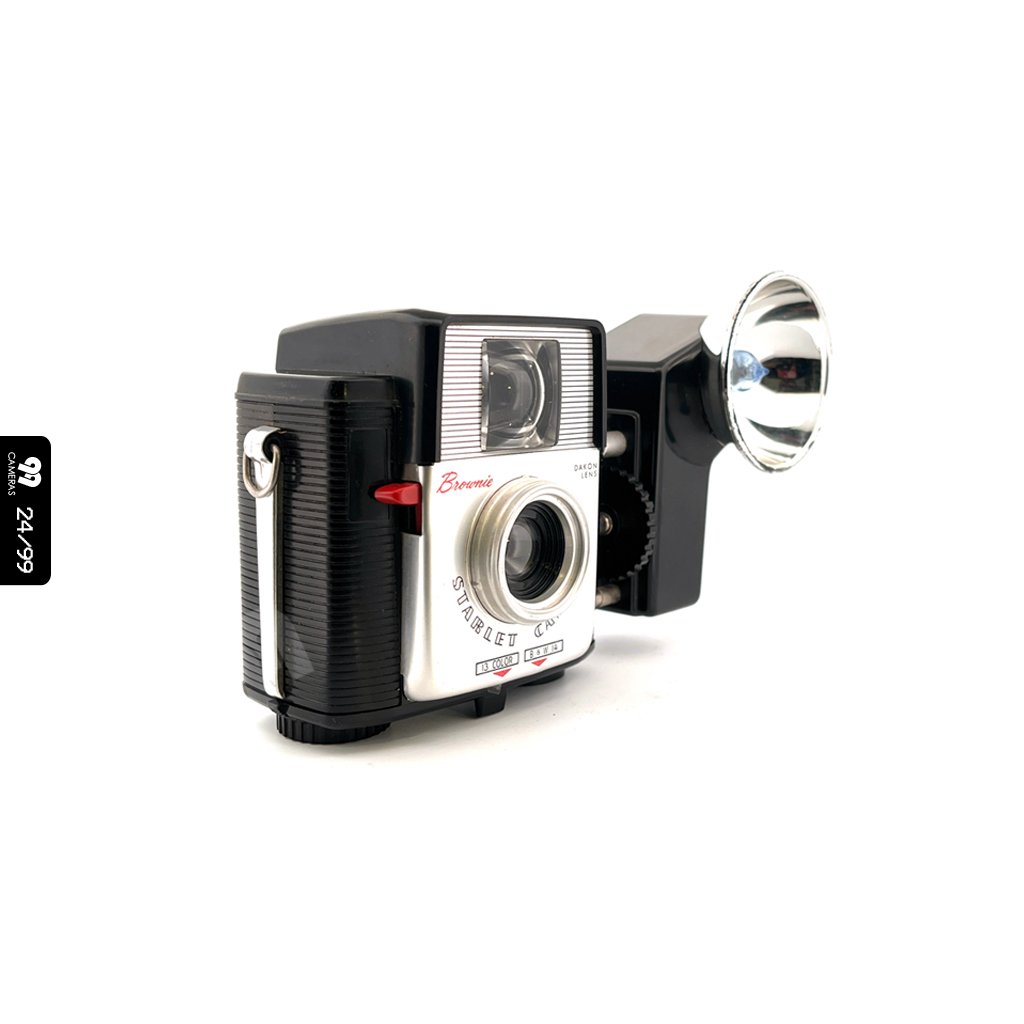
After the war, Kodak became part of American life. The Brownie Hawkeye, then the Brownie Starlet of 1957, designed by Arthur Crapsey, one of Kodak’s first in-house designers, were sold by the million. Kodak film was in every drugstore, its yellow box recognisable from a distance. Eastmancolor, introduced in 1950, made colour cinema cheaper and soon replaced Technicolor.
Kodak Park, the company’s industrial complex in Rochester, had its own railway, fire brigade and power station, and tens of thousands of employees. The company paid a famous yearly “wage dividend”, a share of the profits for each worker: Rochester called Kodak “the great yellow father”.
The people
1963–1976
Drop it in and shoot
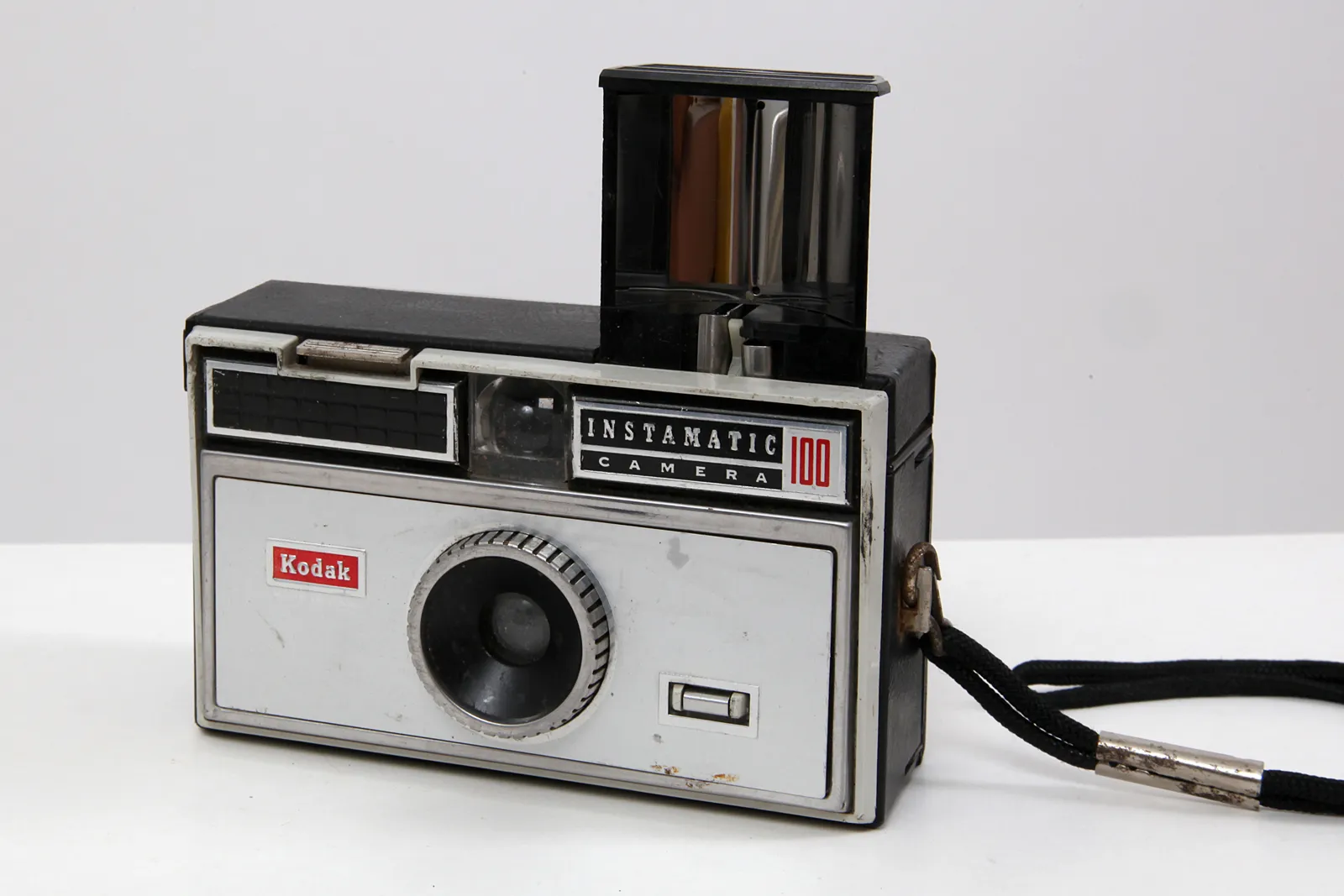
Loading film was still the hardest part of photography for many people. In 1963 Kodak solved the problem with the Instamatic: the film came in a plastic cartridge that you simply dropped into the camera. Tens of millions were sold in a few years, and Kodak added the flashcube, the pocket Instamatic and, for home movies, the Super 8 cartridge of 1965.
By 1976 Kodak sold about 90% of the film and 85% of the cameras bought in the United States. Its film went everywhere, even to the Moon: the astronauts of the Apollo missions loaded their Hasselblads with Kodak film specially made for space. The phrase “a Kodak moment” entered the language.
1947–1991
The war against Polaroid
In the museum
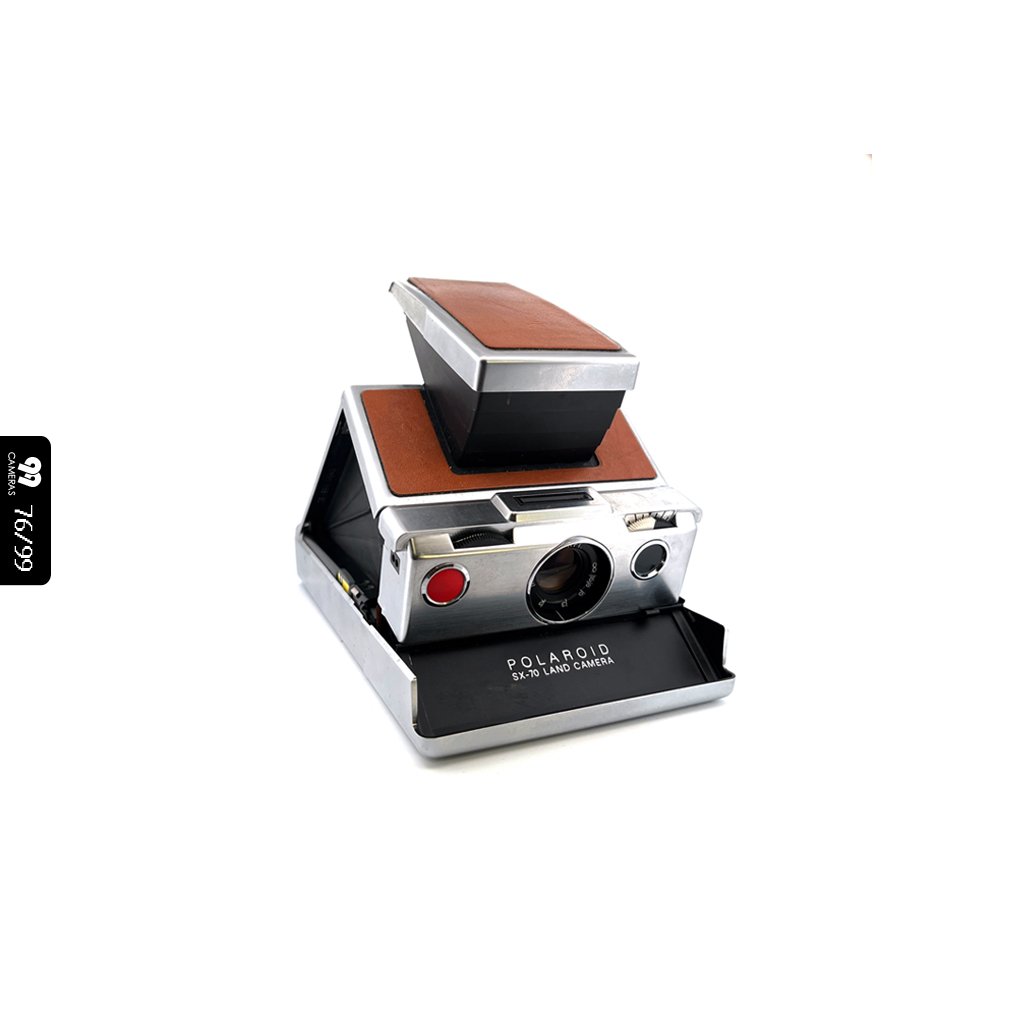
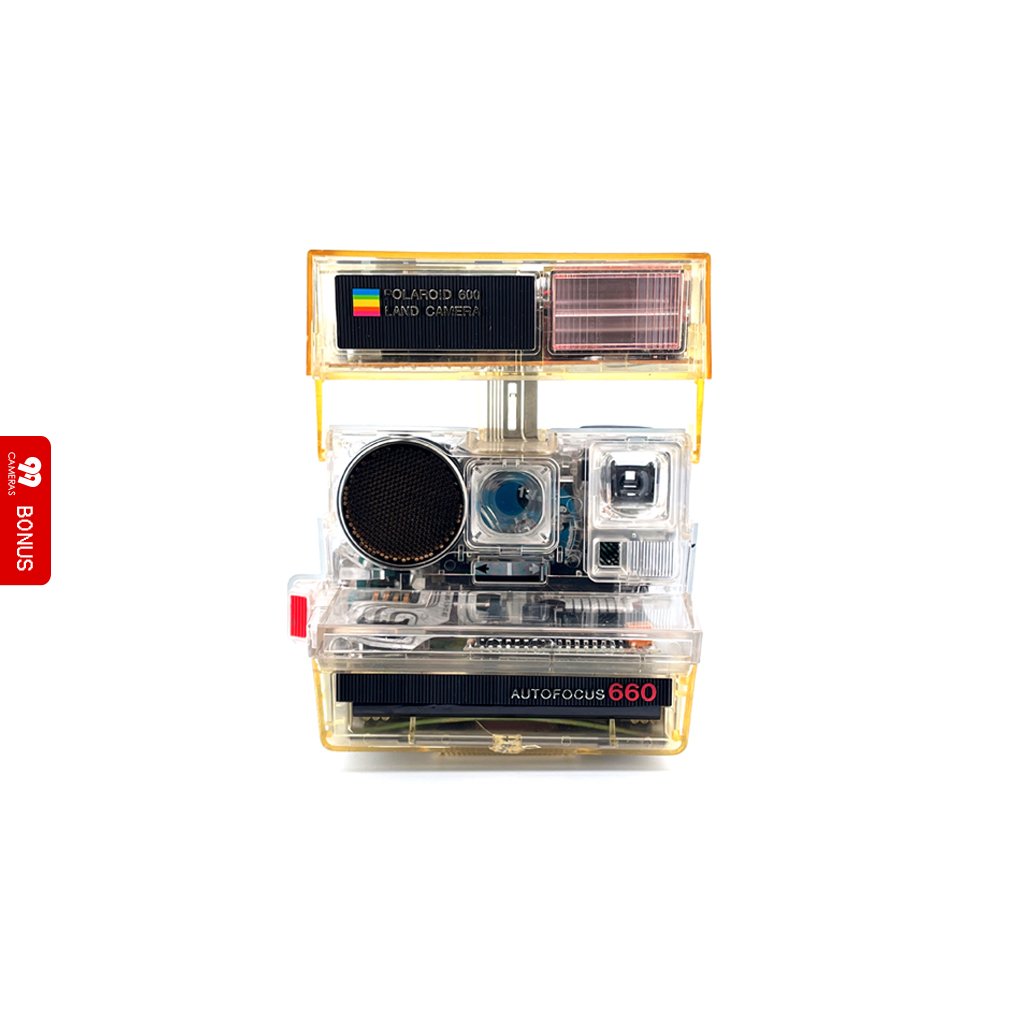
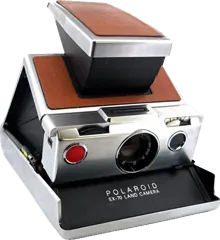
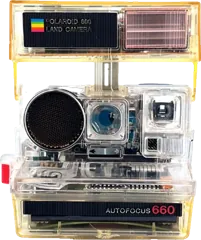
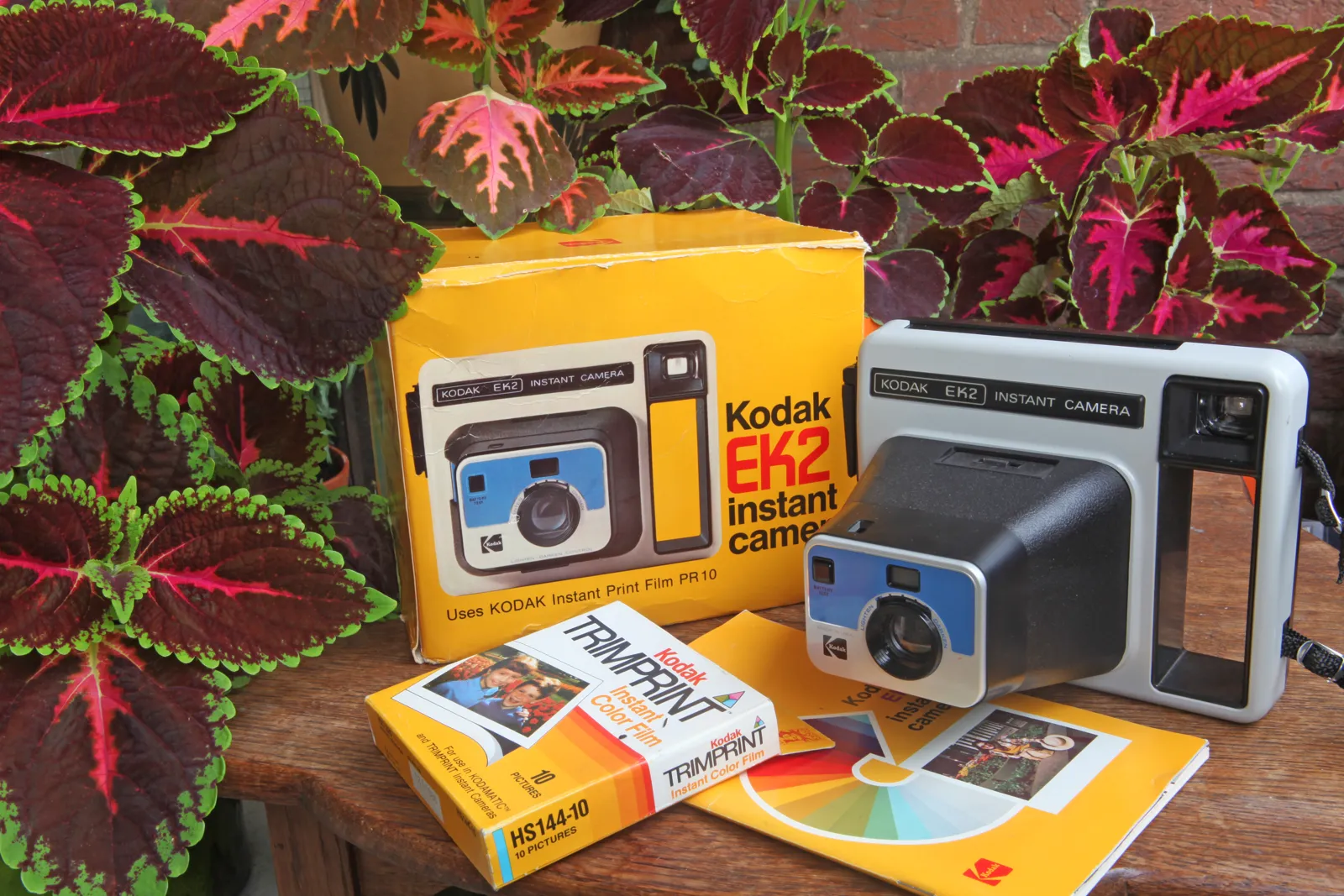
In 1947 Edwin Land, founder of Polaroid, showed a camera that delivered a print in one minute. For years Kodak was his supplier: it manufactured the negative material for Polaroid’s colour film. Then, in 1976, Kodak launched its own instant cameras and films. Within days, Polaroid sued for patent infringement.
The case lasted fourteen years. In 1985 a court found that Kodak had infringed Polaroid’s patents, and in January 1986 Kodak had to stop making and selling instant cameras and films overnight. Millions of owners were left with cameras for which no film would ever be made again. In 1991 Kodak paid Polaroid 925 million dollars, then the largest sum ever paid in a patent case.
The people

1982–2000
The yellow box against the green box
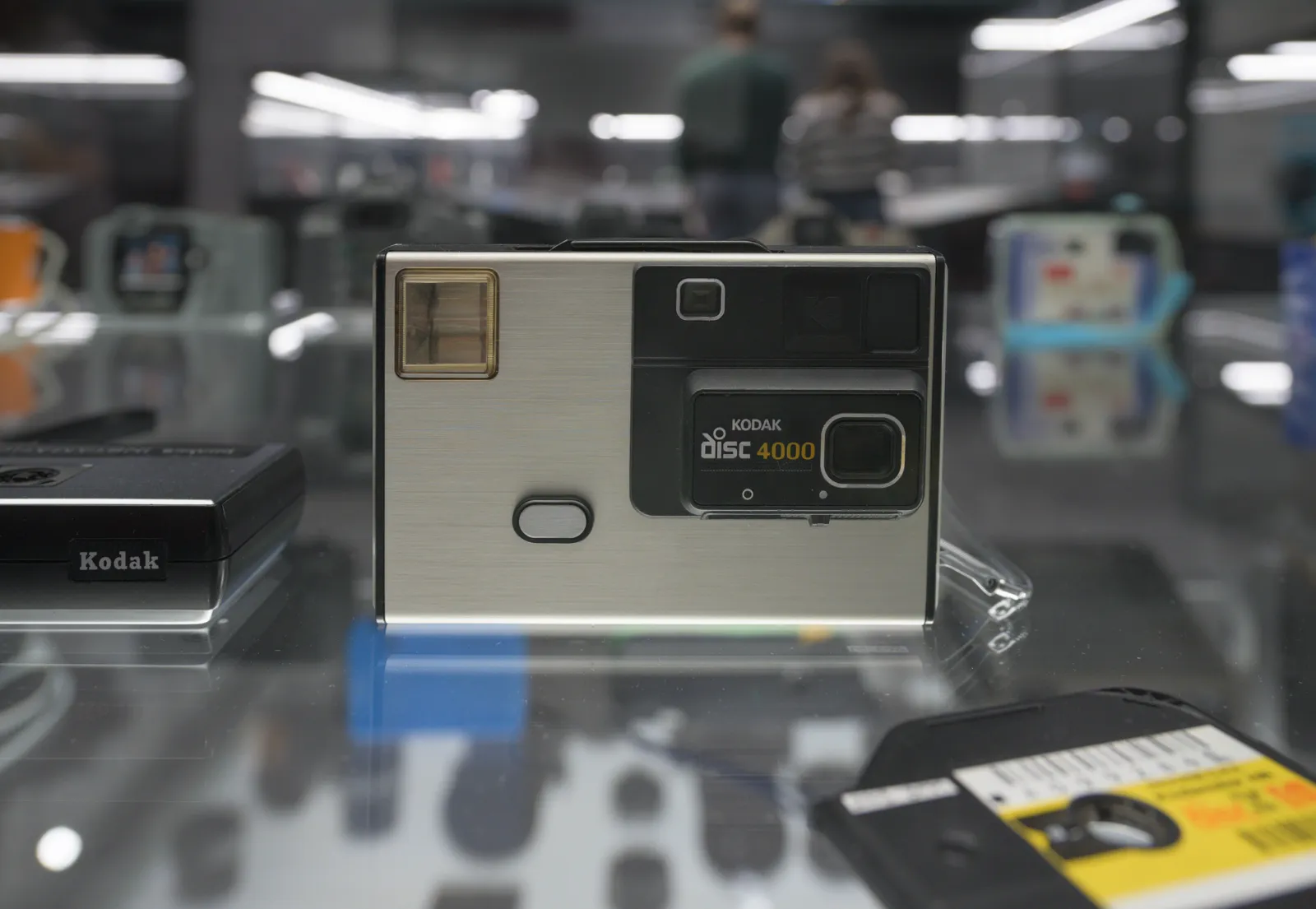
Kodak’s next rival came from Japan. Fujifilm sold film that was as good and cheaper, in a green box. Kodak tried new formats, like the Disc camera of 1982, which sold well at first but produced grainy pictures and disappeared. Fuji invented the single-use camera in 1986; Kodak followed a year later.
Kodak accused Fuji of keeping it out of Japanese shops with the help of the Japanese government, and the United States brought the case to the new World Trade Organization. In 1998 the WTO rejected the complaint. In the meantime, Fuji had won a large part of the world market.
1975–2012
The camera Kodak invented and feared
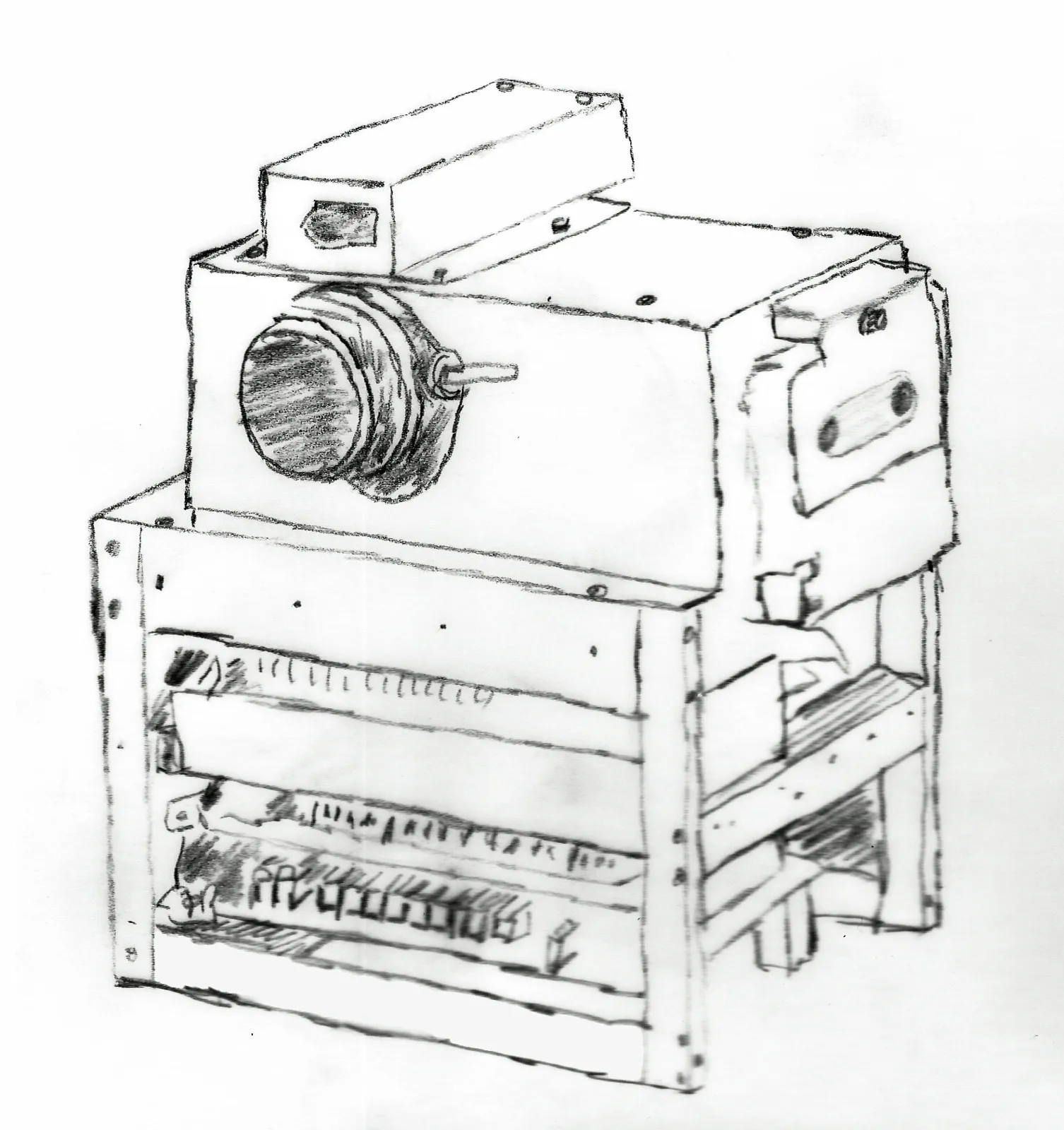
In December 1975 a young Kodak engineer, Steven Sasson, presented a strange machine to his managers: a camera weighing almost 4 kg that recorded a black-and-white image of 0.01 megapixels on a cassette tape, in 23 seconds. It was the first digital camera. Management saw no market: who would want to look at pictures on a television? And it threatened the film that made Kodak rich.
Kodak did work on digital: it made the first megapixel sensor in 1986, professional digital cameras built on Nikon bodies from 1991, and in 2005 it was the largest seller of digital cameras in the United States. But a digital camera brings in money once, film every week. When film sales collapsed, Kodak could not replace them. On 19 January 2012 Eastman Kodak filed for bankruptcy.
The people

2013–today
The film that refuses to die
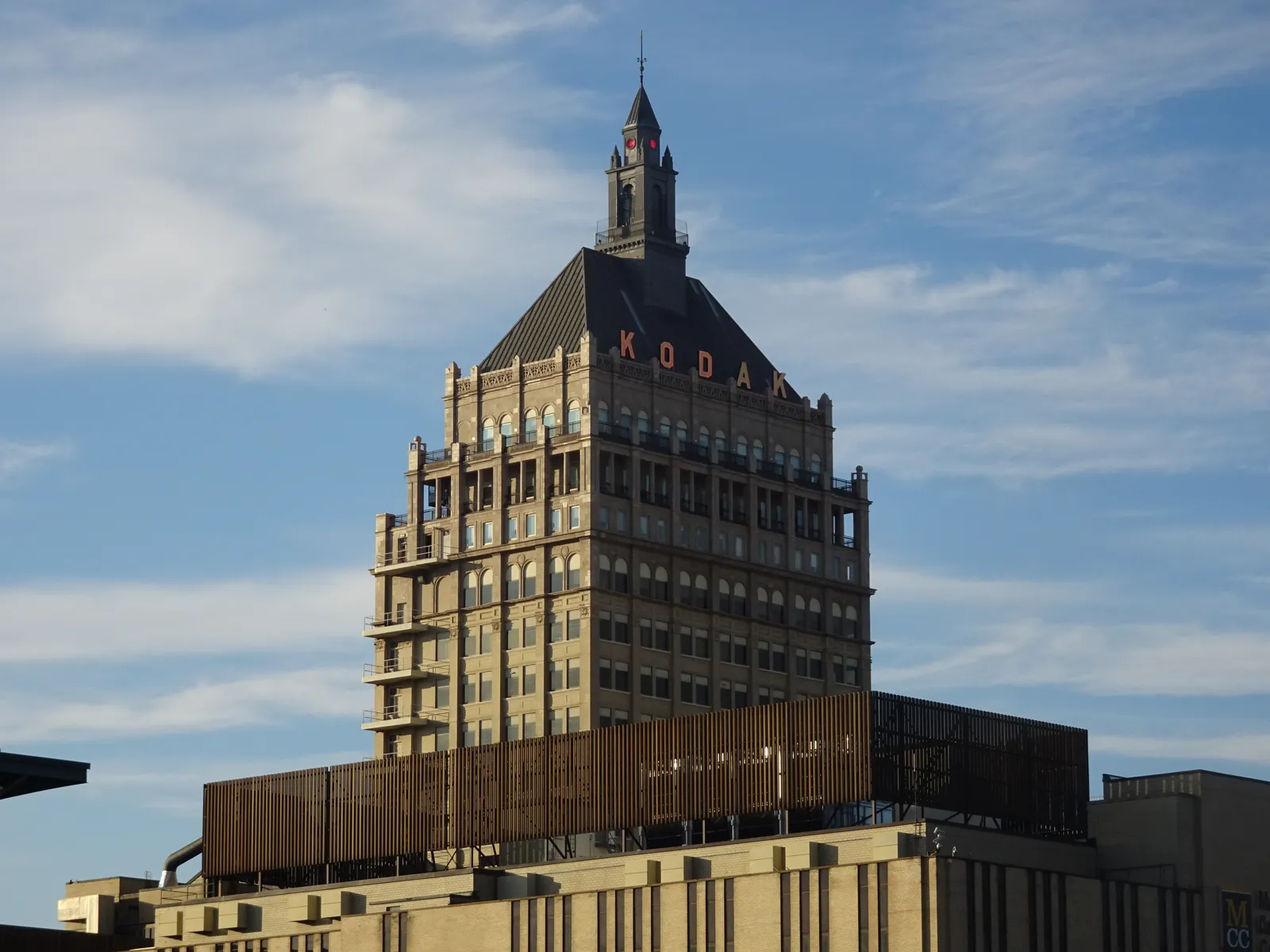
Kodak came out of bankruptcy in 2013, much smaller, after selling its patents and its consumer business. But it kept the factory in Rochester where it makes film. In 2015 Hollywood directors such as Christopher Nolan, Quentin Tarantino and J. J. Abrams persuaded the studios to keep buying Kodak film, to make sure it would still exist.
Since then, film photography has come back with a new generation, and Kodak films, from Portra to Tri-X, are again in short supply in shops. A hundred and forty years after a bank clerk bought his first camera, the yellow box is still here.
Kodak at the 99 Cameras Museum
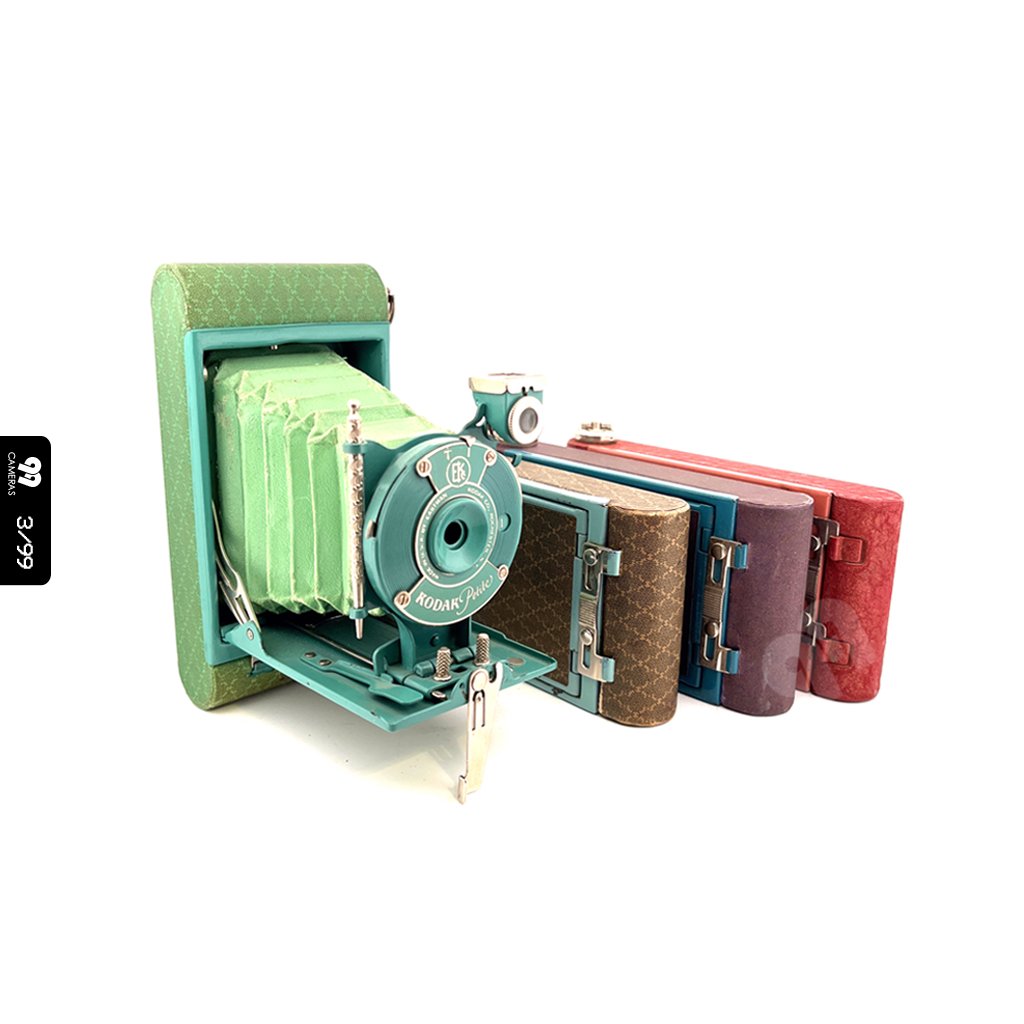
From the colourful Kodak Petite of 1929 to the Retina, the Bantam Special and the Brownie Starlet, and the Polaroids that fought Kodak, you can see the cameras of this story in the showcases of the museum in Paris, and in our online collection.
See the Kodak cameras of the collection
Sources. George Eastman Museum, Kodak corporate history, Wikipedia articles on Kodak, George Eastman, the Brownie, Kodachrome and Polaroid v. Kodak, Physical Review 76 (1949) on film fogged by radioactive packaging, court records of Polaroid Corp. v. Eastman Kodak Co., interviews with Steven Sasson (New York Times, 2015), National Inventors Hall of Fame. Some anecdotes come from oral tradition and are told as such.
Plan your visit
Visit is free and open to all
- Opening hoursMonday – Saturday : 10 – 17:30
- AddressStudio Harcourt, 6 Rue de Lota, 75116 Paris
- Exceptional closuresThursday, 26 November 2026