The adventure of the brands
The Agfa story
A dye maker founded by the son of a composer, a developer still sold after 130 years, a priest who beat Kodak, the colour film of the Third Reich, a company cut in two by the Iron Curtain and a camera that went into orbit: the Agfa story, told through its inventions and its anecdotes.
1867–1897
From dyes to developer
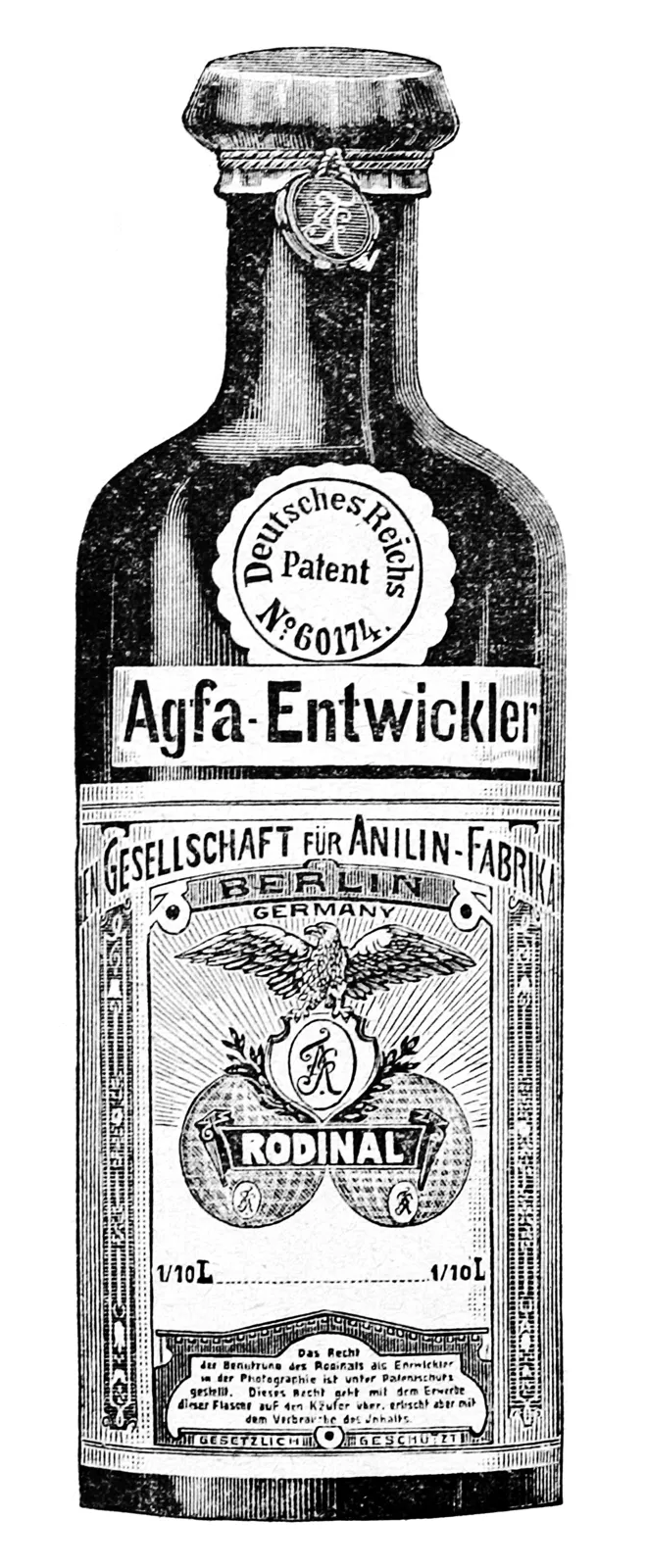
Agfa began as a chemical company, far from photography. In 1867 two young chemists, Paul Mendelssohn Bartholdy and Carl Alexander von Martius, founded near Berlin the “Aktien-Gesellschaft für Anilinfabrikation”, a company making aniline dyes, the new synthetic colours made from coal tar. Its initials gave the name AGFA.
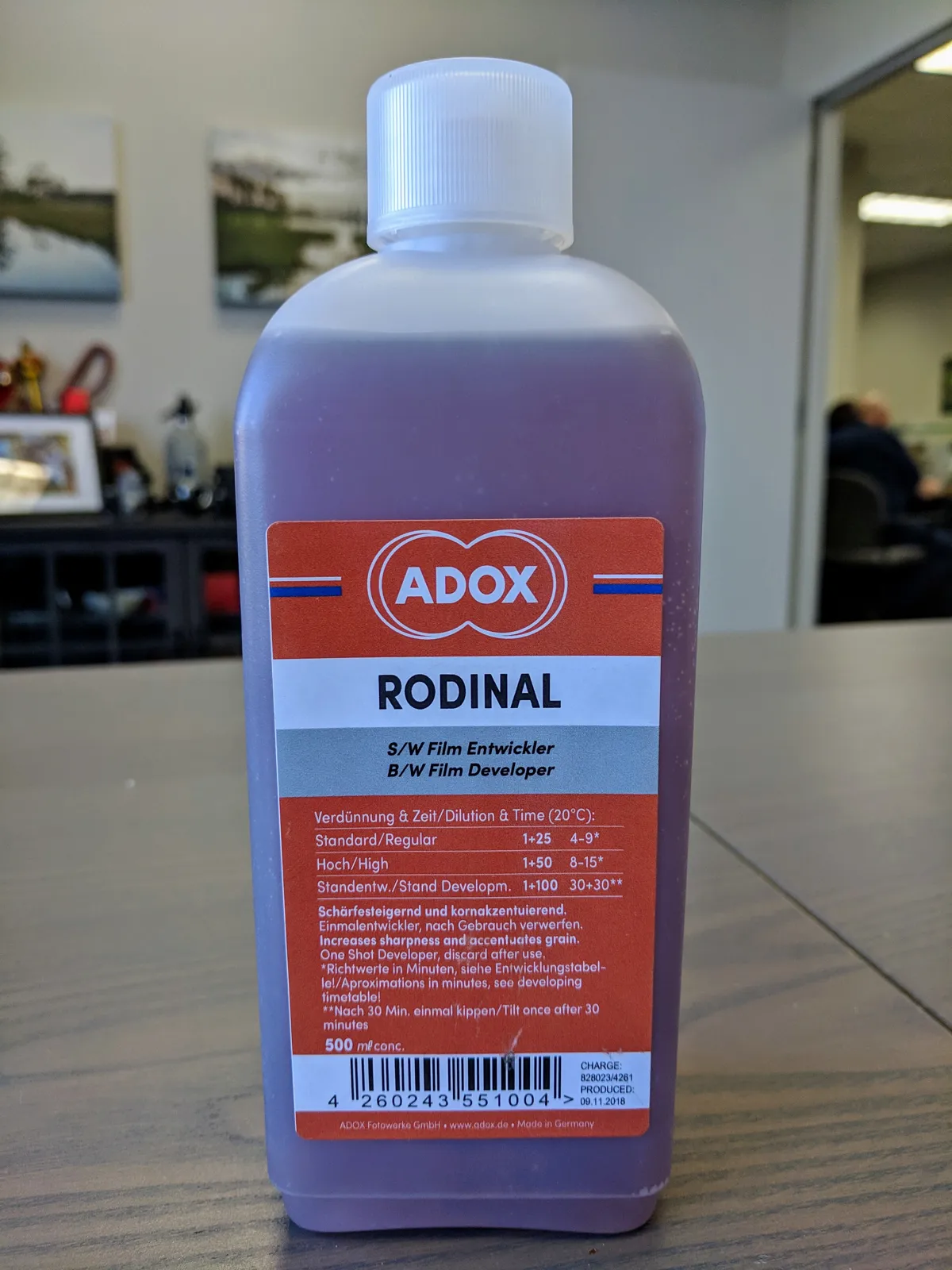
Chemistry led to photography. In 1891 the company’s chemist Momme Andresen developed a concentrated developer for black-and-white film and paper, sold under the name Rodinal. Agfa then made plates, papers and films, and in 1897 it registered the Agfa trademark. Dyes and developers shared the same science: molecules that react with light and colour.
1909–1925
The film town of Wolfen
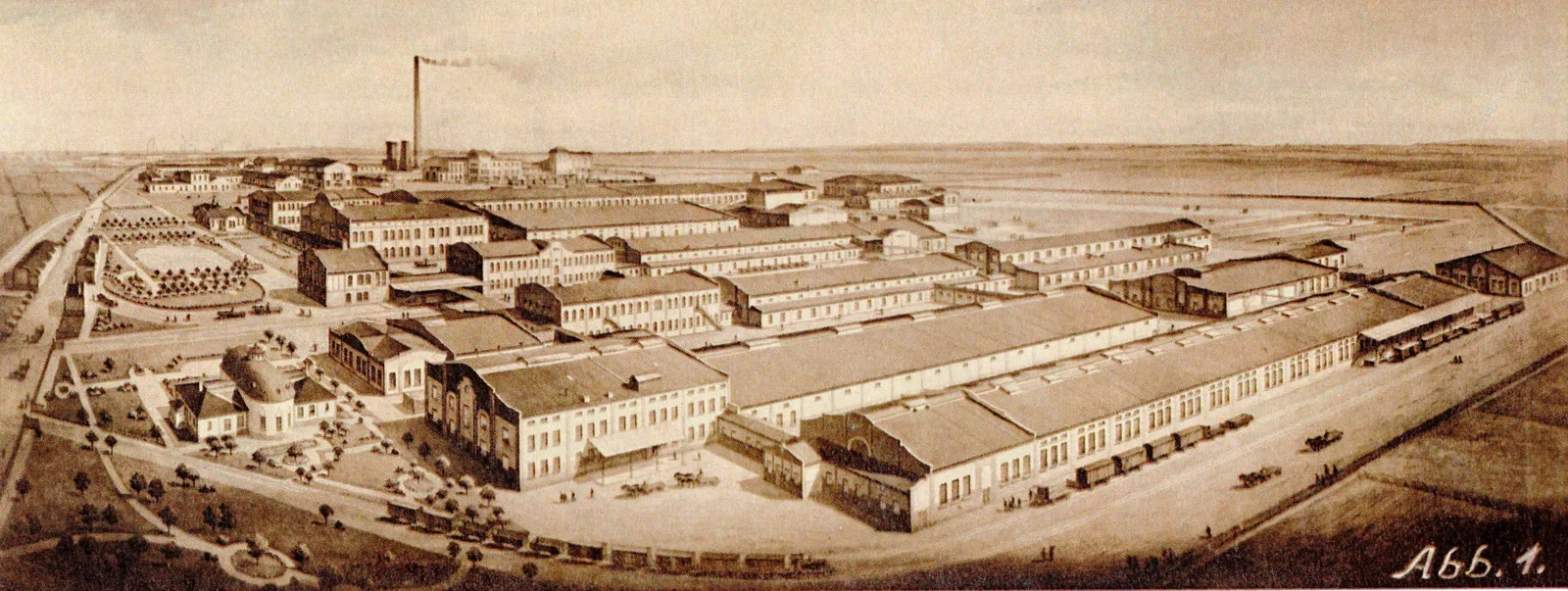
Cinema needed kilometres of film. Agfa built a huge film factory at Wolfen, near Bitterfeld in central Germany, which started production in 1910. It soon became one of the largest in the world, making film for German cinema and for photographers across Europe.
In 1925 Agfa joined the giant IG Farben, the alliance of the main German chemical companies. Photography became one branch of an empire that also made dyes, medicines, fuels and explosives.
1928–1962
Agfa in America
In the museum
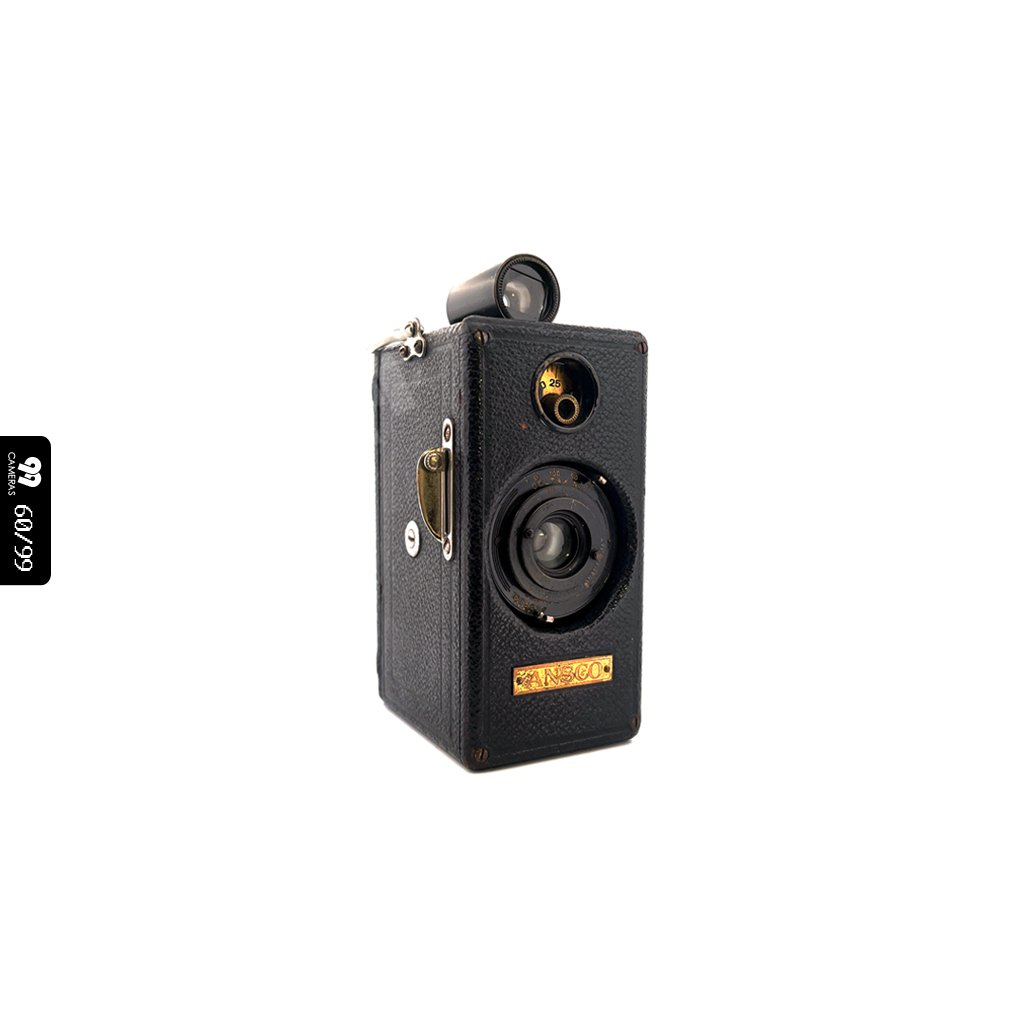
In 1928 Agfa merged its American business with Ansco, of Binghamton in New York State. Ansco came from Anthony & Scovill, the oldest photographic company in the United States, founded in the 1840s. The new company, Agfa-Ansco, sold cameras and film in America, in competition with Kodak. The Ansco Memo of 1927, in the museum, is considered the first American 35 mm still camera.
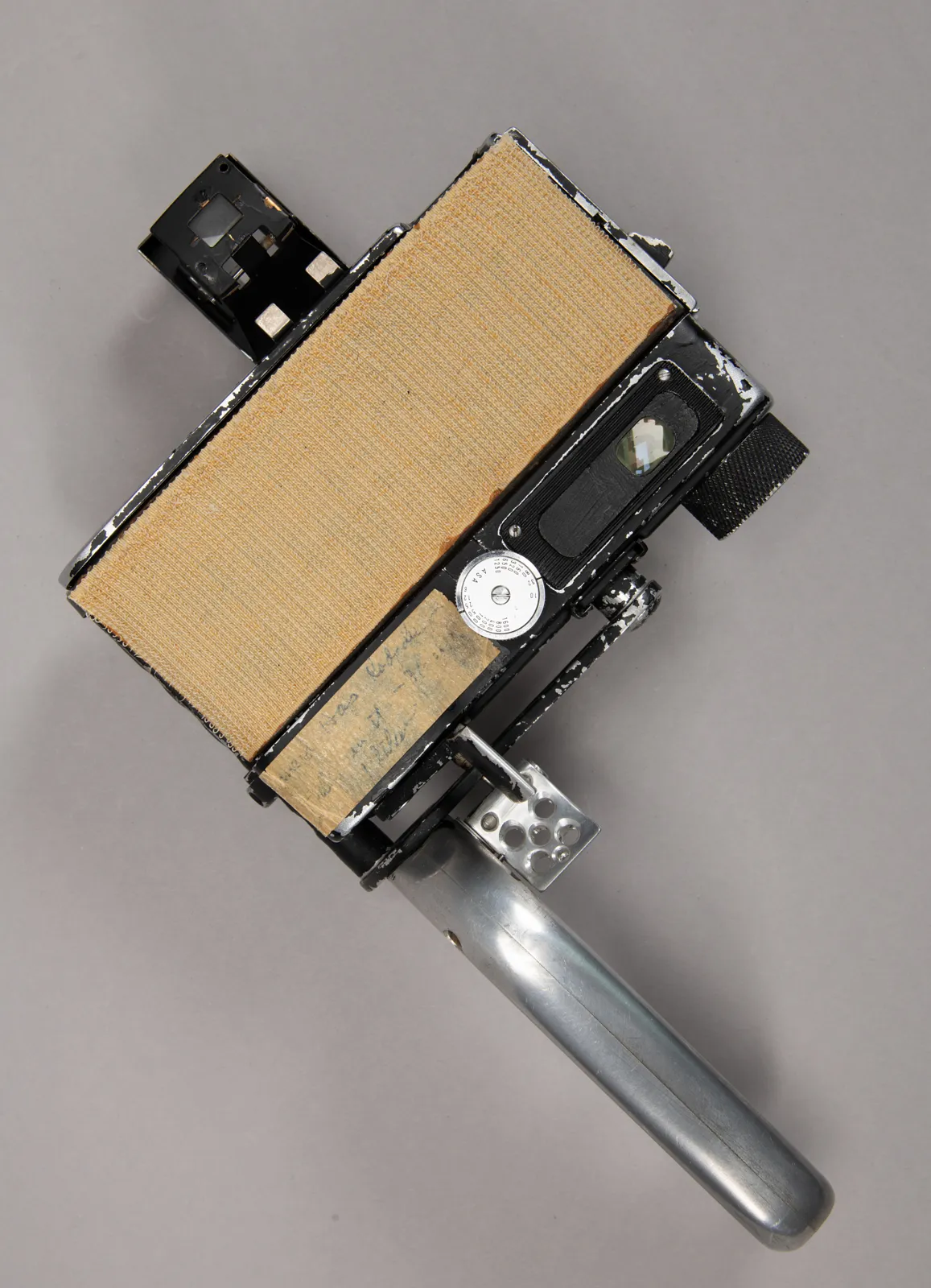
When the United States entered the Second World War in 1941, the American government seized the company as enemy property. It became General Aniline & Film, and the Ansco brand went on alone, American this time. In 1962 an Ansco camera went into orbit: John Glenn, the first American to circle the Earth, took one on board his Friendship 7 capsule.
The people
1925–1939
Cameras for everyone
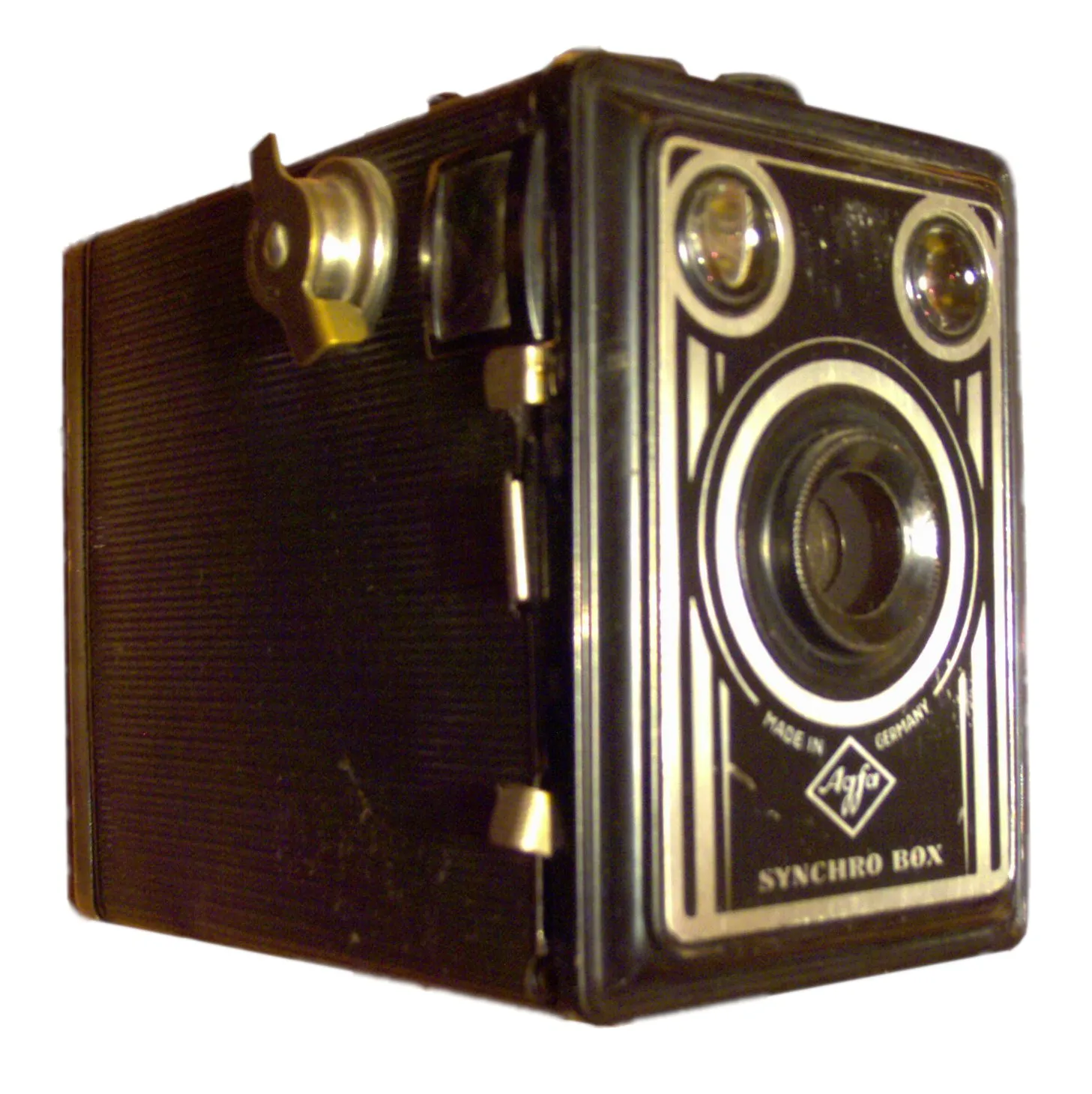
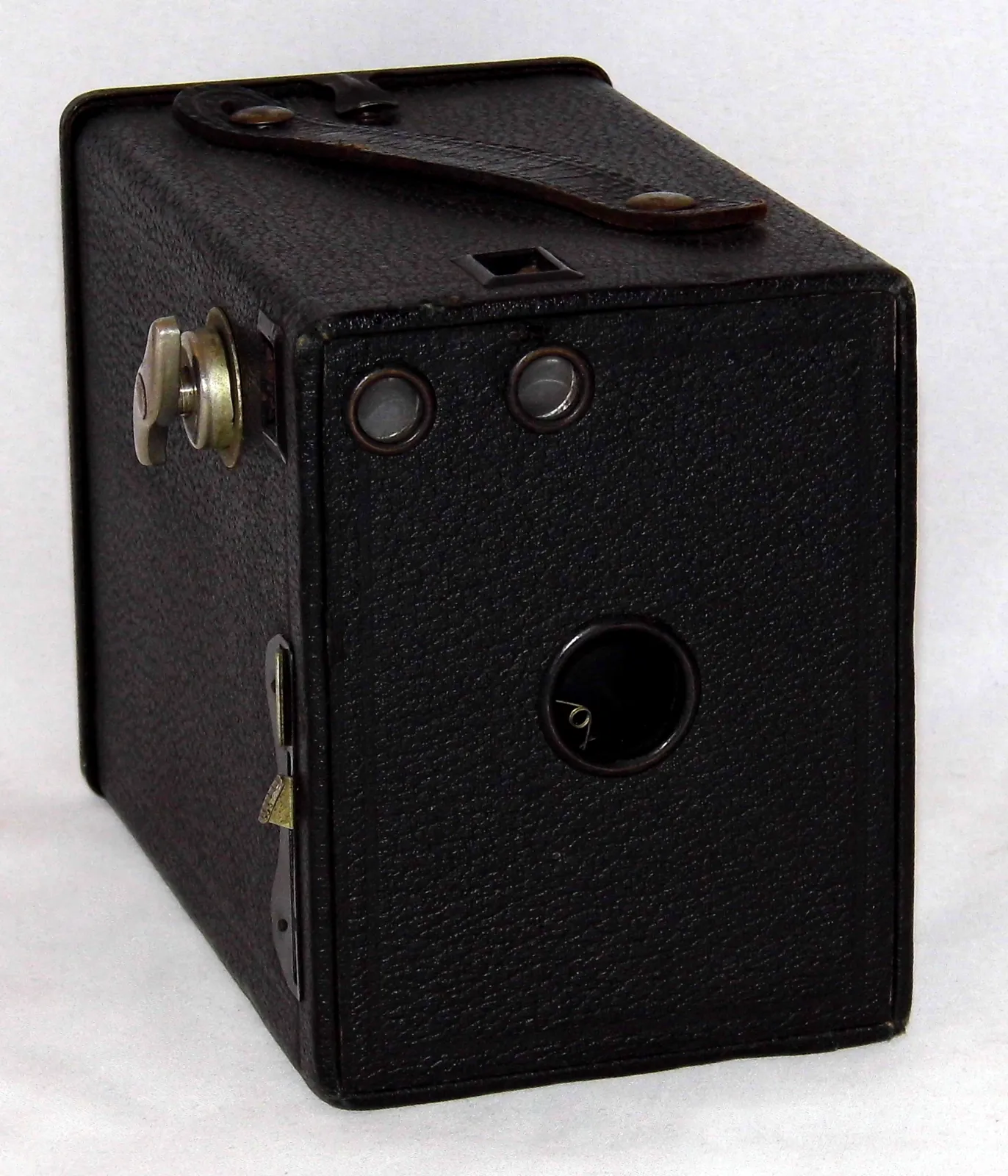
Agfa wanted to sell cameras as well as film. In the mid-1920s it took over the Rietzschel camera works in Munich, which had belonged to Bayer since 1921, and from 1927 the cameras carried the Agfa name. Munich made folding cameras such as the Billy, and simple box cameras for families.
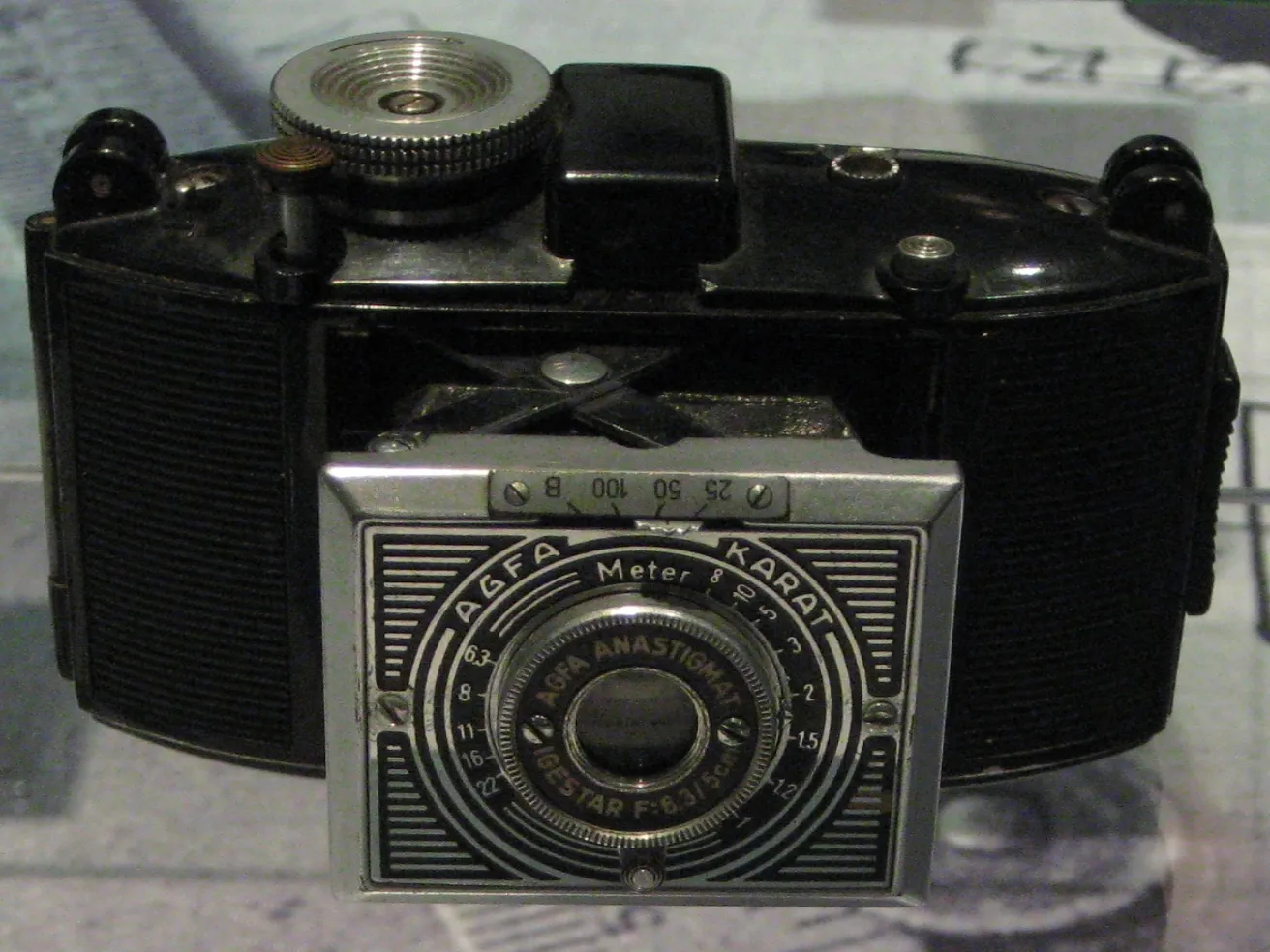
In 1936 came the Karat, a small folding camera for 35 mm film in a special cartridge that did not need rewinding: the film went from one cartridge into another. Agfa’s cameras were rarely the most advanced, but they were well made, affordable and sold in huge numbers.
1936–1945
The colour of the Reich
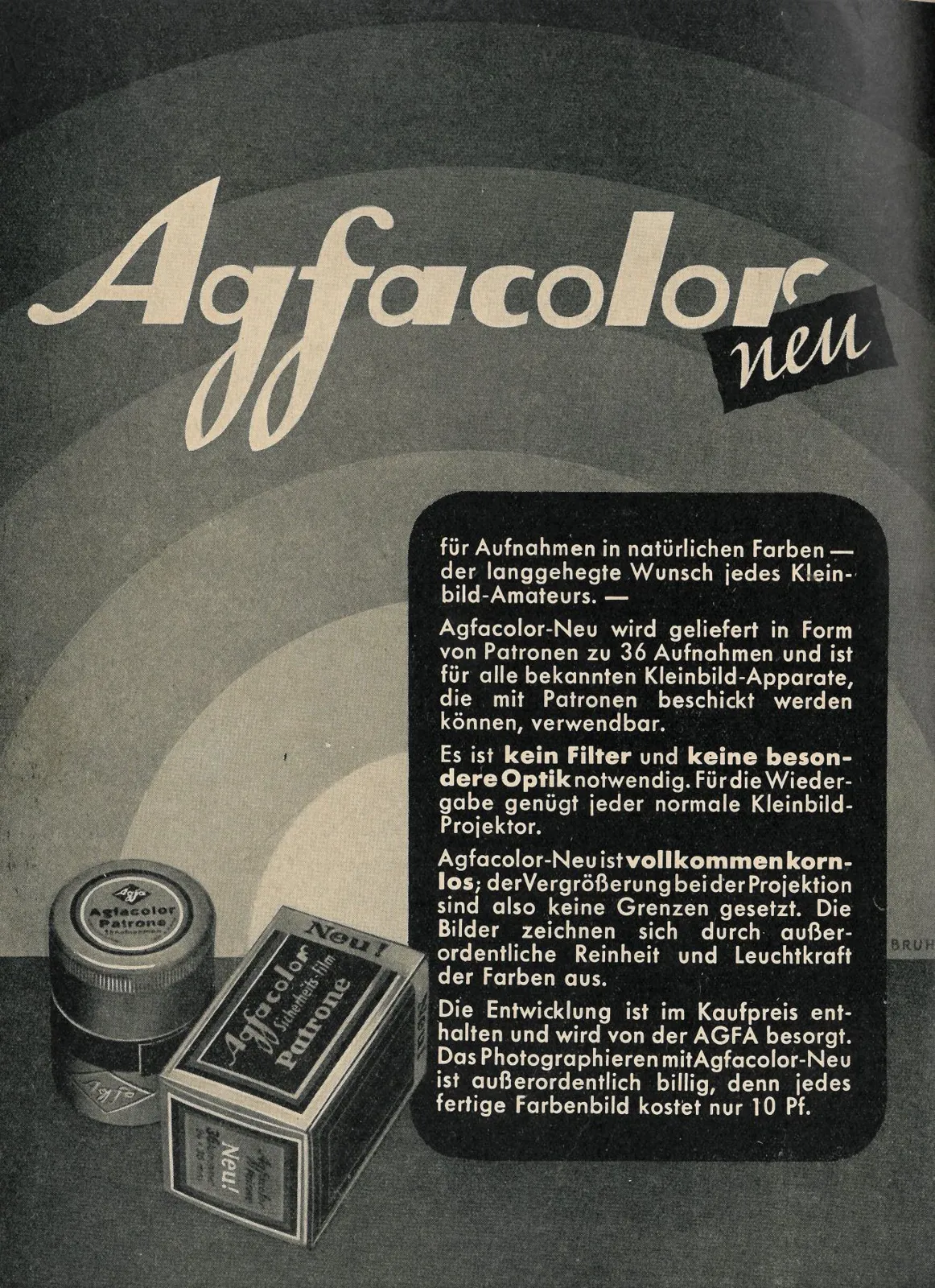
In 1936, a year after Kodachrome, Agfa launched Agfacolor Neu, developed by the chemists Wilhelm Schneider and Gustav Wilmanns. Its secret was to put the colour-forming chemicals into the layers of the film itself, so it could be developed in a much simpler way. It is the principle of almost all colour films that came after it.
The Nazi regime used Agfacolor for its prestige: from 1941 German cinema made feature films in colour, such as Münchhausen (1943), made for the 25th anniversary of the UFA studios. Agfa was then part of IG Farben, a group closely tied to the regime, and like most of German industry at the time it relied on forced labour during the war.
1945–1964
One Agfa, two Germanys
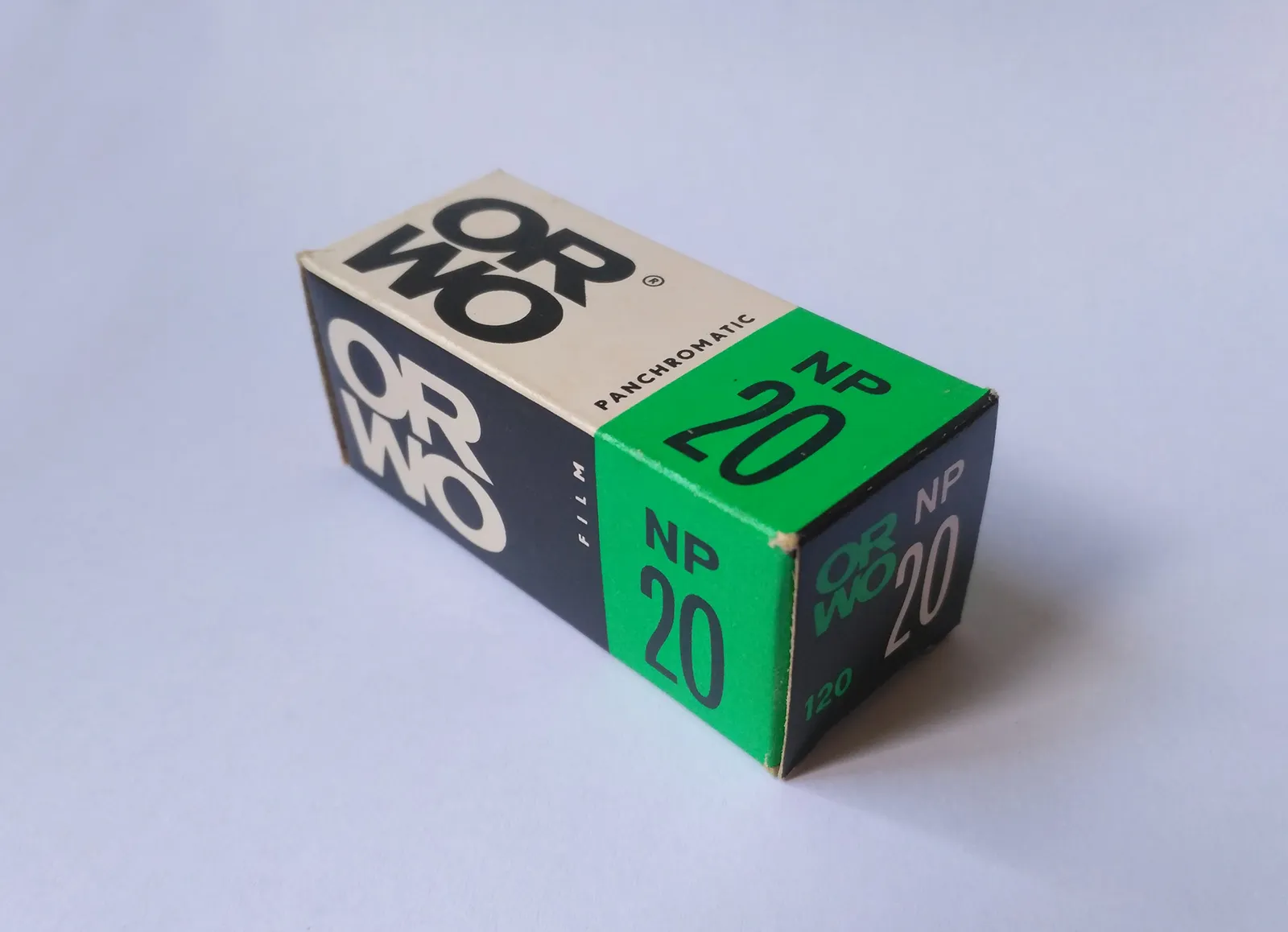
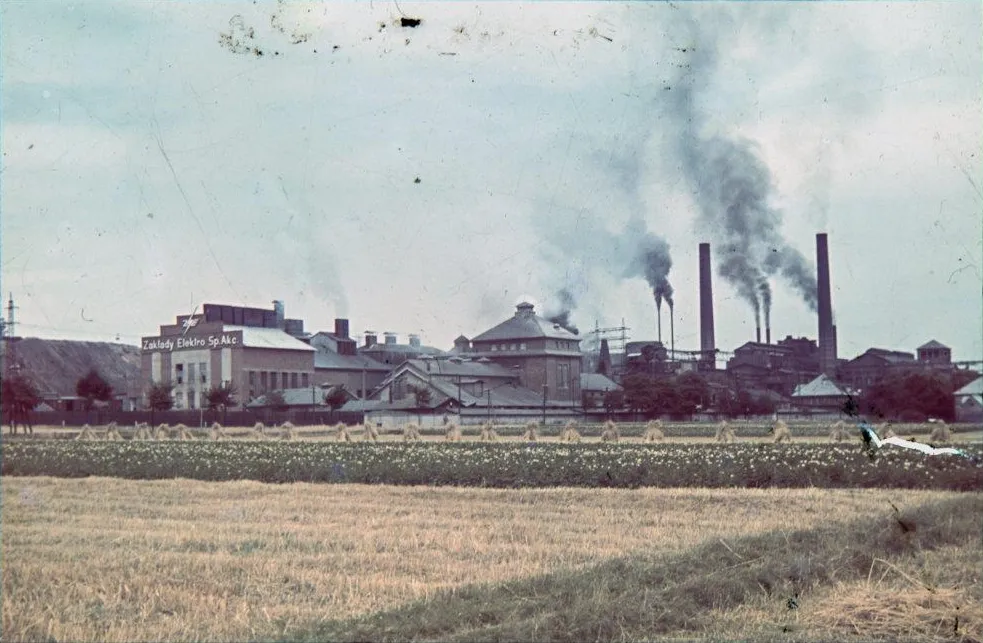
In April 1945 the Americans occupied Wolfen first. They took away the documents of Agfacolor, and the process, protected by hundreds of patents, became free for everyone: it appeared as Anscocolor in America, Sovcolor in the Soviet Union, and inspired colour films around the world. Wolfen was then handed over to the Soviets and kept making Agfa film for the Eastern bloc.
In the West, Agfa started again in Leverkusen, next to Bayer, which owned it from 1952. There were now two Agfas, one on each side of the Iron Curtain, using the same name and the same rhombus logo. As with Zeiss, the dispute over the name lasted years.
1952–1972
The Munich years
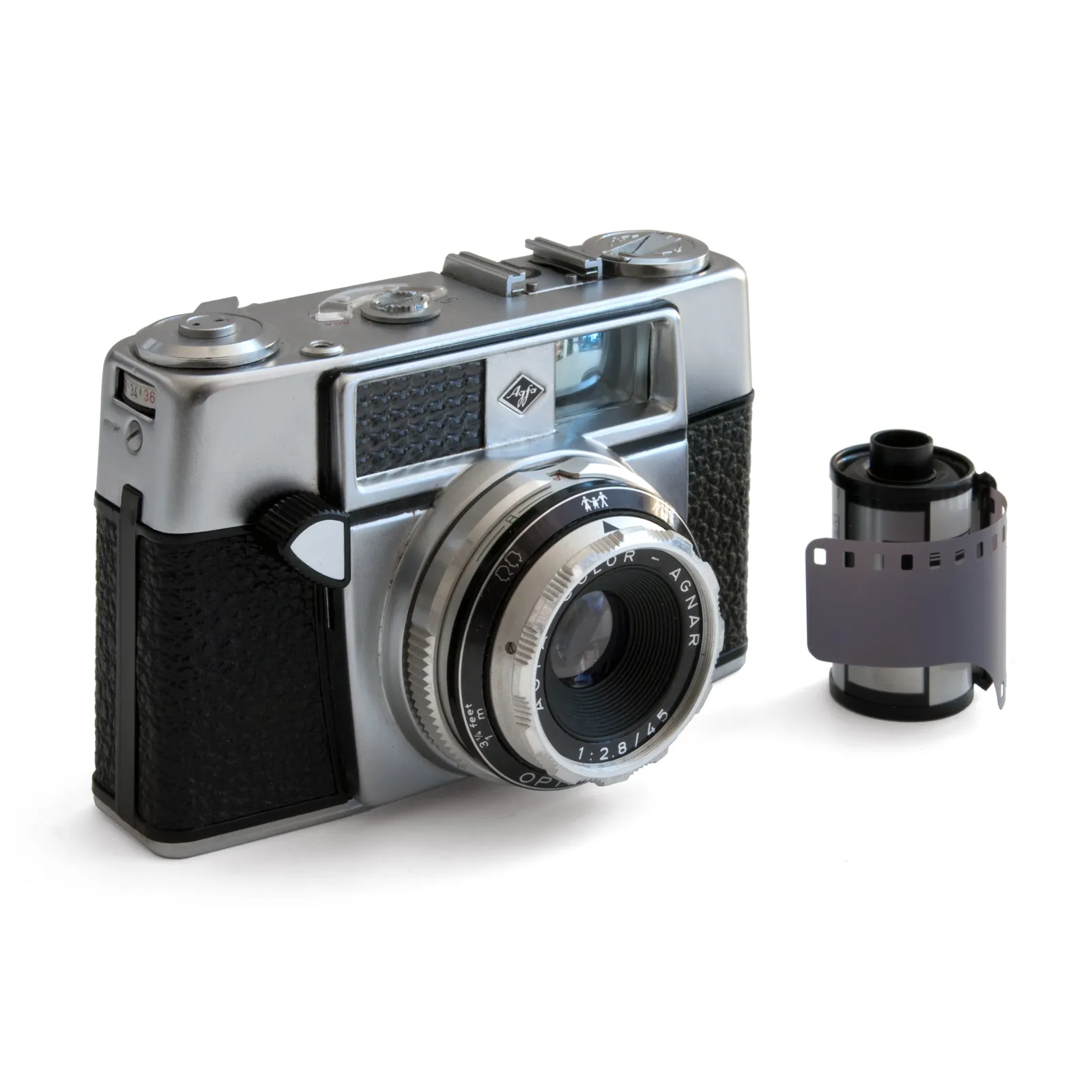
In the museum
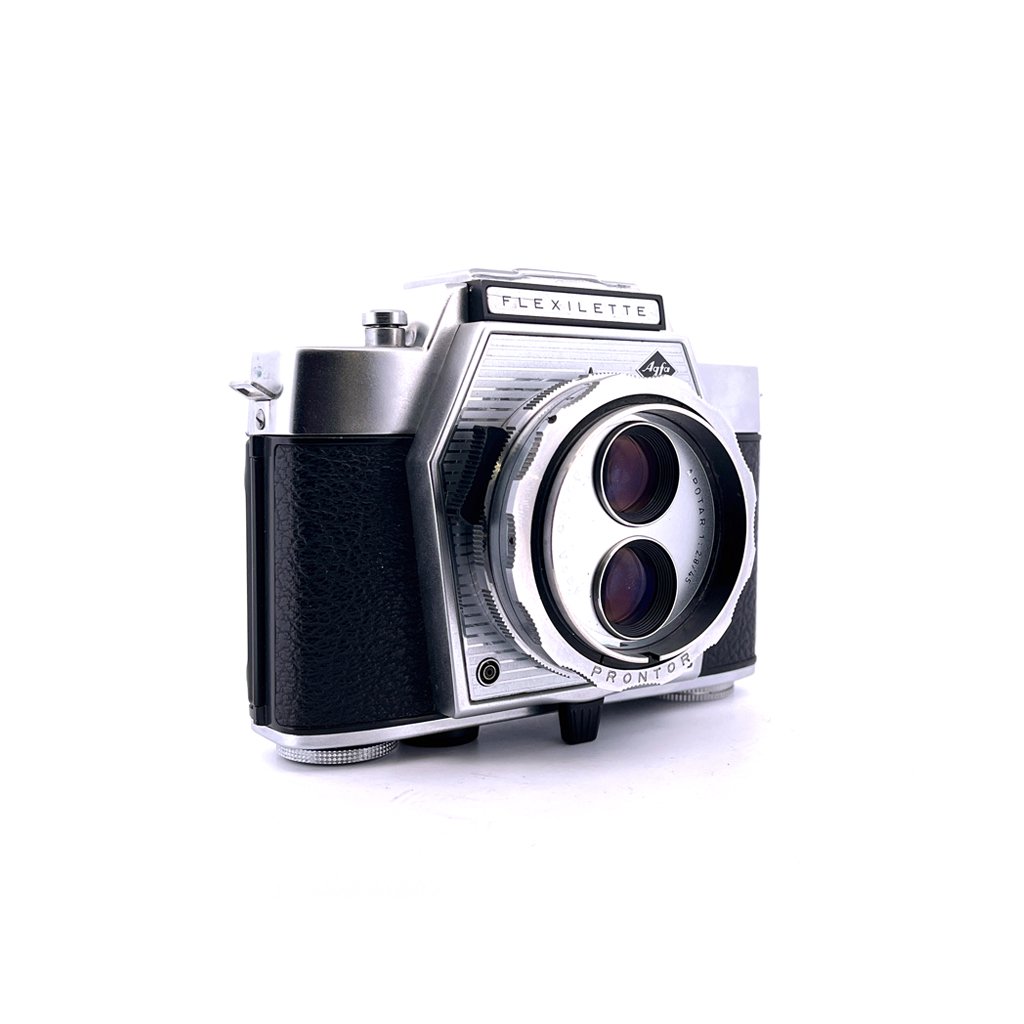
In Munich, Agfa’s camera works had their best years. The Isolette and Solinette folding cameras, the Silette and the Super Silette sold in huge numbers. In 1959 the Optima was one of the first cameras with fully automatic exposure: a light meter set the speed and aperture by itself, and the photographer only had to frame and shoot. The Flexilette of 1960, in the museum, was an original twin-lens reflex for 35 mm film.
In 1964 Agfa merged with the Belgian company Gevaert, founded by Lieven Gevaert in Antwerp in 1894, to form Agfa-Gevaert, one of the largest photographic companies in the world, the only European rival of Kodak and later Fuji.
1973–today
The last rolls
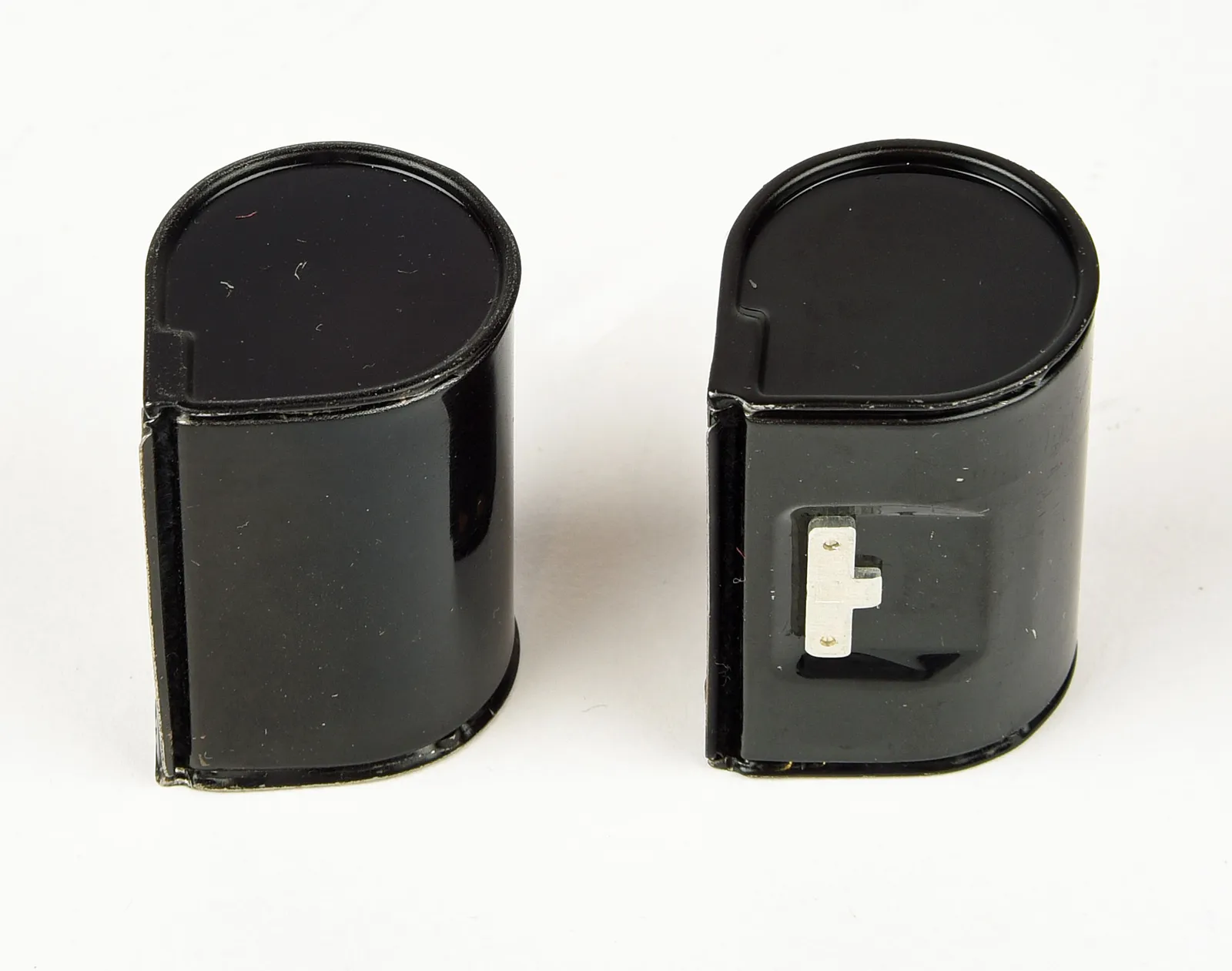
Faced with Japanese cameras, Agfa stopped making cameras in Munich in the early 1980s but went on with film, papers, X-ray film and printing materials. In 2004 Agfa-Gevaert sold its consumer photography business, which became AgfaPhoto; the new company went bankrupt the following year. Agfa-Gevaert still exists, but in medical imaging and printing, no longer in photography.
In Wolfen, ORWO did not survive the end of East Germany; the film plant closed in the 1990s, and the site became an industrial museum. But the name lives on: new ORWO films for cinema and photography are made again by a small company in Wolfen, and the Agfa name still appears on films made under licence.
Agfa at the 99 Cameras Museum
The Agfa Flexilette and the Ansco Memo, the first American 35 mm camera, are in the showcases of the museum in Paris. You can see them, and the other cameras of this story, in our online collection.
See the Agfa cameras of the collection
Sources. Agfa-Gevaert corporate history, Industrie- und Filmmuseum Wolfen, Wikipedia articles on Agfa-Gevaert, Agfacolor, ORWO, Ansco and Hannibal Goodwin, Smithsonian National Air and Space Museum, museum-digital (Agfa Box), National Inventors Hall of Fame. Some anecdotes come from oral tradition and are told as such.
Plan your visit
Visit is free and open to all
- Opening hoursMonday – Saturday : 10 – 17:30
- AddressStudio Harcourt, 6 Rue de Lota, 75116 Paris
- Exceptional closuresThursday, 26 November 2026