The adventure of the brands
The Voigtländer story
The oldest name in photography, a lens calculated with the help of soldiers, a metal camera shaped like a telescope, a quarrel that sent a company from Vienna to Germany, the first zoom lens and a rebirth in Japan: the Voigtländer story, told through its inventions and its anecdotes.
1756–1839
An instrument maker in Vienna
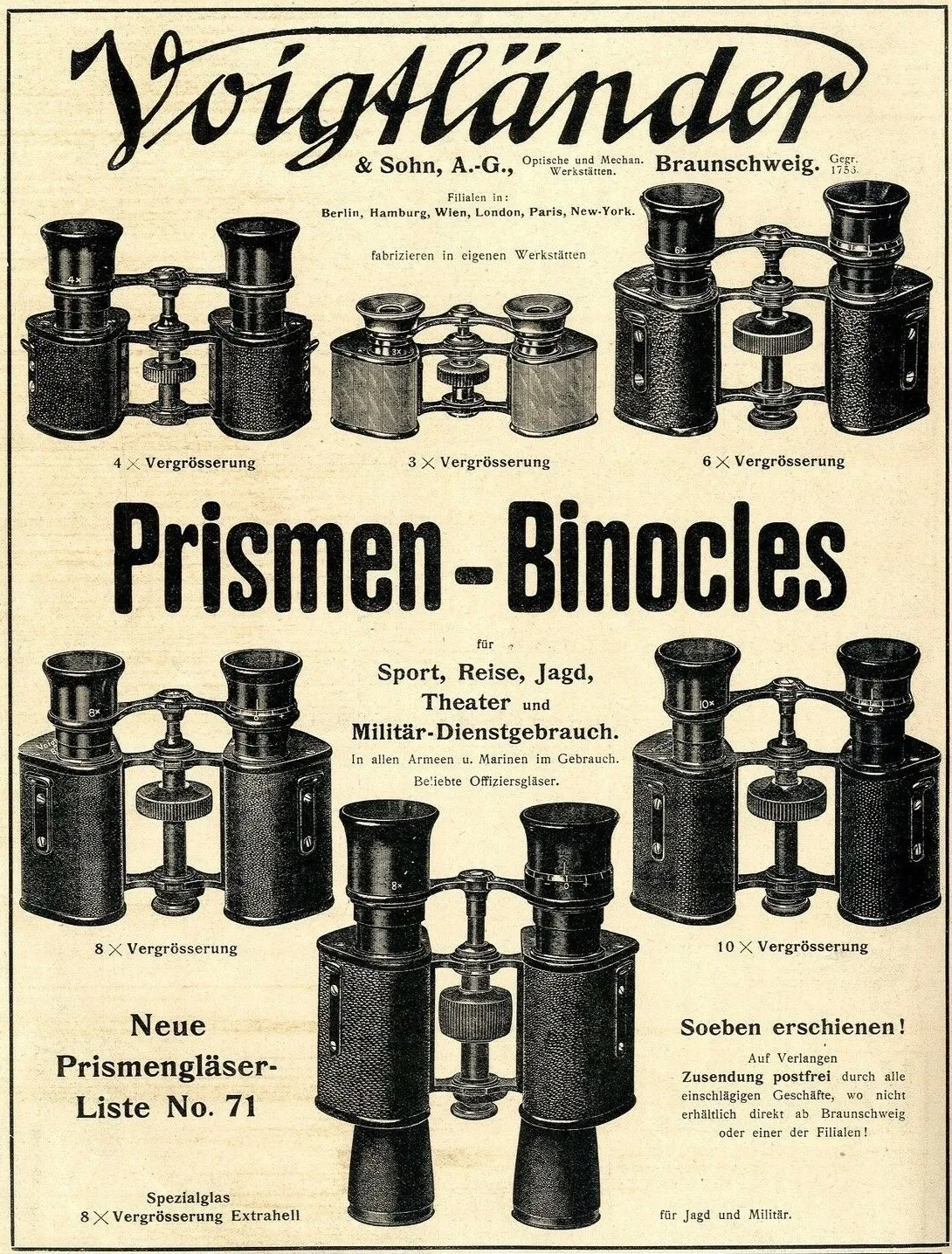
Voigtländer is the oldest name in photography, and it is older than photography itself. In 1756 Johann Christoph Voigtländer opened a workshop in Vienna, the capital of the Habsburg empire, to make mathematical instruments: compasses, rulers, levels. His son and then his grandson turned it towards optics: spectacles, opera glasses, telescopes and microscopes.
In 1839, when the invention of photography was announced in Paris, the workshop was run by the founder’s grandson, Peter Wilhelm Friedrich Voigtländer, a young optician trained in Vienna and abroad. He saw at once that the new art would need lenses.
1840–1841
The lens that made the portrait possible
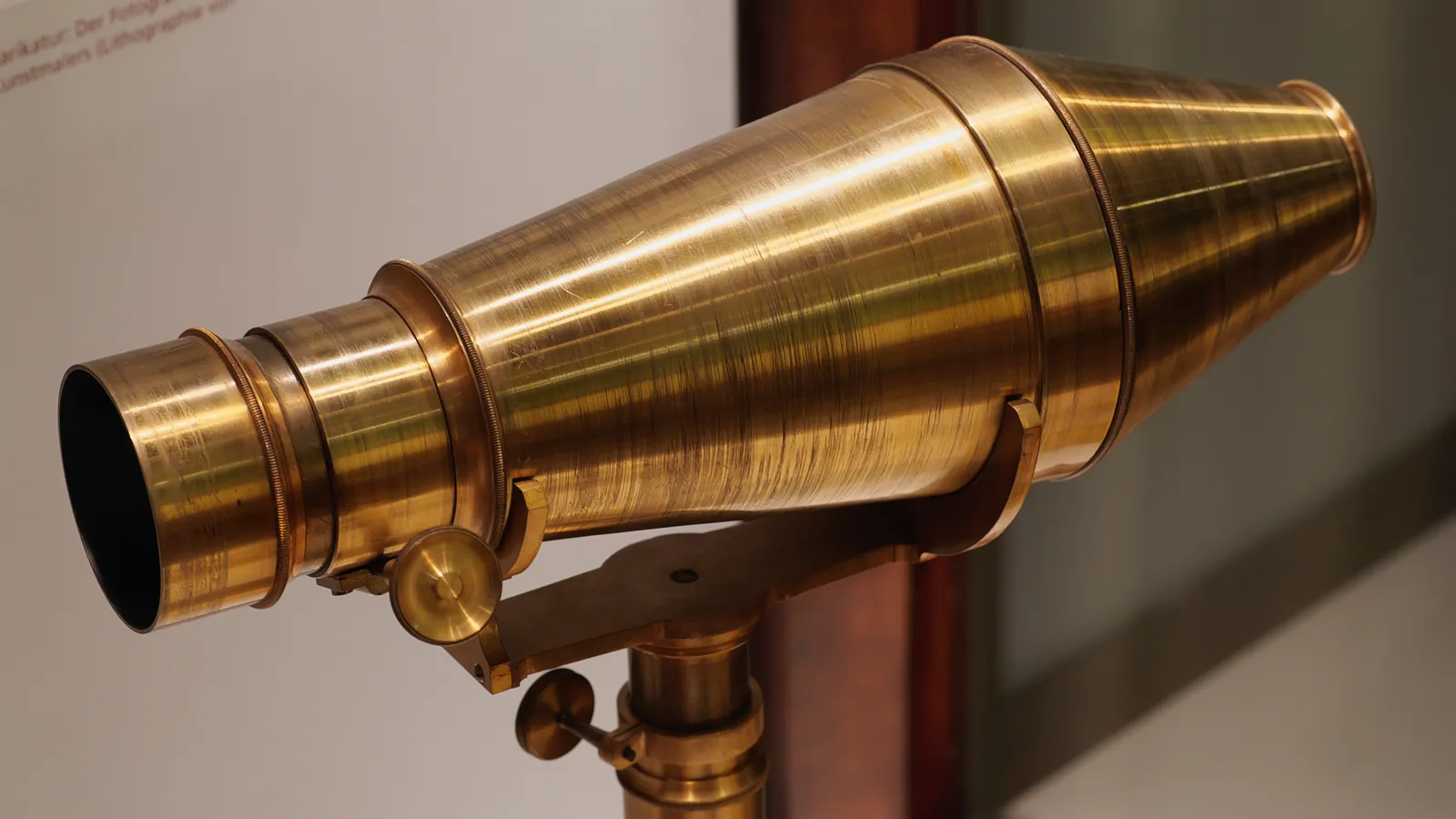
The first daguerreotypes needed several minutes of exposure: impossible for a portrait. In 1840 a young Viennese mathematician, Joseph Petzval, calculated a new lens with mathematics rather than by trial and error. About twenty times brighter than the lenses of the time, it brought exposures down to less than a minute. Voigtländer made it.
In 1841 Voigtländer also produced a strange and beautiful camera: an all-metal daguerreotype camera, a brass cone on a stand, with the Petzval lens. It was small, light and solid, and some 600 were made. With it, portrait studios opened everywhere, and the Petzval lens remained the portrait lens for decades.
The people

1845–1899
A quarrel and a move
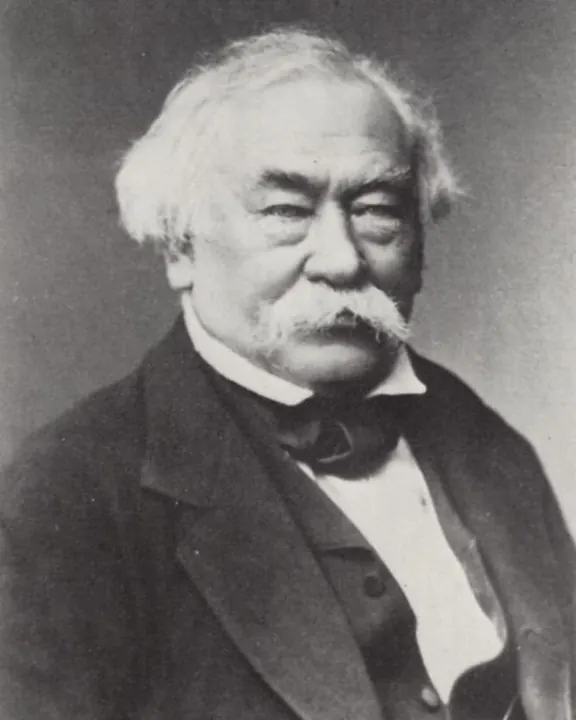
The partnership between Petzval and Voigtländer did not last. Petzval had no proper contract and no patent outside Austria, while Voigtländer sold his lenses in their thousands. The two men fell out, and Voigtländer, to escape Petzval’s Austrian patent, moved his production to Braunschweig, in northern Germany, his wife’s home town, where he opened a factory in 1849.
Braunschweig became the home of Voigtländer for more than a century. The company made lenses, binoculars and, later, complete cameras, and the family was ennobled by the Austrian emperor. Petzval, bitter, turned away from optics and lived an increasingly isolated life in Vienna.
1900–1939
Heliar, Bessa and the folding years

In the museum
In 1900 the Voigtländer designer Hans Harting created the Heliar, a lens with a soft, delicate rendering that portrait photographers loved for decades. In 1925 the company was bought by the pharmaceutical firm Schering, which kept it independent.
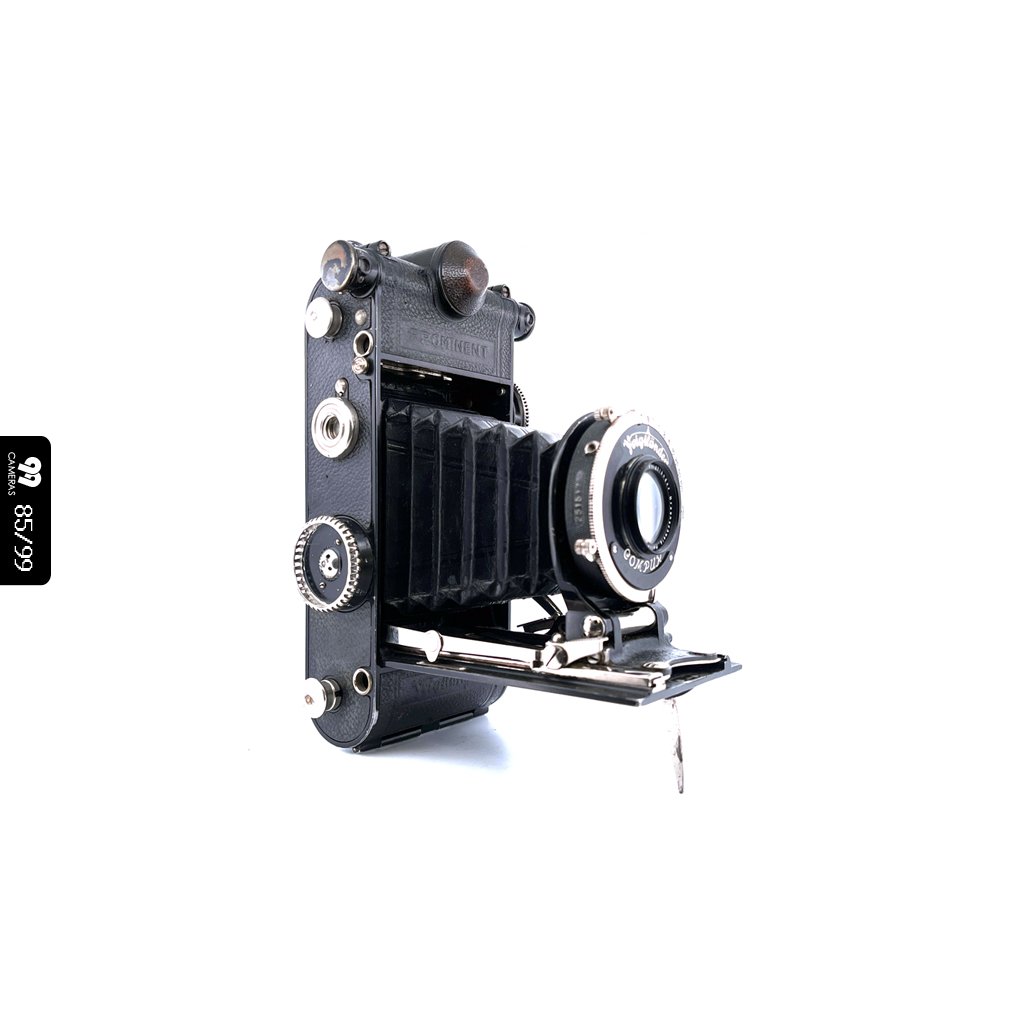
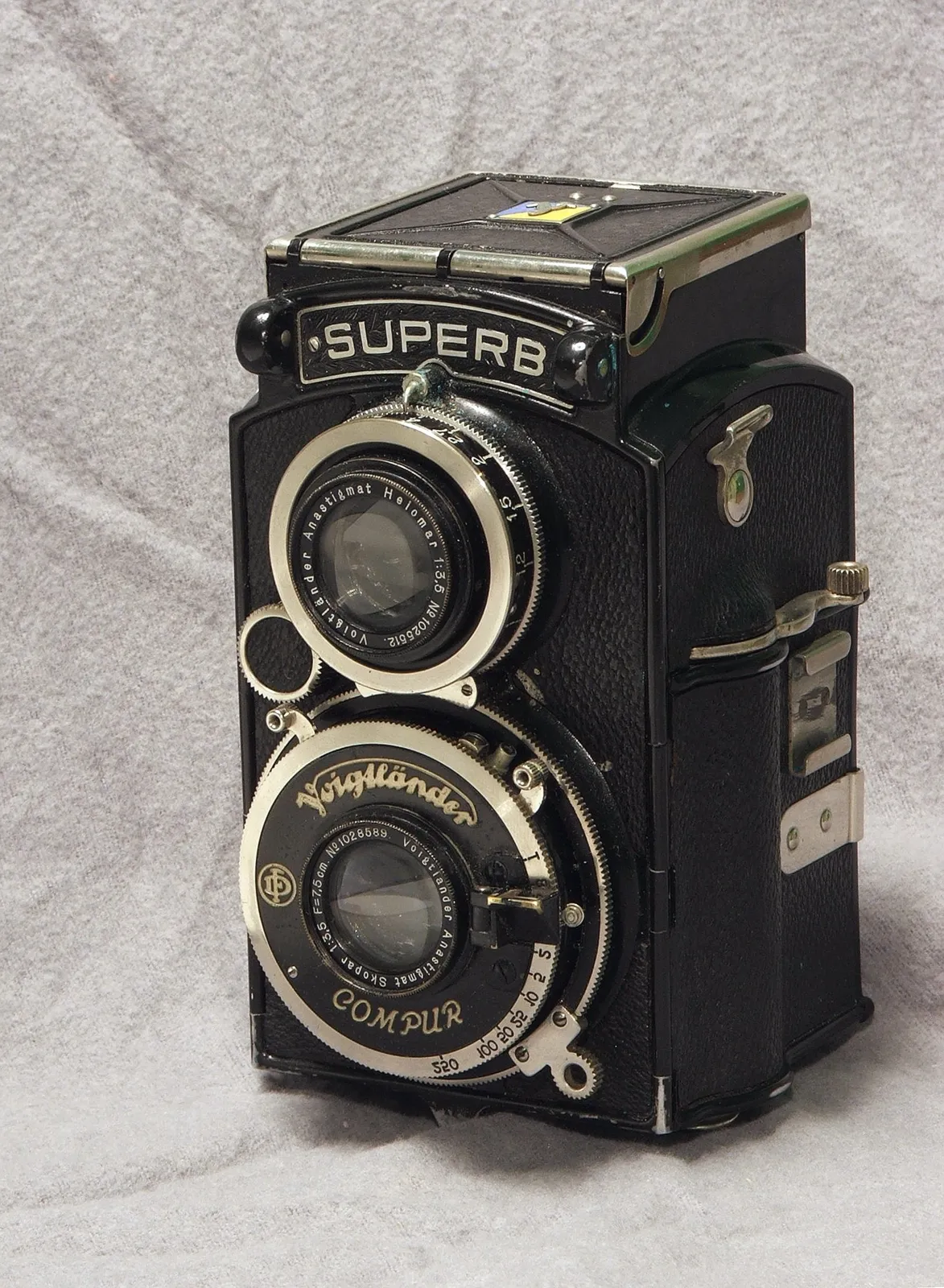
Between the wars Voigtländer made some of the best folding cameras for roll film: the Bergheil, the Bessa of 1929, the Prominent of 1932, in the museum, and the Superb of 1933, an elegant twin-lens reflex. It stayed outside the great merger of 1926 that created Zeiss Ikon, and competed with it.
1945–1956
The barn doors
In the museum
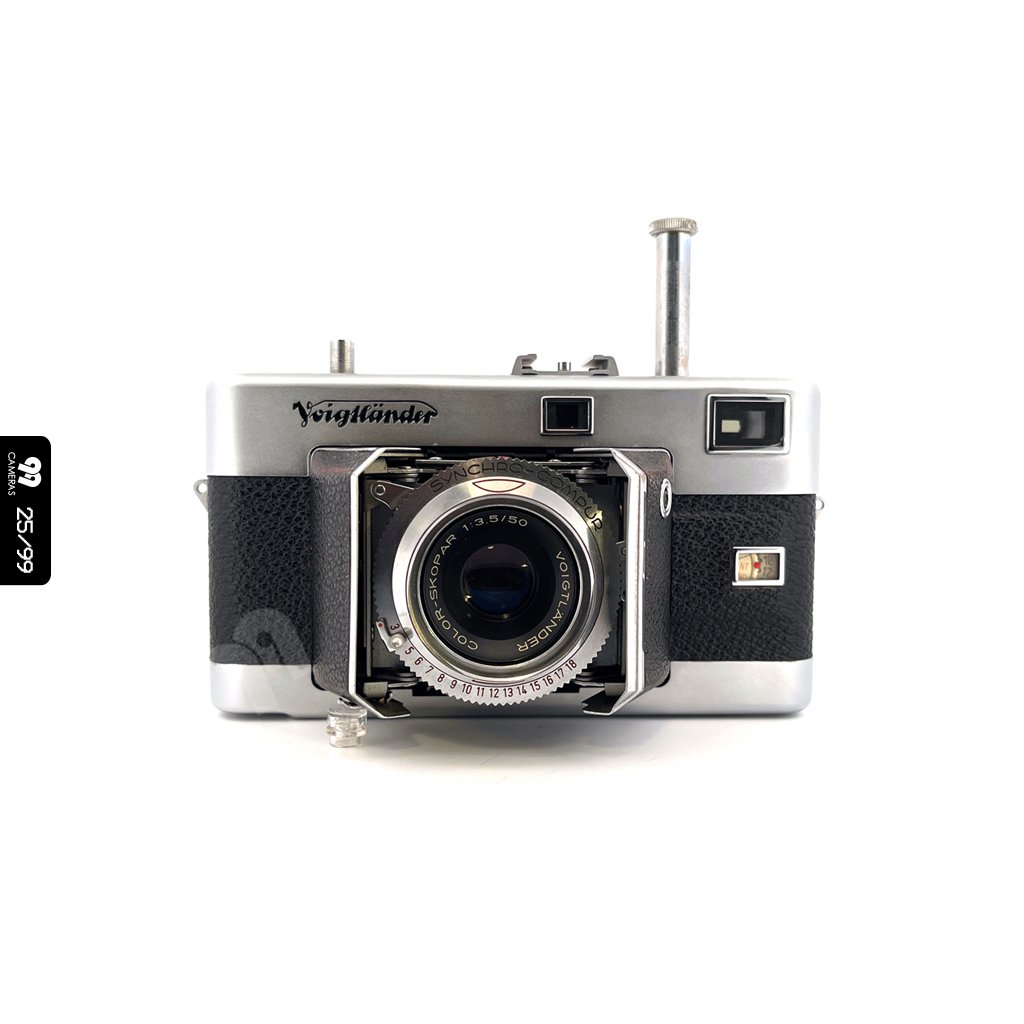
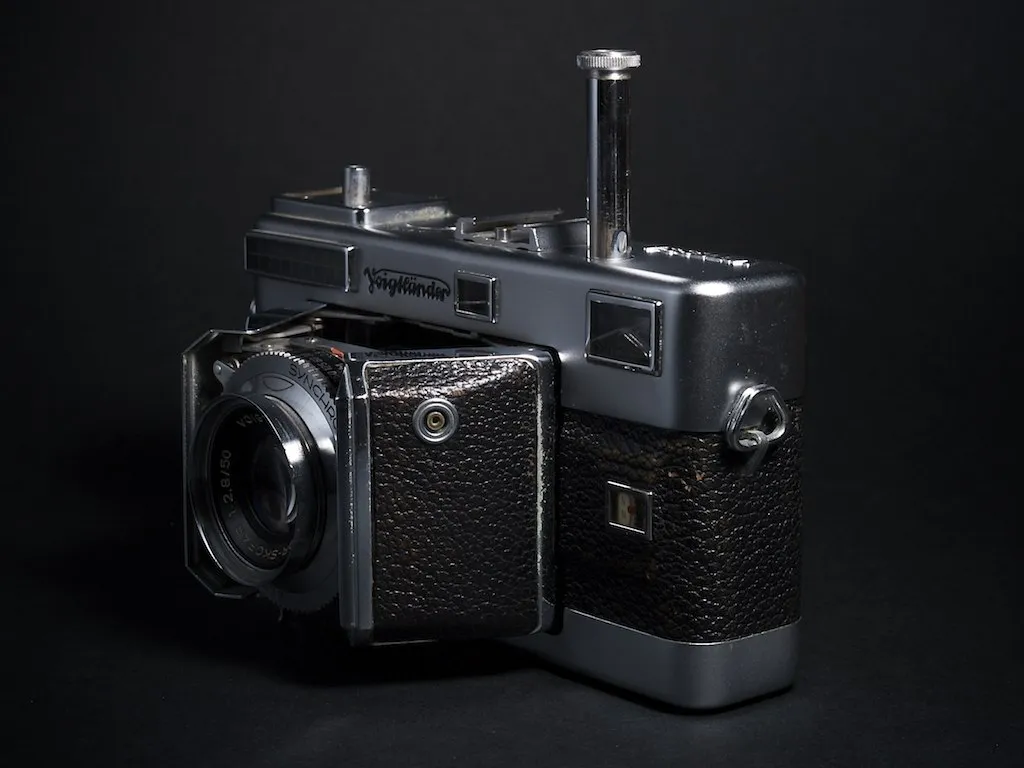
After the war, Braunschweig was in the British zone of occupation, and Voigtländer started again with cameras for 35 mm film. The Vito, a small folding camera, and the Prominent of the 1950s, a high-quality rangefinder, were joined in 1950 by the Vitessa, one of the strangest and most original cameras of its time.
The Vitessa folded flat behind two doors that opened like a cupboard. A tall plunger on top did everything at once: pushing it down advanced the film and cocked the shutter. In 1956 the Carl Zeiss Foundation bought Voigtländer from Schering, and the oldest camera maker became a sister company of Zeiss Ikon.
1959
The first zoom
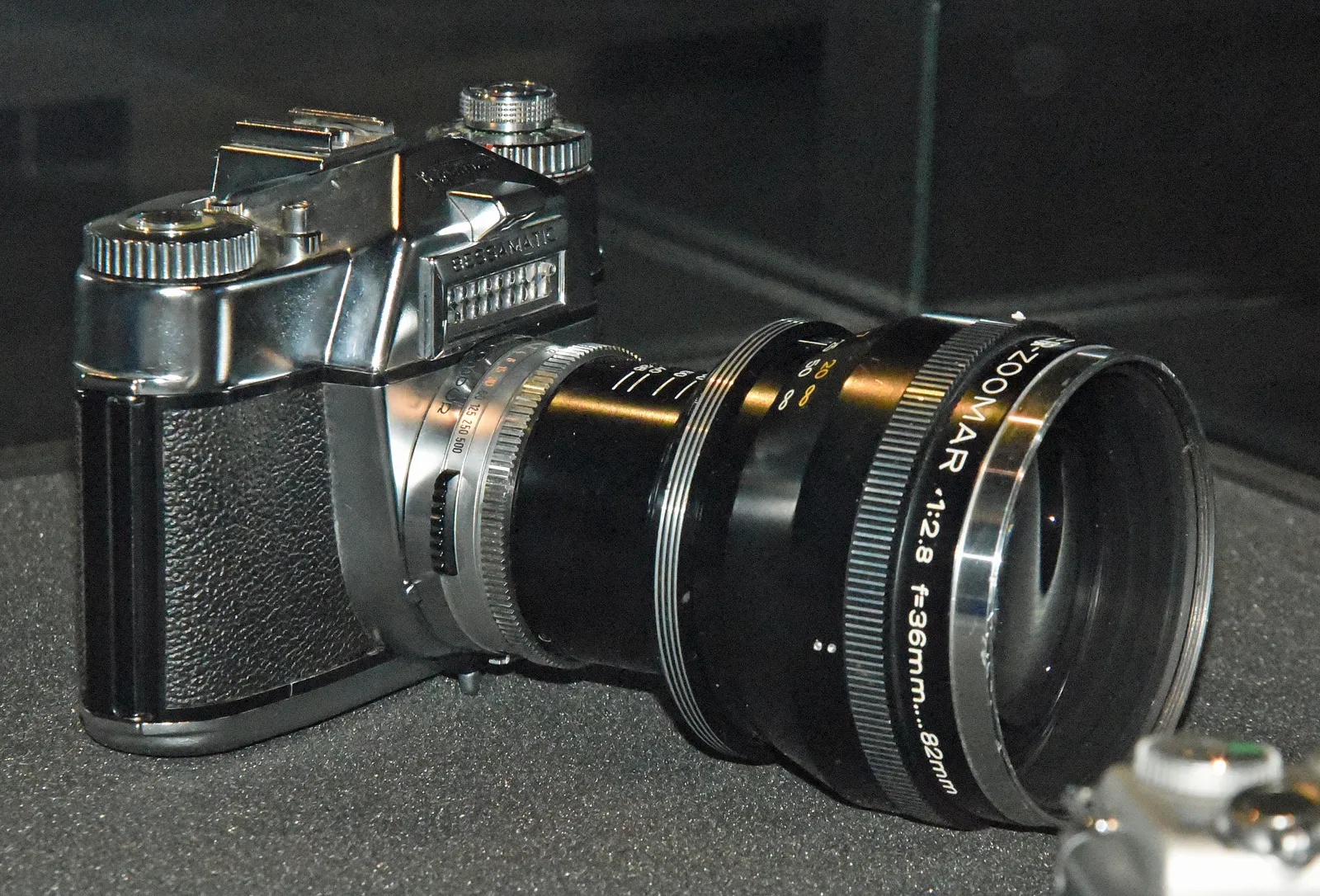
In 1959 Voigtländer launched the Bessamatic, a reflex camera, and with it a lens that changed photography: the Voigtländer-Zoomar 36–82 mm, the first zoom lens for 35 mm still cameras. Instead of changing lenses, the photographer could change the framing by turning a ring.
The Zoomar was big and heavy, and its image was not as sharp as the best fixed lenses. But the idea had arrived. Within a few decades, the zoom lens would become the standard lens on almost every camera in the world.
1965–1982
Swallowed and sold
Under the same owner, Voigtländer and Zeiss Ikon competed with each other while Japanese cameras became cheaper and better every year. At the end of the 1960s the two companies merged, and in 1971 production stopped at Braunschweig.
In 1972 Zeiss, Rollei and a regional bank tried to save the name with a new company, Optische Werke Voigtländer; Rollei soon took it over. But Rollei itself ran into trouble in the late 1970s and early 1980s, and the Voigtländer name passed from hand to hand, used on cameras made by others.
1999–today
A rebirth in Japan
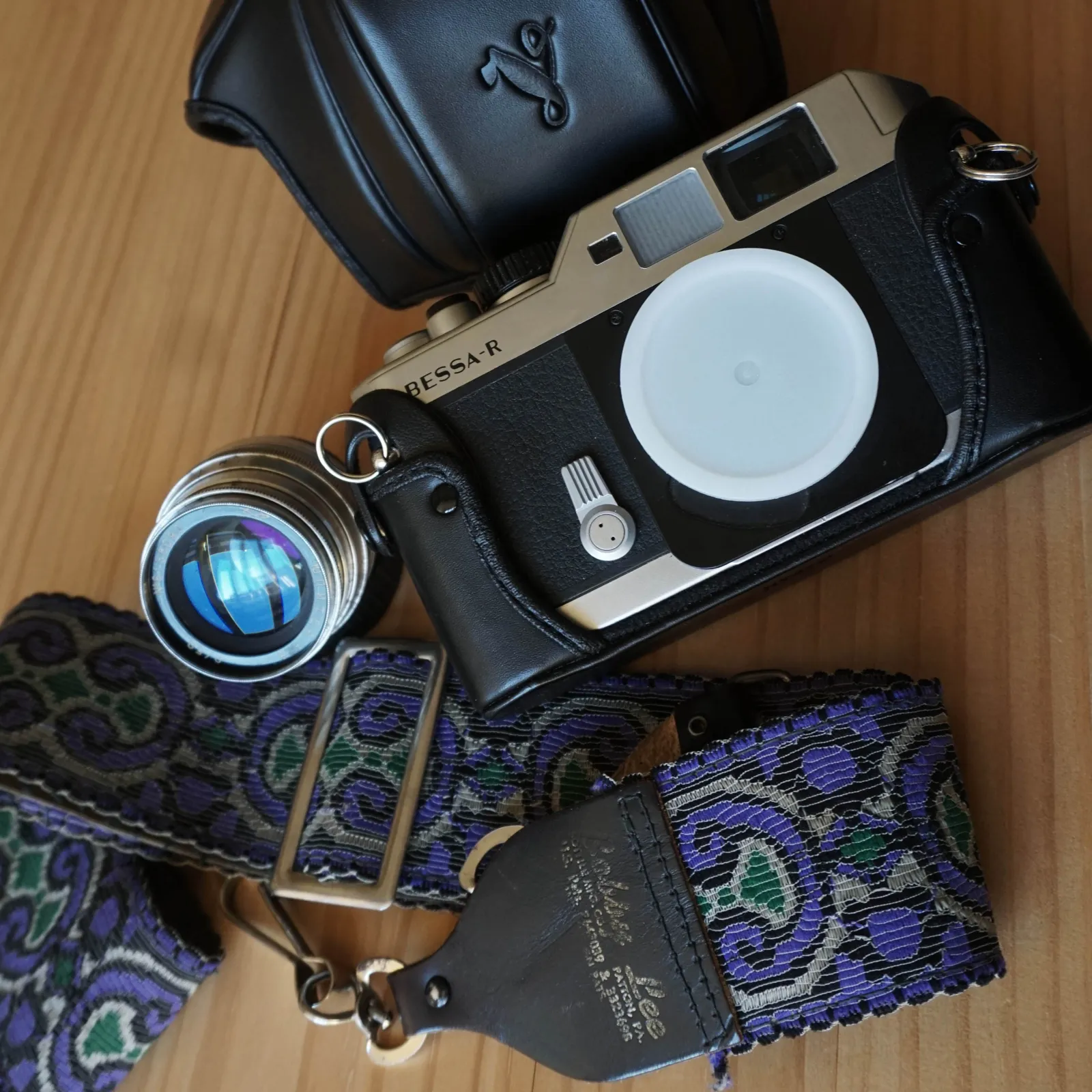
In 1999 the Japanese company Cosina, in Nagano, obtained the right to use the Voigtländer name. It launched the Bessa-L, then the Bessa-R, new rangefinder cameras, and lenses with the old names, Heliar, Nokton, Ultron, made for Leica and other cameras.
Cosina’s Voigtländer lenses found a new public among photographers who loved manual focusing and compact lenses. Today they are made for mirrorless cameras too, and the Voigtländer name, born in Vienna in 1756, is carried by lenses made in Japan.
Voigtländer at the 99 Cameras Museum
The Voigtländer Prominent of 1932 and the Vitessa A of 1950 are in the showcases of the museum in Paris. You can see them, and the other cameras of this story, in our online collection.
See the Voigtländer cameras of the collection
Sources. Wikipedia articles on Voigtländer, Joseph Petzval, the Petzval lens and Cosina Voigtländer, Science Museum Group collection, Tekniska museet Stockholm, Musée Nicéphore Niépce. Some anecdotes come from oral tradition and are told as such.
Plan your visit
Visit is free and open to all
- Opening hoursMonday – Saturday : 10 – 17:30
- AddressStudio Harcourt, 6 Rue de Lota, 75116 Paris
- Exceptional closuresThursday, 26 November 2026