
No.16/99
Canon 7
Fastest lens of its time
 Exhibited at the museum
Used by Théo Giacometti
in our exhibition “5 Creators meet 5 Iconic Cameras”
See the exhibition →
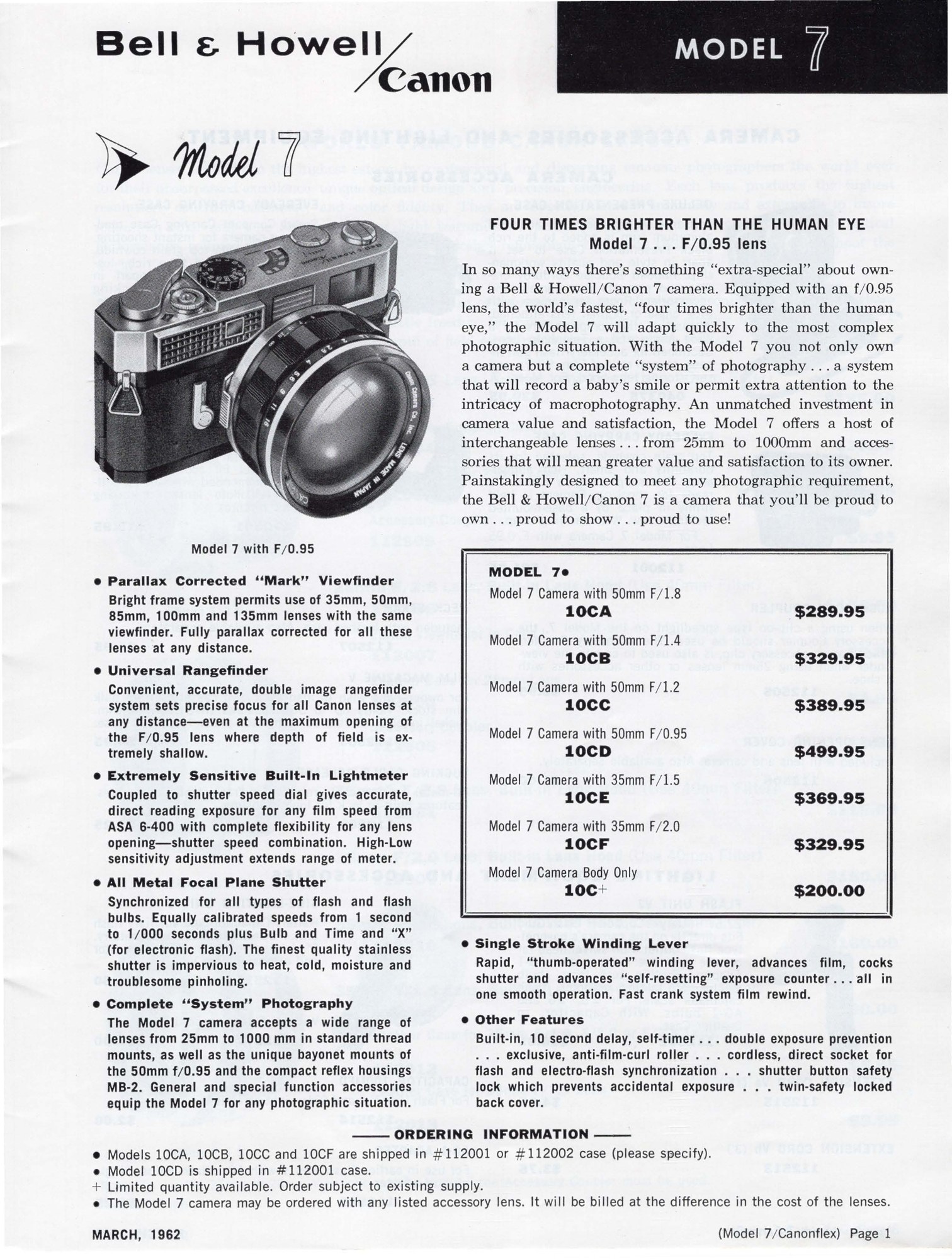
The Canon 7 rangefinder was introduced in 1961 and is one of Canon’s last models compatible with the Leica M39 lens mount.
Even though Canon had already issued single lens reflex (SLR) cameras at the time, the brand wanted to produce a fast-shooting rangefinder camera for reportage in direct competition with the Leica M3. It featured a focal-plane shutter and an integrated selenium light meter.
But what made the Canon 7 a legend, was the fact that it came as a camera system with a set of 4 lenses, one of which was going to earn the title of “Dream lens” : the Canon 50mm f/0.95 lens.
This unique lens had the largest aperture in the world for photographic lenses at the time. It is four times faster than the human eye. The amount of engineering to make it possible is incredible and the lens aesthetic and size make an impression on everyone who sees it. The Dream lens is so wide it locks to the camera body using an external bayonet and a set of winged tabs are used to lock securely to the outer mount. The rear element is so large that the glass is shaved down on one side to make room for the rangefinder cam.
Generations of photographers have written on how the Dream lens is a weapon of choice for portraits and incredible Bokeh, making it one of the most sought after collectibles ever.
About its creator
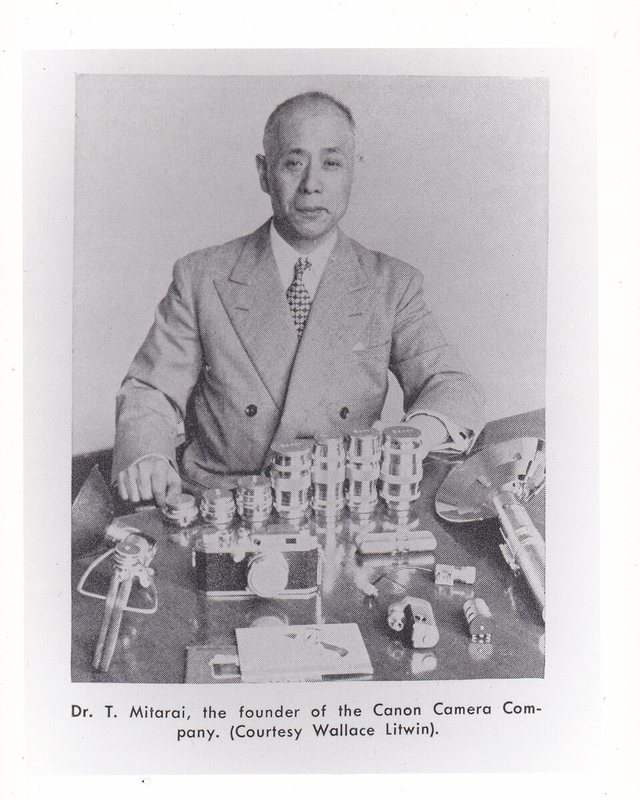
Takeshi Mitarai
1901–1984 · Japanese
Co-founder and president of Canon
A doctor by training, Mitarai backed the small laboratory that built the first Canon and became the company’s president in 1942. He rebuilt it after the war and turned it into an exporter, from rangefinders such as the Canon IIIA and Canon 7 to a worldwide brand.
Gallery
7







Media Pin-ups are AI-generated.
10









More from The Legends
Discover the collection
Plan your visit
Visit is free and open to all
- Opening hoursMonday – Saturday : 10 – 17:30
- AddressStudio Harcourt, 6 Rue de Lota, 75116 Paris
- Exceptional closuresMonday, 16 November 2026Tuesday, 17 November 2026Thursday, 19 November 2026Thursday, 26 November 2026