
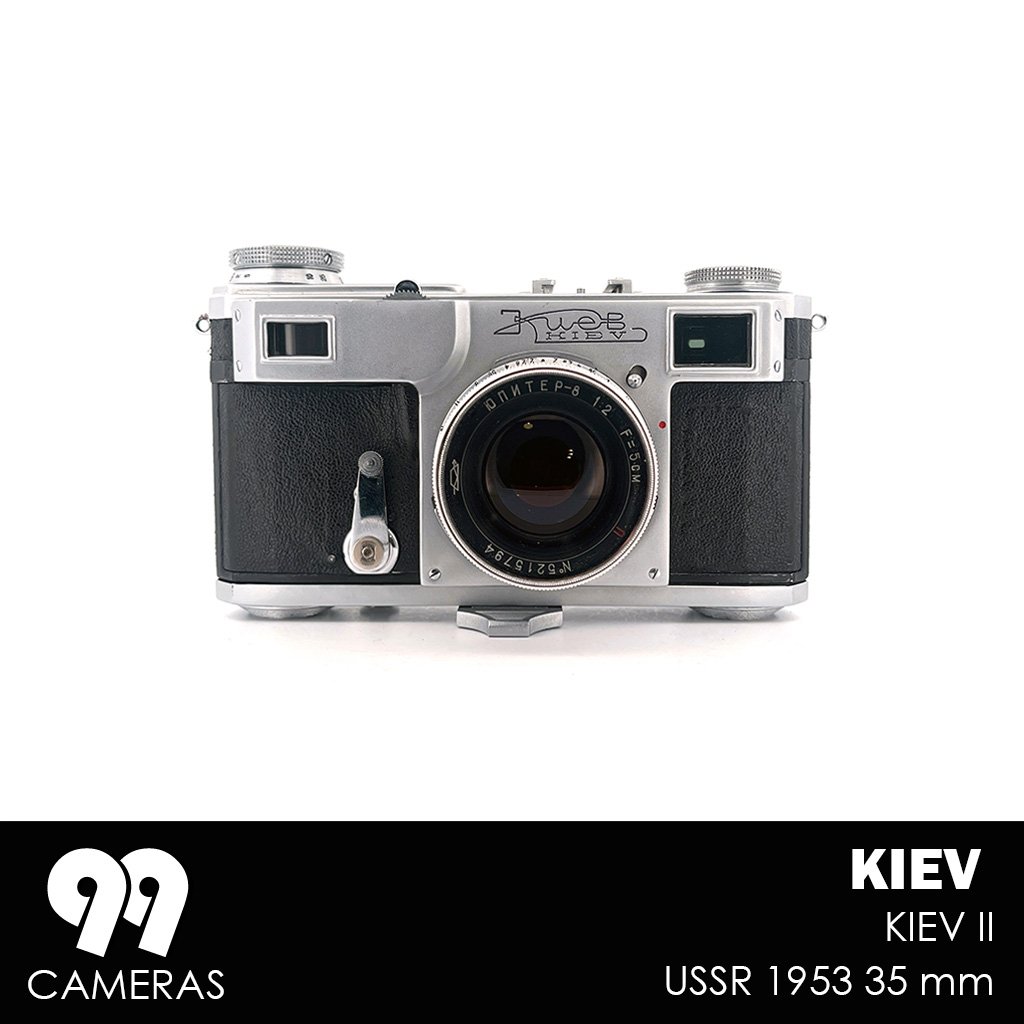
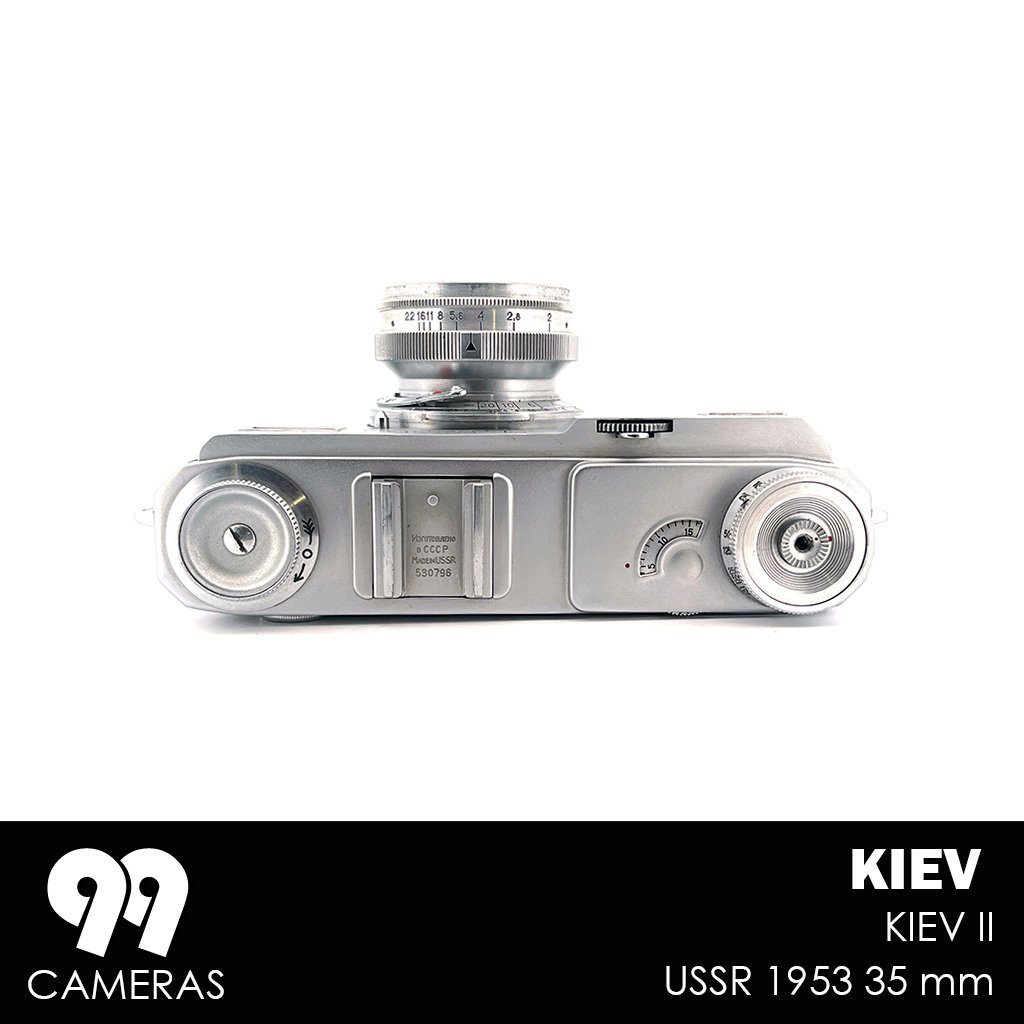
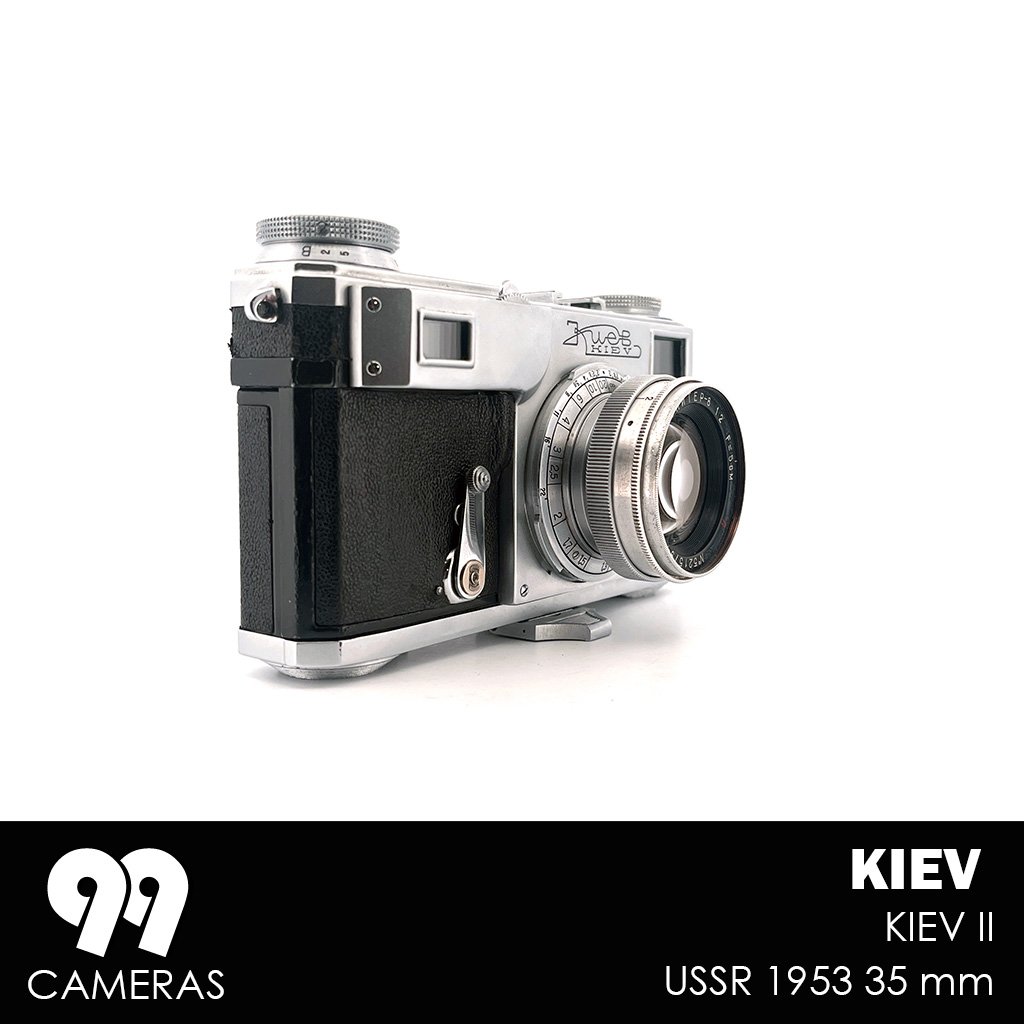
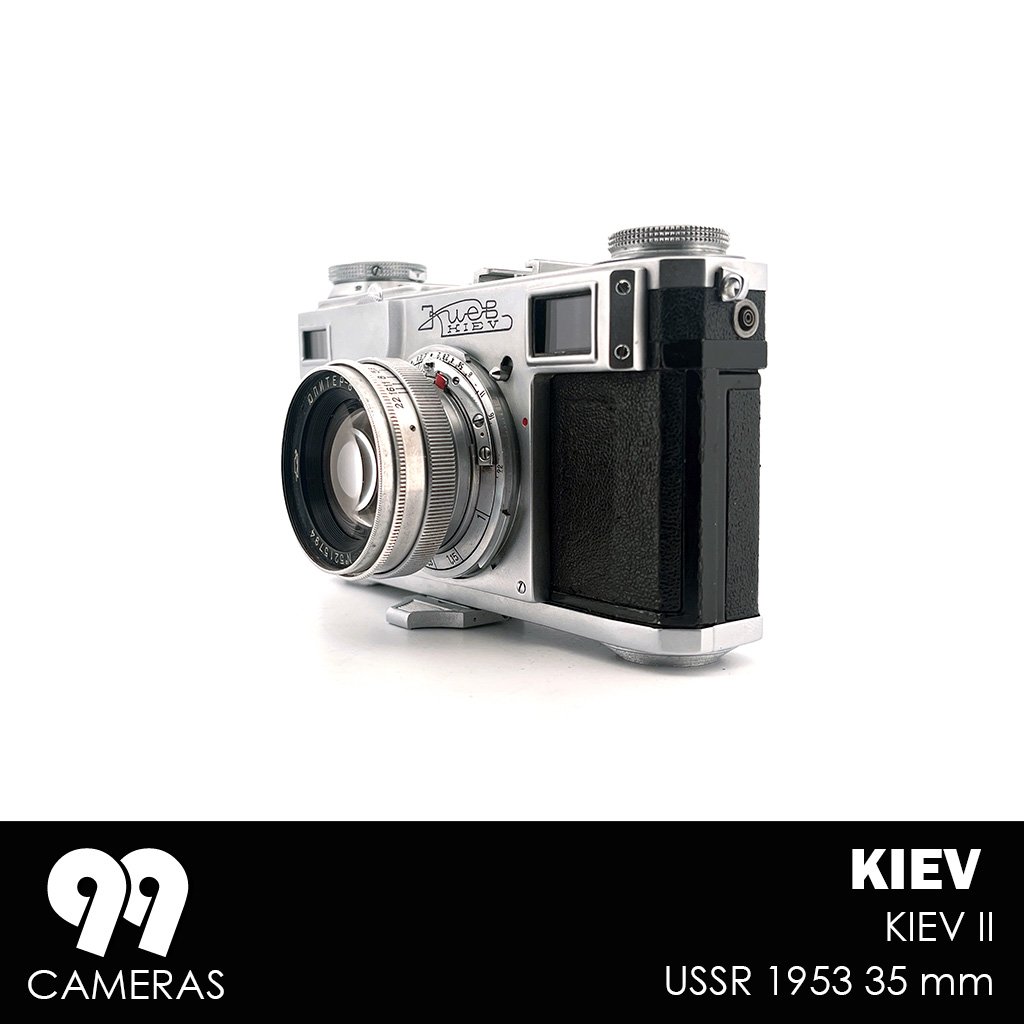
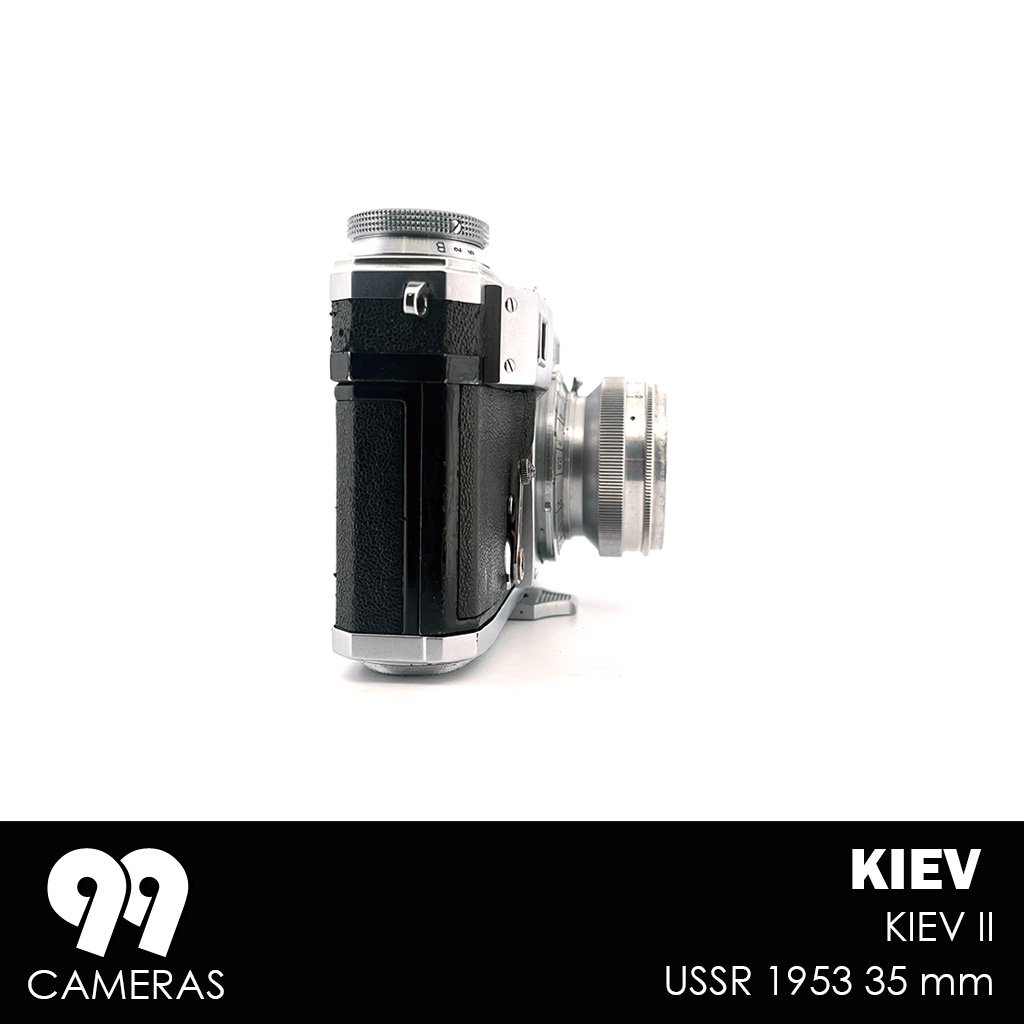
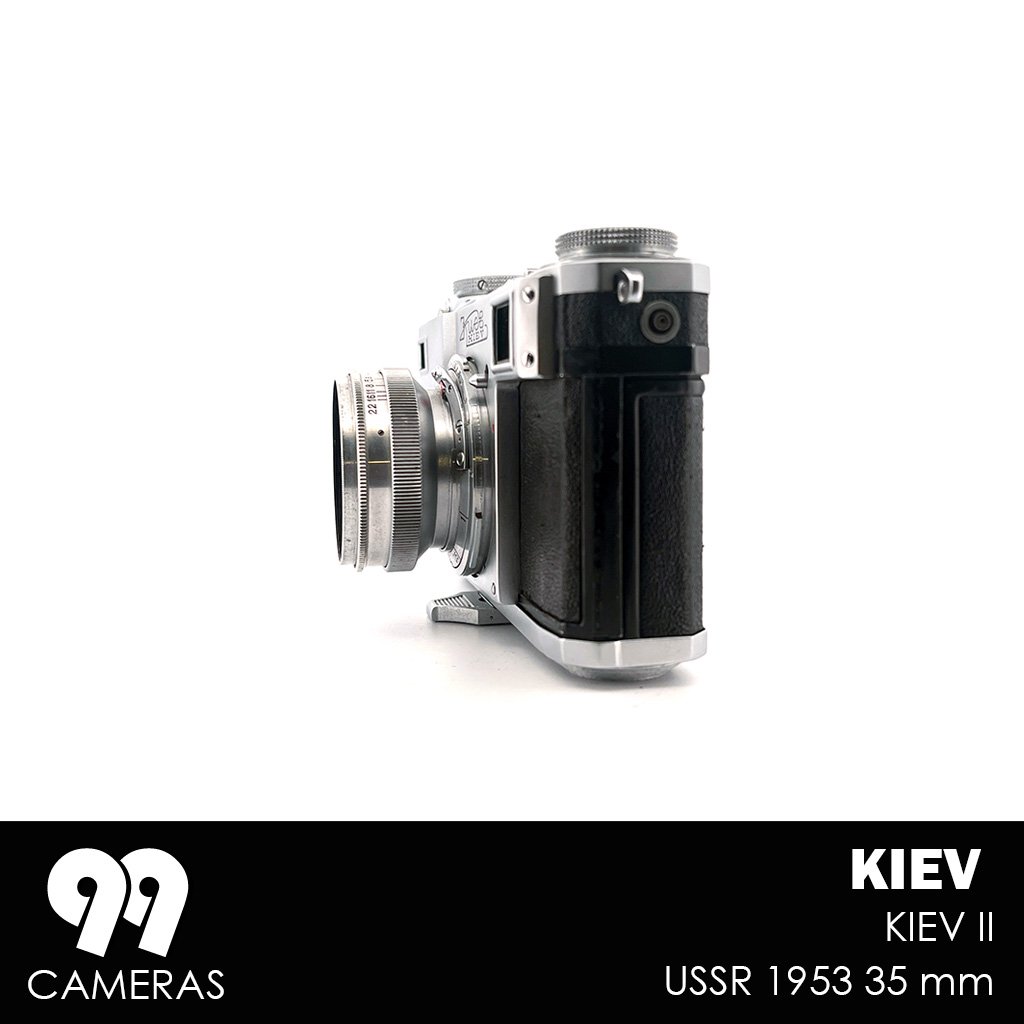
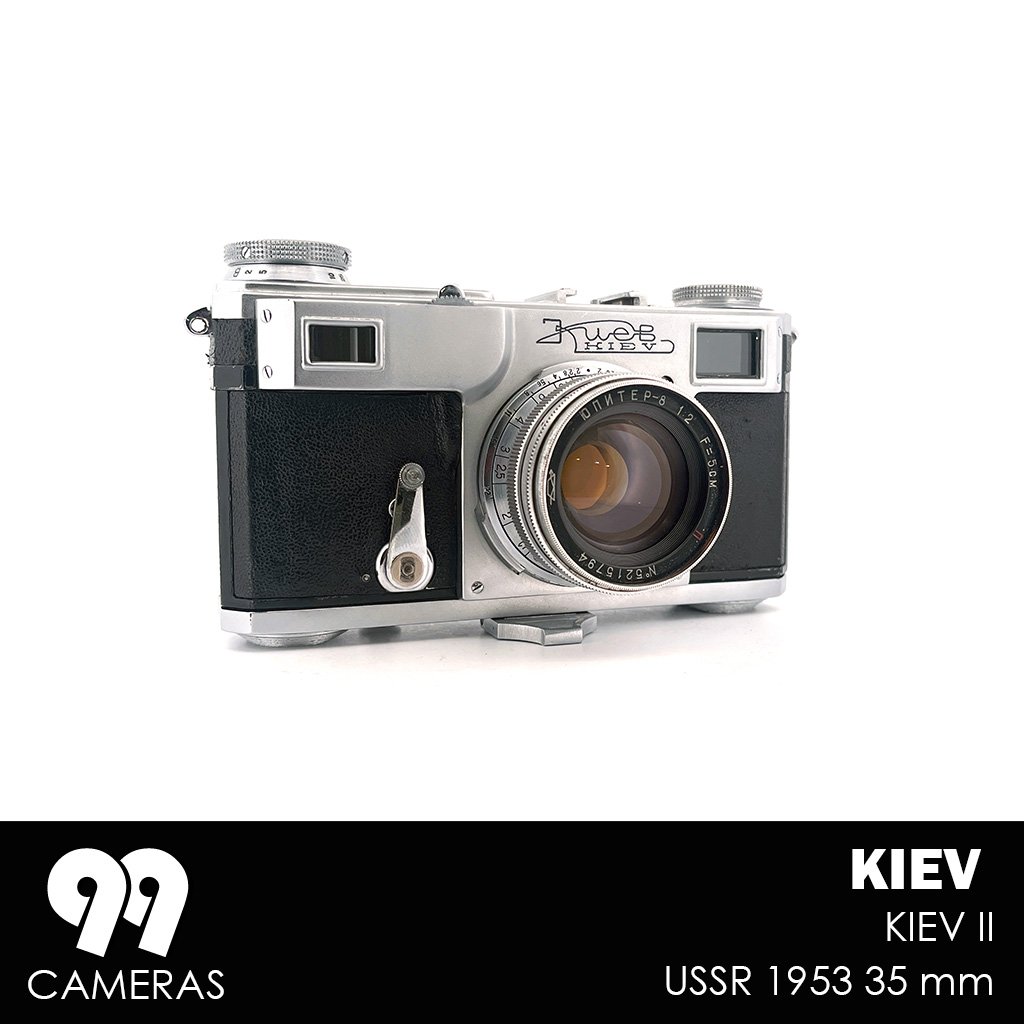
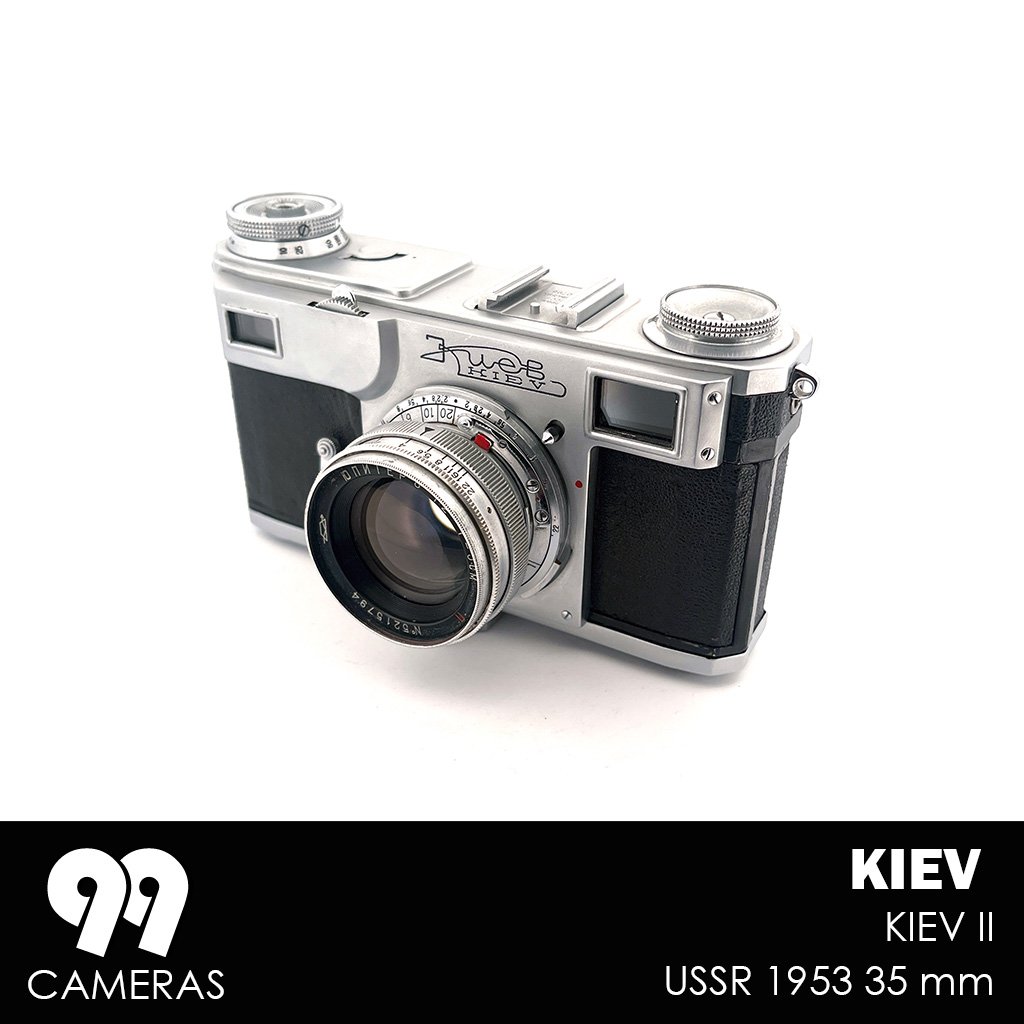
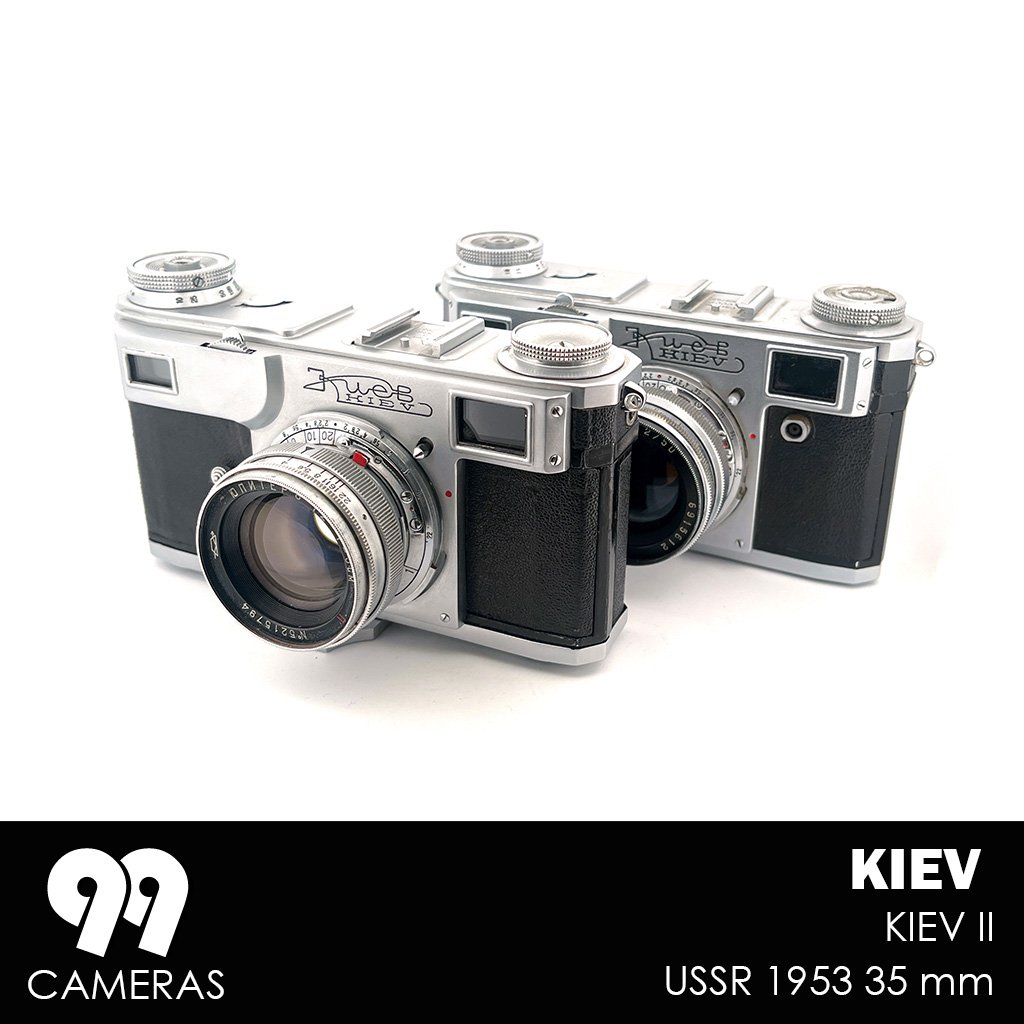
The Kiev rangefinders were produced for over 50 years in Ukraine (USSR) and carry an extraordinary history. It all began with one model : the Kiev II
At the end of World War II, the victorious Red Army captured and “relocated” the still-standing Dresden Zeiss factories to Ukraine to restart production under Soviet control. Machinery, tooling, and even parts were transported to Kiev. As a result, the earliest Kiev cameras were assembled using refurbished Contax II components and original Zeiss equipment.
The camera that marked this beginning was the Kiev II, introduced in 1947. The first units were essentially built from remaining Contax II parts, making them extraordinarily close relatives of the last Zeiss cameras produced in Dresden. In many ways, the Kiev II represents the direct continuation of the Contax lineage — but under a new Soviet identity.
In essence, the Kiev rangefinder is a Soviet evolution of a German rangefinder originally designed to compete with another German icon, the Leica II. What began as a near-identical copy would, over time, develop into a camera appreciated in its own right.
The early years of production were laborious, but the Arsenal factory continuously refined the design. The Kiev inherited the Contax bayonet mount, allowing photographers to use Zeiss lenses on a far more affordable body, a key factor in its popularity. It was also the cradle for one of the most legendary Soviet lens ever, the Jupiter 8, that was initially released for this mount.
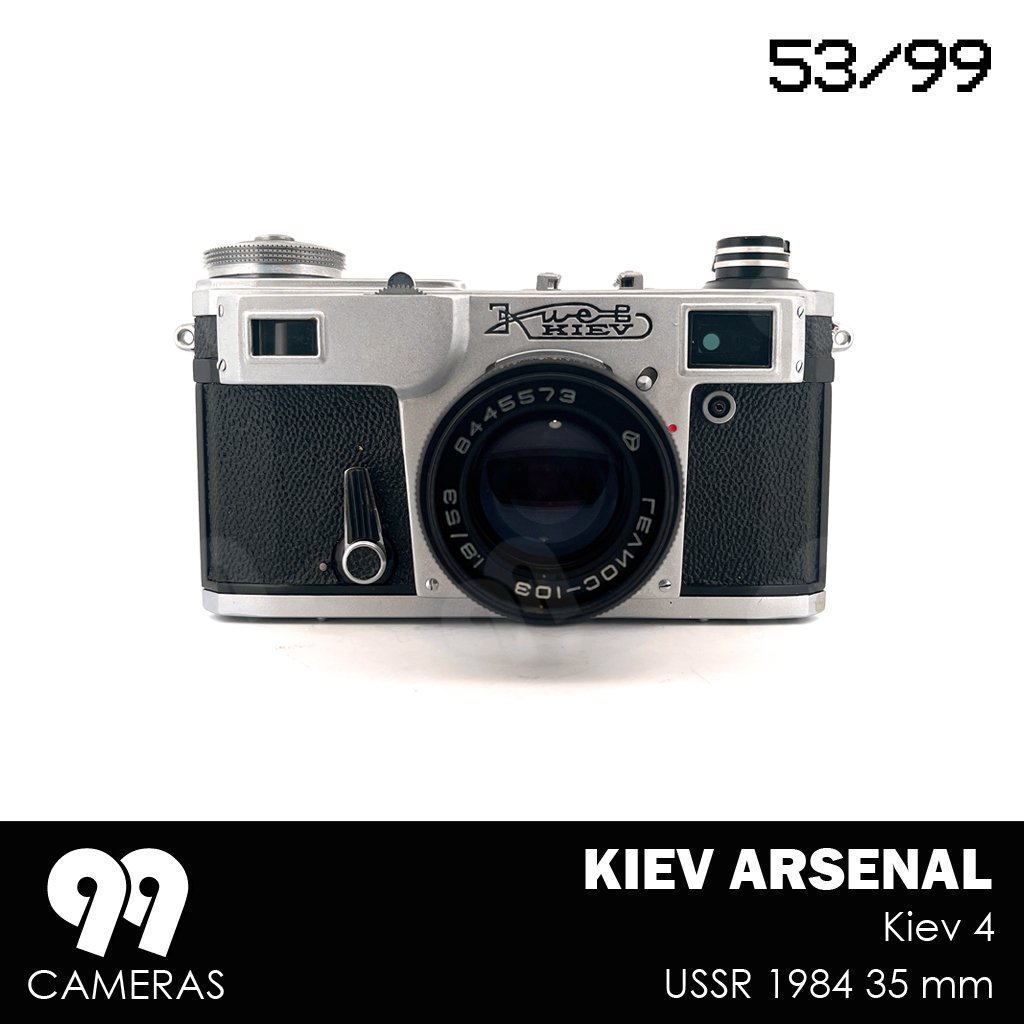
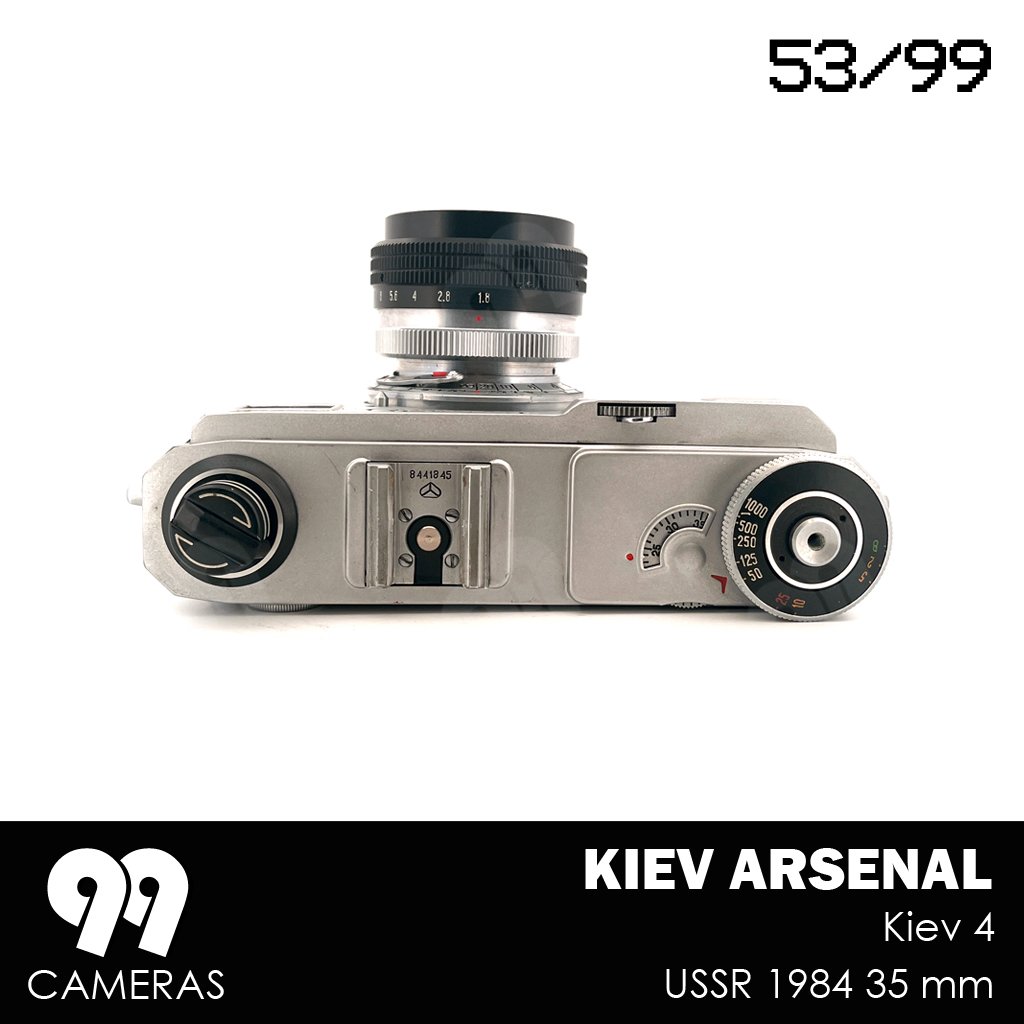
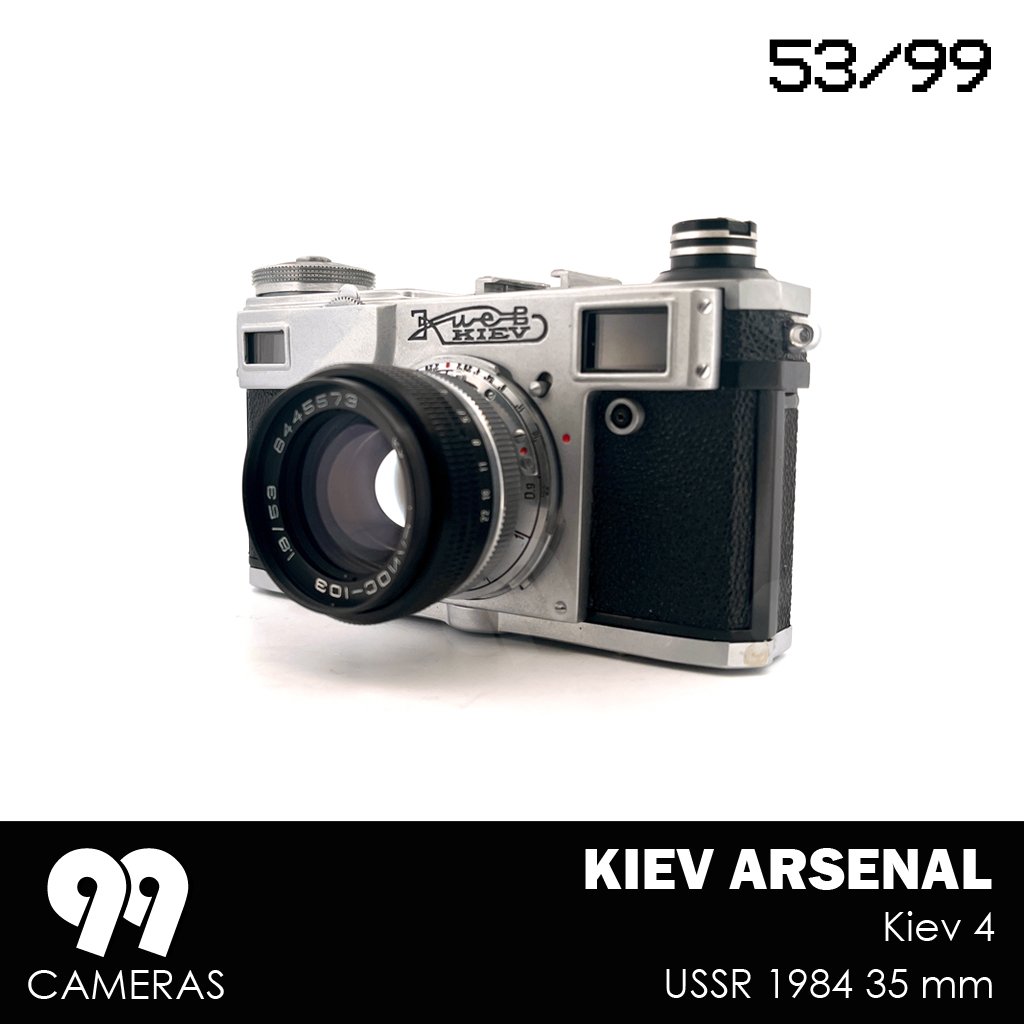
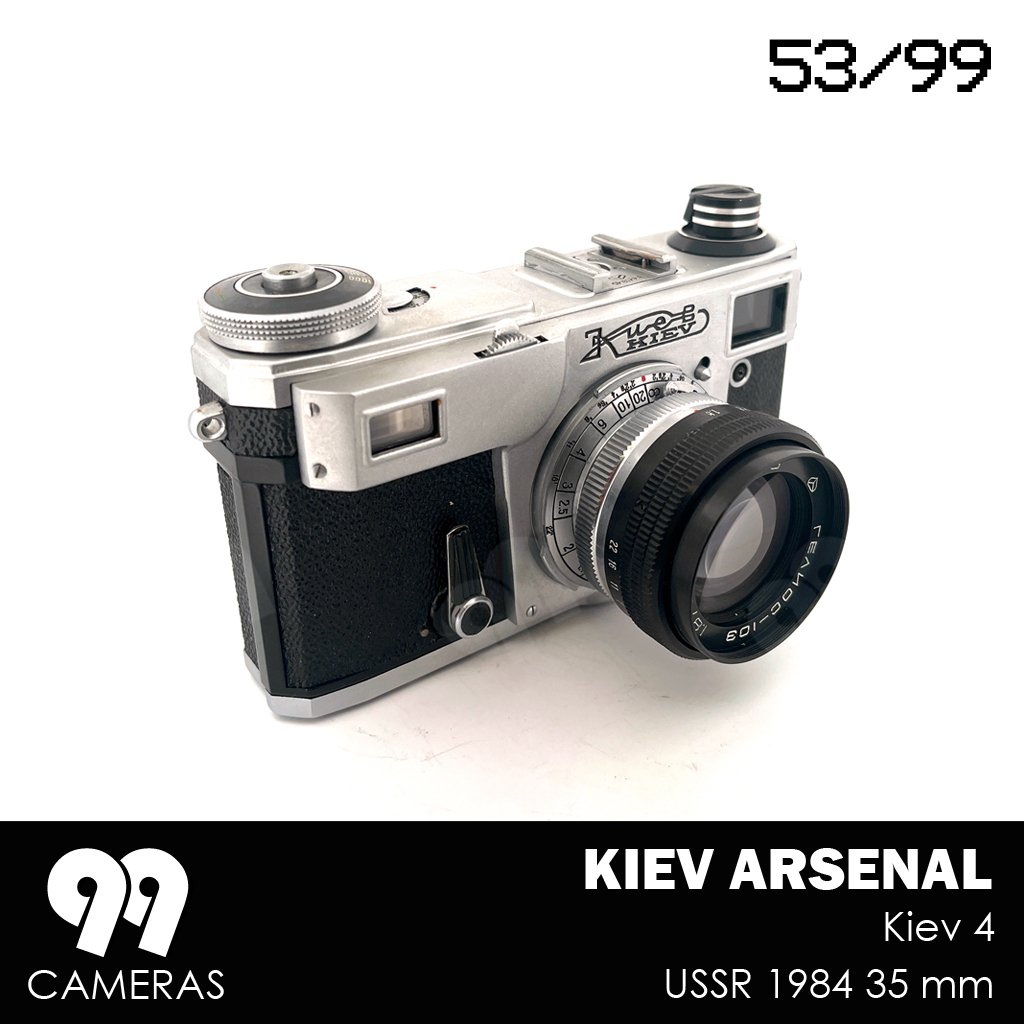
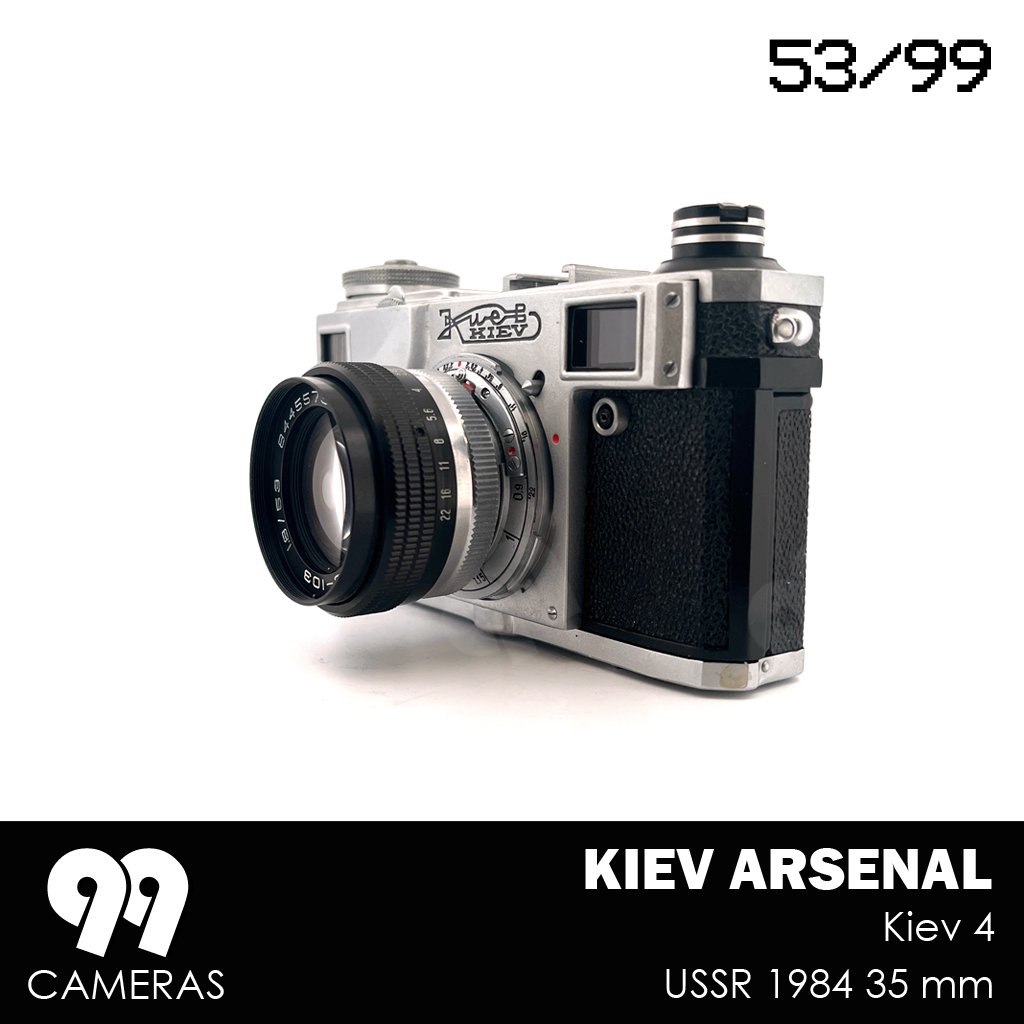
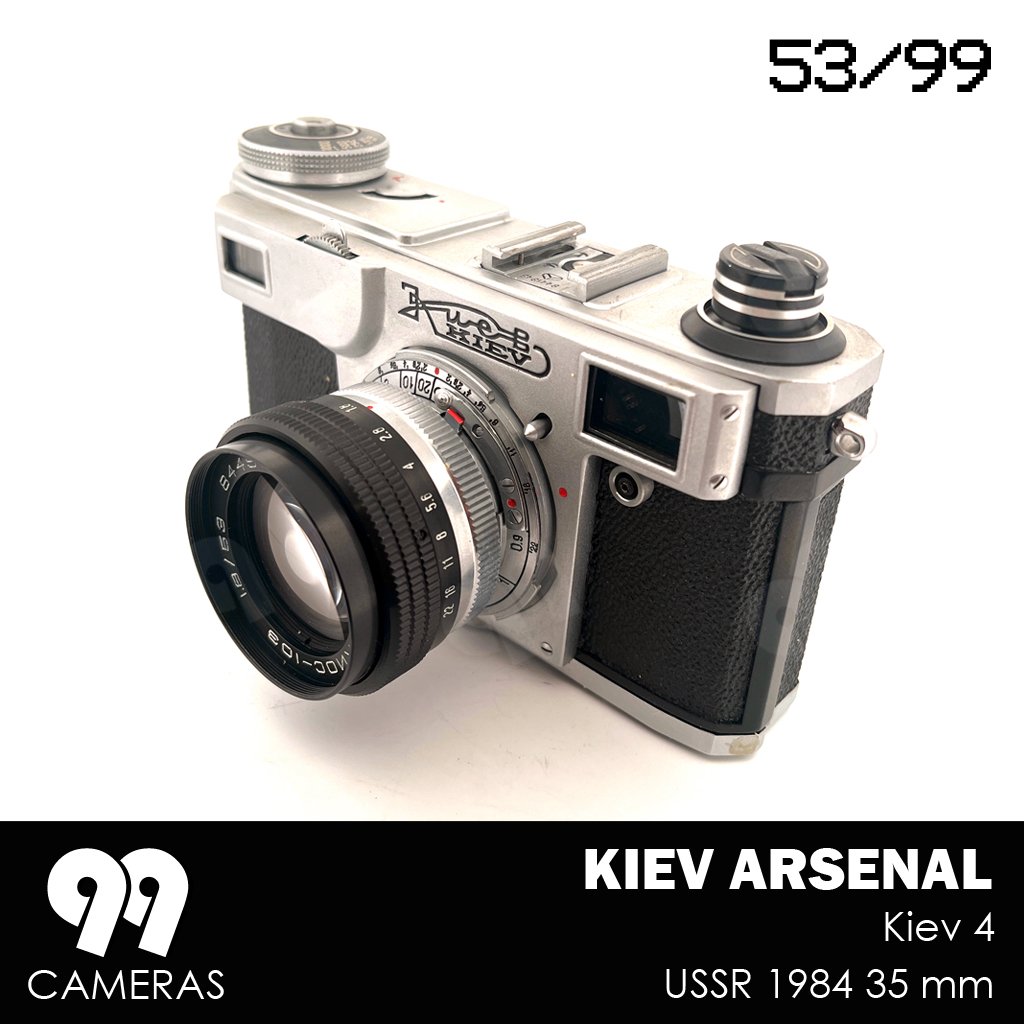
After the pioneering Kiev II established the line, later models followed, most notably the Kiev 4, produced in large numbers from 1957 to 1987 with only minor design variations, often distinguishable mainly by serial number.
In its remarkable design stability across decades, the Kiev remains one of the closest things in photography to a time traveler, but it all started with the Kiev II.
This camera was upgraded
Before displaying the Kiev II from 1953, the museum was exposing a much later version, the Kiev 4A for 1984.
Gallery
16

More from The Classics
Discover the collection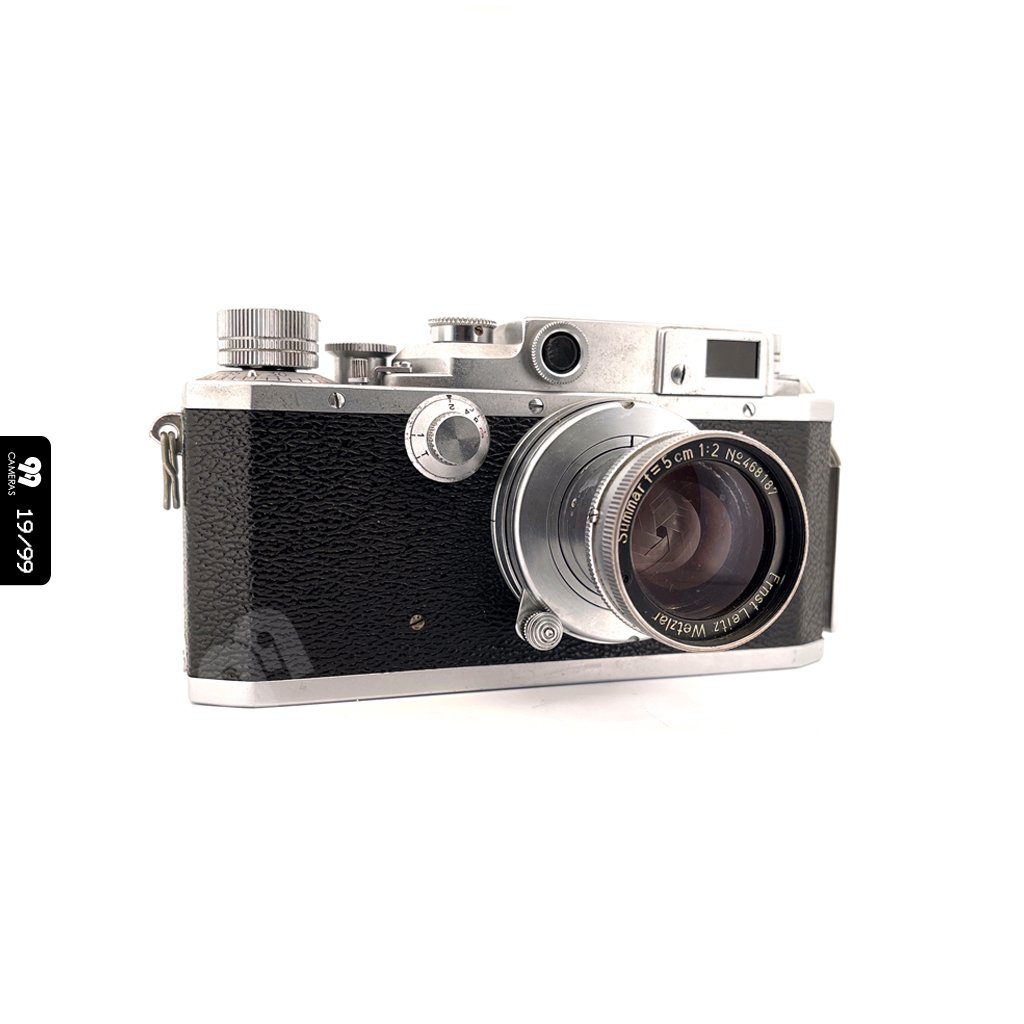
Plan your visit
Visit is free and open to all
- Opening hoursMonday – Saturday : 10 – 17:30
- AddressStudio Harcourt, 6 Rue de Lota, 75116 Paris
- Exceptional closuresThursday, 8 October 2026Friday, 9 October 2026Saturday, 10 October 2026Sunday, 11 October 2026