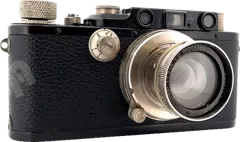
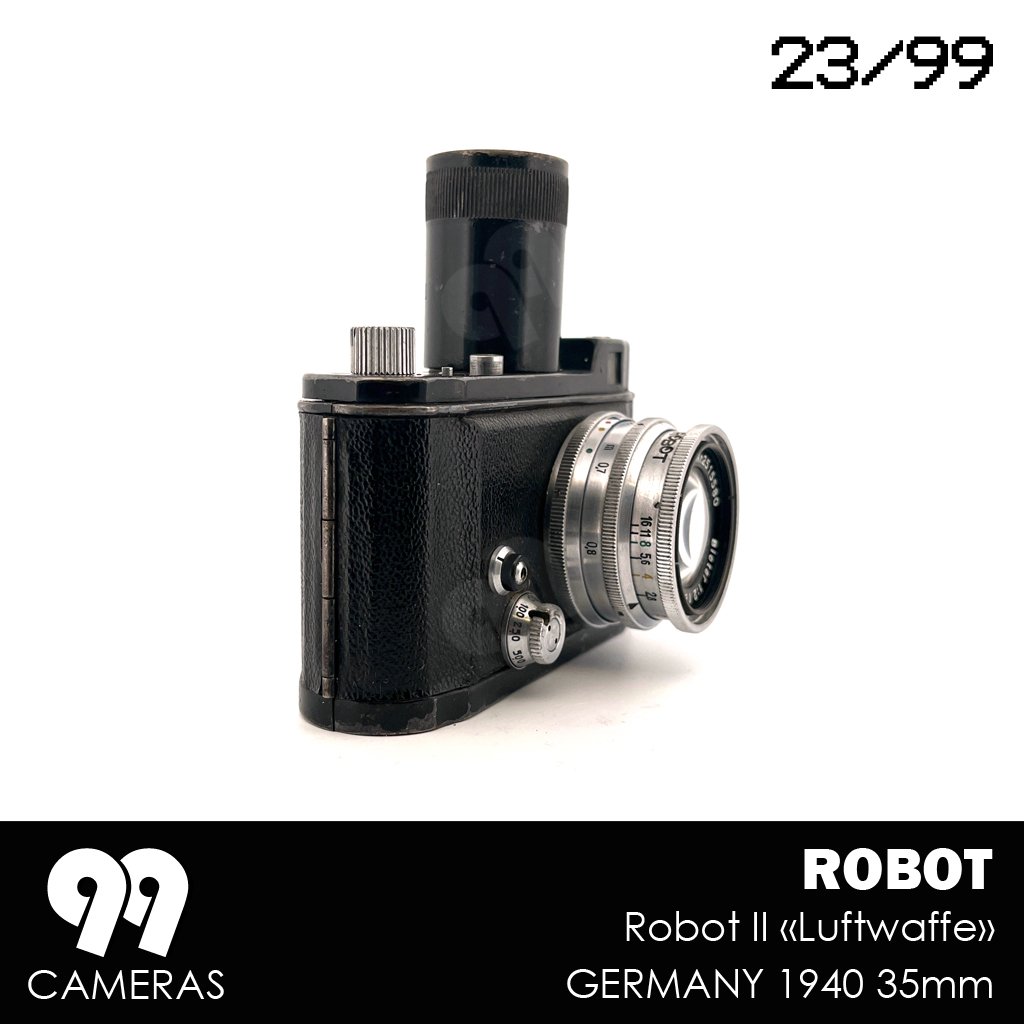
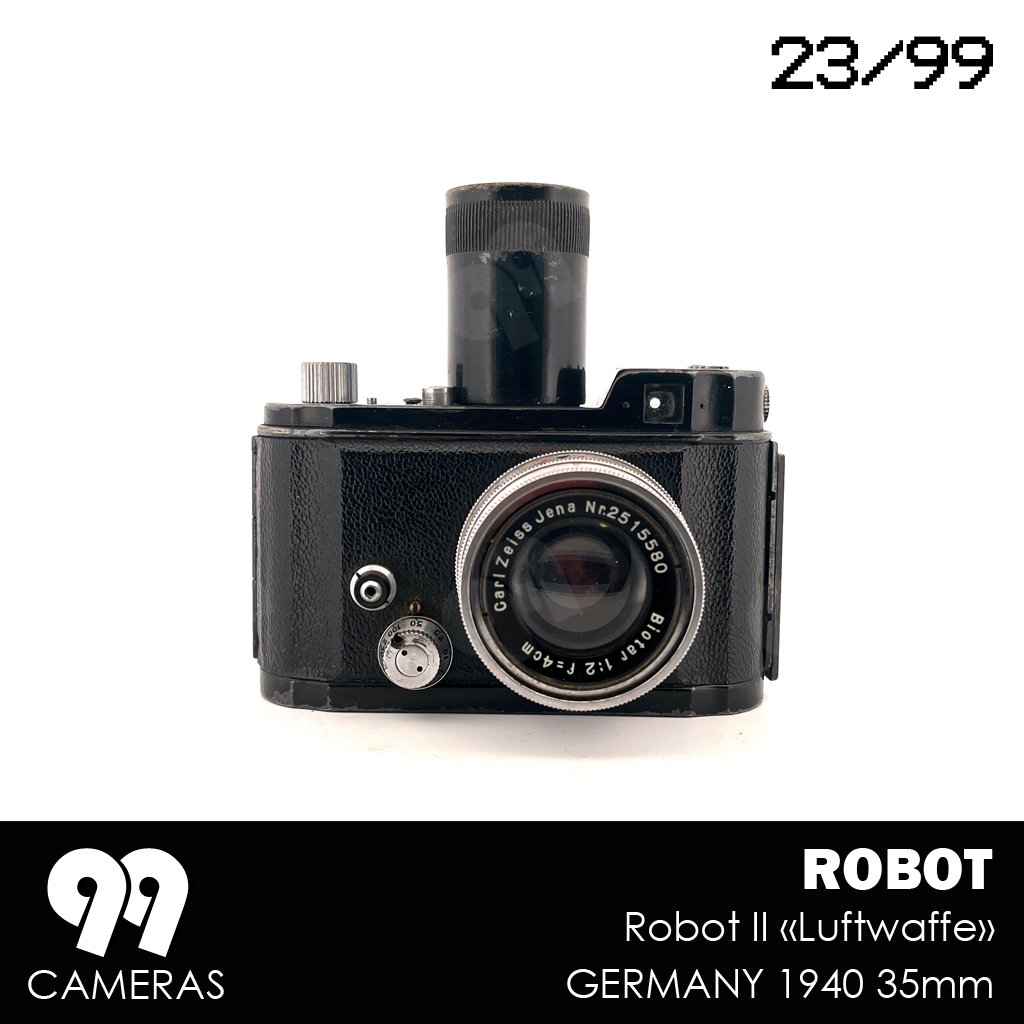
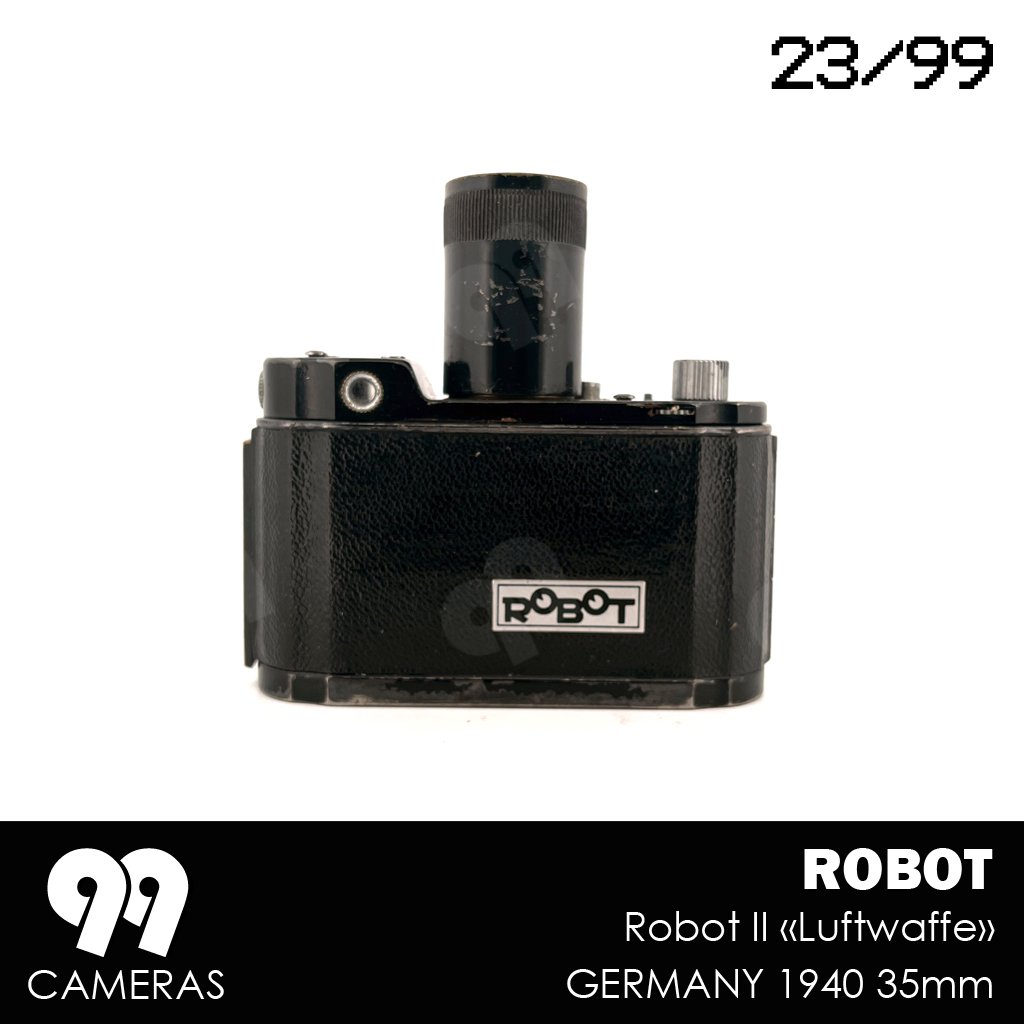
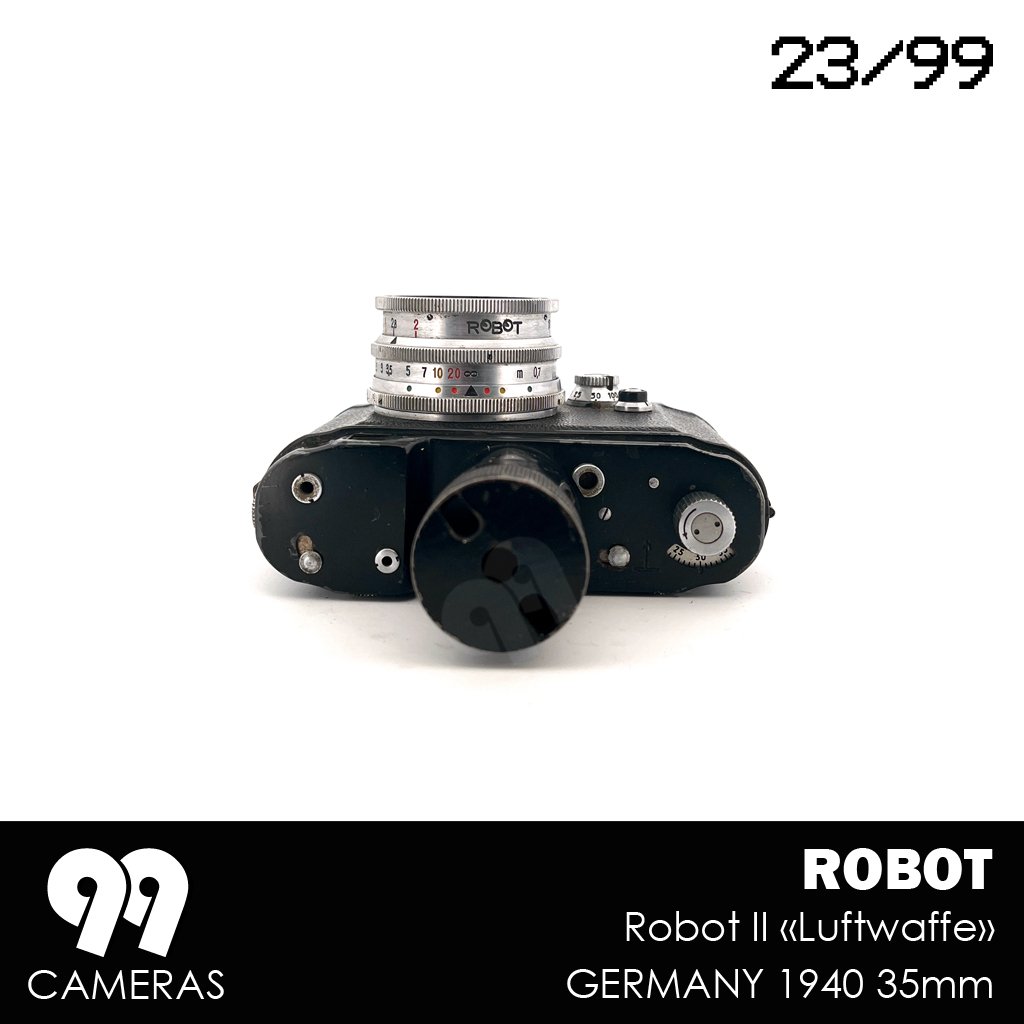
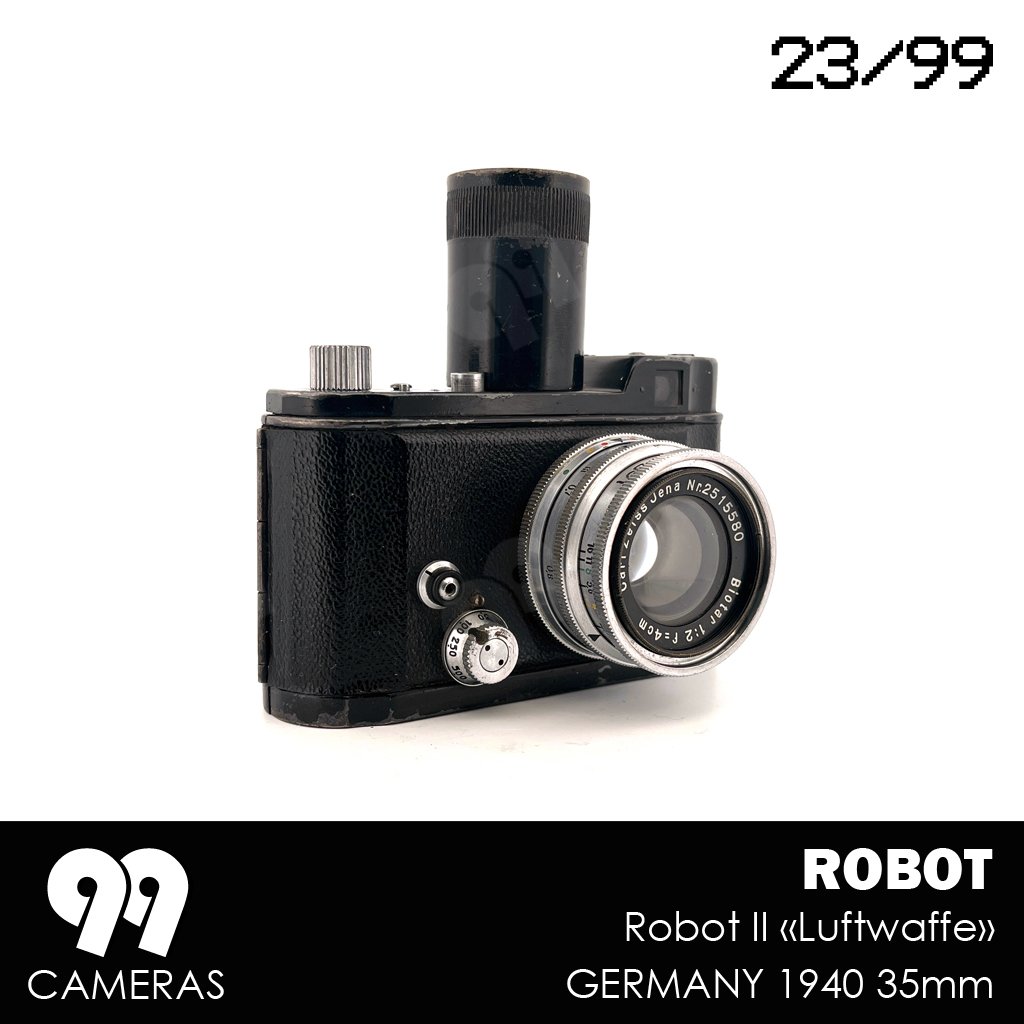
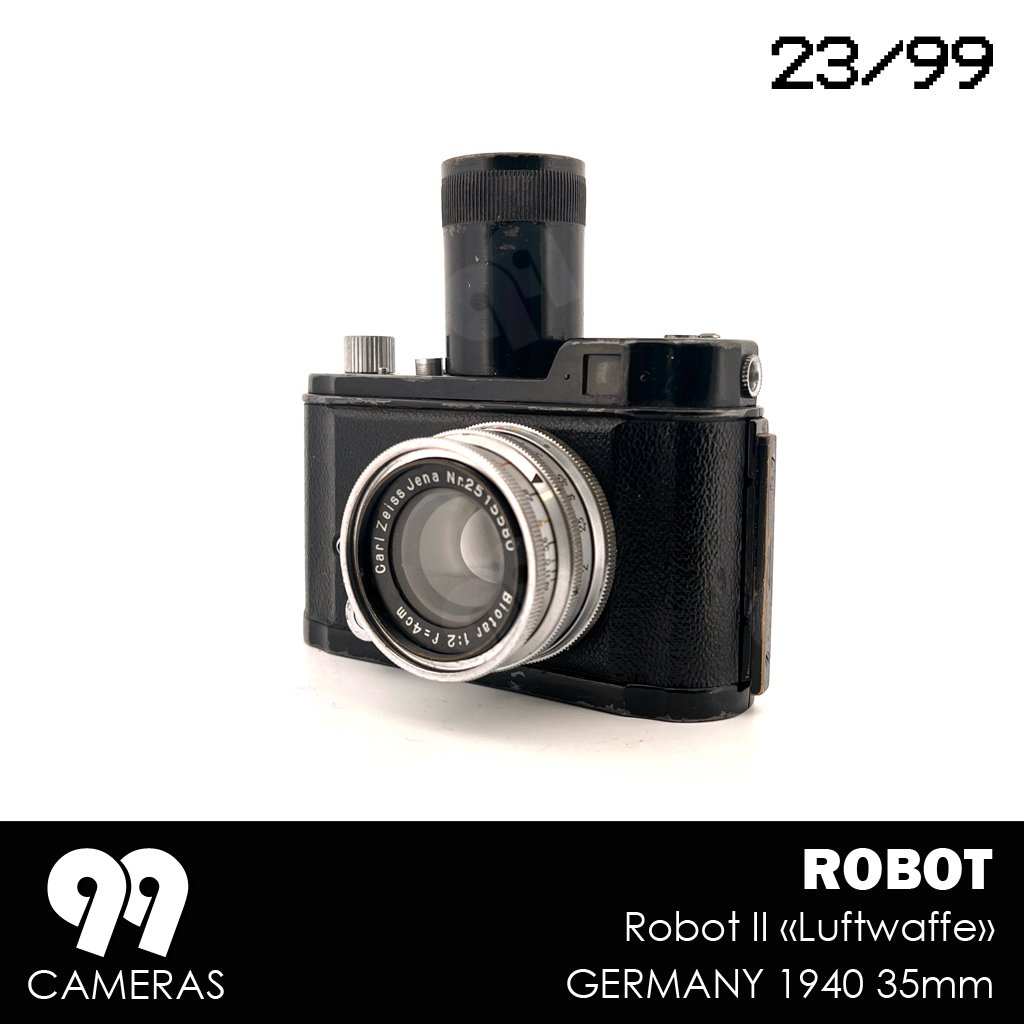
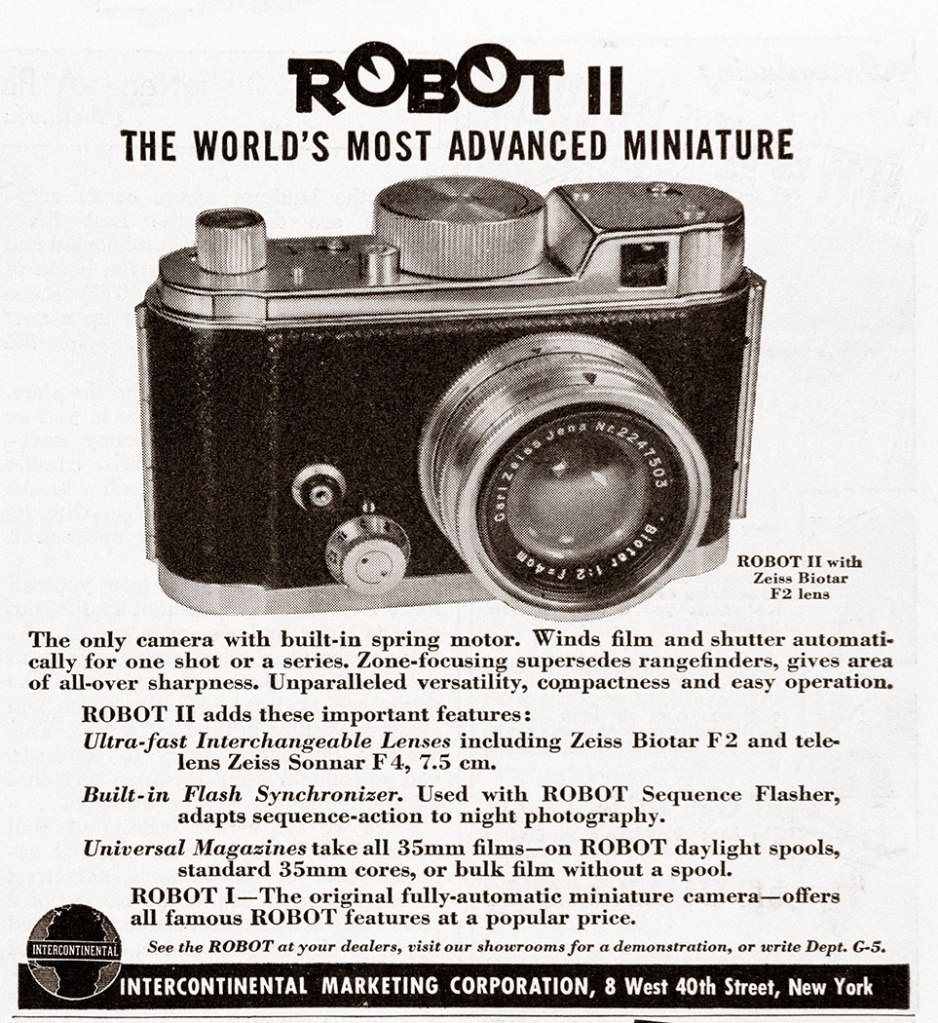
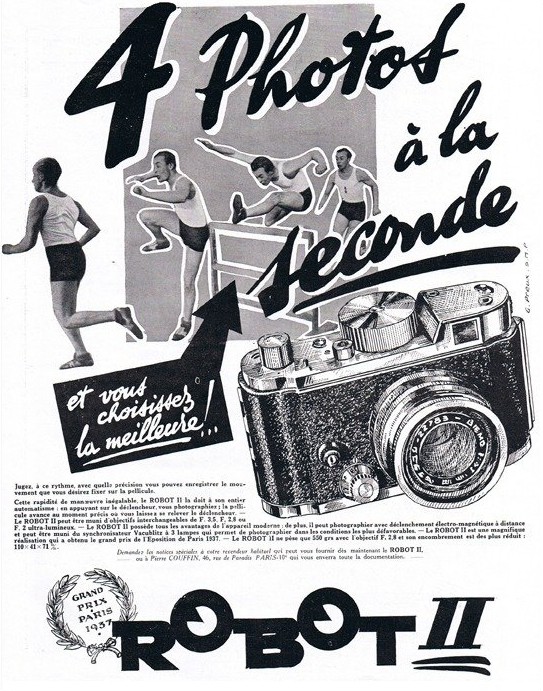
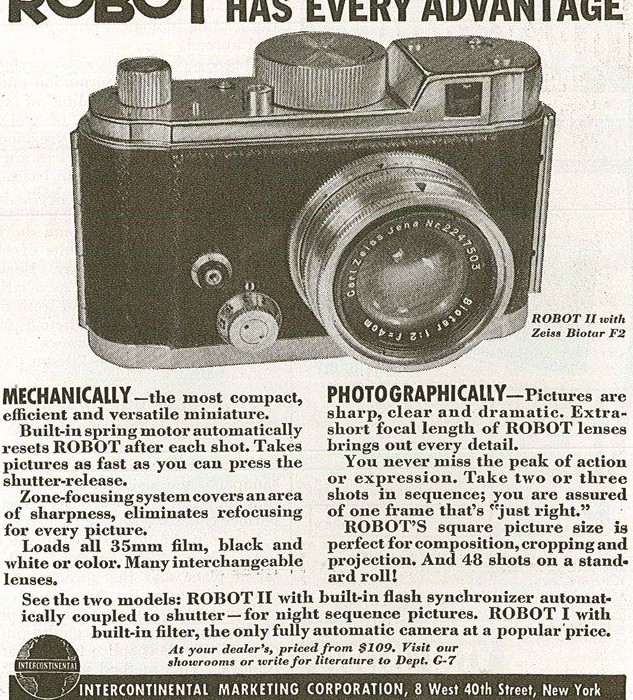
Introduced in 1938, the Robot II emerged as a slightly larger iteration of its predecessor, the Robot I, boasting several notable enhancements while retaining the core mechanism.
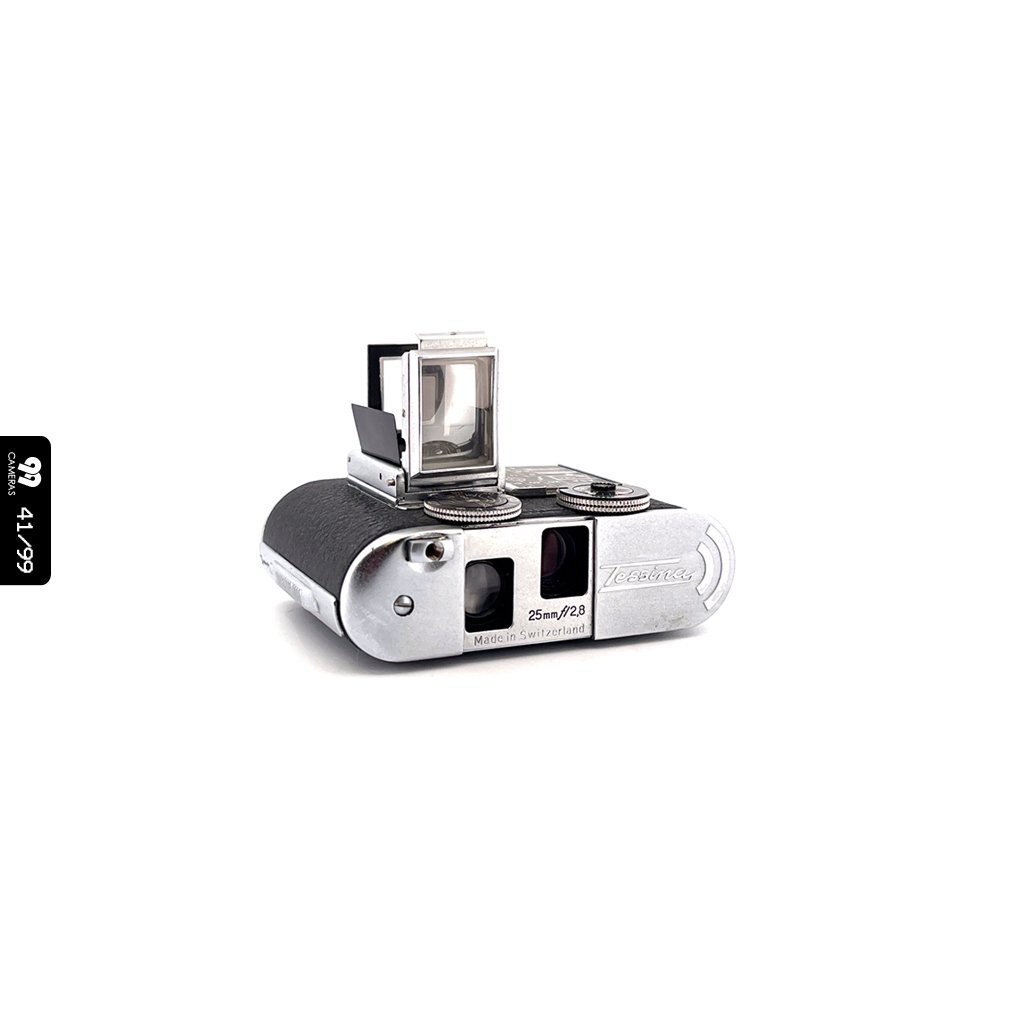
A distinct variant was developed exclusively for the German intelligence service and military. Equipped with two perpendicular viewfinders—one on the back and another on the side—this version facilitated hidden usage, even within a suitcase. Its clockwork mechanism further enabled up to 30 shots without requiring rewinding. The Robot II found its role within the German air force (Luftwaffe) as a bomb damage assessment camera, mounted in the tail of JU87 (Stuka) dive bombers.
With a significant part of World War II history intertwined with its existence, the Robot II holds a captivating allure as a collectible, encapsulating a remarkable chapter of human ingenuity and wartime application.
About its creator
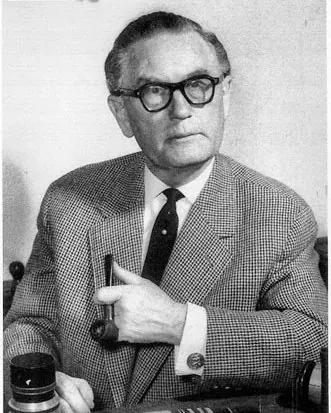
Heinz Kilfitt
1898–1980 · German
Designer of the Robot and the Mecaflex
A German camera and lens designer, Kilfitt created the Robot of 1934 for Otto Berning, with its spring motor that wound the film after every shot. After the war he designed the Mecaflex and founded a lens company whose Makro-Kilar was the first macro lens for 35 mm cameras.
Gallery
6
Media
3
More from The Spies
Discover the collection
Plan your visit
Visit is free and open to all
- Opening hoursMonday – Saturday : 10 – 17:30
- AddressStudio Harcourt, 6 Rue de Lota, 75116 Paris
- Exceptional closuresThursday, 26 November 2026