Certain designs possess such distinctive uniqueness that they can be attributed solely to British ingenuity. The Purma Special undeniably belongs to this remarkable category.
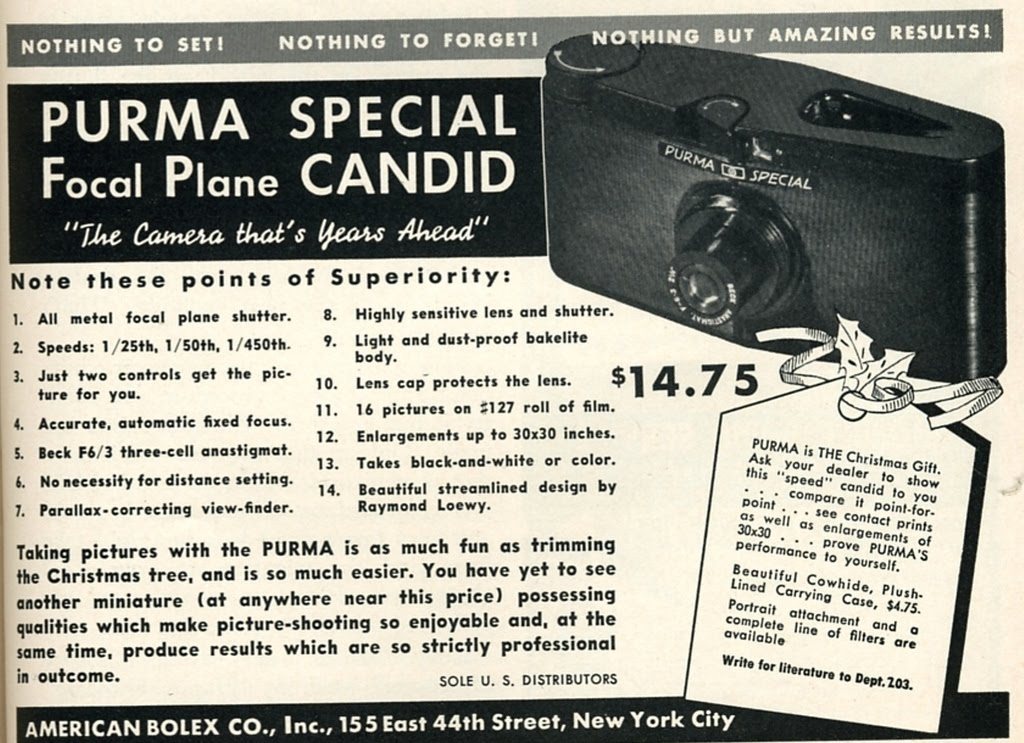
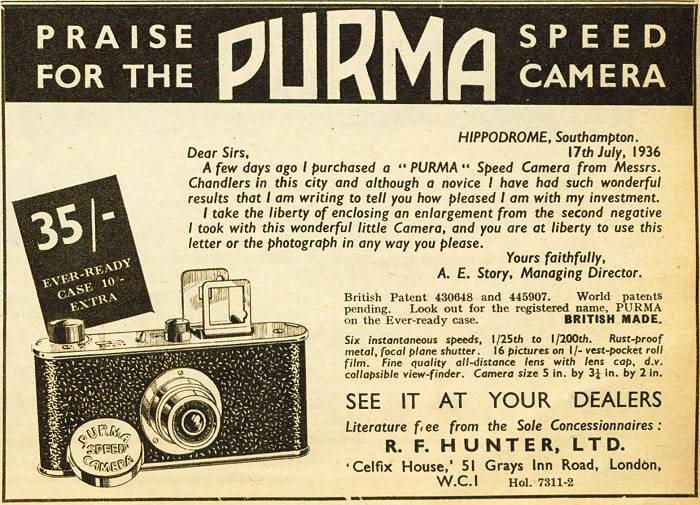
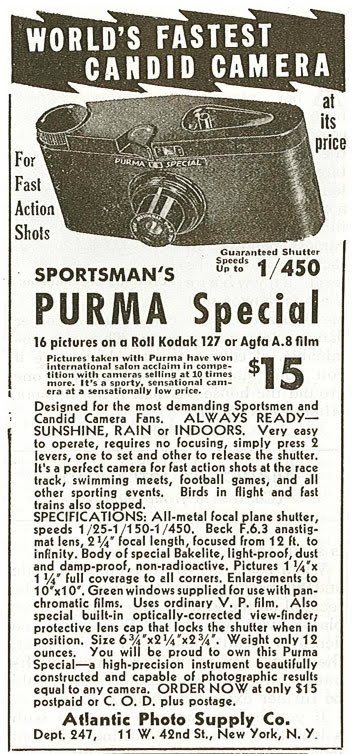
Conceived by artist Tom Purvis and inventor Alfred Croger Mayo, the Purma Special (a fusion of PURvis and MAyo) stands as an unparalleled camera, advertised as “the camera that’s years ahead.”
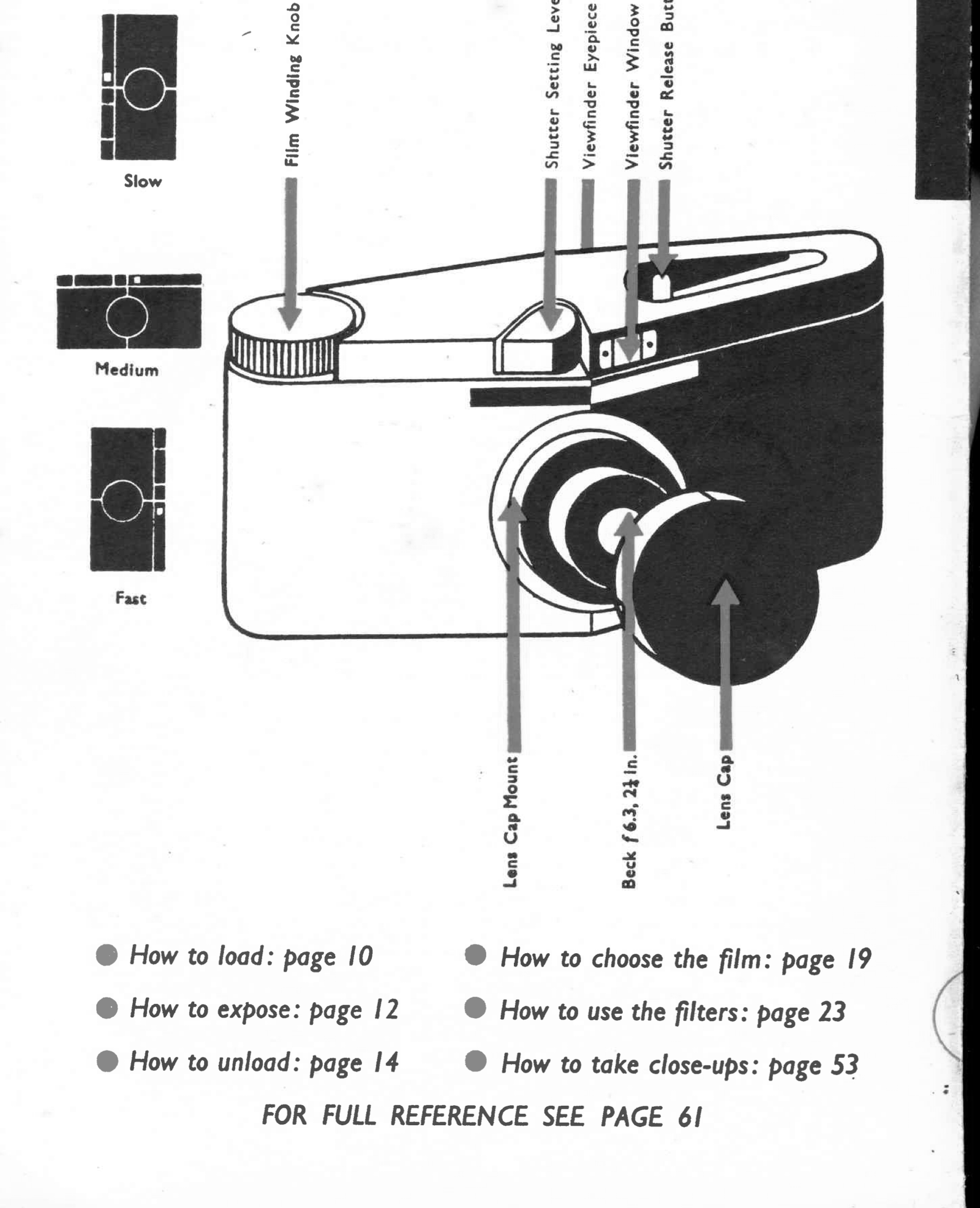
The camera’s every aspect exudes a singular, even eccentric character, commencing with its distinct diamond shape housing a retractable objective on its front. Crafted entirely from bakelite, the lens cap doubles as a mechanism for pushing the objective back into the camera body. The shutter button is discreetly situated in a recess on the camera’s top, preserving the sleek, unblemished design.
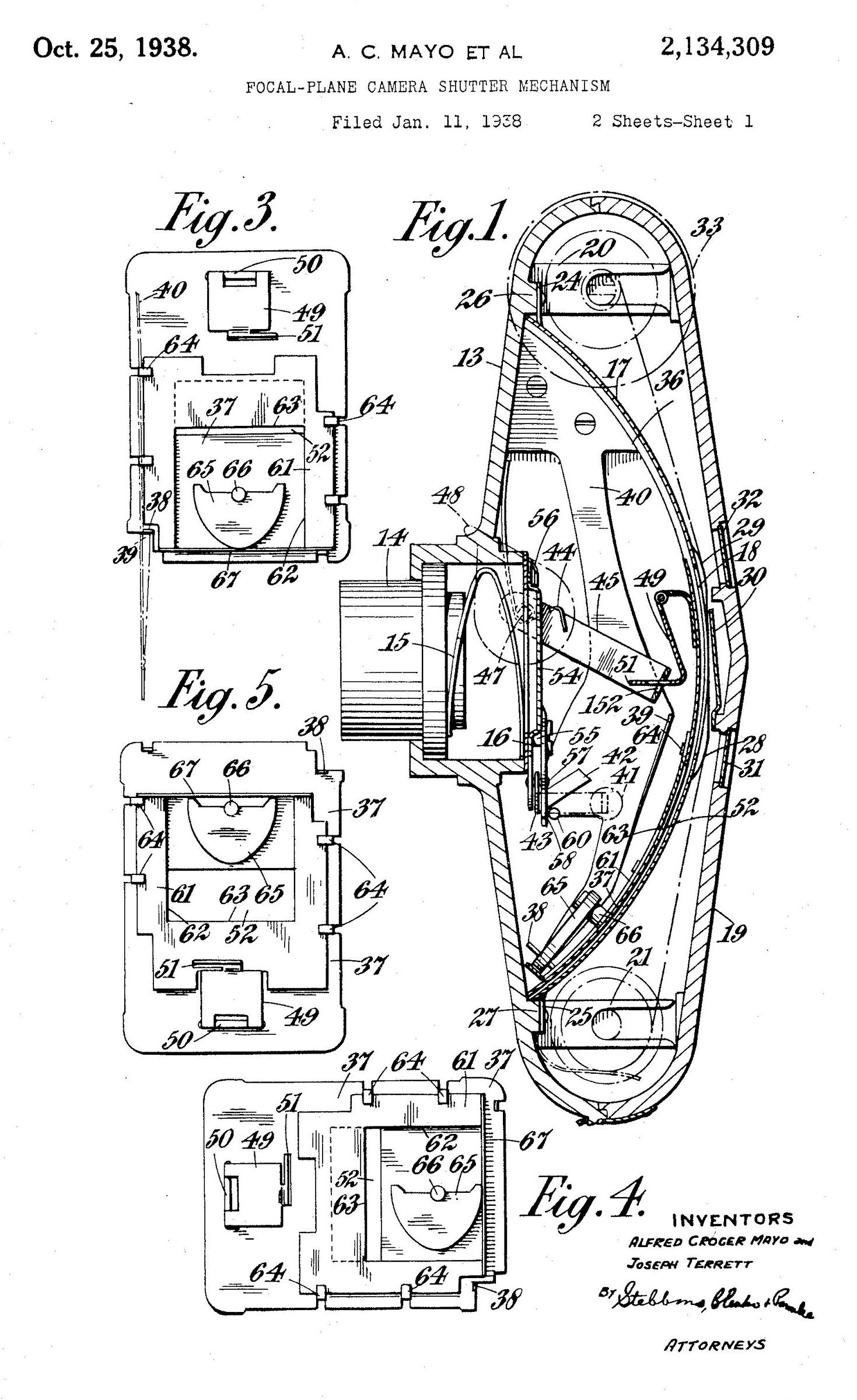
Operating the camera itself showcases further innovation – to cock the shutter, one must toggle a small switch on top of the objective and tilt the camera left or right to set the exposure time. This ingenuity stems from Mayo’s patent for a gravity-operated shutter, where an internal brass component shifts according to the camera’s angle, altering the distance between the shutter curtains.
The Purma Special emerges as an absolute oddity, a testament to the creative collaboration between two ingenious minds committed to introducing something genuinely novel and distinct. It stands as an extraordinary collectible.
About its creators
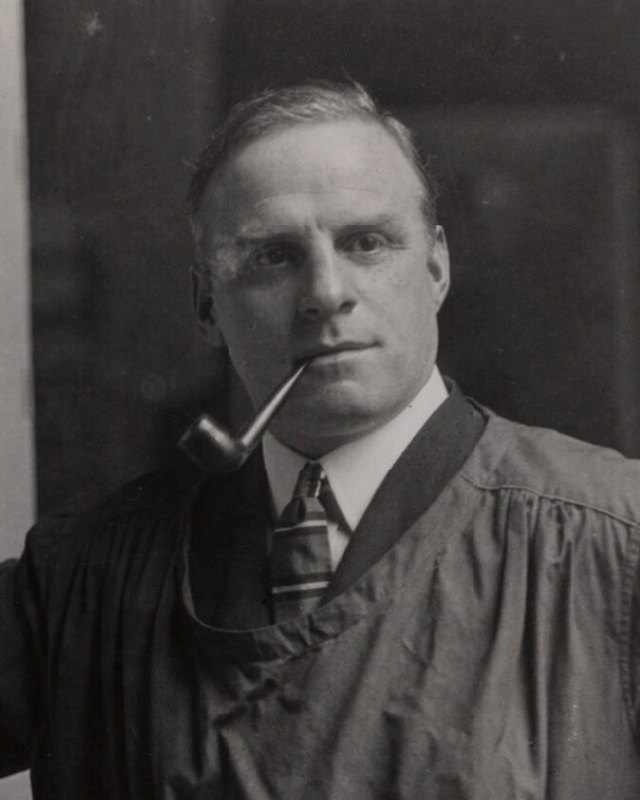
Tom Purvis
1888–1959 · British
Co-founder of Purma
One of Britain’s great poster artists, famous for his railway posters, Purvis founded Purma Cameras in 1935 with the inventor Alfred Mayo; the name joins PURvis and MAyo. Their Purma Special of 1937, one of the first cameras with a plastic body, was styled by the London office of Raymond Loewy, while Mayo designed its gravity shutter.
Alfred Croger Mayo
British
Inventor of the gravity shutter
Mayo was the engineer of Purma Cameras. His patented shutter used gravity: a small weight inside the camera moved as the camera was turned, changing the speed. Held one way the Purma Special shot at 1/25 s, turned on its side at 1/150 s or 1/450 s.
Raymond Loewy
1893–1986 · French / American
Pioneer of industrial design
Born in Paris, Loewy moved to New York and became the most famous industrial designer of his time: locomotives, Studebaker cars, the Lucky Strike pack, the Shell logo. His motto “never leave well enough alone” shaped how 20th-century products, cameras included, were styled to sell. His London office is credited with the styling of the Purma Special of 1937.
Gallery
7


Media
6
More from The Incredibles
Discover the collection
Plan your visit
Visit is free and open to all
- Opening hoursMonday – Saturday : 10 – 17:30
- AddressStudio Harcourt, 6 Rue de Lota, 75116 Paris
- Exceptional closuresMonday, 16 November 2026Tuesday, 17 November 2026Thursday, 19 November 2026Thursday, 26 November 2026