
The Incredibles
15 cameras
Strokes of genius or false good ideas: the history of cameras is full of incredible attempts, proof of the boundless creativity of engineers.
Some paved the way for revolutionary uses, like the Panon or the Polaroid 660; others were costly dead ends. All tell of a time when manufacturers dared to take risks.
Audio guide · The Incredibles
Top shelf 5 cameras
-
AlsaphotAlsaphot Cyclope
- 1952
- FranceFrance
- 120 film
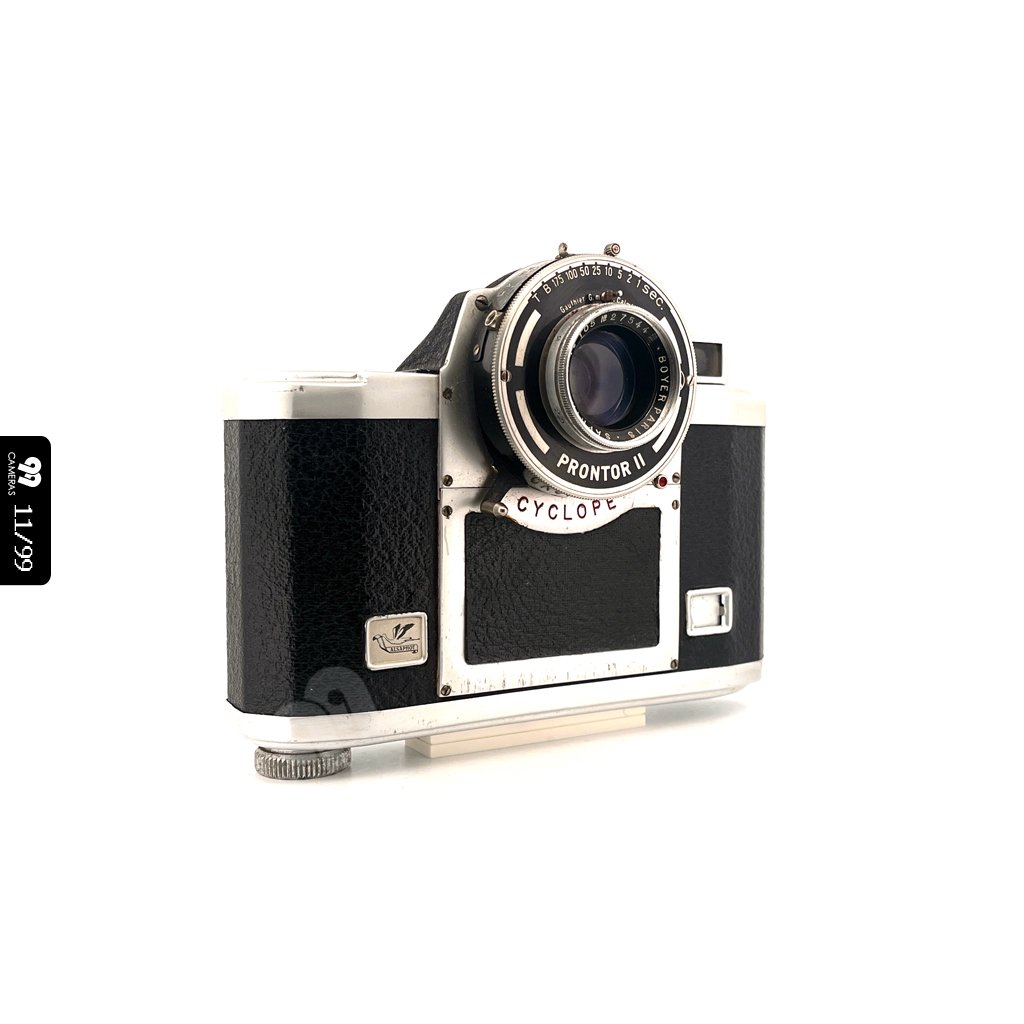
The Cyclope is a medium-format camera designed to be as thin as a compact. The image undergoes 2 reflections before reaching the film. It is recognizable by its "hump," which accommodates the mirrors, and the unique positioning of the lens that earned it the name "Cyclope." Less than 2000 units were ever produced.
See the camera page -
K.G. CorfieldK.G. Corfield Periflex 1
- 1953
- EnglandEngland
- 35 mm
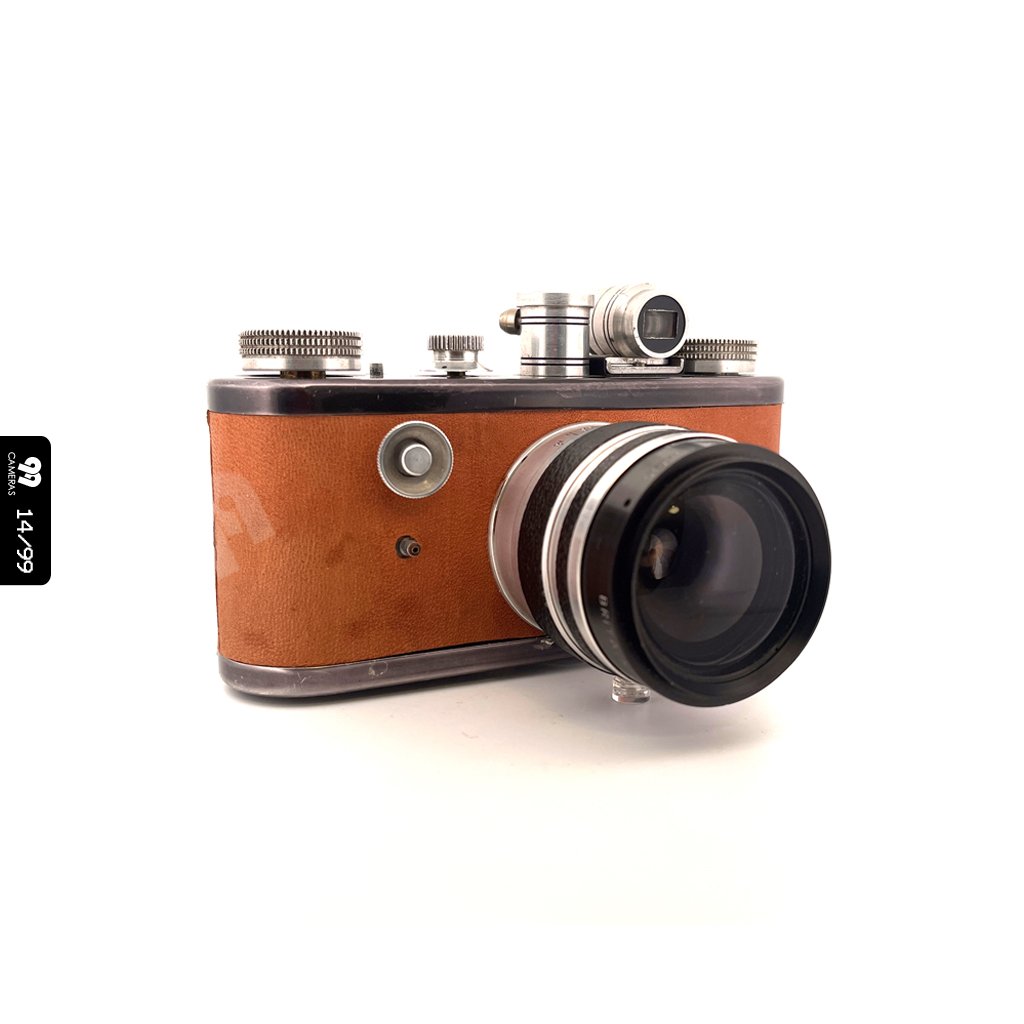
The Periflex is notable for its vertical focusing mechanism that resembles a periscope of a submarine. This very ingenious solution is activated by a button that lowers a periscope just behind the lens, allowing the photographer to focus on a small section of the image.
See the camera page -
Purma CamerasPurma Cameras Purma Special
- 1937
- EnglandEngland
- 127 film
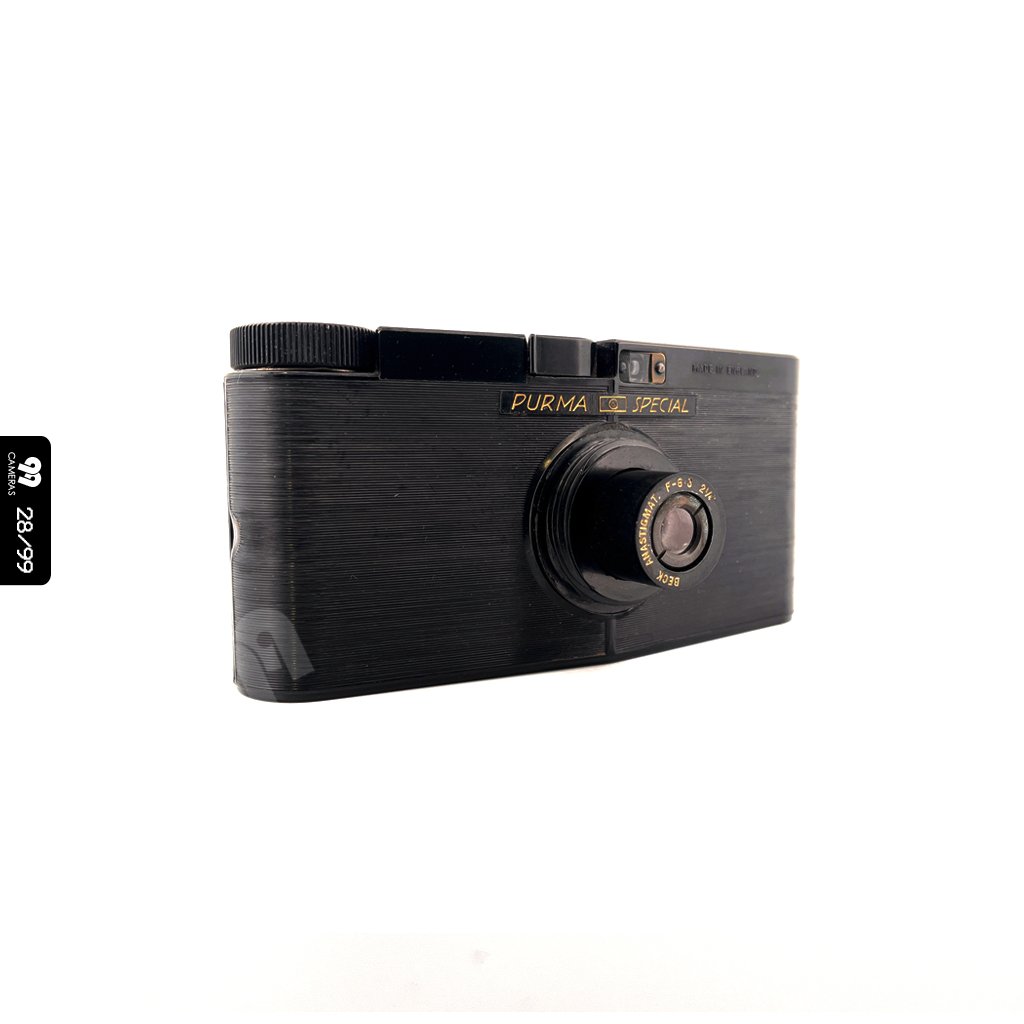
The Purma Special is a unique and almost eccentric camera advertised as "the camera that is ahead of its time". Completely made of bakelite, it features an unlikely diamond shape that conceals various levers and buttons. The lens is retractable and needs to be pushed back using the bakelite cap.
See the camera page -
UnivexUnivex Mercury
- 1938
- United StatesUnited States
- 35 mm
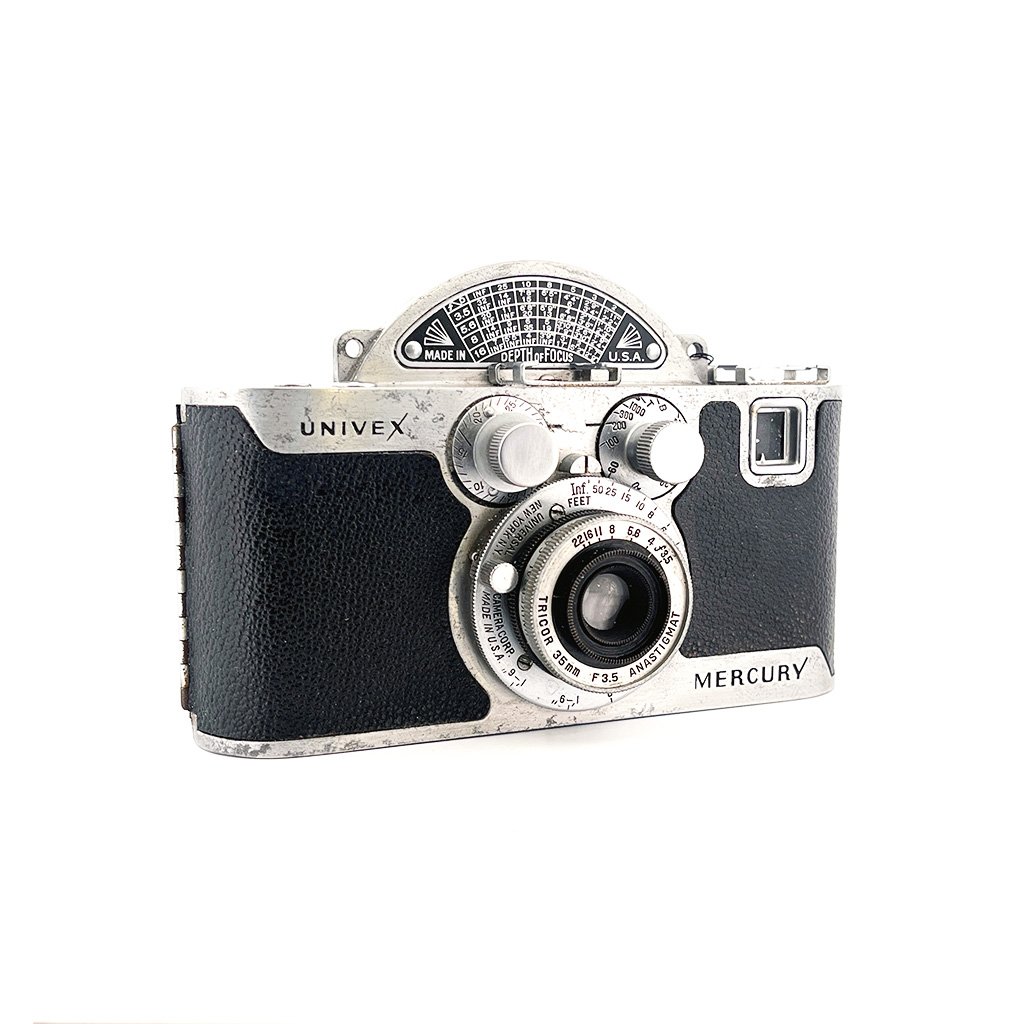
Often referred to as the "hunchback" for obvious reasons, this uniquely designed camera featured a rotary shutter that allowed extremely precise speeds of up to 1/1500s. Both sides of the "hump" are covered with tables, and a complex 3-level rotating calculator covered most of the rear panel.
See the camera page -
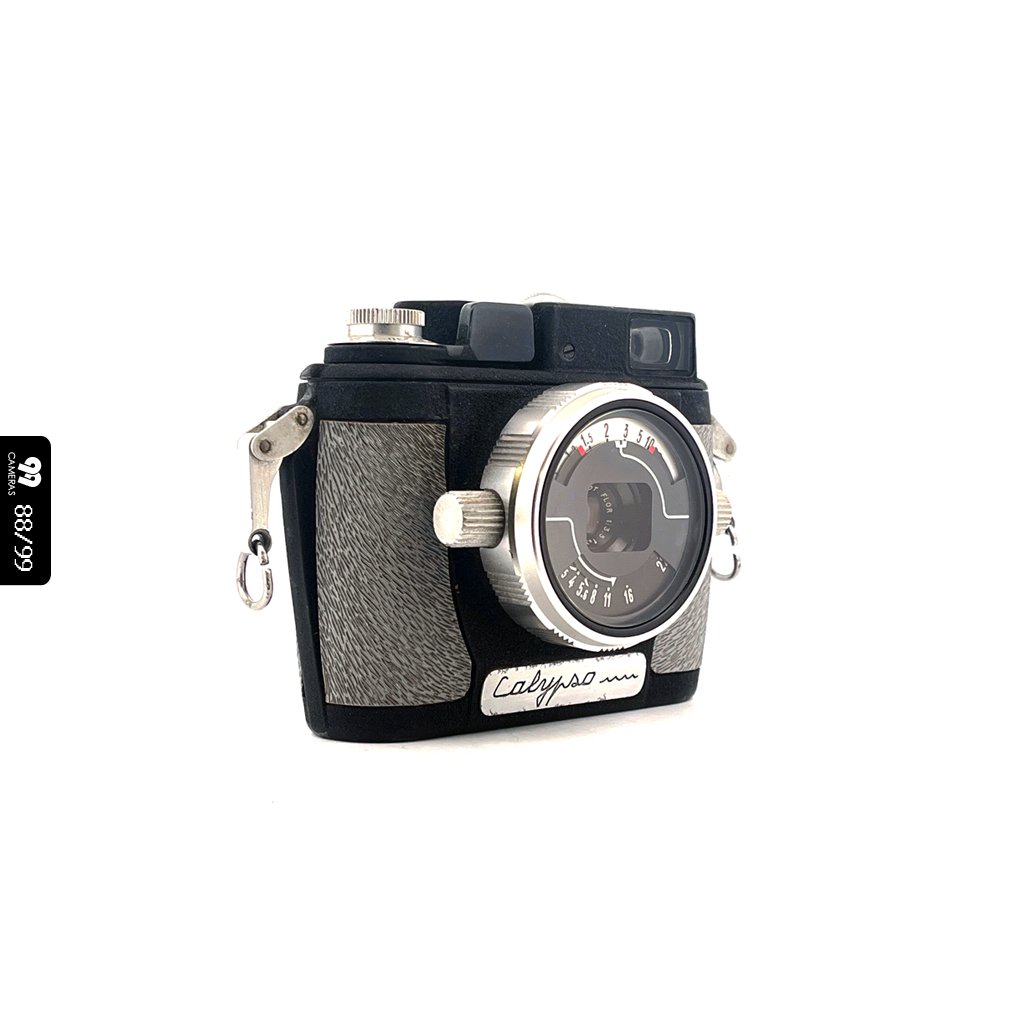
SpirotechniqueSpirotechnique Calypso
- 1960
- FranceFrance
- 35 mm
Developed in collaboration with Jacques Cousteau, the Calypso was the first camera designed for underwater photography. It could descend up to 50 meters and operate at temperatures as low as -20°C. Nikon would carry it forward through the Nikonos line of underwater cameras, which lasted into the 1990s.
See the camera page
Middle shelf 6 cameras
-
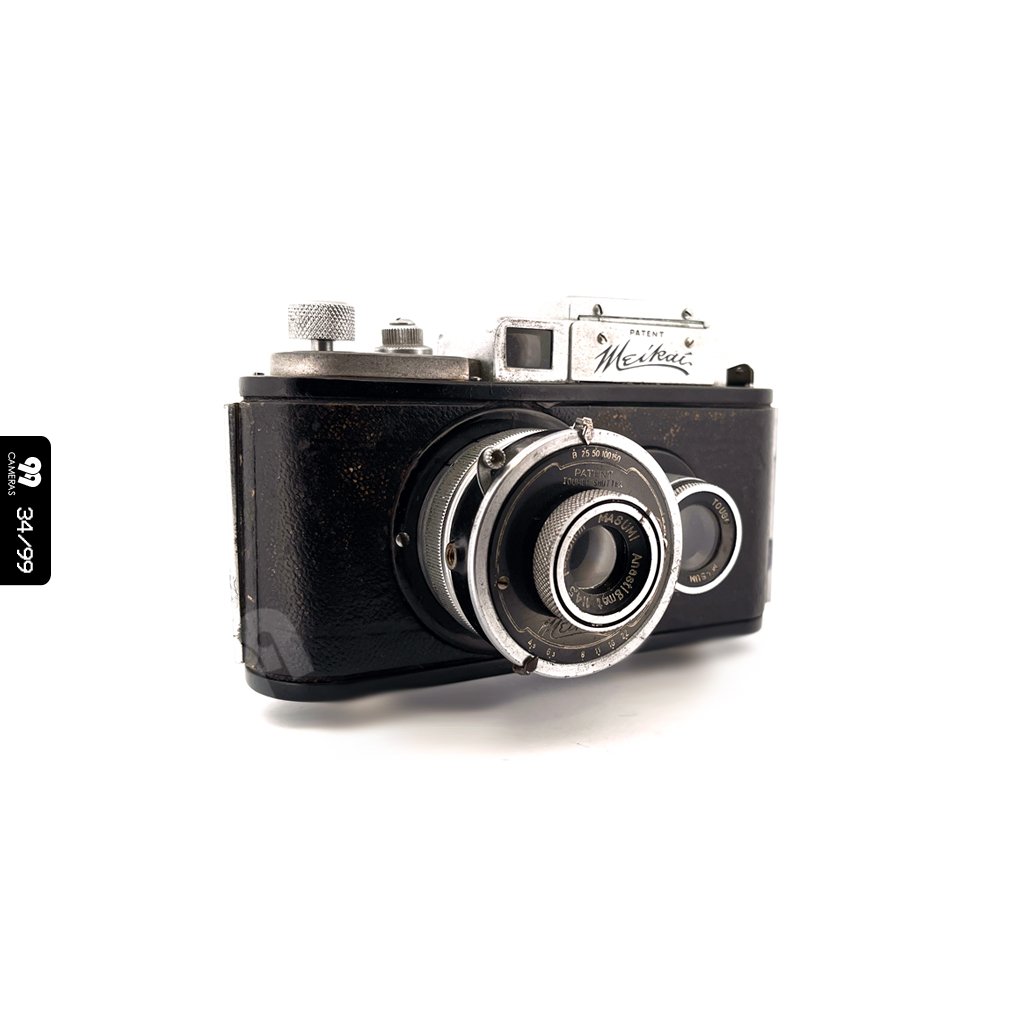
TougodoTougodo Meikai No.1
- 1940
- JapanJapan
- 35 mm
The Tougodo Meikai is among the early attempts at creating a compact 35mm twin-lens reflex (TLR) camera. The innovation of the Tougodo is the horizontal arrangement of the two lenses, which allows a TLR to be only slightly larger than an ordinary compact camera while providing much better visibility.
See the camera page -
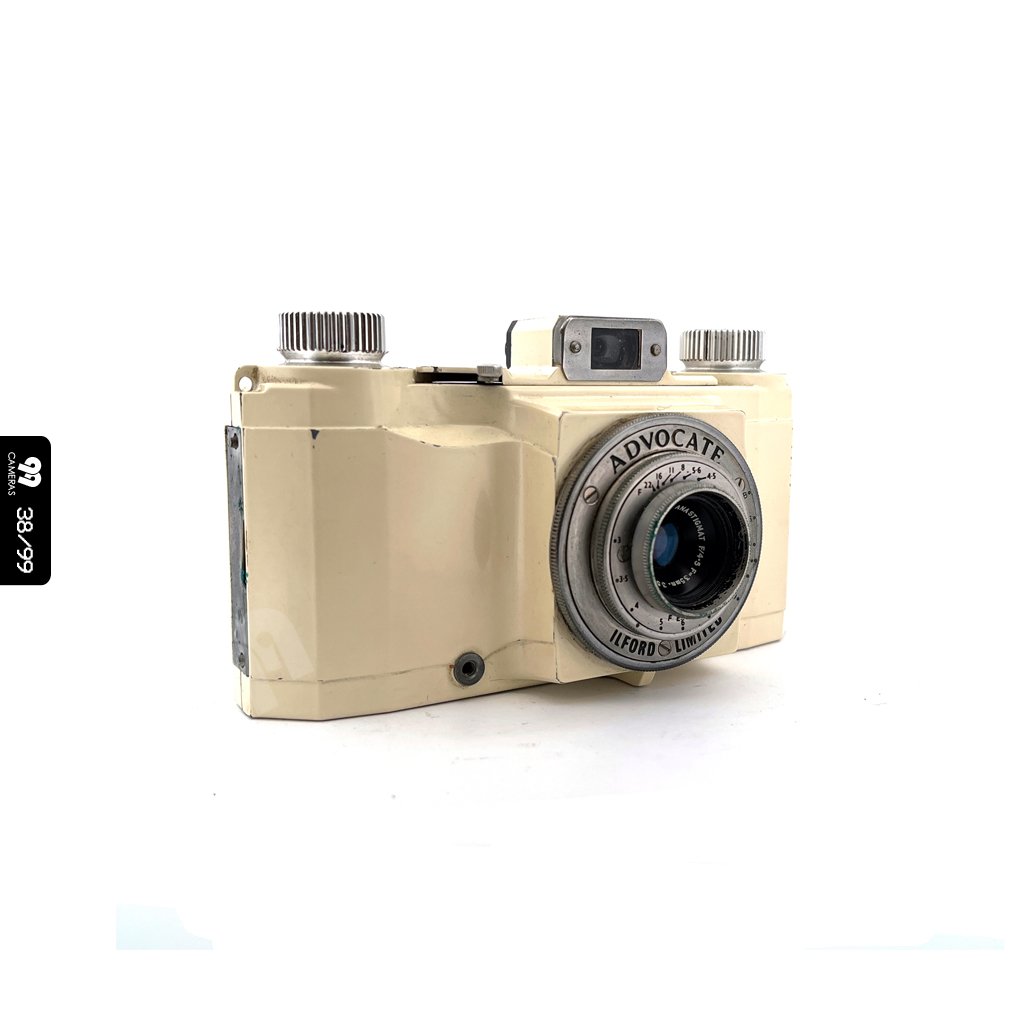
IlfordIlford Advocate
- 1949
- EnglandEngland
- 35 mm
The Advocate is a 35mm camera made from die-cast aluminum alloy and enamel-coated in white. The hardened ivory enamel finish is highly resistant to scratches and wear. For these reasons, the Advocate was popular among "beach photographers" in the 1950s.
See the camera page -
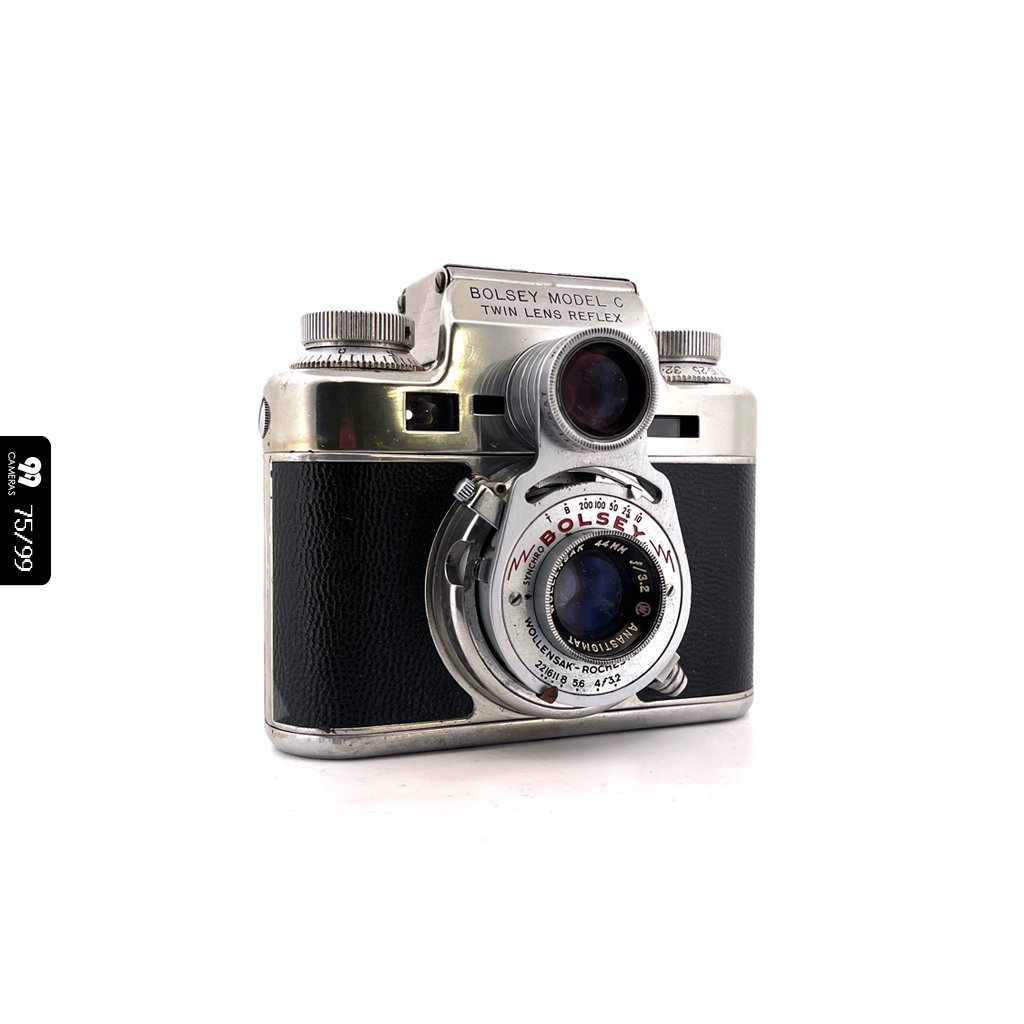
BolseyBolsey Model C
- 1950
- United StatesUnited States
- 35 mm
The Model C is a very compact twin-lens reflex (TLR) camera with an "atomic" style, designed by Jacques Bogopolsky, who is also famous for later founding Bolex (the cinema camera manufacturer) and designing some of the most successful Alpa cameras.
See the camera page -
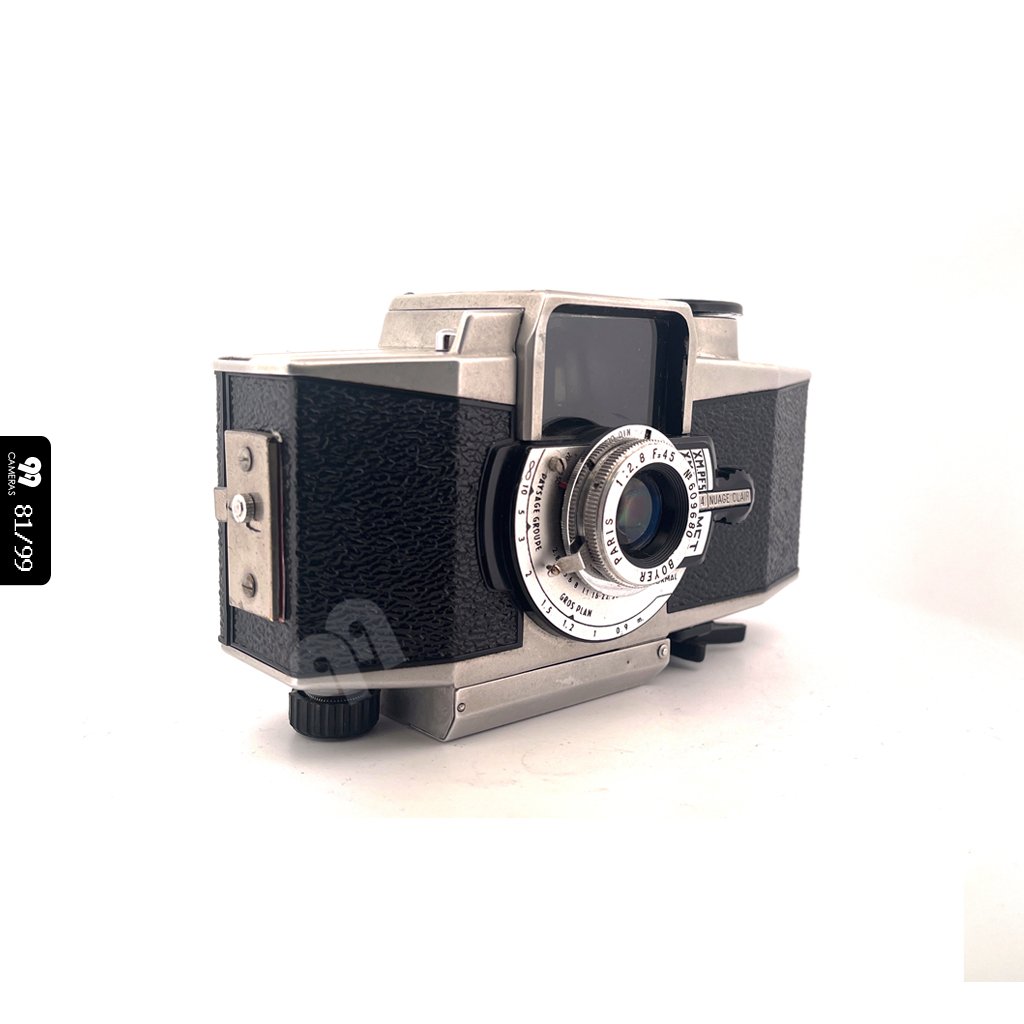
LachaizeLachaize Mecilux
- 1955
- FranceFrance
- 35 mm
Created by Paul Lachaize, a skilled artisan, the Mecilux is an incredibly ingenious and user-friendly device. A dial mechanism simplifies exposure settings by selecting weather conditions on a rotating barrel. Unfortunately, a fire struck the factory, resulting in the production of only around 2,000 cameras.
See the camera page -
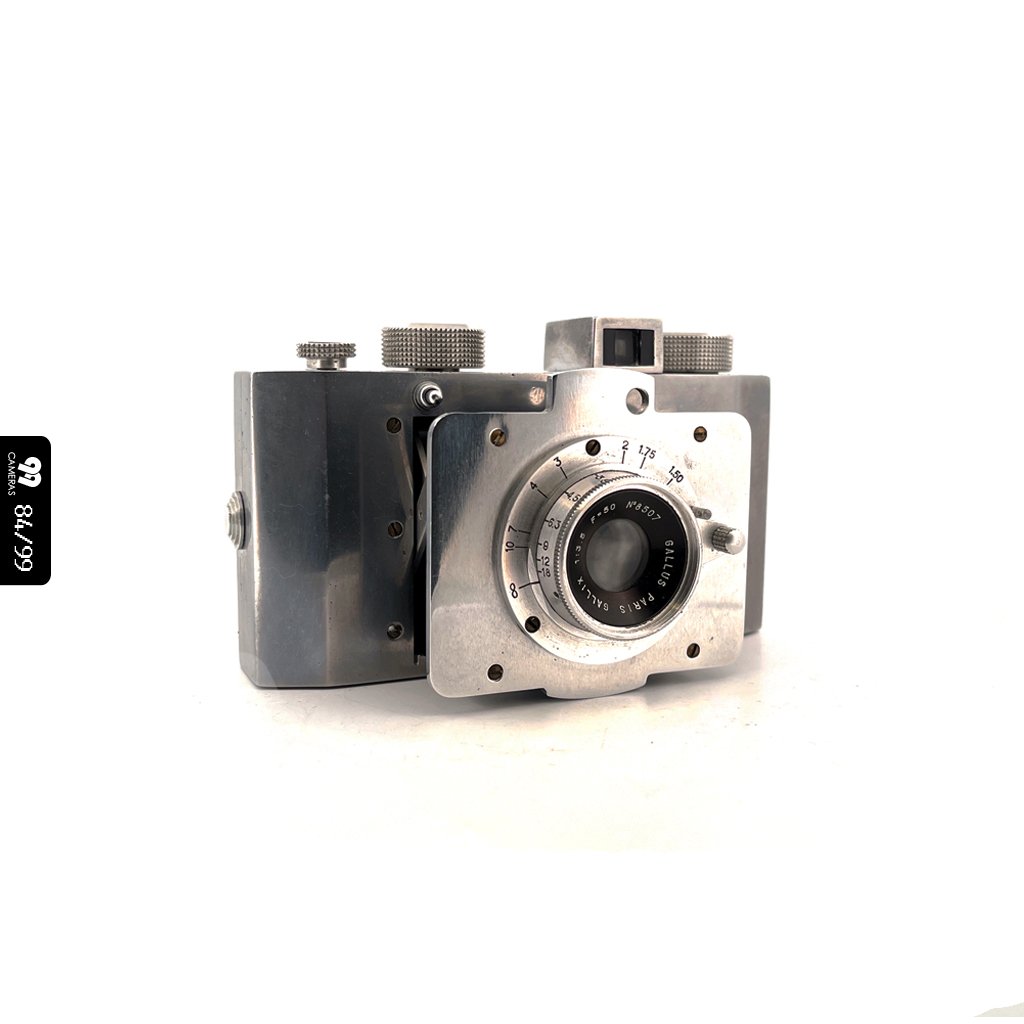
GallusGallus Derlux
- 1947
- FranceFrance
- 127 film
The Derlux is a very unique camera that belongs to a particularly singular period in French history. Following the liberation from German occupation, leather was hard to come by, leading to the entire camera being crafted from polished aluminum, without any paint or coating.
See the camera page -
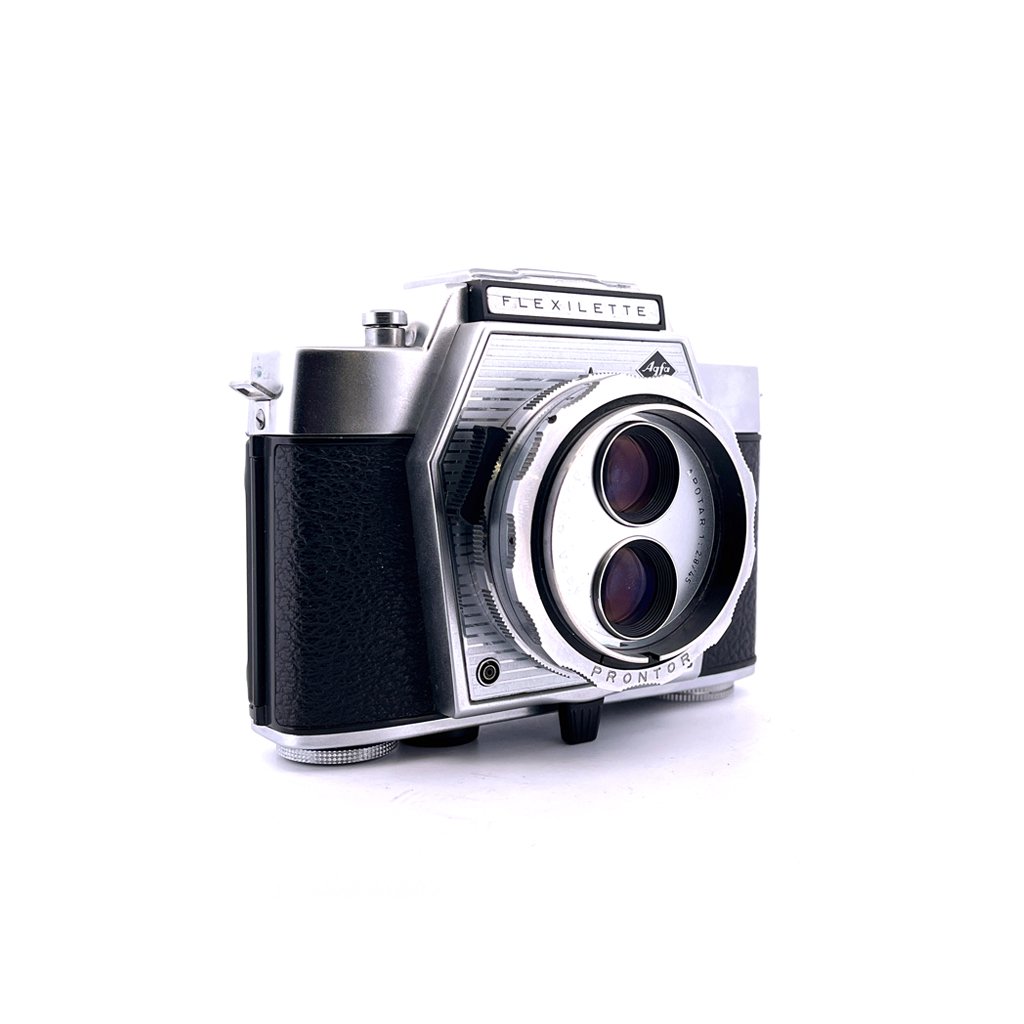
AgfaAgfa Flexilette
- 1960
- GermanyGermany
- 35 mm
The Flexilette is a wonderful example of creativity from the 1960s. It's a TLR (twin-lens reflex) designed to resemble a 35mm camera by combining the two lenses into a single barrel. Unfortunately, it couldn't compete with more practical SLRs and was discontinued in 1964, leaving behind a very interesting collectible piece.
See the camera page
Bottom shelf 4 cameras
-
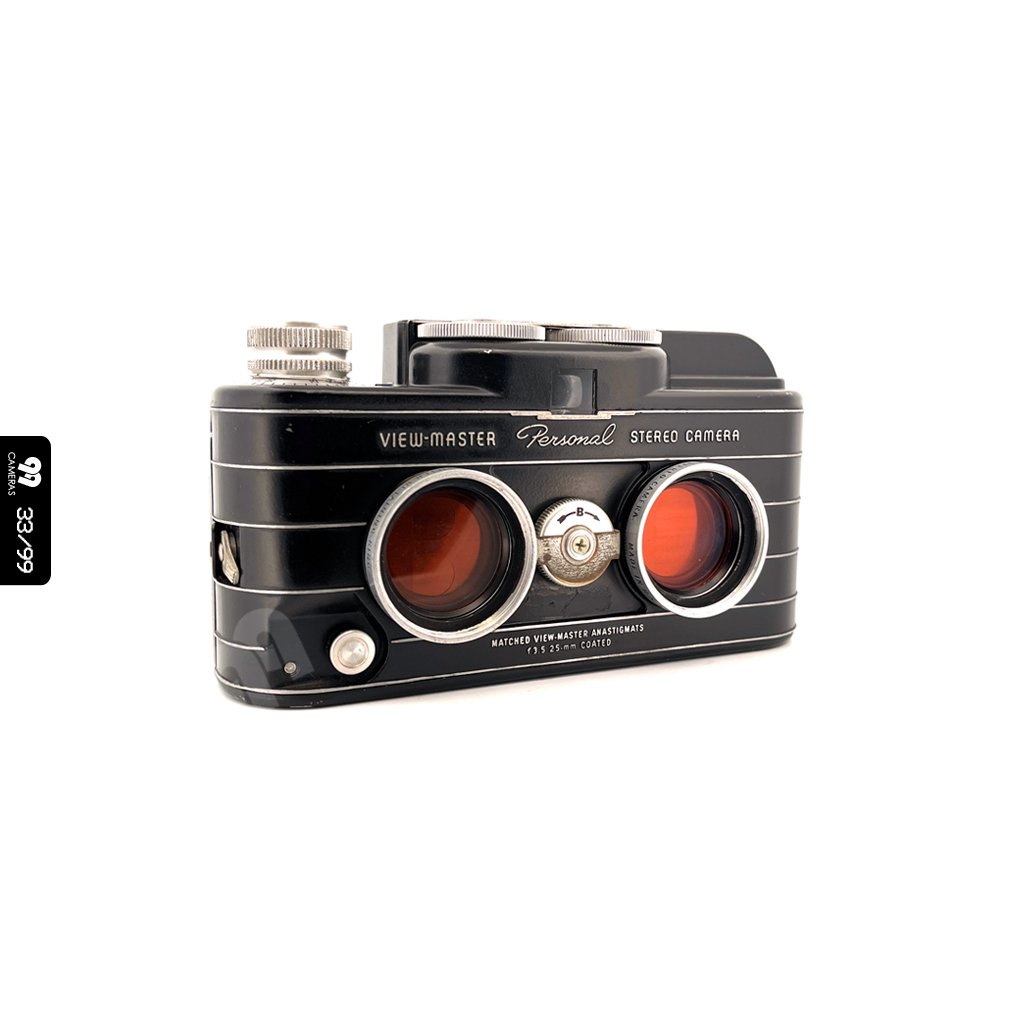
SawyersSawyers View-master Personal Stereo
- 1952
- United StatesUnited States
- 35 mm
The View-Master allowed the viewing of stereoscopic (3D) images from cardboard discs containing seven pairs of stereo images. These discs were highly popular for decades. The View-Master Personal Stereo Camera was designed to enable individuals to create discs using standard 35mm film.
See the camera page -
MamiyaMamiya Magazine 35
- 1957
- JapanJapan
- 35 mm
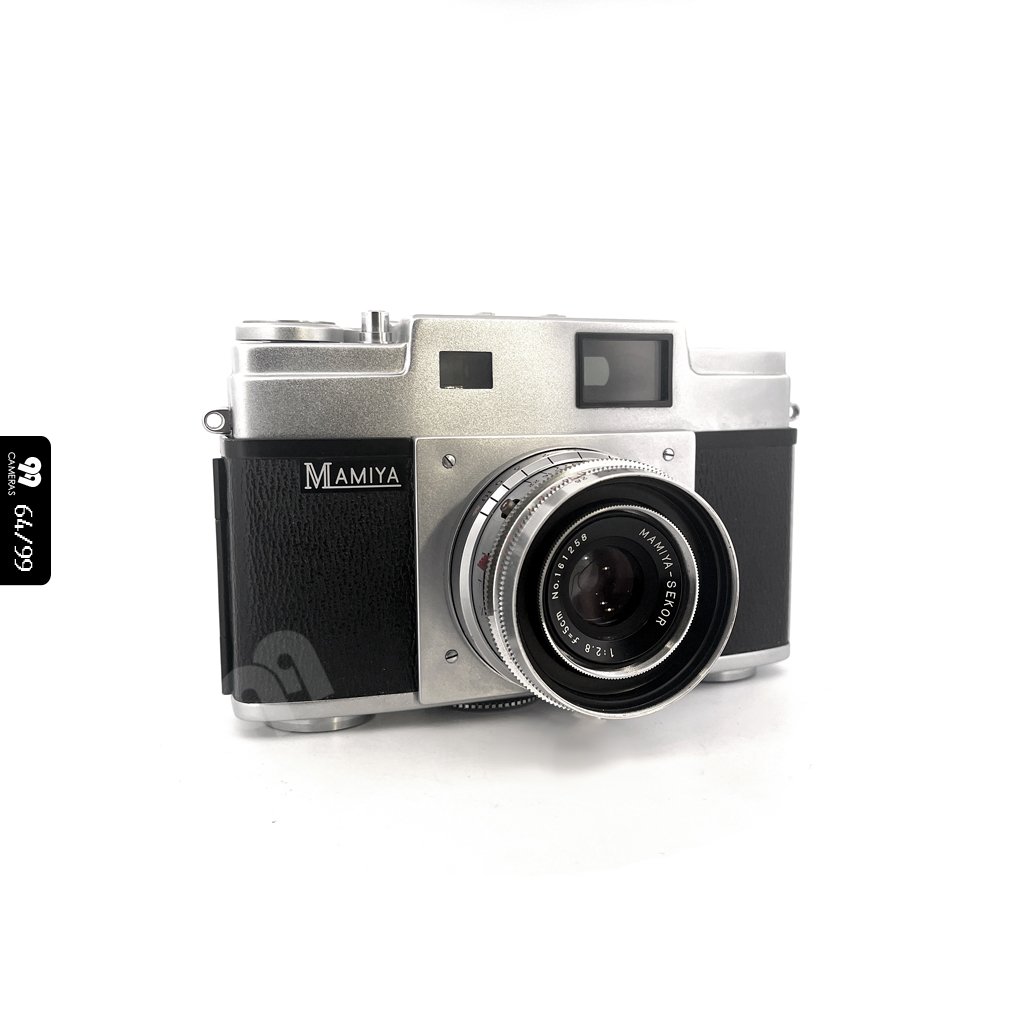
The Magazine 35 is one of the most radical interchangeable back cameras. The entire back of the camera slides downward, leaving only the lens and viewfinders. Mamiya had to completely rework its architecture to offer a self-contained back with winding and rewinding mechanisms.
See the camera page -
SteinheilSteinheil Casca
- 1948
- GermanyGermany
- 35 mm
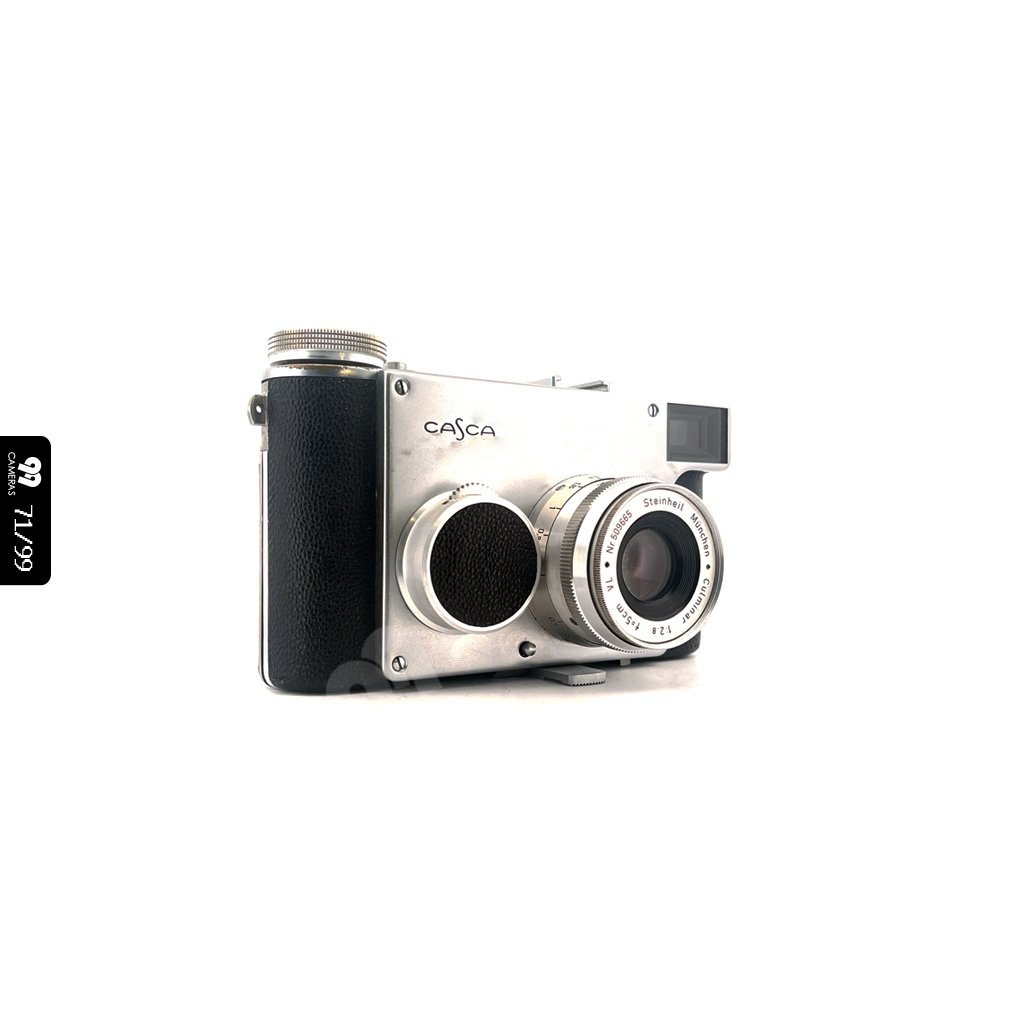
The Casca camera is widely regarded as one of the finest 35 mm models of its era. However, production was abruptly halted after just one year and 2,000 units due to a legal dispute with Leica. Many believe the true motivation was the threat it posed to the upcoming Leica M3.
See the camera page -
PolaroidPolaroid Autofocus 660 “Crystal”
- 1982
- United StatesUnited States
- 600 film
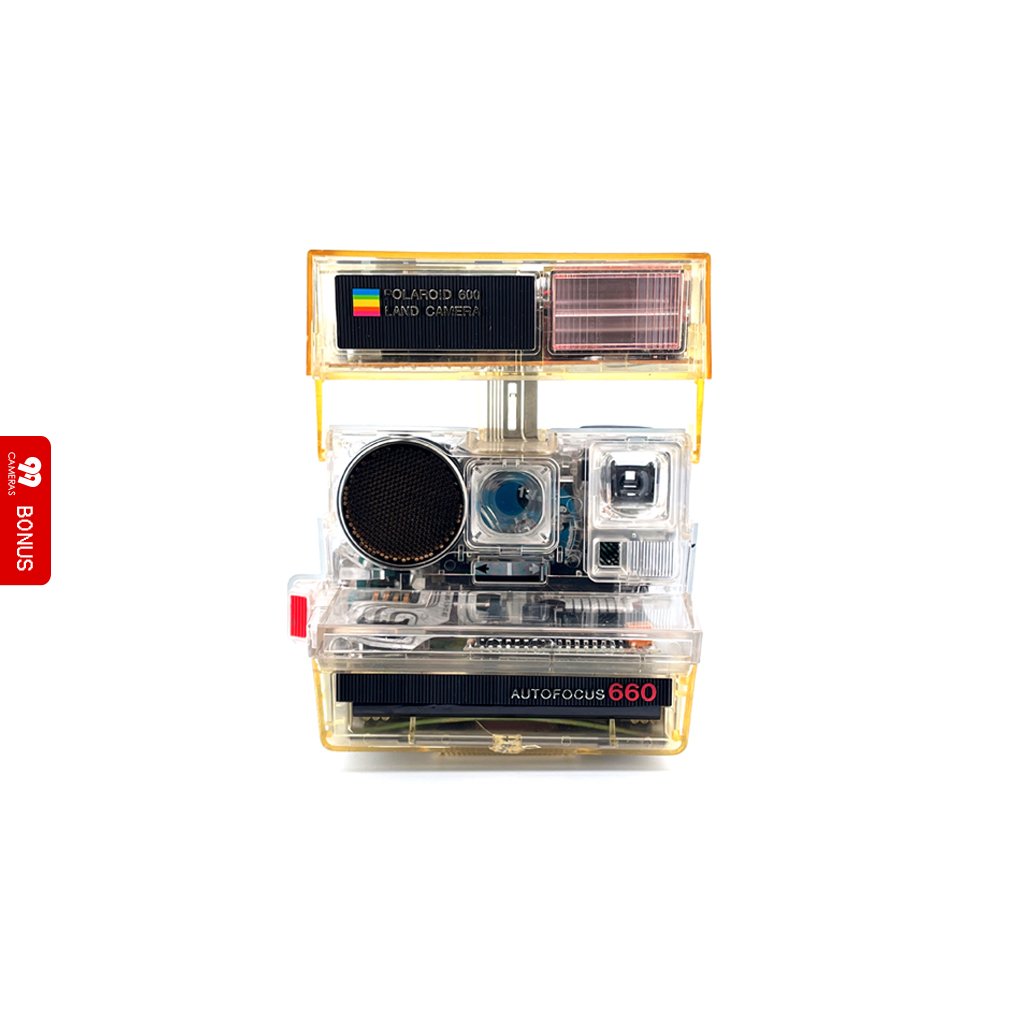
The Polaroid 600 is iconic both for its immediately recognizable design and for the casual approach to photography it made possible. It allowed an entire generation to capture fleeting moments and initiated the selfie revolution.
See the camera page
Plan your visit
Visit is free and open to all
- Opening hoursMonday – Saturday : 10 – 17:30
- AddressStudio Harcourt, 6 Rue de Lota, 75116 Paris
- Exceptional closuresMonday, 16 November 2026Tuesday, 17 November 2026Thursday, 19 November 2026Thursday, 26 November 2026