The adventure of the brands
The Purma story
- Founded in 1935United Kingdom
- No longer makes cameras
A poster artist and an inventor, a fireworks maker as backer, a camera in bakelite styled by Raymond Loewy’s office and a shutter that works with gravity: the Purma story, told through its inventions and its anecdotes.
1935–1936
An artist and an inventor
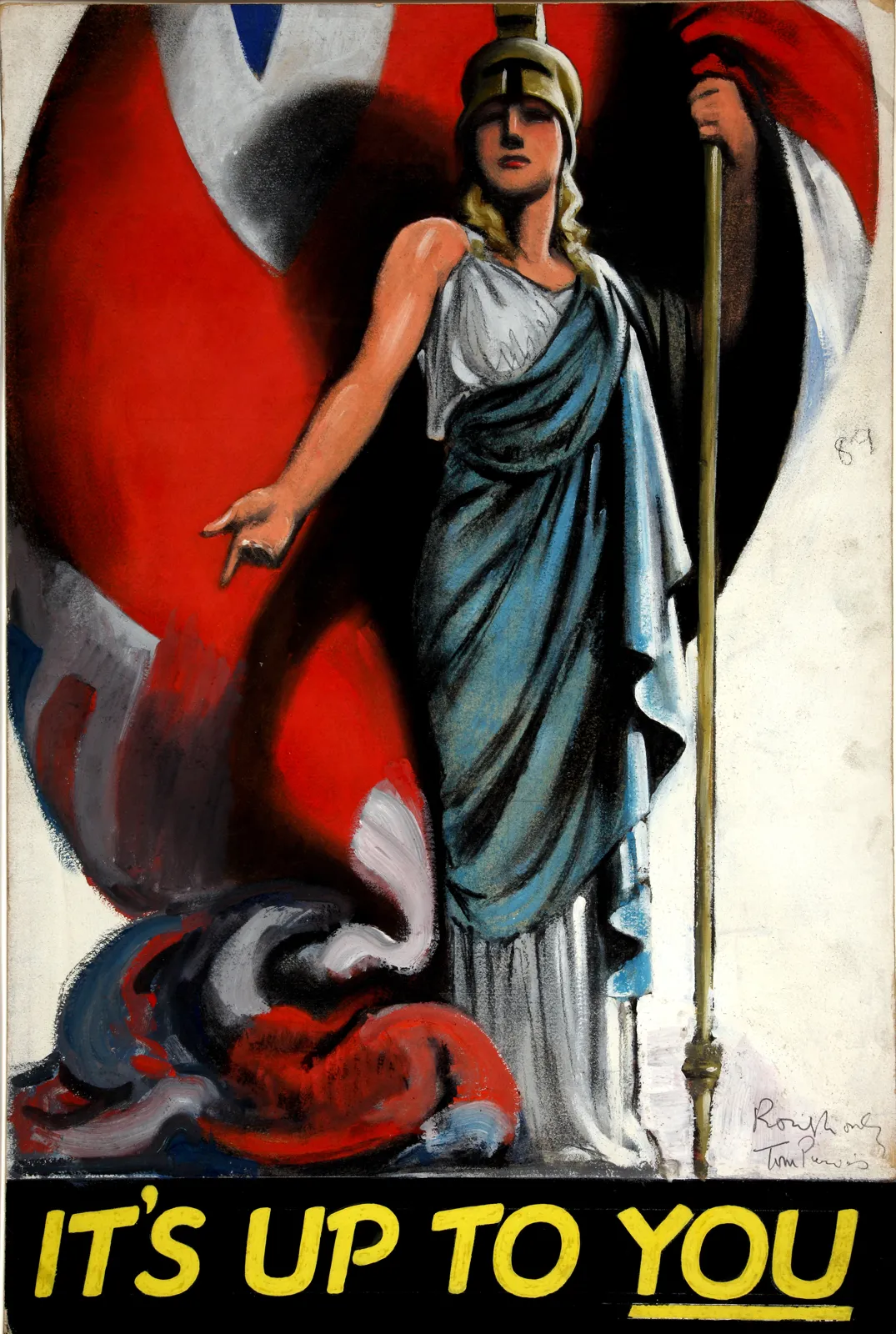
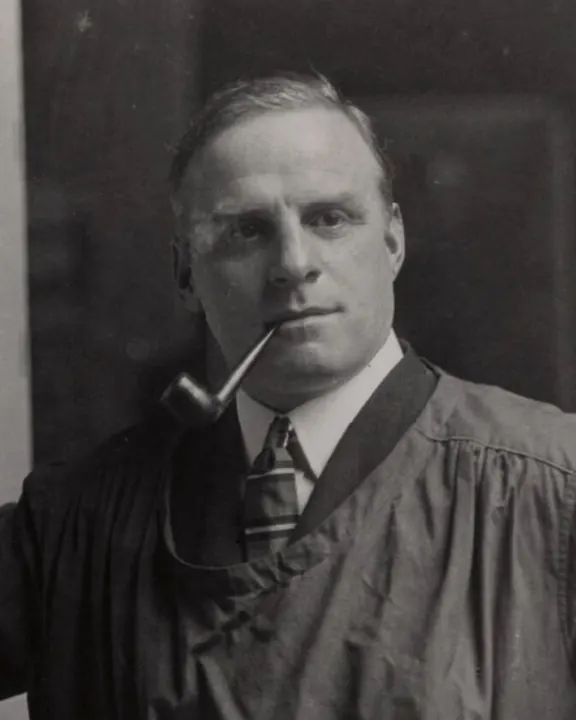
Tom Purvis was one of Britain’s great poster artists, famous for his railway posters. In 1935 he founded Purma Cameras in London with the inventor Alfred C. Mayo, with money from David Brock, of Brock’s Fireworks. Their first camera, the Purma Speed, came out in 1936.
1937–1950
The Purma Special
In the museum
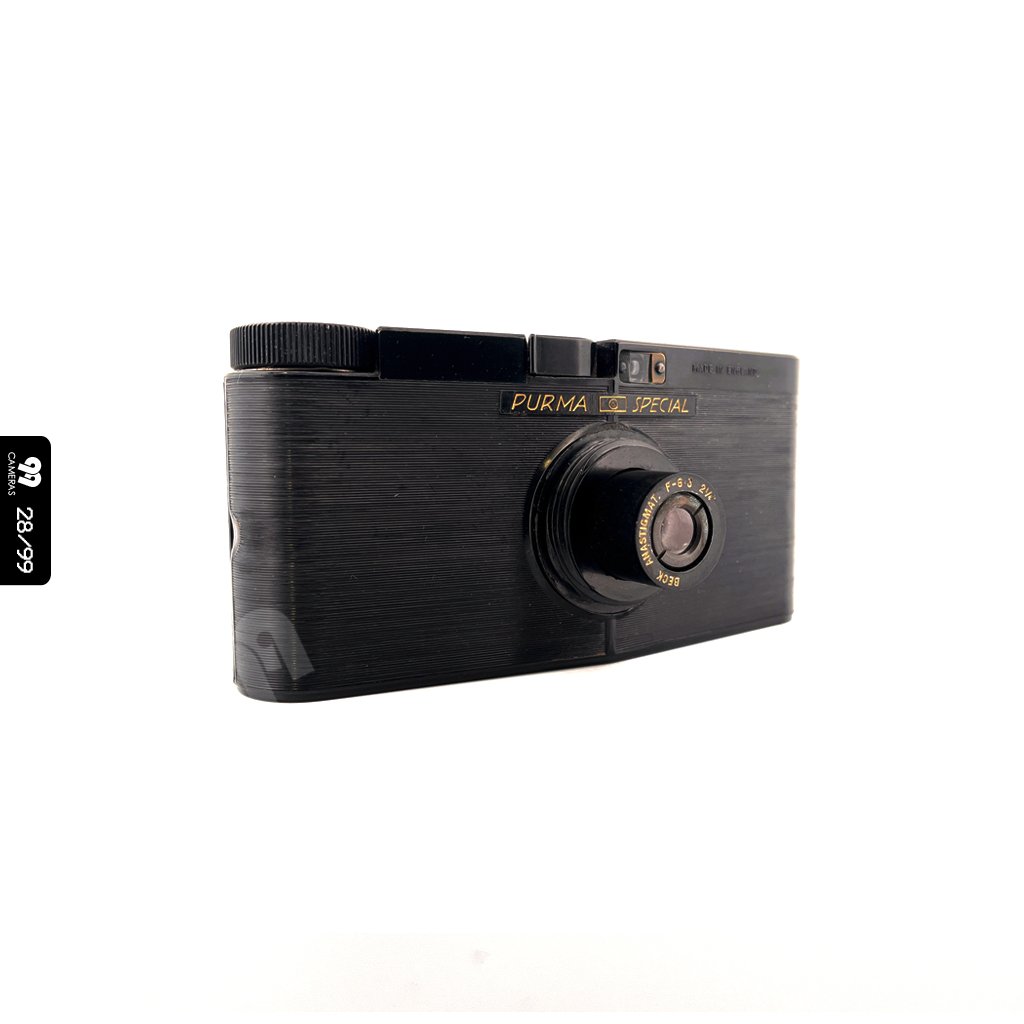
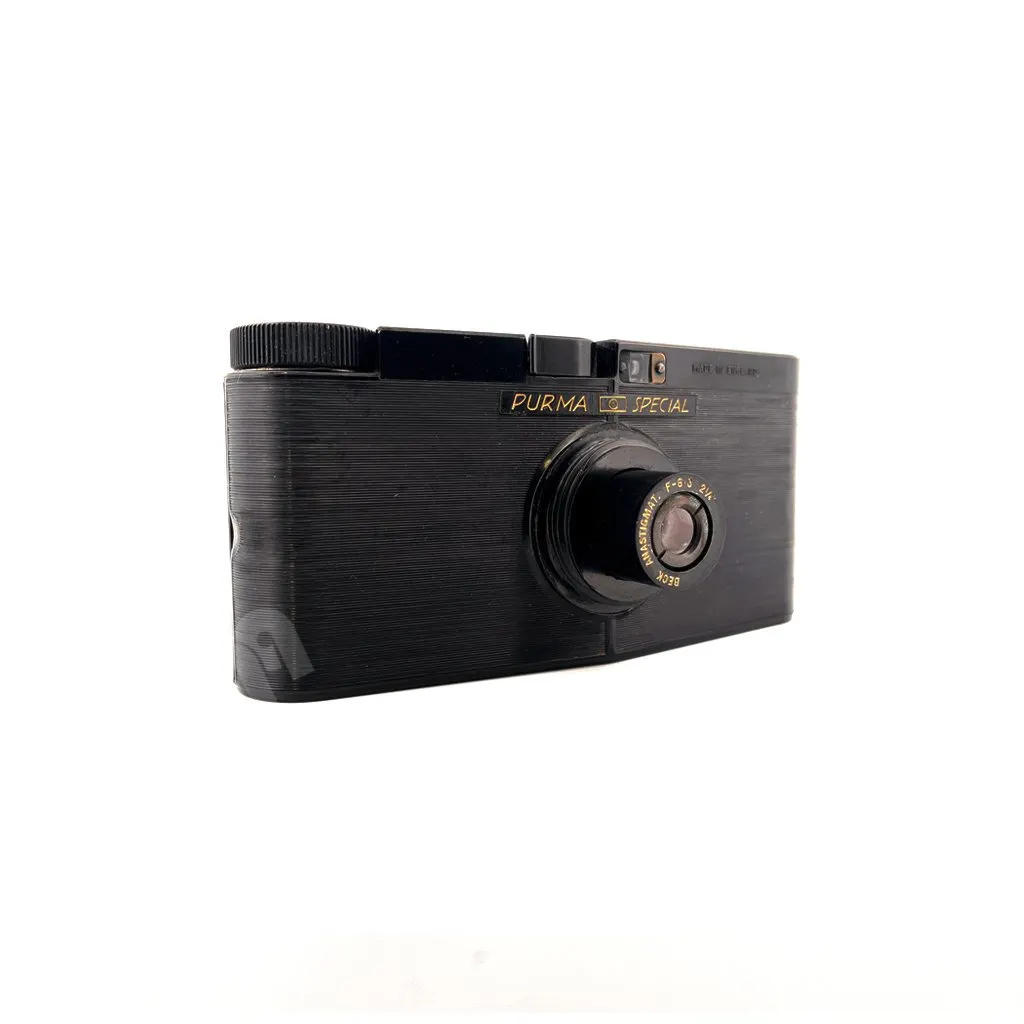
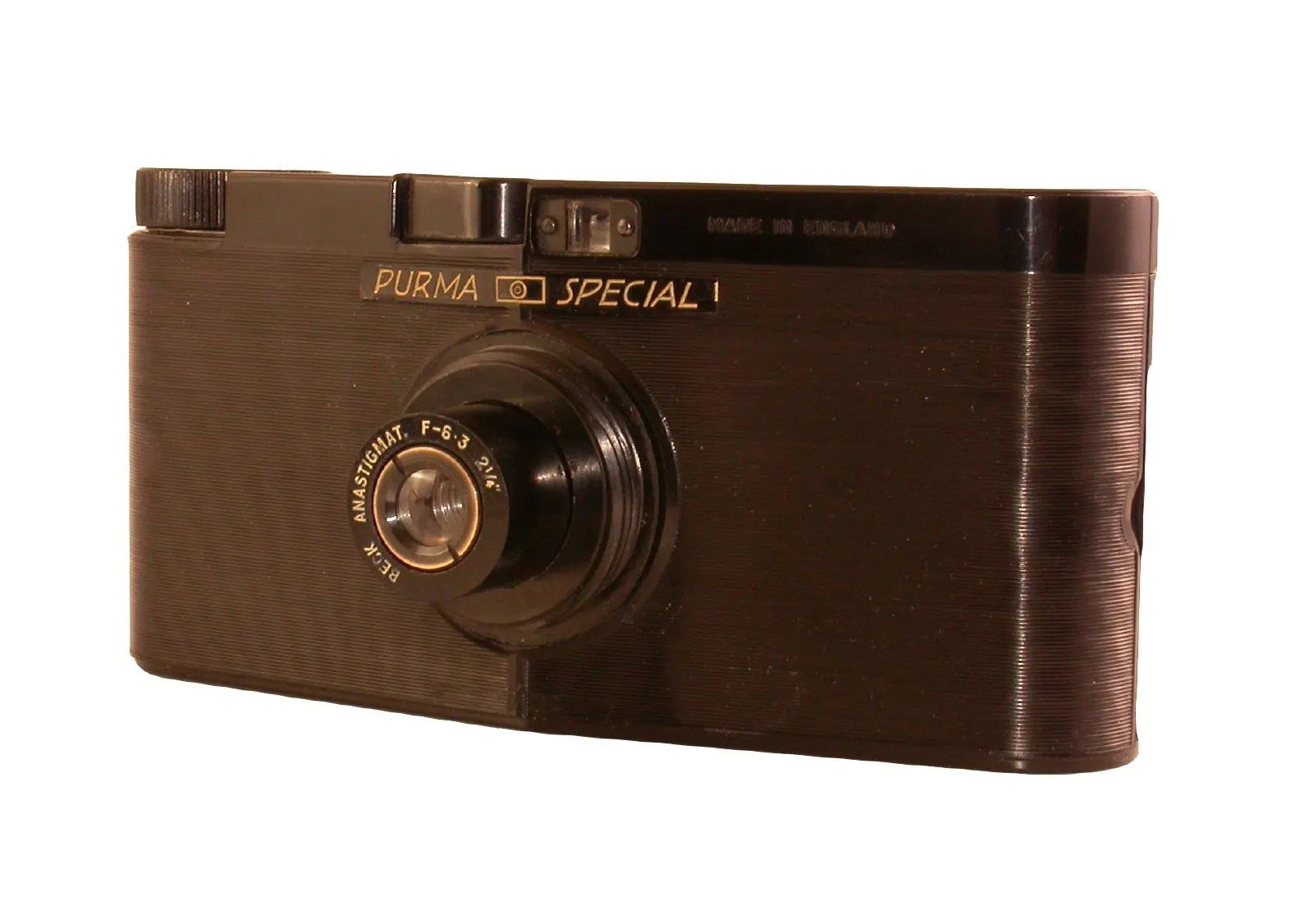
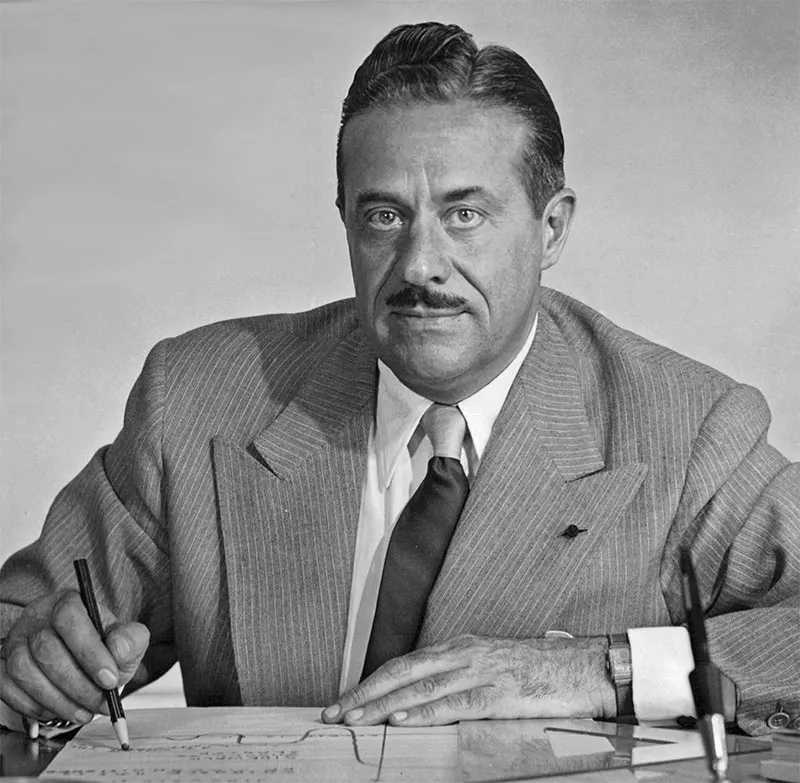
In 1937 came the Purma Special, made almost entirely of bakelite, one of the first cameras with a plastic body. Its styling is credited to the London office of the designer Raymond Loewy. It took 16 square pictures, about 31 mm wide, on 127 film. Pull off the cap and the lens comes out; put it back and the release is locked.
Purma is said to have made the first camera with plastic optics, but only in the viewfinder. The Purma Special is in the museum.
1951–1959
The Purma Plus
In 1951 Purma launched the Purma Plus, with an aluminium body and the same gravity shutter, now up to 1/500 s. It cost twelve guineas and was sold until about 1959, the year Tom Purvis died.
Another model, the SAMA, was patented in 1952 but never went beyond the prototype.
Purma at the 99 Cameras Museum
The Purma Special, the camera you tilt to change the speed, is in the showcases of the museum in Paris. You can see it in our online collection.
See the Purma camera of the collection
Sources. Camera-wiki article on the Purma Special, the museum’s own records. Some anecdotes come from oral tradition and are told as such.
Plan your visit
Visit is free and open to all
- Opening hoursMonday – Saturday : 10 – 17:30
- AddressStudio Harcourt, 6 Rue de Lota, 75116 Paris
- Exceptional closuresThursday, 26 November 2026