
The Legends
15 cameras
Some cameras have become far more than technical objects: icons that shaped their era and inspired devoted followings among photographers, thanks to their design or their innovations.
Celebrities were not mistaken: from Picasso to Madonna to the Queen of England, they posed with their favourite camera, showing that they were image makers too.
Audio guide · The Legends
Top shelf 5 cameras
-
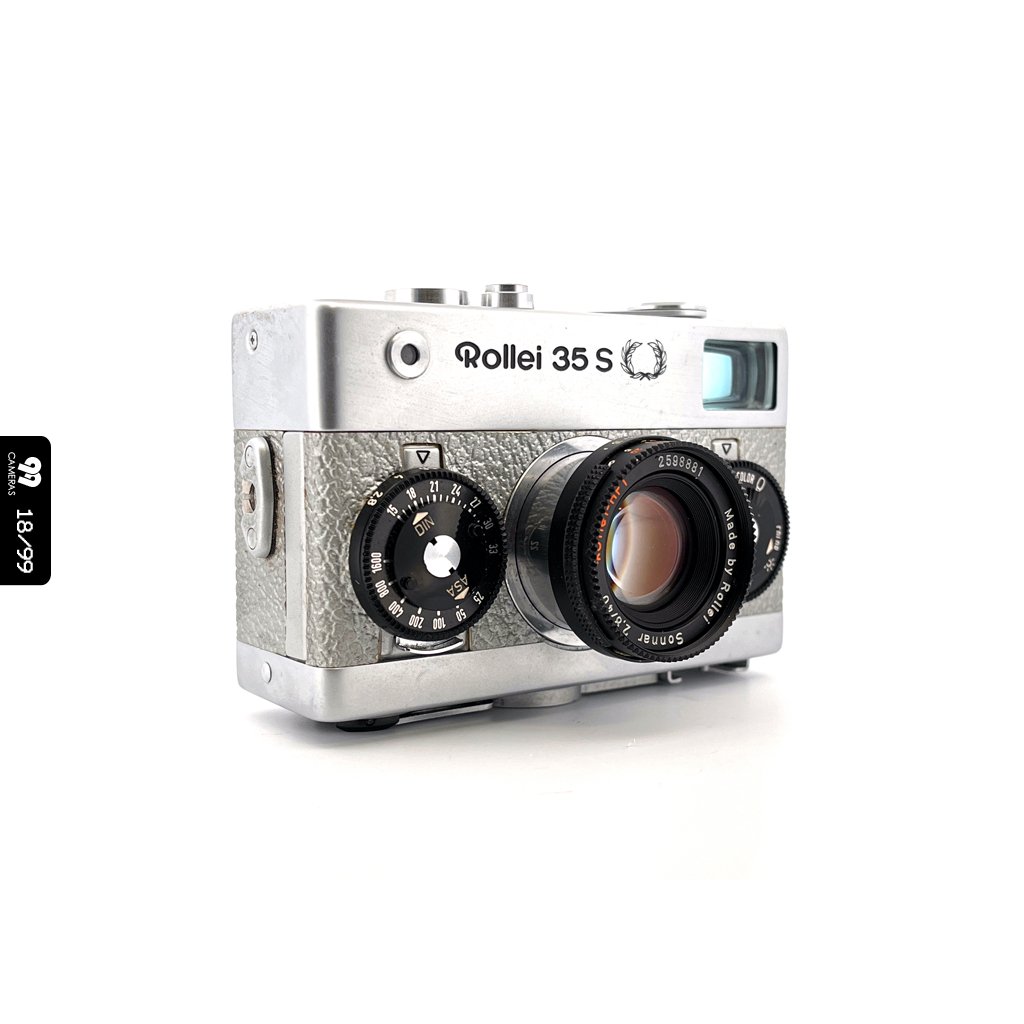
RolleiRollei 35 S Jubilee
- 1974
- GermanyGermany
- 35 mm
The Rollei 35 is one of the smallest 35mm cameras ever built. Heinz Waaske, an engineer at Wirgin, designed it in his spare time. Unfortunately, neither Wirgin, Leitz, nor Kodak, to whom he proposed the design, were interested. It was the enthusiasm of the Rollei director that led to its production. Approximately 2 million units were manufactured until 2015.
See the camera page -
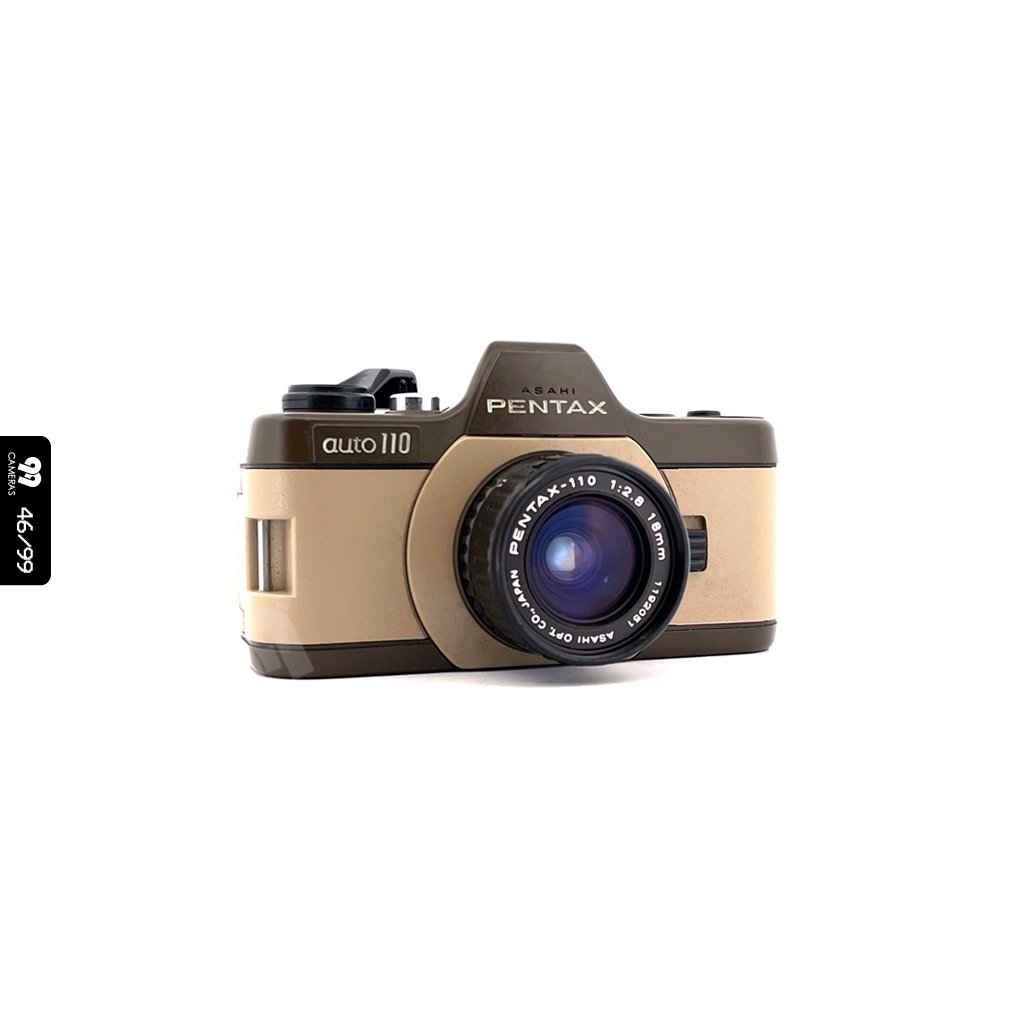
PentaxPentax Auto 110
- 1978
- JapanJapan
- 110 film
The Auto 110 was a miniature version of a 35mm interchangeable lens reflex, generating a lot of excitement among photography enthusiasts. Pentax engineers were the first to release a 110 reflex, presented as the central point of a complete miniature photographic system with many lenses and accessories.
See the camera page -
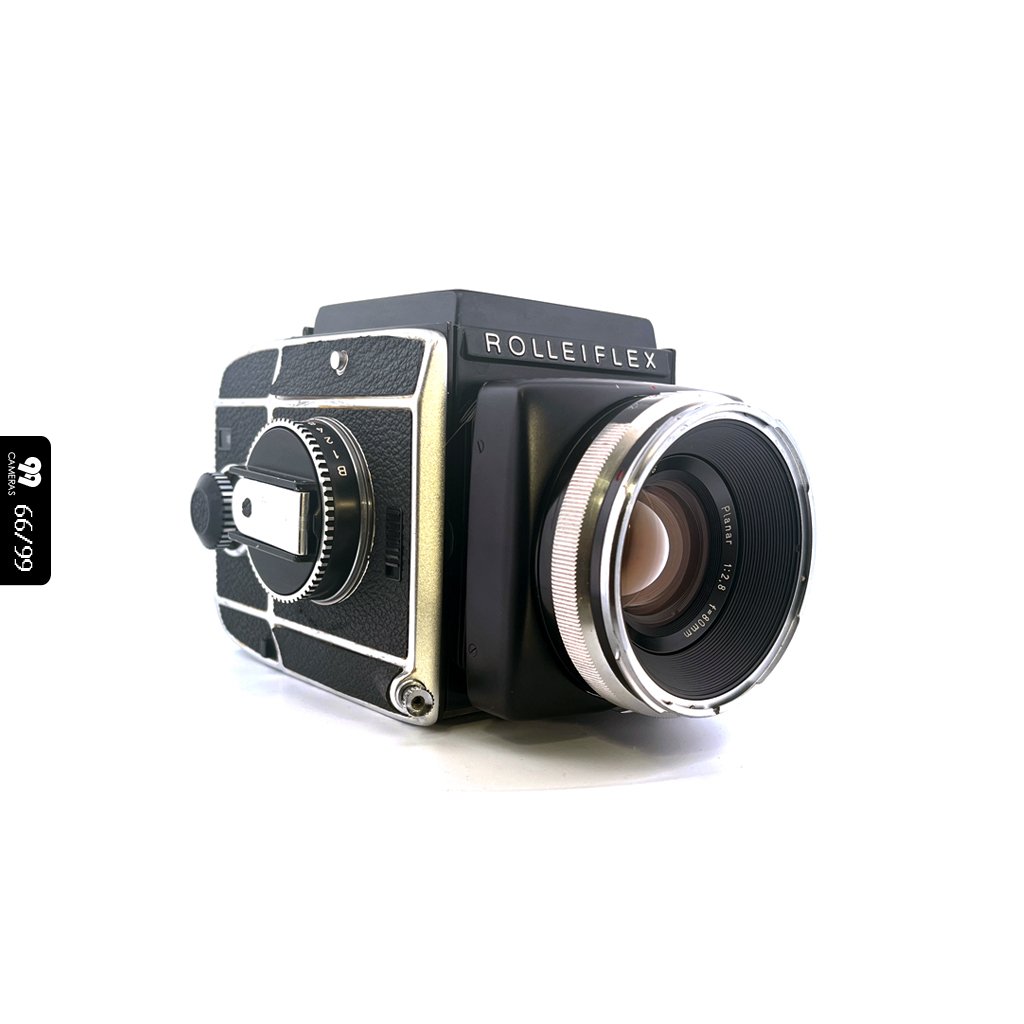
RolleiRolleiflex SL66
- 1966
- GermanyGermany
- 120 film
The Rolleiflex SL66 was the only Rollei model produced for over 25 years. It is a masterpiece of engineering, entirely mechanical and operating without batteries, consisting of over 1000 parts. It is considered technically superior to its competitor, the Hasselblad, but significantly more expensive and less flexible, which explains why it didn't achieve the expected commercial success.
See the camera page -
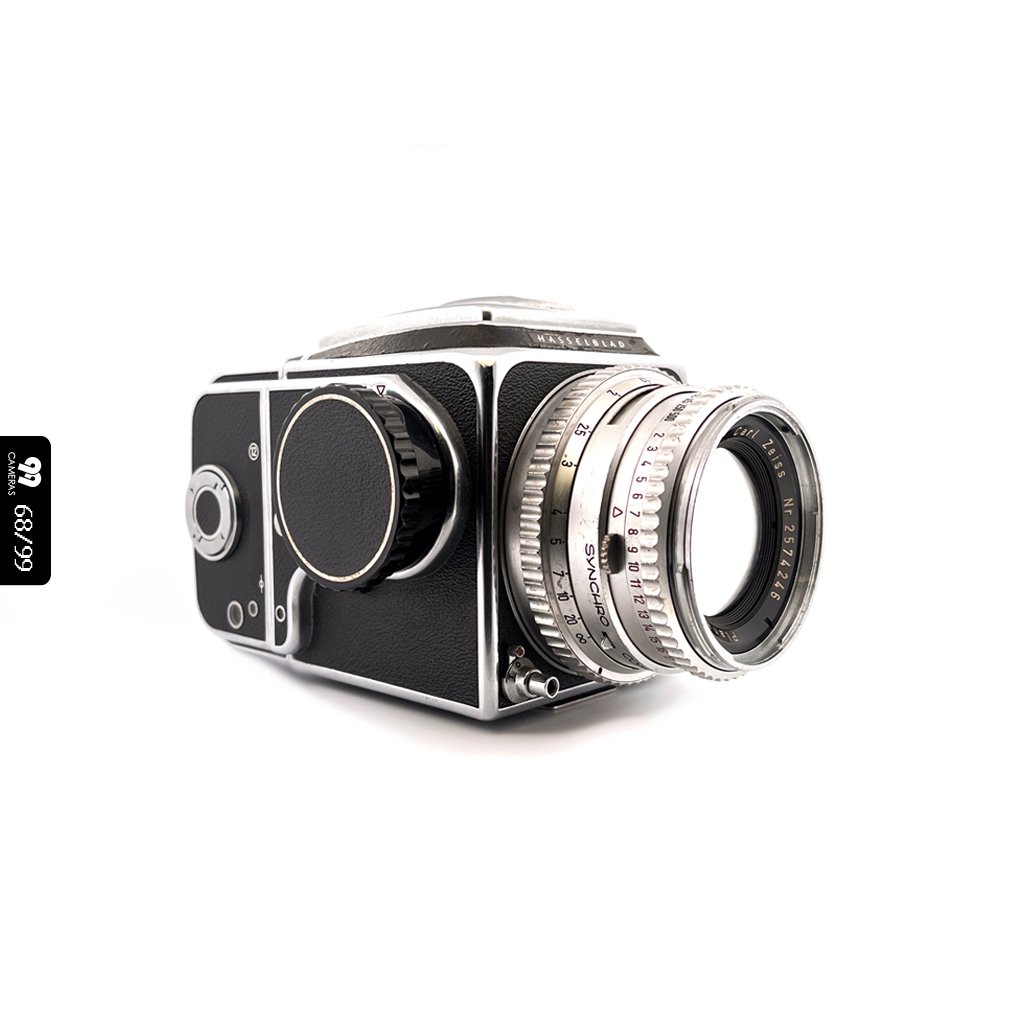
HasselbladHasselblad 500 C
- 1957
- SwedenSweden
- 120 film
With this camera, Victor Hasselblad invented an open and flexible architecture that could accommodate multiple lenses, backs, and viewfinders. The list of iconic photos he captured is endless, ranging from the Beatles to Jimi Hendrix, the Rolling Stones to Audrey Hepburn, James Dean, and Elizabeth Taylor. Astronaut Walter Schirra even took it on the Mercury flight in 1962.
See the camera page -
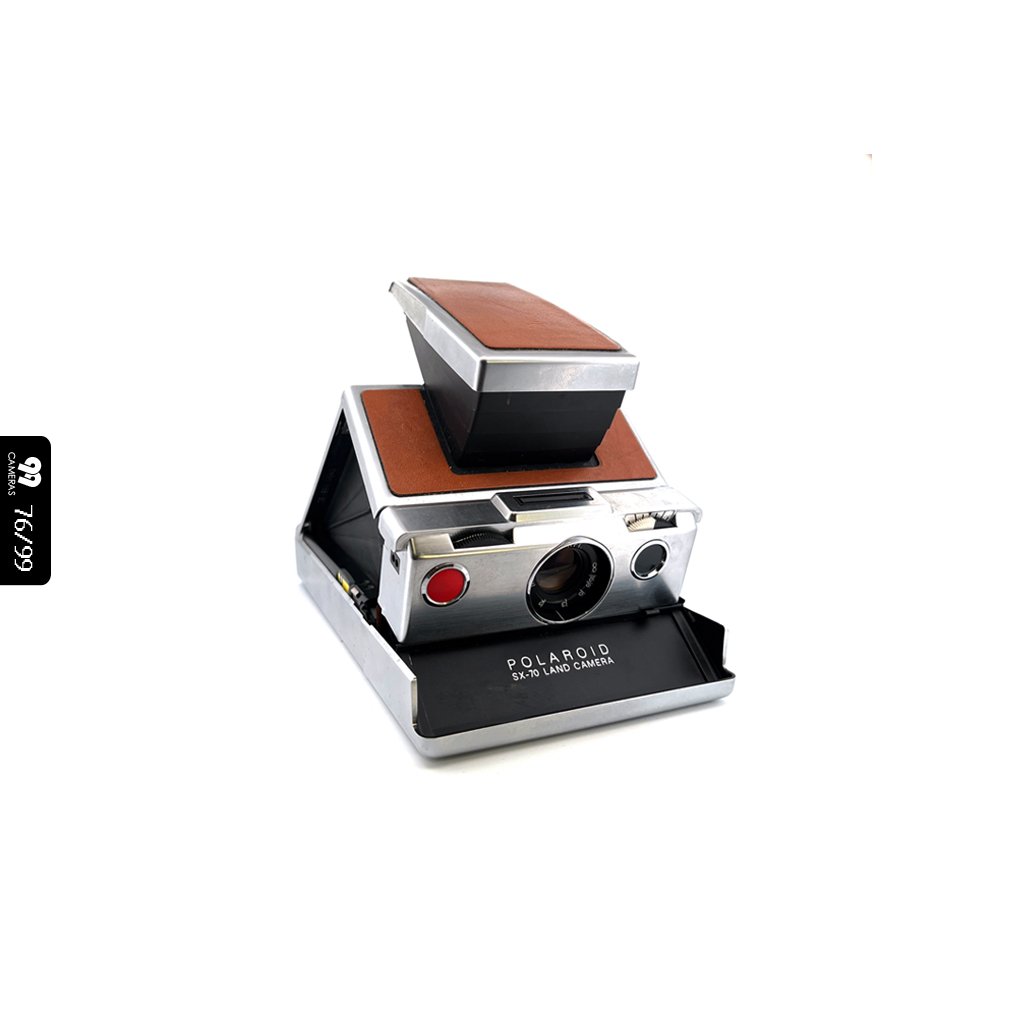
PolaroidPolaroid SX 70
- 1975
- United StatesUnited States
- SX-70
Polaroid's research and development budgets for this project were massive, and several factories were specifically built to manufacture it. The central element of the camera was the film cartridge, which allowed for the production of 10 photos and integrated a battery to power all the motorized functions of the camera, including the ejection of the photo.
See the camera page
Middle shelf 5 cameras
-
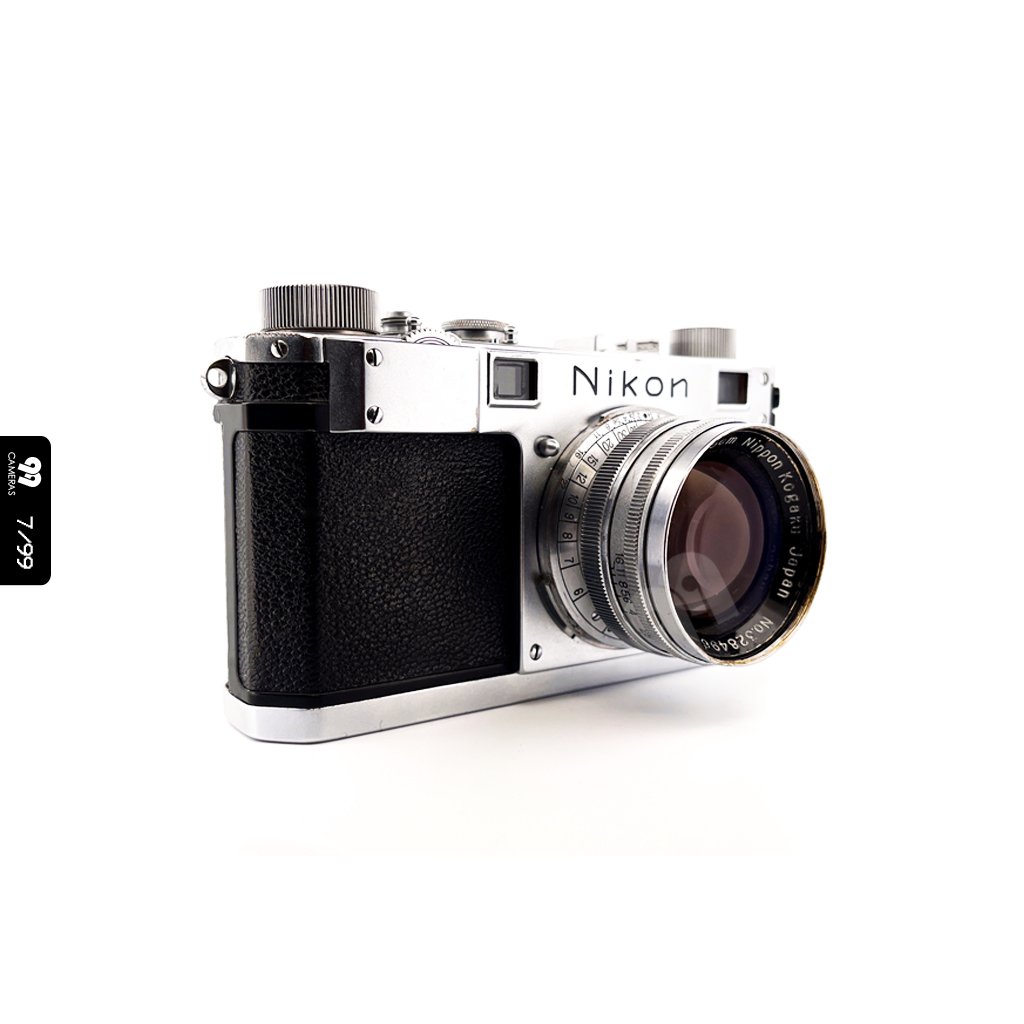
NikonNikon S
- 1950
- JapanJapan
- 35 mm
The Nikon 1 was the first camera produced by Nikon in 1948 in occupied Japan. It was initially named “Nikorette”, the shortened version of Nippon Kogaku, with “ette” added to indicate its small size. Ultimately "Nikon" was chosen and became the brand name. It was the first model to be seriously promoted and sold outside of Japan.
See the camera page -
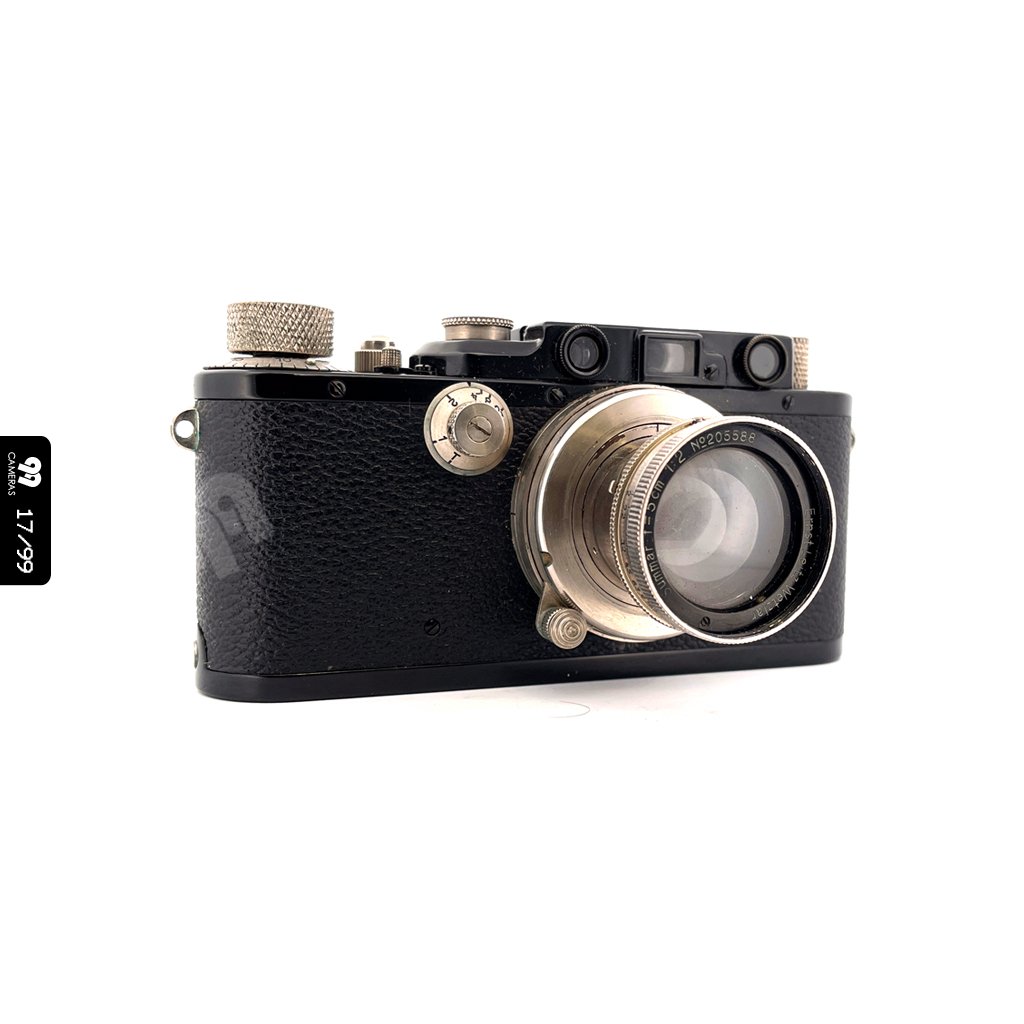
LeicaLeica III f
- 1933
- GermanyGermany
- 35 mm
The Leica 3 is arguably one of the most iconic and imitated designs of all time. The distinctive positioning of the viewfinder and rangefinder was replicated by hundreds of copies up to the present day, even among digital cameras. The Leica III was the first camera to incorporate all the essential elements that would become Leica's signature in all subsequent models.
See the camera page -
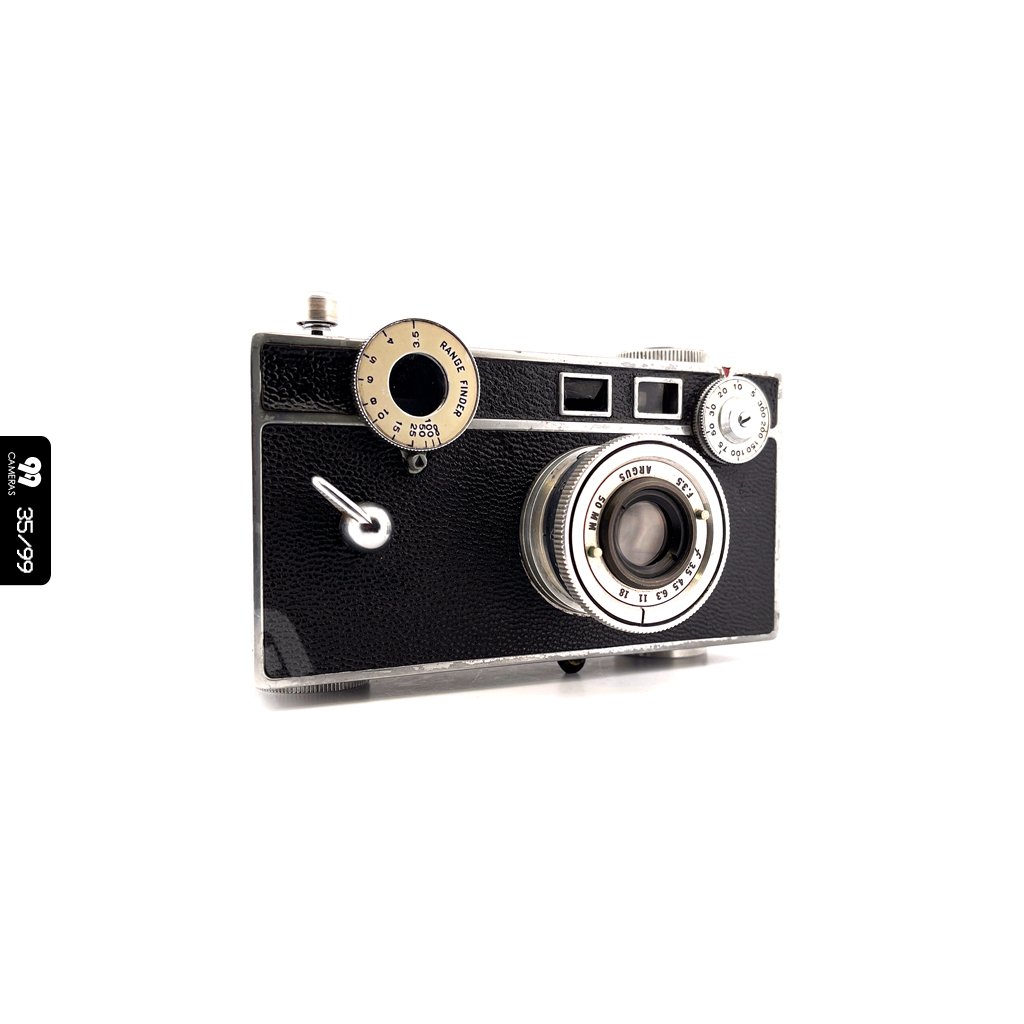
ArgusArgus C
- 1938
- United StatesUnited States
- 35 mm
Known as "the brick," the Argus C is one of the most recognizable cameras. Its most common version, the C3, holds one of the longest production runs in the history of photography, spanning from 1939 to 1966 with over 3 million units sold. The renowned photographer Tony Vaccaro is known for using this model throughout World War II.
See the camera page -
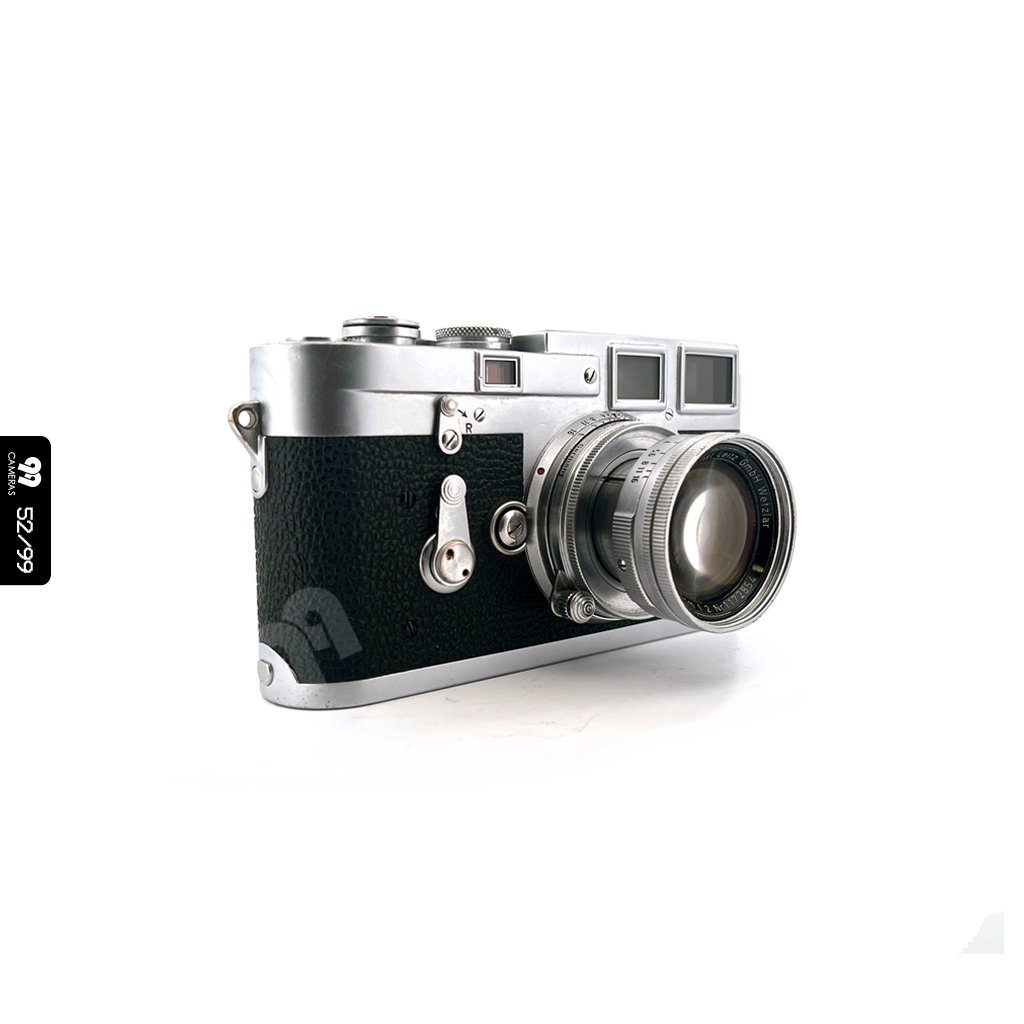
LeicaLeica M3
- 1954
- GermanyGermany
- 35 mm
The Leica M3 introduced a design so groundbreaking that it remained nearly unchanged for over 50 years, even surviving the transition to digital. Despite being quite expensive at the time, it became the biggest commercial success in the M series, with over 220,000 units sold. Iconic photographers like Henri Cartier-Bresson immediately embraced the M3 as their camera of choice.
See the camera page -
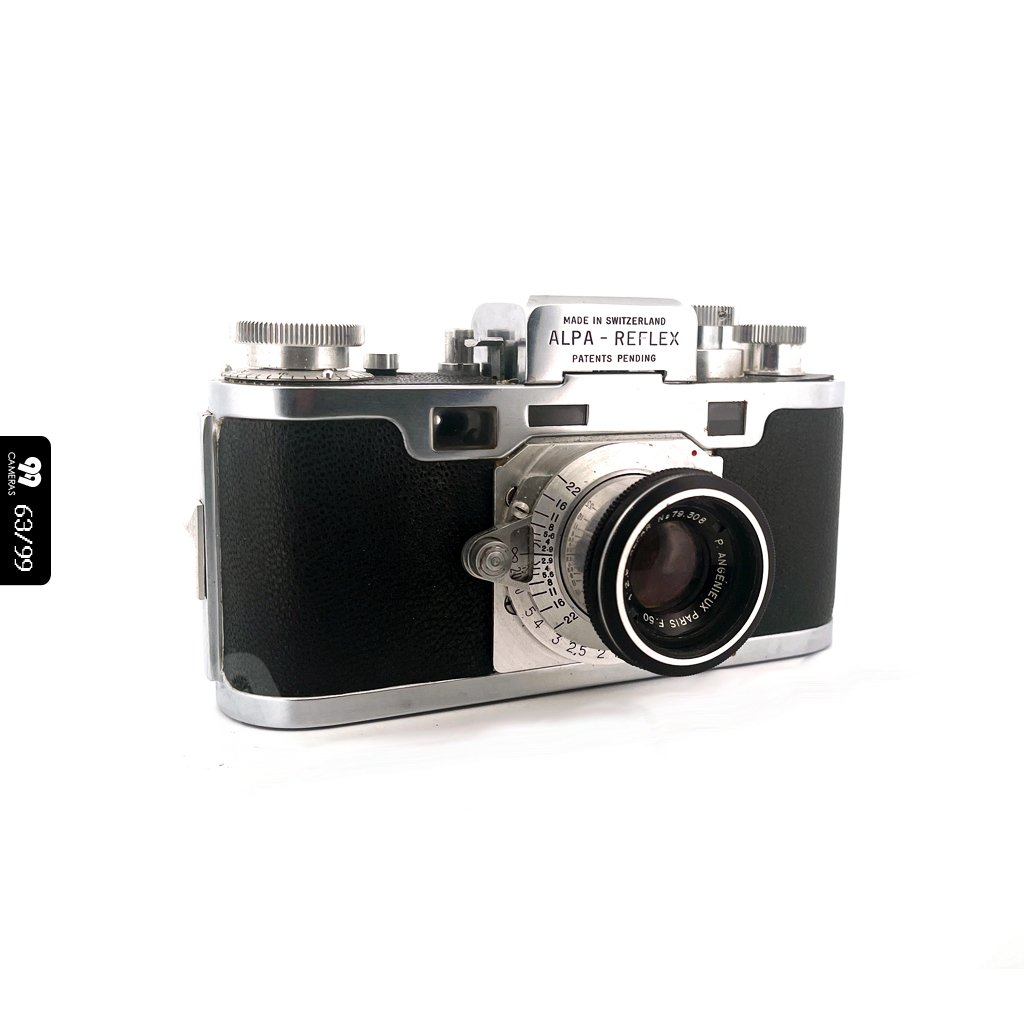
AlpaAlpa Reflex
- 1942
- SwitzerlandSwitzerland
- 35 mm
The Alpa Reflex was designed by a Swiss manufacturer of precision watch mechanisms who aimed to diversify their product range in the late 1930s. It is one of the earliest single-lens reflex (SLR) 35mm cameras and its design reflects the precision craftsmanship of Swiss watchmaking. It is the brainchild of Jacques Bogopolsky, who later went on to create the renowned Bolsey and Bolex cameras for the film industry.
See the camera page
Bottom shelf 5 cameras
-
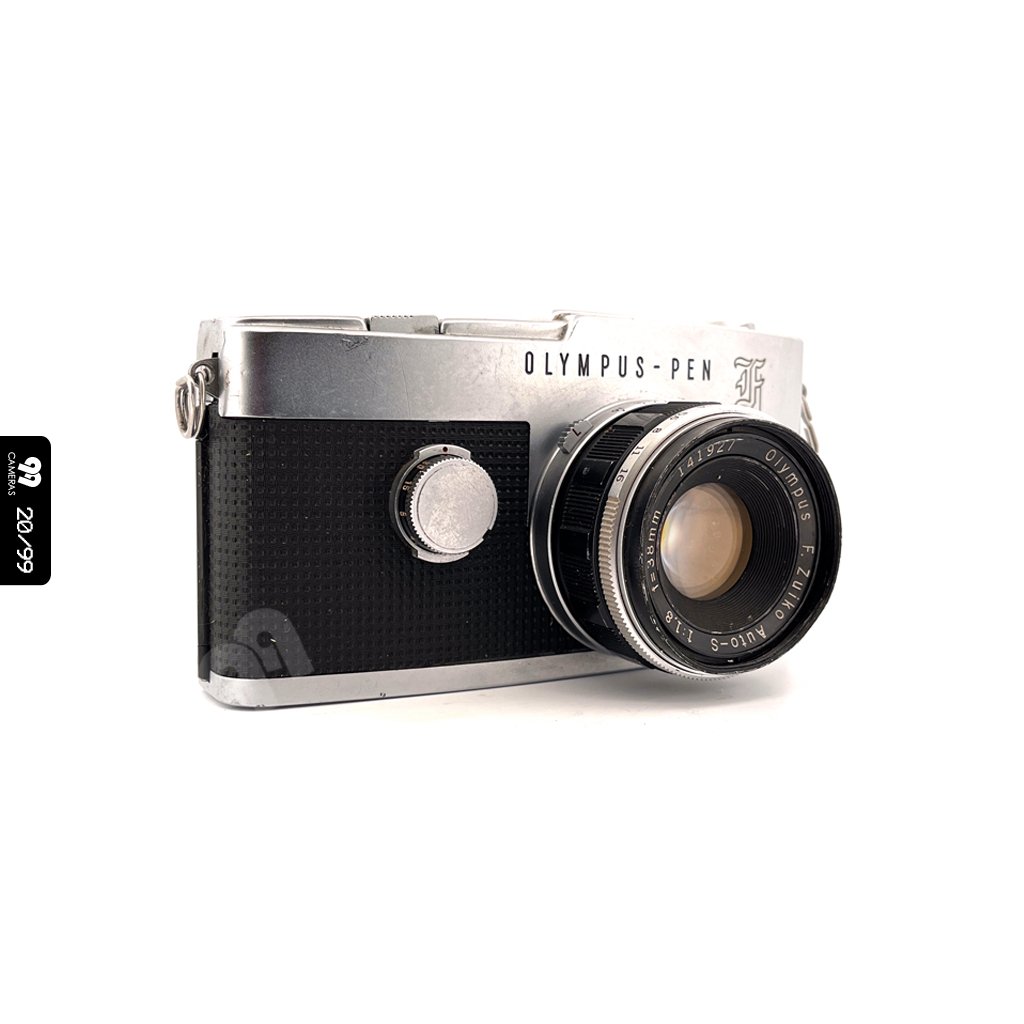
OlympusOlympus Pen F
- 1963
- JapanJapan
- 35 mm
The Olympus Pen F was the first half-frame reflex camera. It originated from a challenge posed by Olympus to one of its young engineers, Yoshihisa Maitani. Tasked with creating a reflex camera that could retail for less than one third of the current price of an Olympus, this innovation resulted in over 50 new patents for Olympus.
See the camera page -
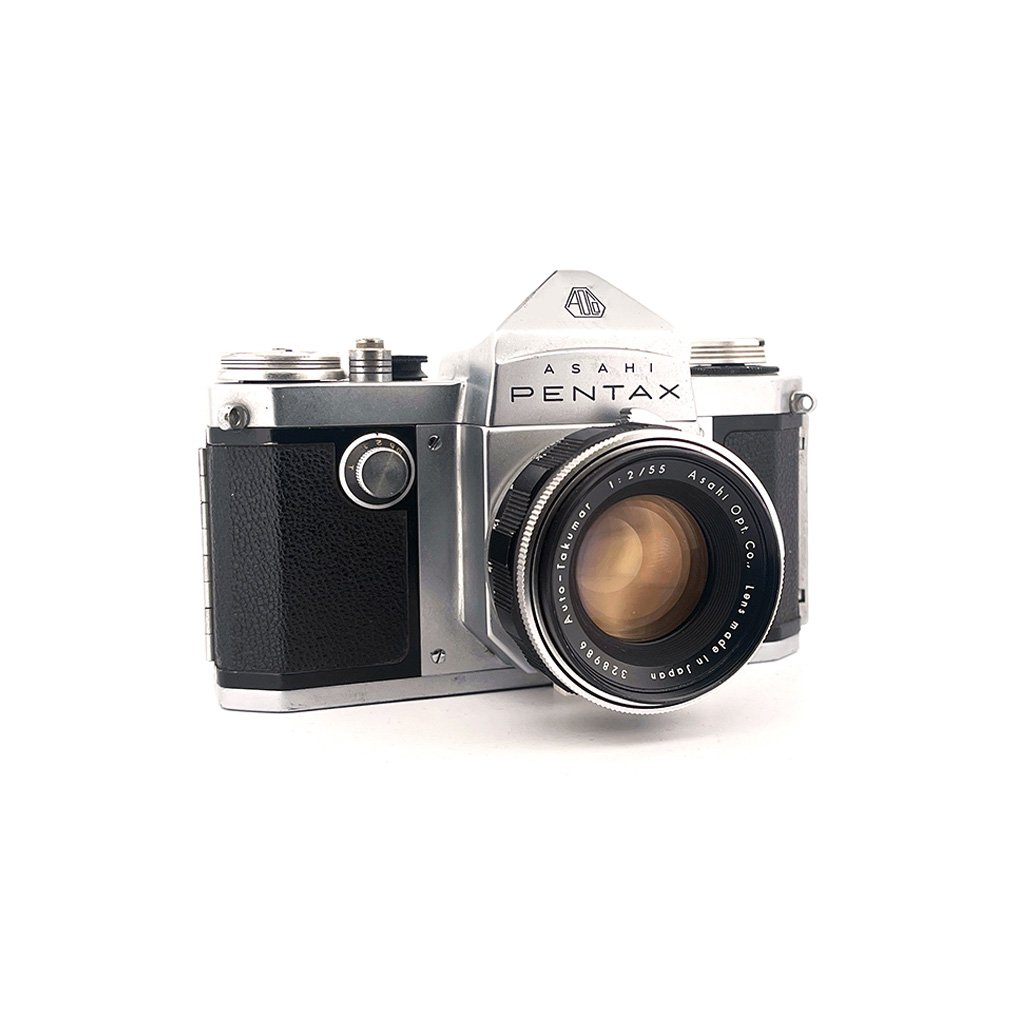
AsahiAsahi Pentax AP
- 1957
- JapanJapan
- 35 mm
The Pentax AP was designed to be mass-produced at a reasonable cost while offering quality comparable to Nikon and Canon. It's an incredibly modern and efficient camera (despite being 65 years old), particularly due to the exceptional quality of its Takumar lenses. The name "Pentax" is a contraction of "Pentaprism" and "Contax."
See the camera page -
GomzGomz Leningrad 2A
- 1958
- USSRUSSR
- 35 mm
With its automatic spring advancement mechanism, the Leningrad is considered the most advanced and expensive Soviet rangefinder ever made. It even received the “Grand Prix de Bruxelles” in 1958. Many Leningrads were given as gifts to party members and visiting dignitaries, and modified Leningrads were used in the Soviet space program.
See the camera page -
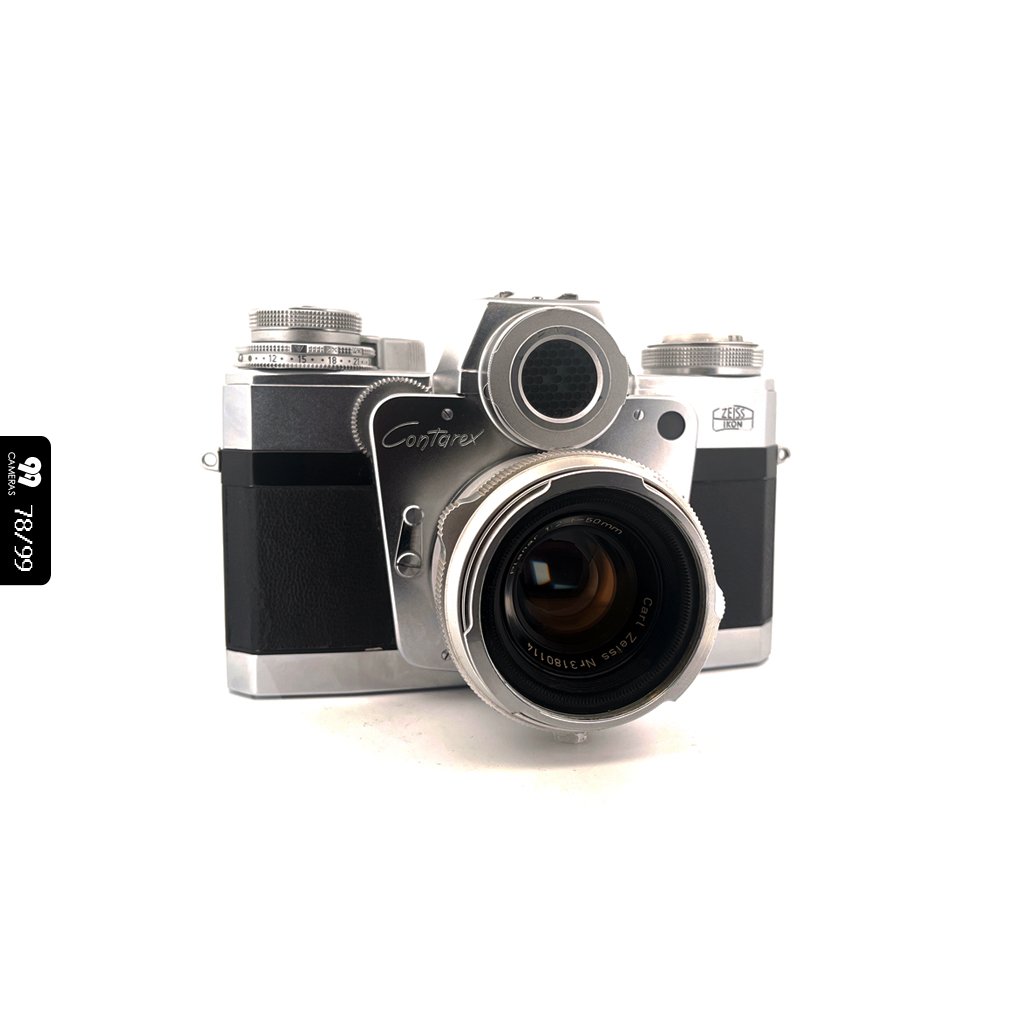
Zeiss IkonZeiss Ikon Contarex “Bullseye”
- 1960
- GermanyGermany
- 35 mm
The Contarex, also known as the Bullseye, was a technical masterpiece weighing nearly 1 kg and comprising around 1100 parts. A specialist was required for any repair, as 43 pieces had to be disassembled just to access the interior. Unfortunately, its complexity and price contributed to its commercial failure and also to the bankruptcy of Zeiss Ikon.
See the camera page -
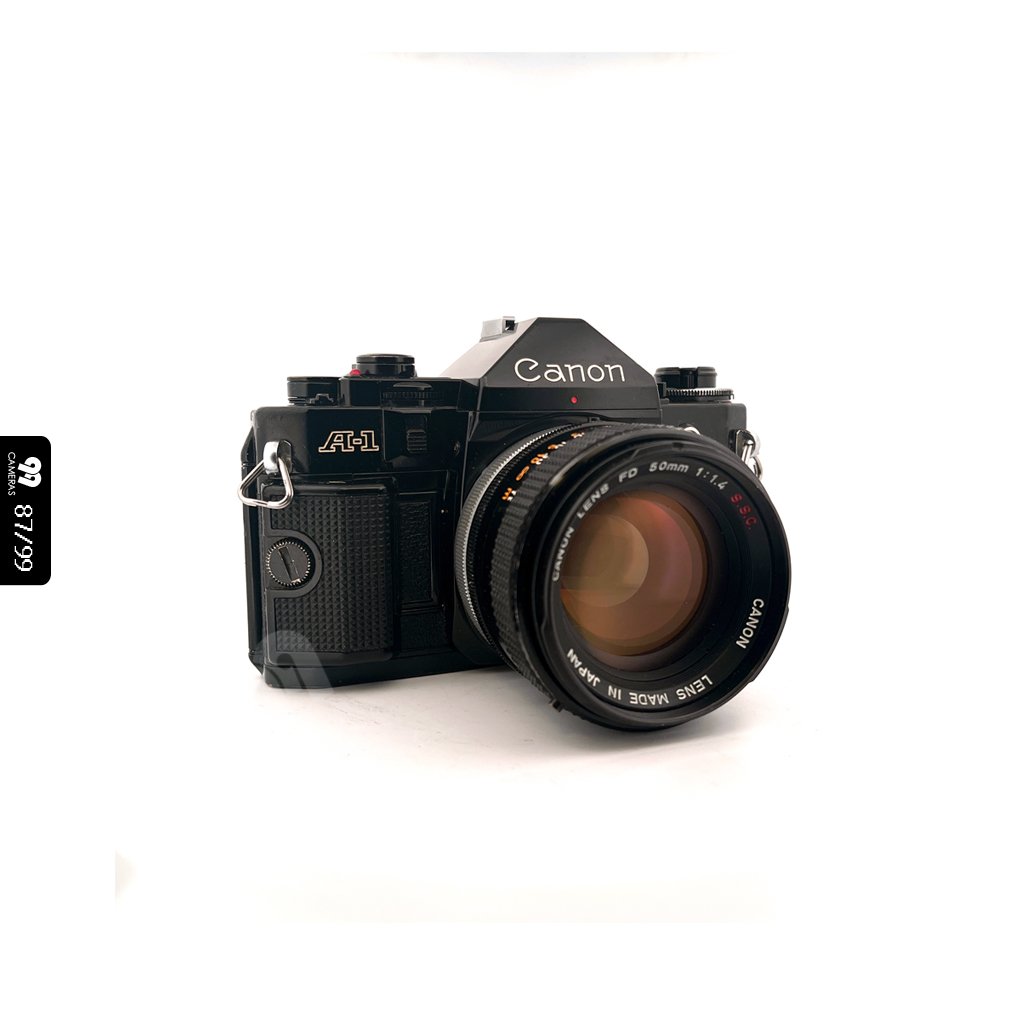
CanonCanon A1
- 1978
- JapanJapan
- 35 mm
The Canon A1 has become legendary. It was the first SLR to offer electronically controlled programmed automatic exposure mode, making it a professional-quality camera usable even by beginners. For the first time, a microprocessor was used to automatically select exposure based on the light conditions.
See the camera page

Plan your visit
Visit is free and open to all
- Opening hoursMonday – Saturday : 10 – 17:30
- AddressStudio Harcourt, 6 Rue de Lota, 75116 Paris
- Exceptional closuresMonday, 16 November 2026Tuesday, 17 November 2026Thursday, 19 November 2026Thursday, 26 November 2026