
The Miniatures
16 cameras
Miniature cameras introduced a new idea: anyone could photograph anything, at any moment, with a camera in their pocket. It took smartphones, a century later, to fully achieve it.
Simple toys or truly professional mini-cameras smaller than a pack of cigarettes, they often sit on the line between watchmaking and photography.
Audio guide · The Miniatures
-
MoritaMorita Kiku 16
- 1956
- JapanJapan
- 16 mm
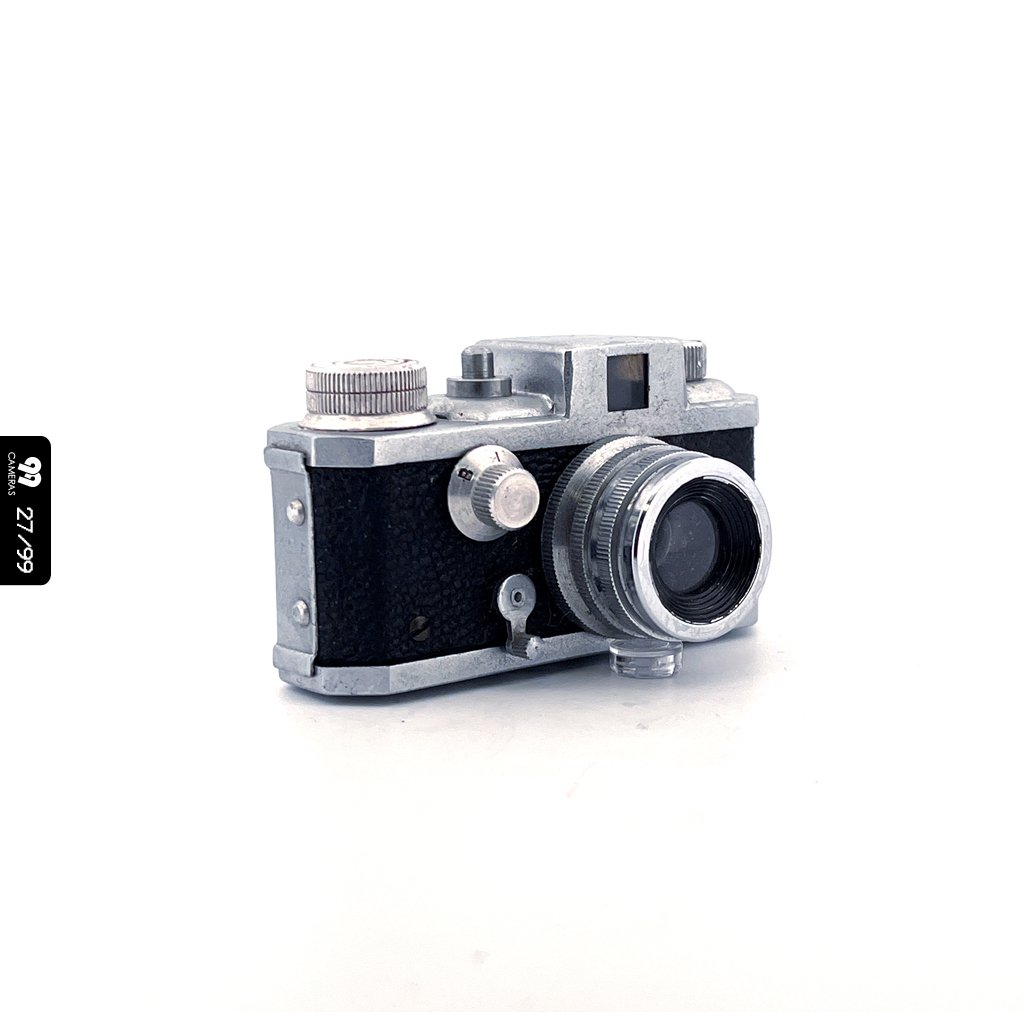
The Kiku 16 measures less than 6 cm and clearly aims to resemble a miniature Leica. The shutter is triggered by a button on the top cover next to the viewfinder, and the winding mechanism is located where the timer would be. There's even a fake rewinding knob on the upper left.
See the camera page -
MiyagawaMiyagawa Boltax I
- 1938
- JapanJapan
- Bolta film
A true pioneer of Japanese miniature cameras, the Boltax was a Japanese-market adaptation of a German model introduced in 1936. It blended German technical precision with a distinctly refined and elegant Japanese craftsmanship.
See the camera page -
Asahi MusenAsahi Musen Steky
- 1947
- JapanJapan
- 16 mm
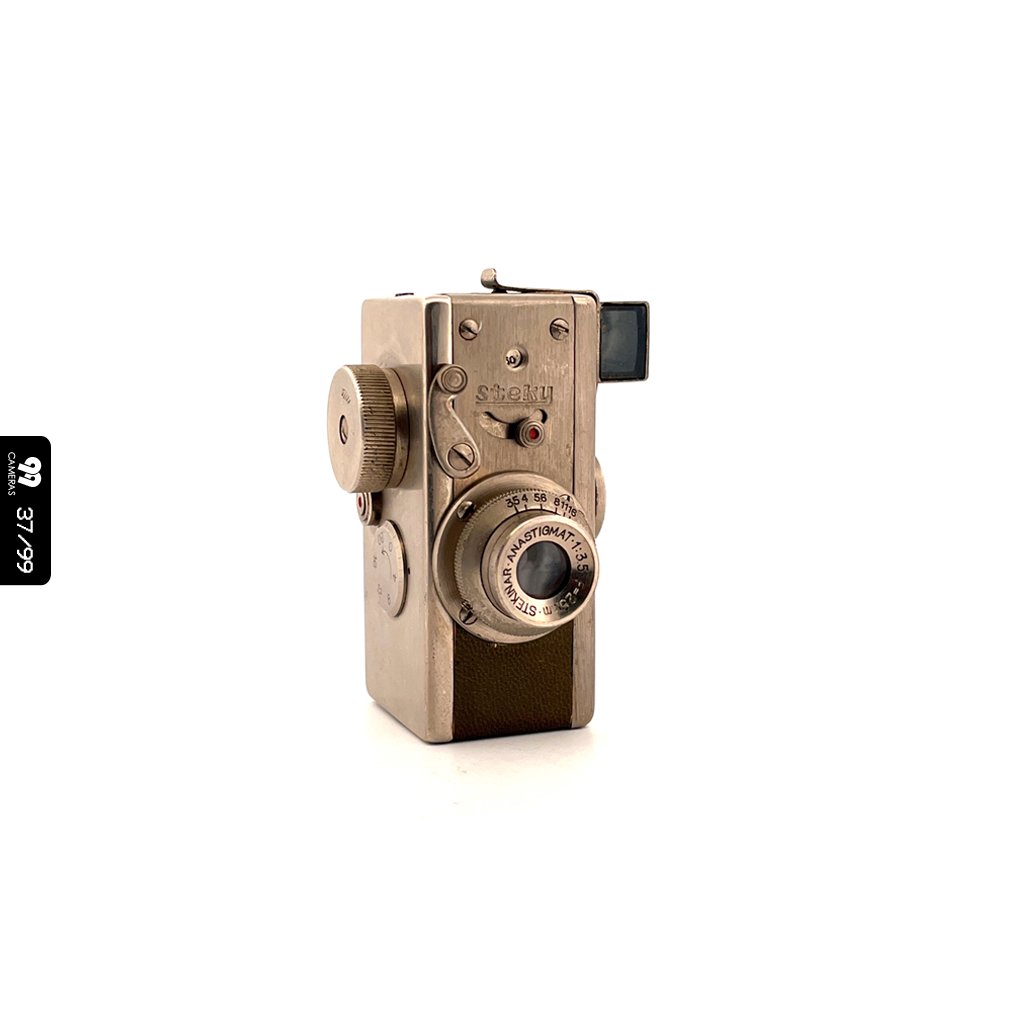
Far from wanting to resemble a miniature version of a larger camera, the Steky innovatively distributed its various elements (viewfinders, dials) around the camera's body to optimize accessibility despite its small size. This gives the Steky a unique and highly efficient vertical design.
See the camera page -
Showa KogakuShowa Kogaku Gemflex
- 1949
- JapanJapan
- 14 mm
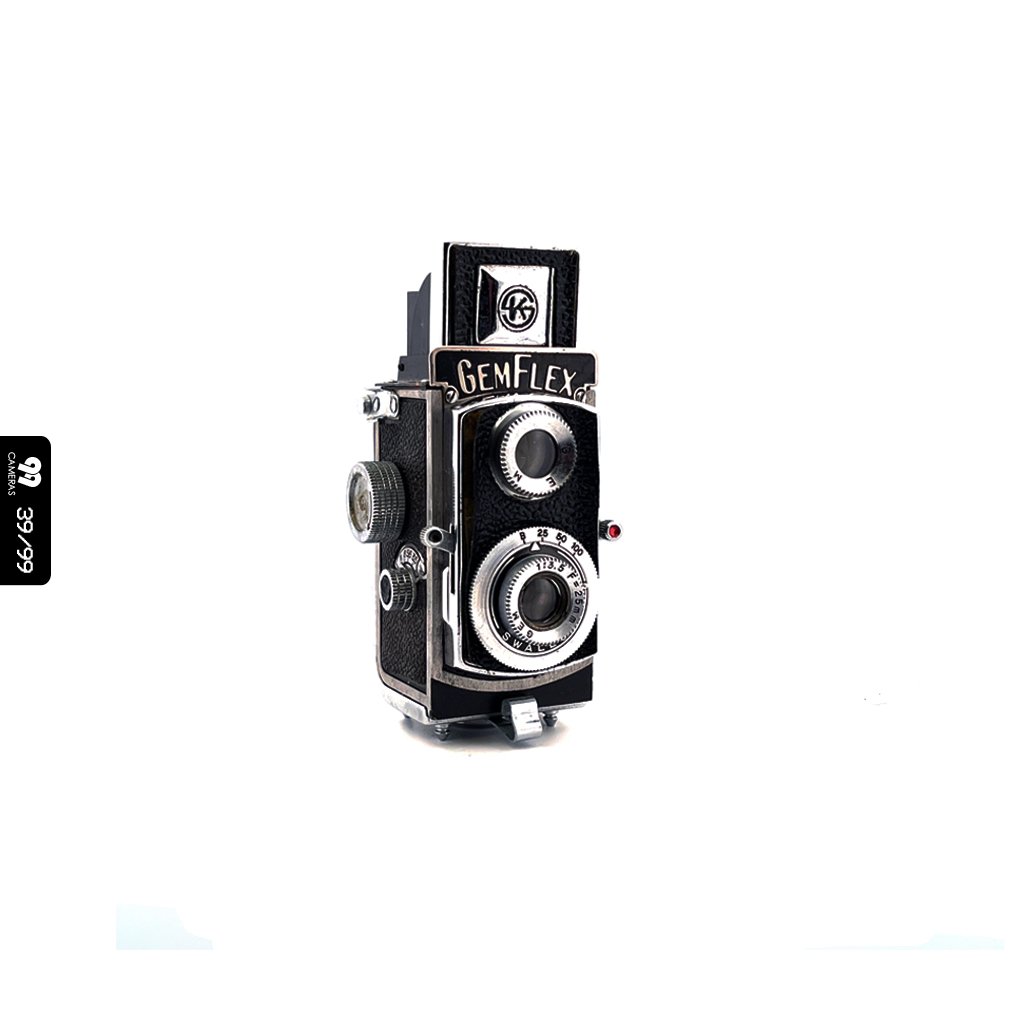
The Gemflex is an incredible miniature camera. Not only does it resemble a miniature version of the famous Rolleiflex, but it's also operated in a similar manner. It's one of the smallest (pseudo) twin-lens reflex cameras ever produced, possibly even the smallest.
See the camera page -
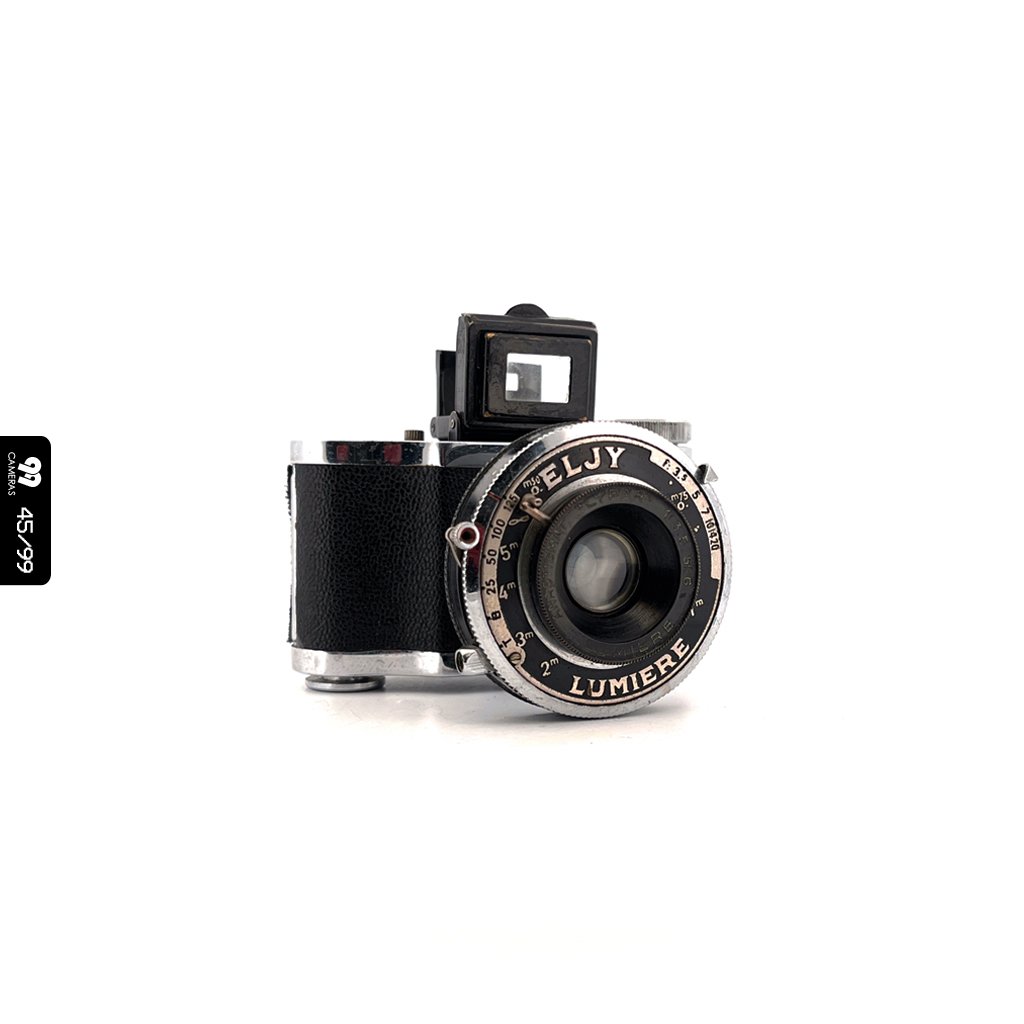
LumiereLumiere Super Eljy
- 1937
- FranceFrance
- Custom film
The Eljy is one of the most iconic French miniature cameras from the Lumière brothers. The name "Eljy" comes from the initials of Lyon and Joinville, the cities where the Lumière brothers had factories. They were extremely popular and were produced with very few major modifications for nearly 20 years.
See the camera page -
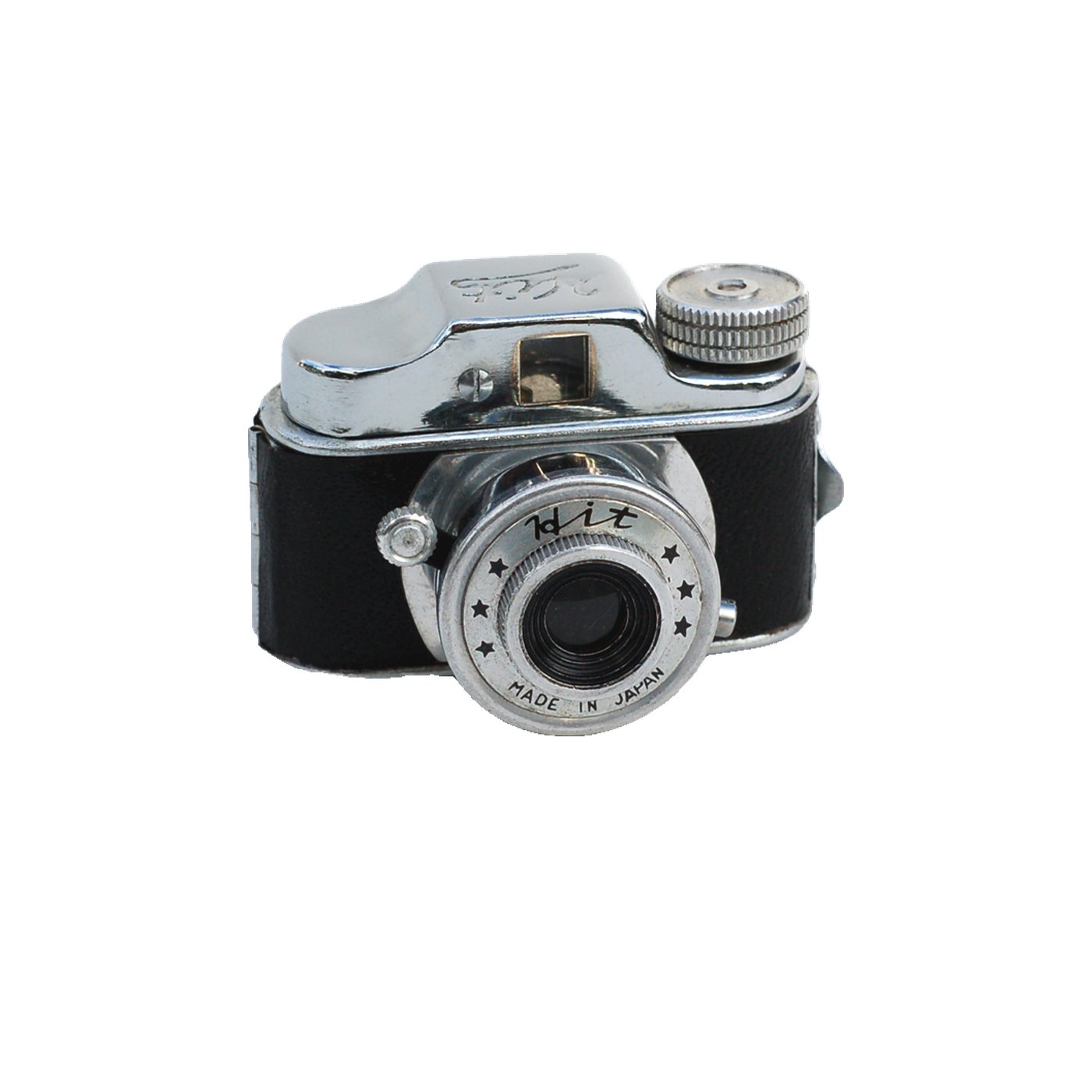
HitHit Ht
- 1960
After World War II, the Japanese manufactured a multitude of budget-friendly cameras utilizing 17.5mm film. These cameras emulated the design of 35mm models, featuring leather-covered bodies and viewfinders. Various manufacturers introduced hundreds of comparable models.
-
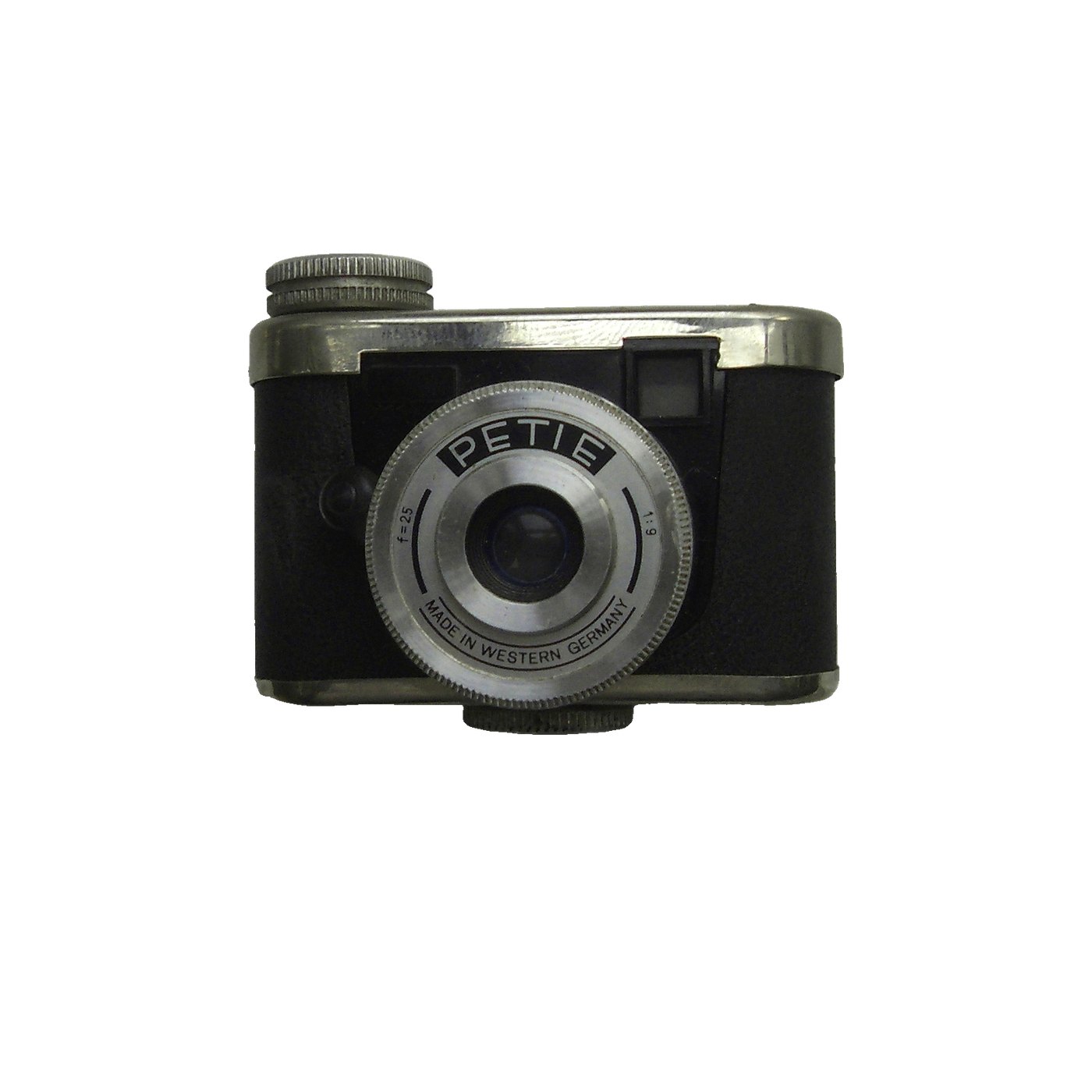
KunikKunik Petie
- 1955
Peties were the German response to the Japanese Hits, manufactured in large quantities in the post-war context. Of better quality, they were notably added to many everyday objects such as cigarette cases or powder compacts.
-
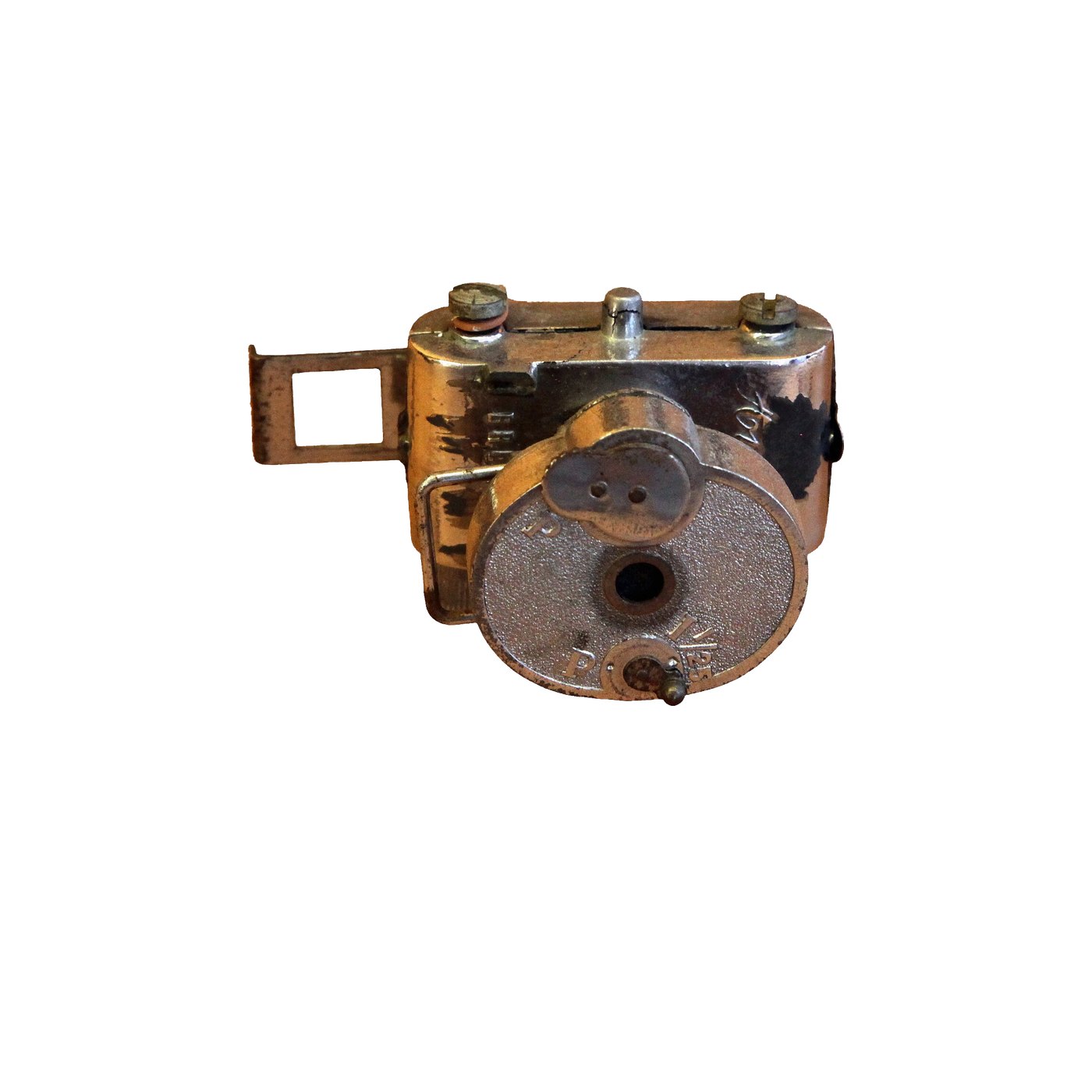
L'aiglonL'aiglon
- 1934
L'Aiglon was one of the smallest devices of its time and probably one of the prettiest with its nickel plating. It could take 8 photos on a 14 mm film.
-
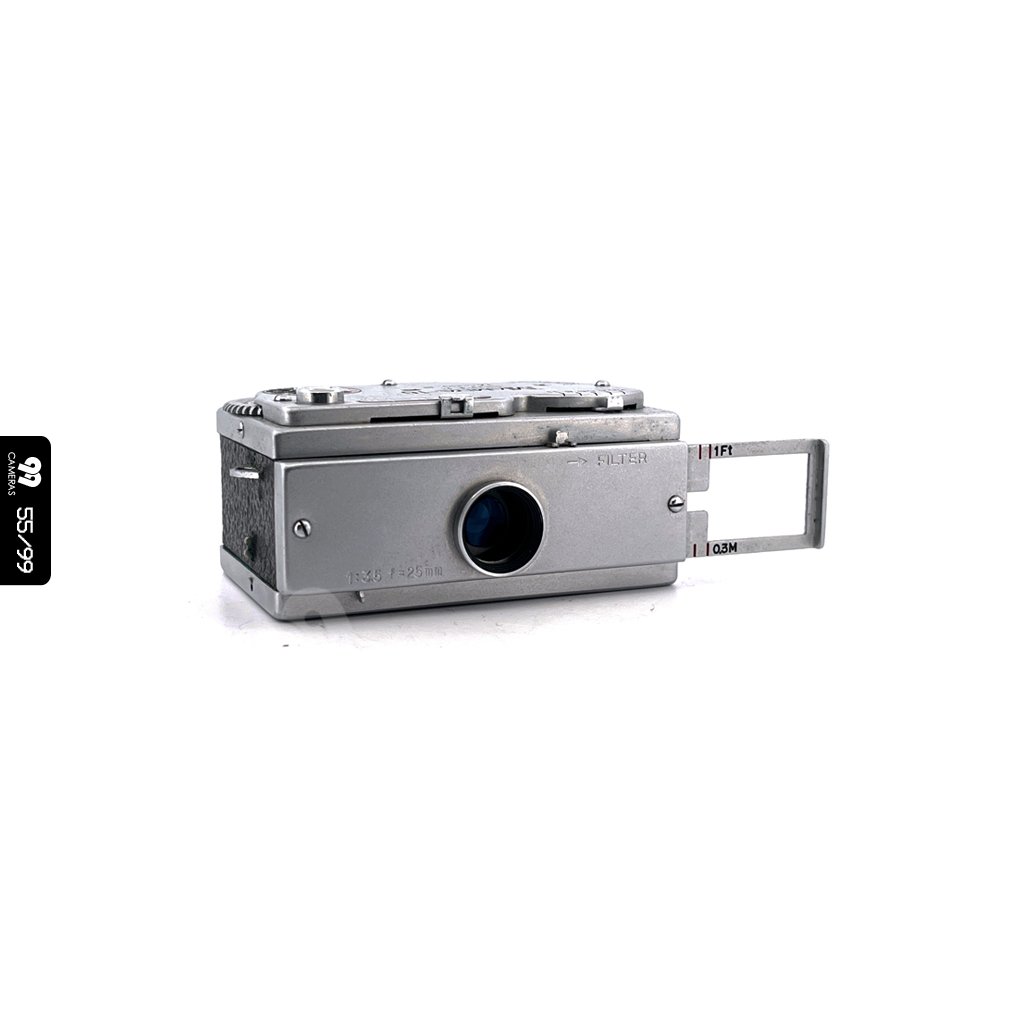
MamiyaMamiya Super 16
- 1959
- JapanJapan
- 16 mm
The Mamiya Super 16 was one of the most beloved 16mm cameras for its exceptional technical features and ease of use despite its extremely compact size. Among these features, it included a retractable viewfinder with a simple yet effective parallax correction, a shutter lock system, and even a sliding filter holder in front of the lens.
See the camera page -
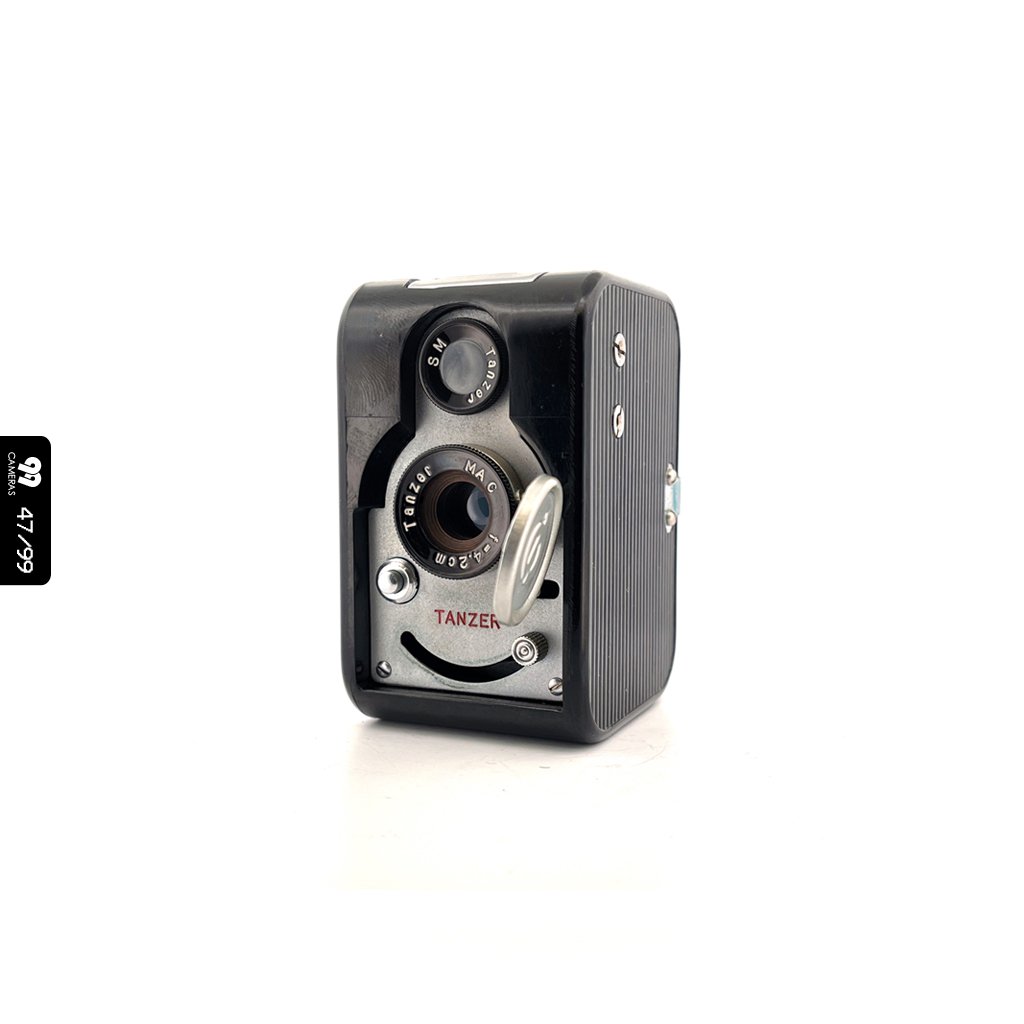
NomuraNomura Tanzer “smile”
- 1950
- JapanJapan
- Bolta film
The Tanzer is probably the only twin-lens reflex (TLR) camera to use Bolta film, a format that enjoyed considerable popularity in Japan until the mid-1950s. It stands out for its distinctive proportions and is easily recognized by its smile-shaped shutter mechanism.
See the camera page -
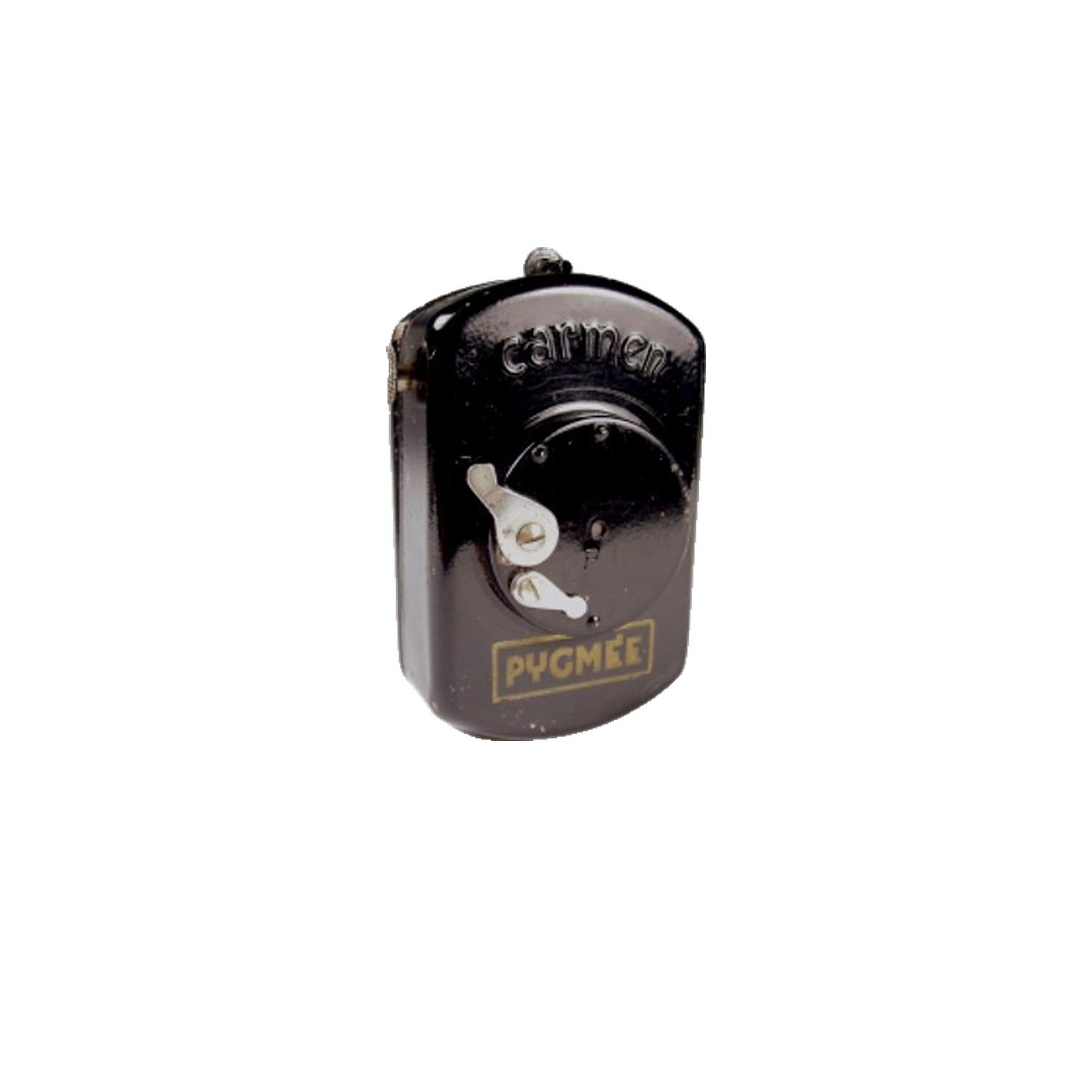
PigmeePigmee Carmen
- 1935
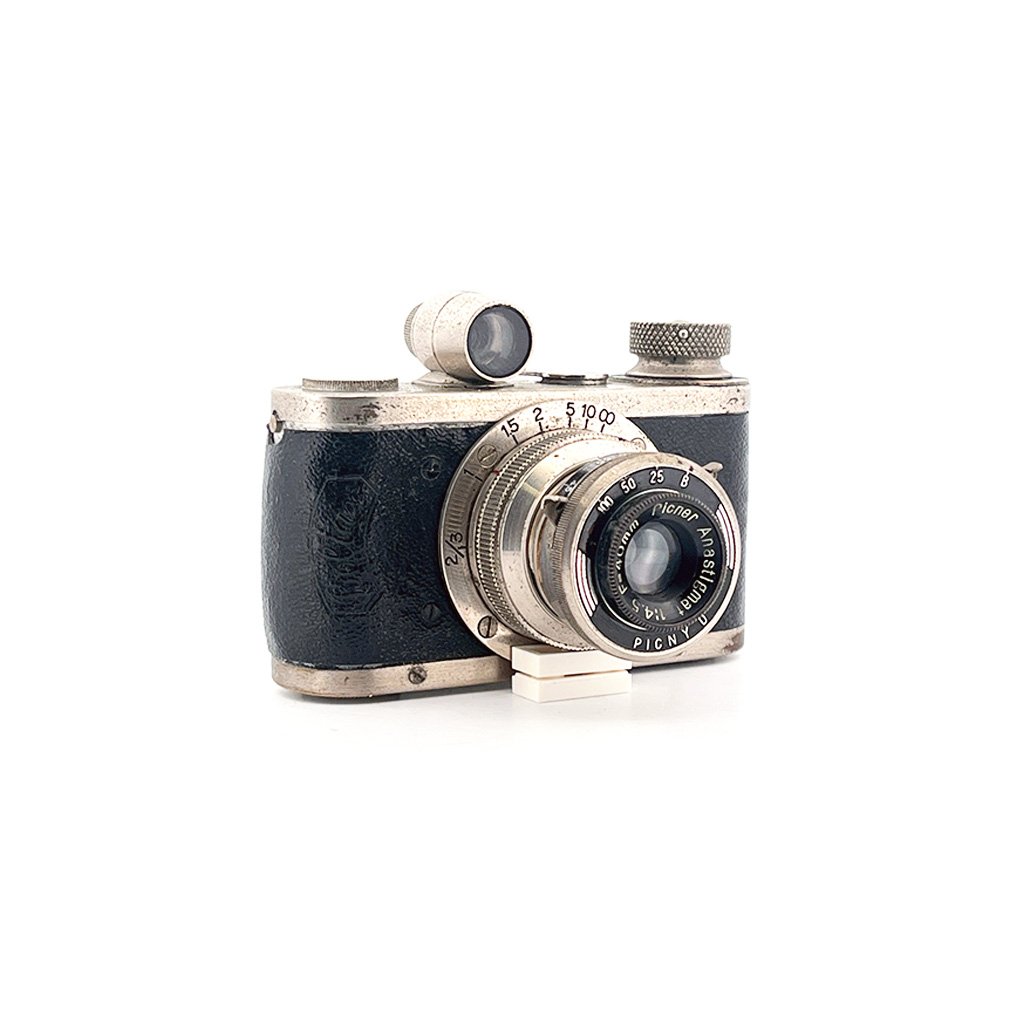
The Pygmée captured twelve 24 x 24mm exposures on a specialized paper-backed roll film that was available at the time for 95 centimes. It was likely one of the most straightforward cameras available in the early 1930s.
-
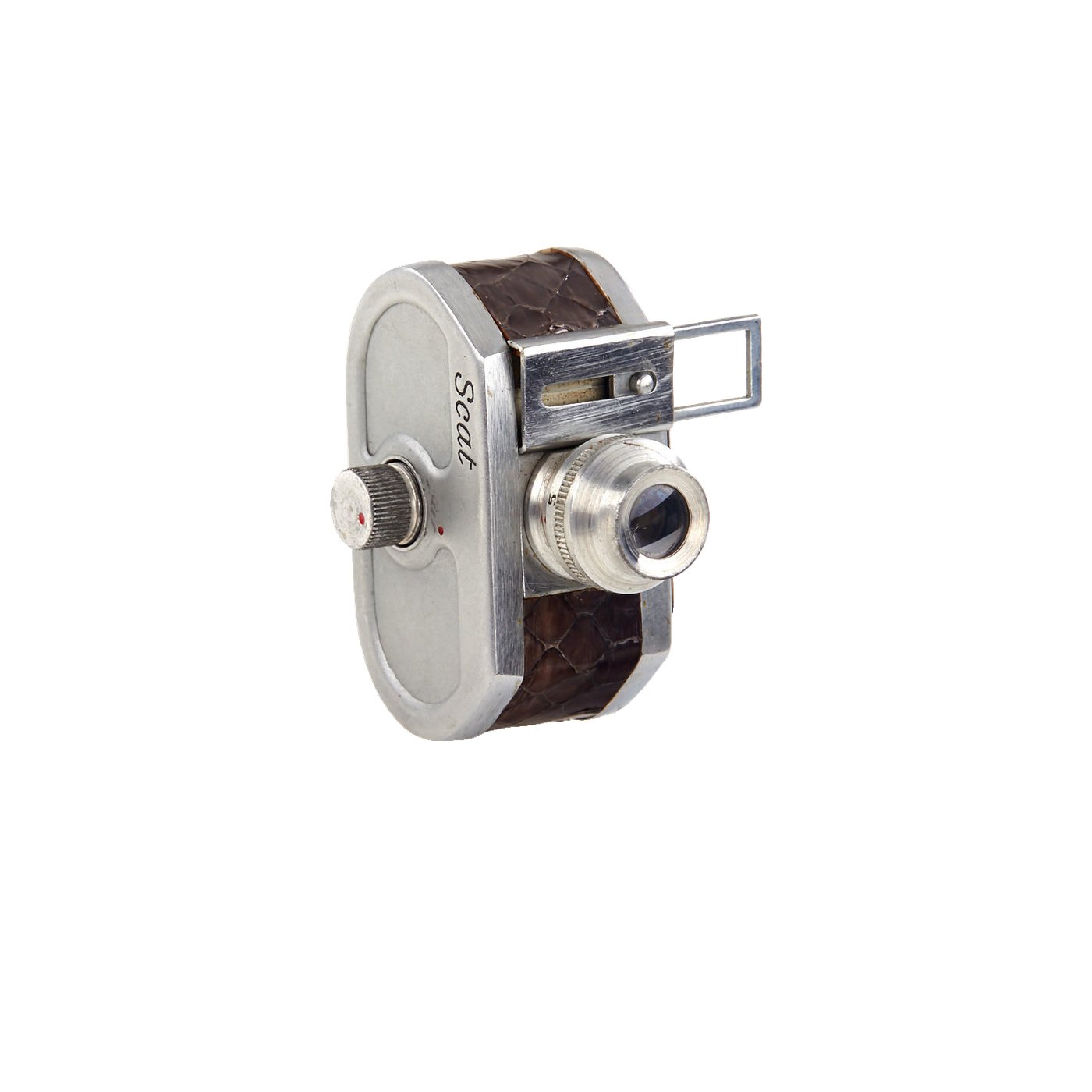
SCATSCAT
- 1947
The SCAT camera captured 8x11mm exposures on 16mm film using special magazines. Its overall dimensions are under 5 cm, and it weighs about 65 g, making it one of the smallest cameras ever produced.
-
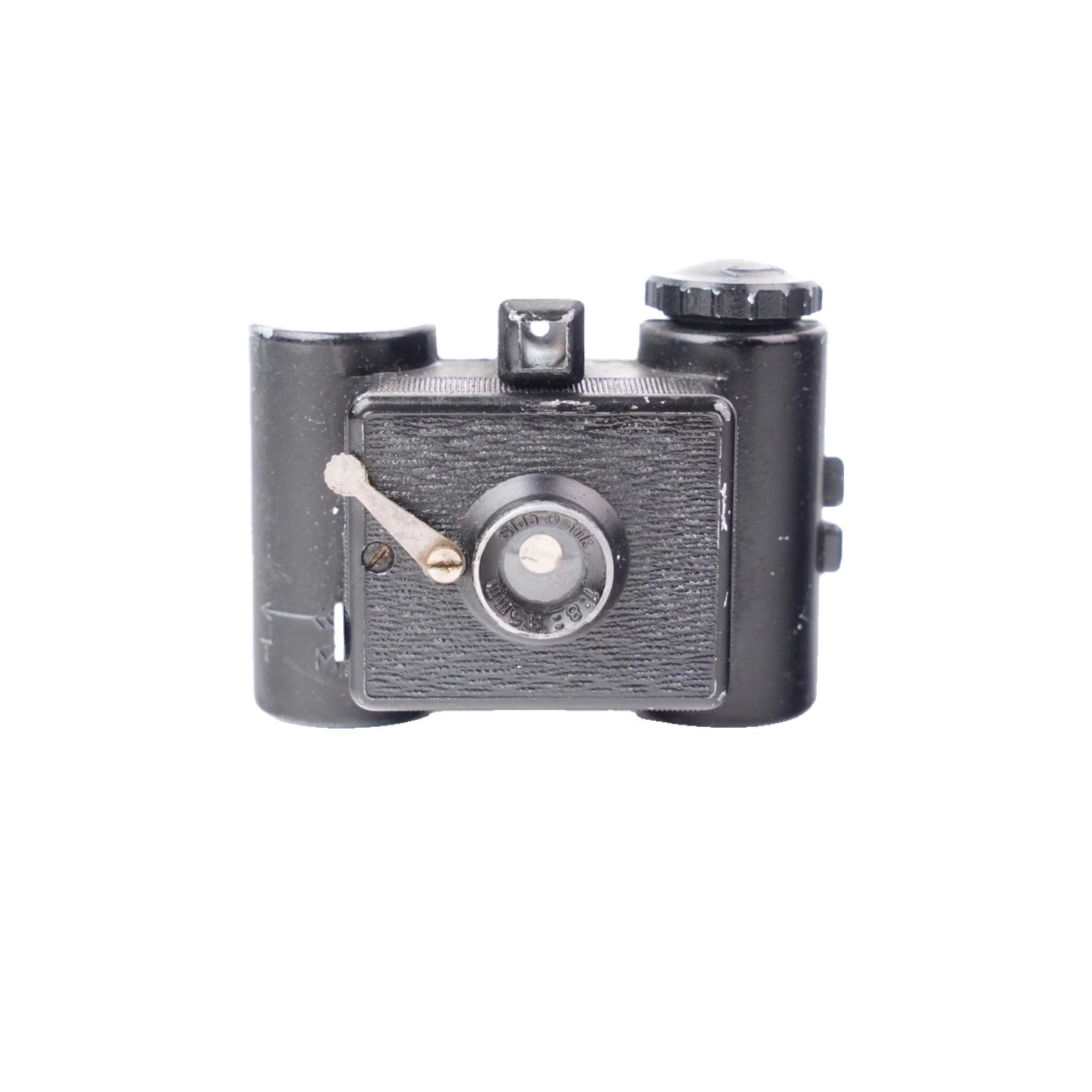
SIDASIDA
- 1936
The Sida is a small German device entirely made of cast aluminum, which makes it almost as heavy as a large-sized device.
-
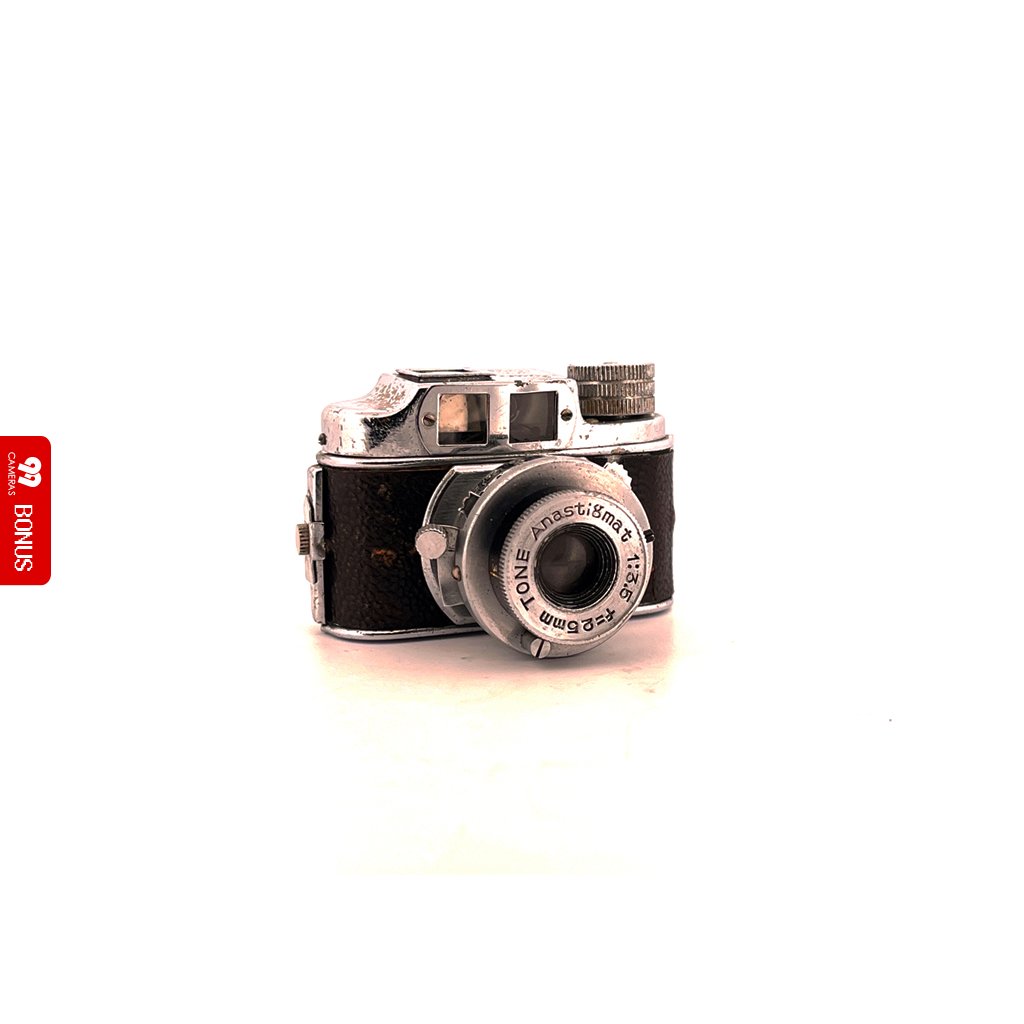
TokoToko Tone Micro
- 1948
- JapanJapan
- 16 mm
The Tone Micro was an interesting attempt to enhance the features of a miniature camera while still staying within the price range of "toy" cameras. This incredible little camera is equipped with a focus lens, a 25mm lens, and variable shutter speeds. It also features two perpendicular viewfinder systems.
See the camera page -
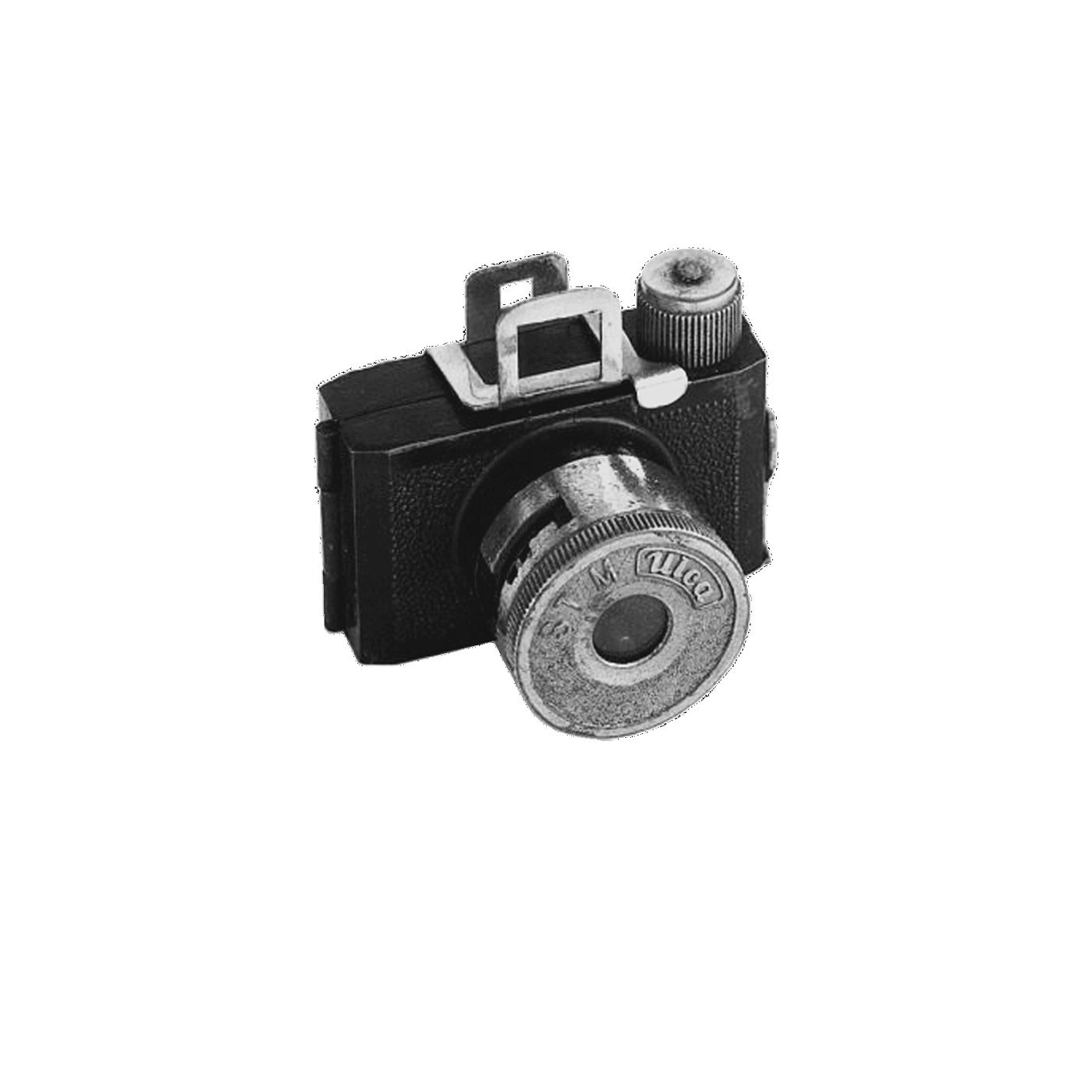
ULCAULCA Sti
- 1933
There are at least seven versions of ULCA micro cameras manufactured in different countries under American license. The STI is the English version, made of die-cast metal with a black finish and a simple fixed viewfinder. These very basic cameras were inexpensive and popular before World War II.
-
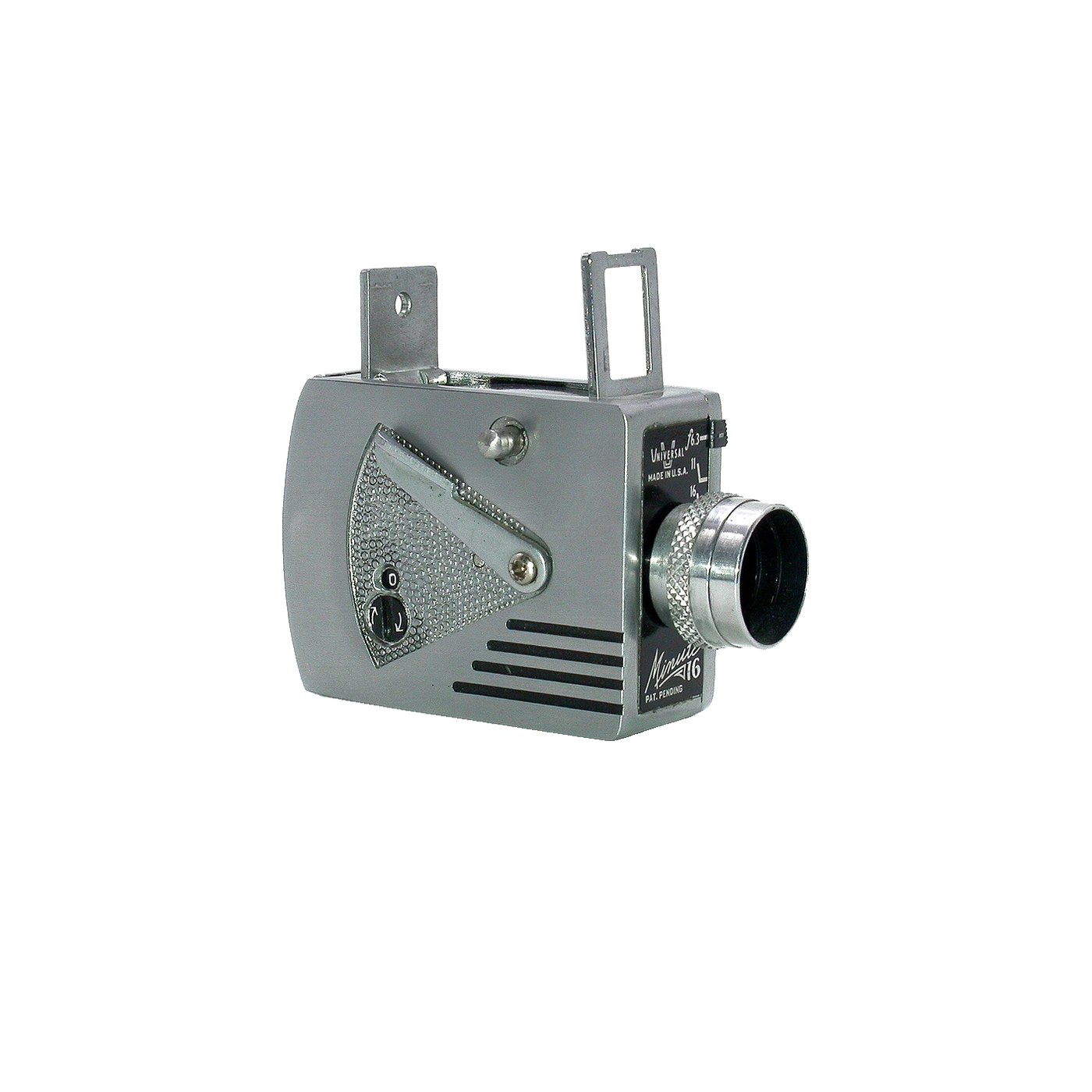
UniversalUniversal Minute 16
- 1949
The Minute 16 is a remarkable subminiature camera that employs 16mm perforated film in reloadable cartridges. It was designed to resemble a small cine camera. The lever on the right-hand side winds the camera and sets the shutter, while the shutter release push button is situated just above it.
Plan your visit
Visit is free and open to all
- Opening hoursMonday – Saturday : 10 – 17:30
- AddressStudio Harcourt, 6 Rue de Lota, 75116 Paris
- Exceptional closuresMonday, 16 November 2026Tuesday, 17 November 2026Thursday, 19 November 2026Thursday, 26 November 2026