The adventure of the brands
The Meopta story
- Founded in 1933Czechia
- No longer makes cameras
A Moravian optics company, a twin-lens reflex bought from two brothers, a tiny camera with a single slider, a stereo camera that fits in a pocket, cinema projectors and a return from America: the Meopta story, told through its inventions and its anecdotes.
1933–1945
Optikotechna

In 1933 Alois Beneš and Alois Mazurek founded Optikotechna in Přerov, in Moravia, to make optics and projectors. In 1935 it was bought by the arms maker Zbrojovka Brno, which built a new factory.
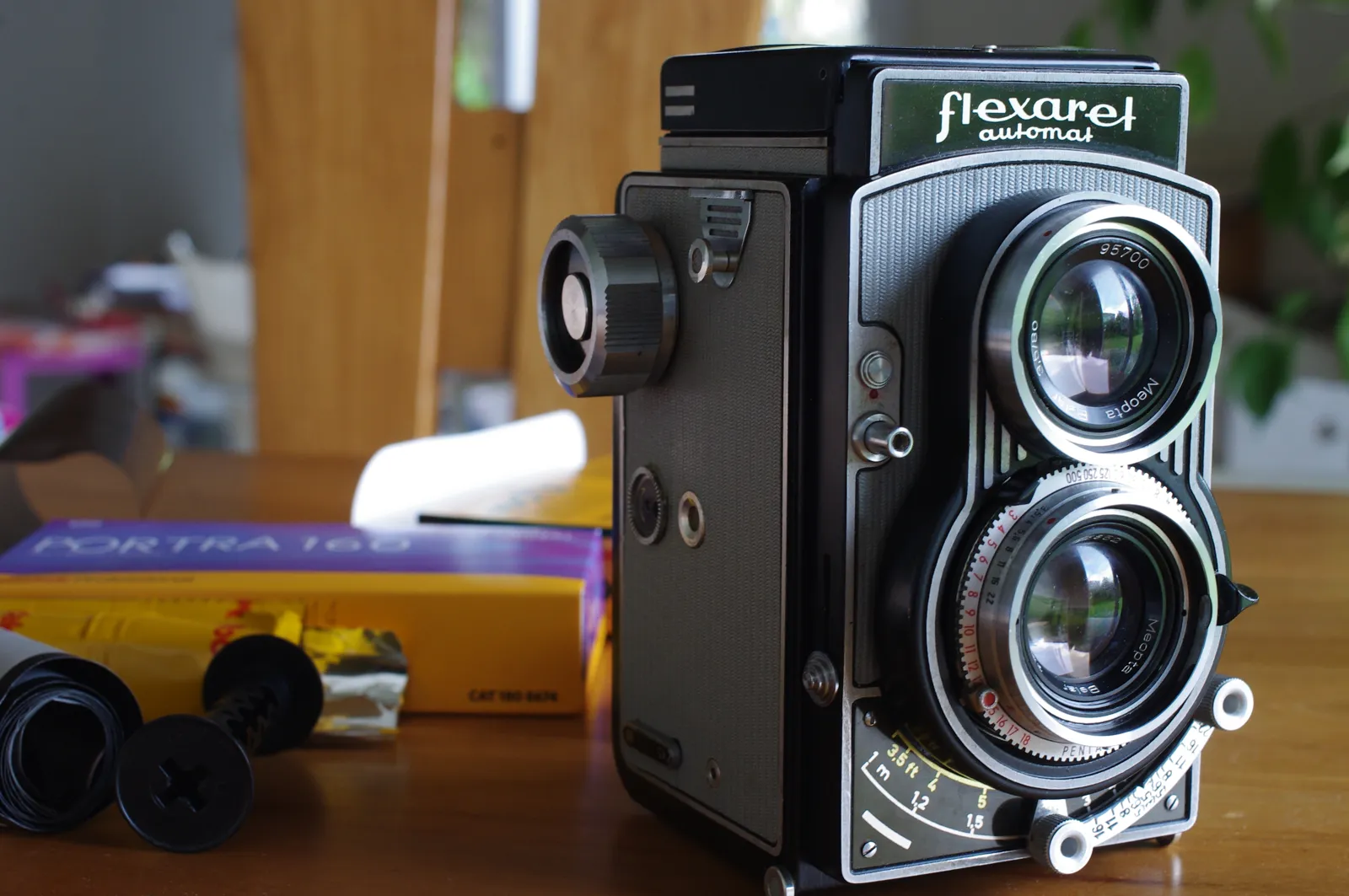
Early in 1939 Optikotechna bought the rights to a twin-lens reflex designed by the Bradáč brothers. It became the Flexaret. A few months later, under the German occupation, the company was ordered to make optics for the German army.
1945–1960
Meopta and the Mikroma
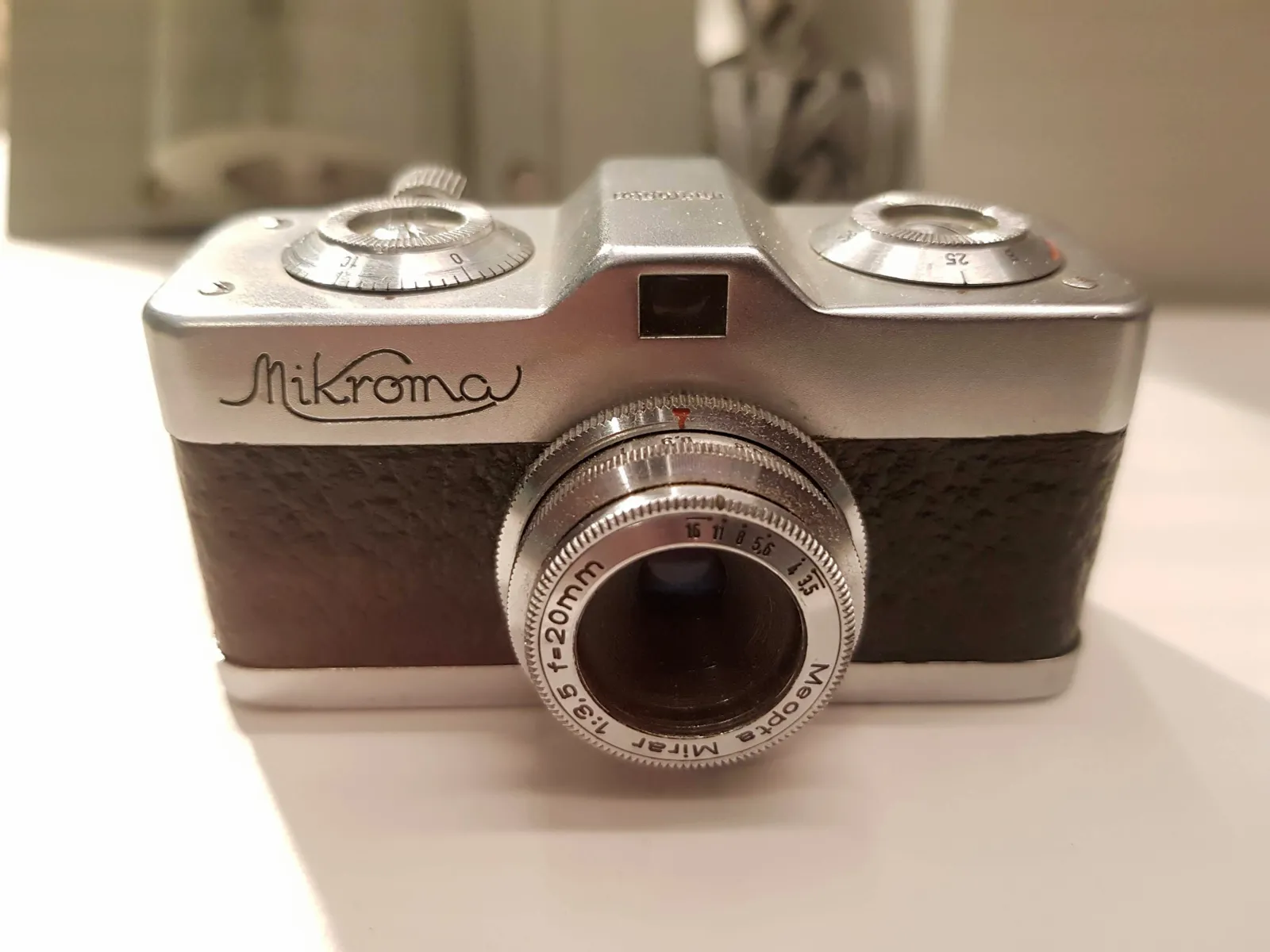
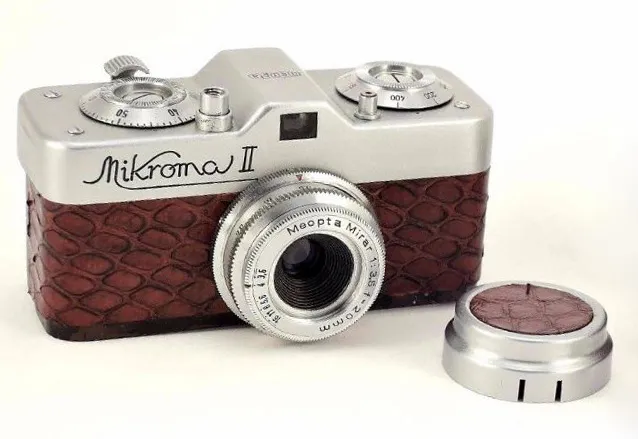
In 1945 Optikotechna was nationalised and merged with other companies, and in 1946 the state enterprise Meopta was born. Around 1949 it launched the Mikroma, a subminiature camera for 16 mm film based on the Mikronette of Optikotechna.
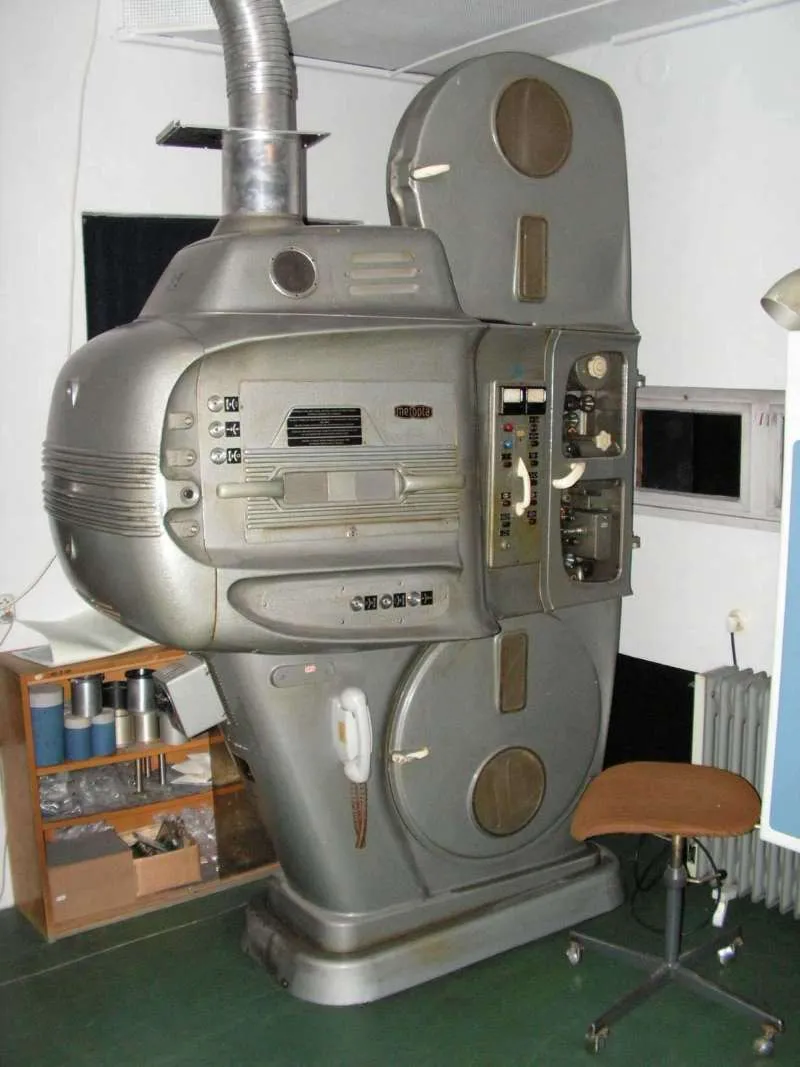
Meopta also became a great maker of cinema projectors, the Meopton, of enlargers and of Admira cine cameras, sold all over the Eastern bloc.

1961–today
In three dimensions, and back from America

In the museum

In 1961 Meopta launched the Stereo Mikroma, the stereo version of its little camera: two lenses side by side take two pictures at once, which give an image in relief in a viewer. It is one of the smallest and easiest stereo cameras ever made, and it is in the museum.
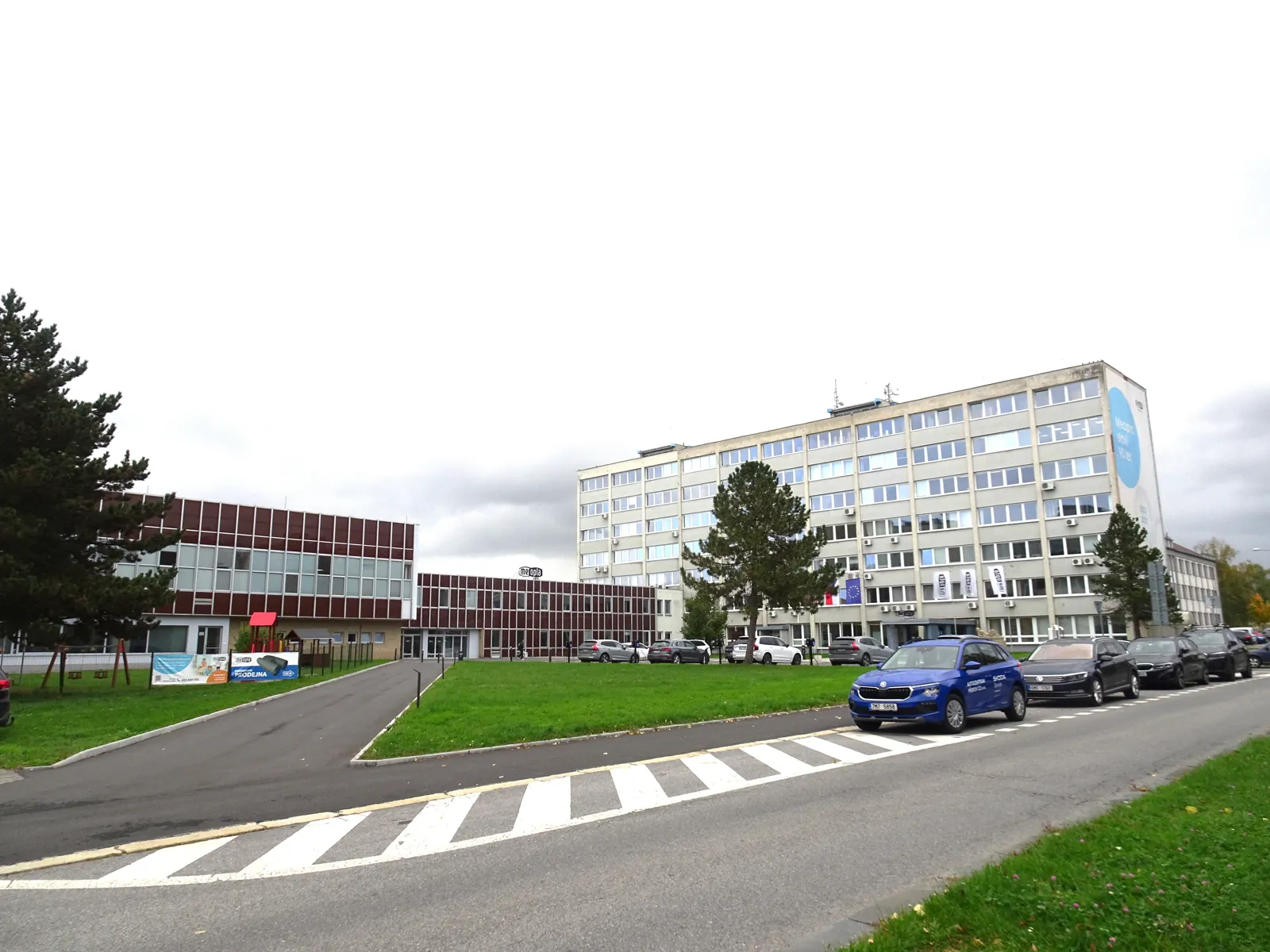
After the fall of communism, Meopta became a private company. In 2000 Paul Rausnitz, a Czech-American businessman, took control of it. Today Meopta makes binoculars, rifle scopes and optical components, and since 2023 it has been controlled by the American investment fund Carlyle.

Meopta at the 99 Cameras Museum
The Stereo Mikroma, a stereo camera that fits in a pocket, is in the showcases of the museum in Paris. You can see it, and the other cameras of this story, in our online collection.
See the Meopta cameras of the collection
Sources. Wikipedia article on Meopta, Camera-wiki, Czech press on Paul Rausnitz. Some anecdotes come from oral tradition and are told as such.
Plan your visit
Visit is free and open to all
- Opening hoursMonday – Saturday : 10 – 17:30
- AddressStudio Harcourt, 6 Rue de Lota, 75116 Paris
- Exceptional closuresThursday, 26 November 2026